A canopy bed changes more than the silhouette of a bedroom. It can define a sleeping zone, soften a room with tall ceilings, give a plain box-shaped space stronger proportions, and create a sense of enclosure without building a wall. That is one reason canopy and four-poster beds are appearing again in current bedroom design coverage. For Haveliora, the useful question is not whether a canopy bed is fashionable, but how to make one work in a real room without making the space feel crowded, theatrical, or difficult to clean.
This guide focuses on modern canopy-bed ideas that balance comfort with scale. It covers frame shape, fabric, ceiling height, circulation, lighting, color, bedding, small-room adaptations, renter-friendly approaches, and the practical details that are easy to overlook when the bed itself becomes the room’s largest visual element.
Why canopy beds are returning now
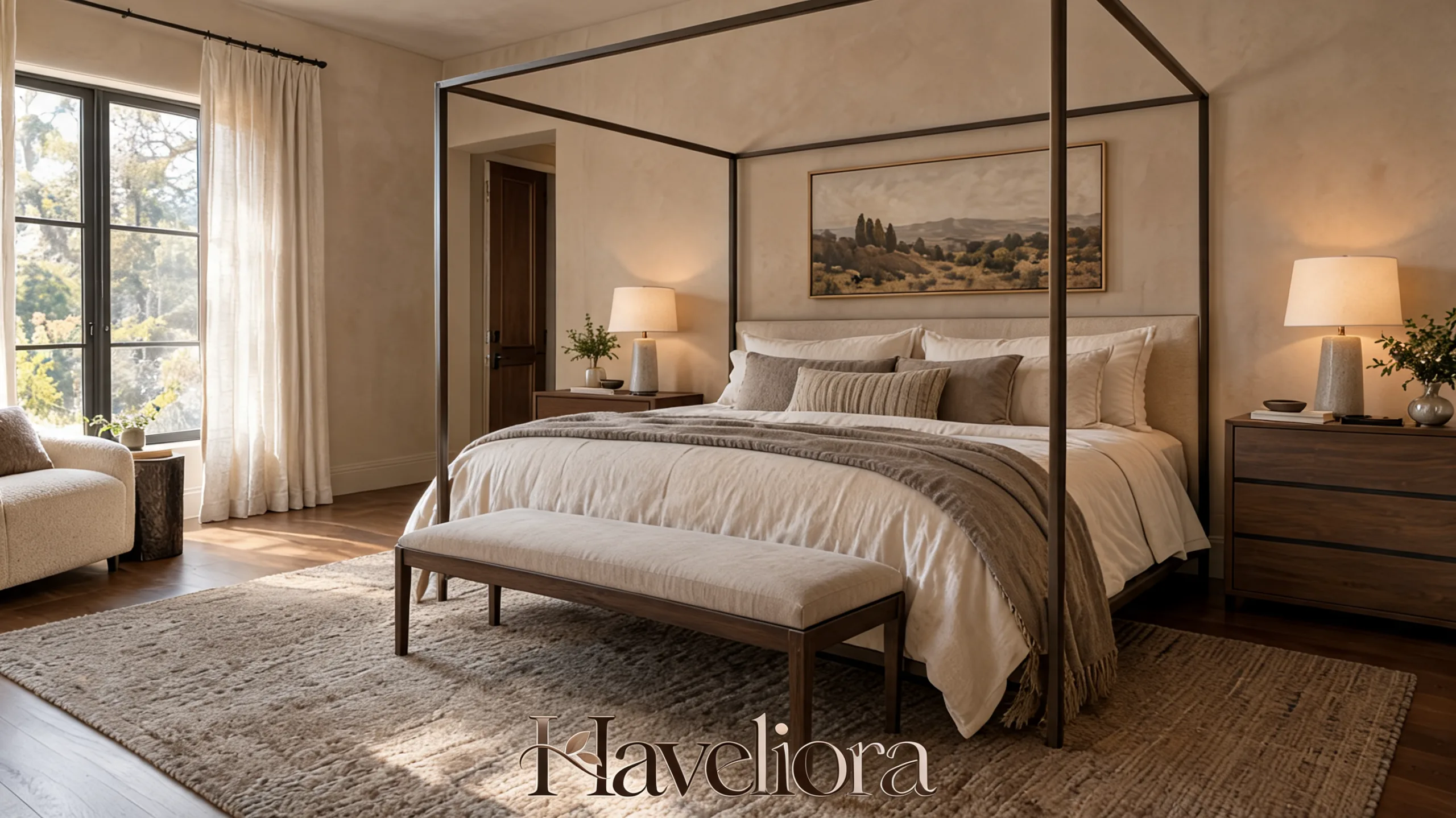
Bedrooms have been moving away from the idea that calm must mean empty, pale, and minimally decorated. Current design reporting is showing more interest in layered, cocooning rooms with stronger textile presence, taller headboards, drapery, and furniture that creates a sense of enclosure. Homes & Gardens included canopy beds among its 2026 bedroom trends, noting renewed interest in four-poster forms and softer fabric treatments. That direction makes sense because a canopy can create intimacy without requiring more decorative objects on every surface.
There is also a practical reason the idea is appealing. A canopy gives the bed a complete architectural frame. In a large room, that frame prevents the mattress and nightstands from looking lost. In a visually busy room, it can establish a single dominant shape that helps everything else feel more organized. And in a bedroom with strong windows, beams, or an awkward ceiling line, the posts can create a calmer rectangle inside the architecture.
For current trend context, see Homes & Gardens’ 2026 bedroom trend report. The rest of this article focuses on implementation rather than trend-chasing.
Start with the room, not the bed
A canopy bed is usually taller and visually denser than an ordinary bed frame, so its success depends on the volume around it. Measure the room before choosing a style. Do not look only at mattress size. Check the total frame width, post thickness, overall height, any projecting finials, the distance from the frame to pendant lights or ceiling fans, and the walking space left after bedside furniture is added.
In a compact bedroom, thin posts and an open top frame keep more of the walls and ceiling visible. In a large bedroom, slightly heavier posts can help the bed hold its own against generous floor area or tall windows. Rooms with low ceilings generally benefit from a visually quiet frame with no bulky upper cornice. Rooms with high ceilings can handle a taller, more expressive structure, especially when the frame aligns with tall curtains or paneling.
If your room is already tight, compare the footprint with the advice in Haveliora’s small bedroom ideas. The bed should not solve one visual problem by creating a circulation problem.
Choose the right canopy structure
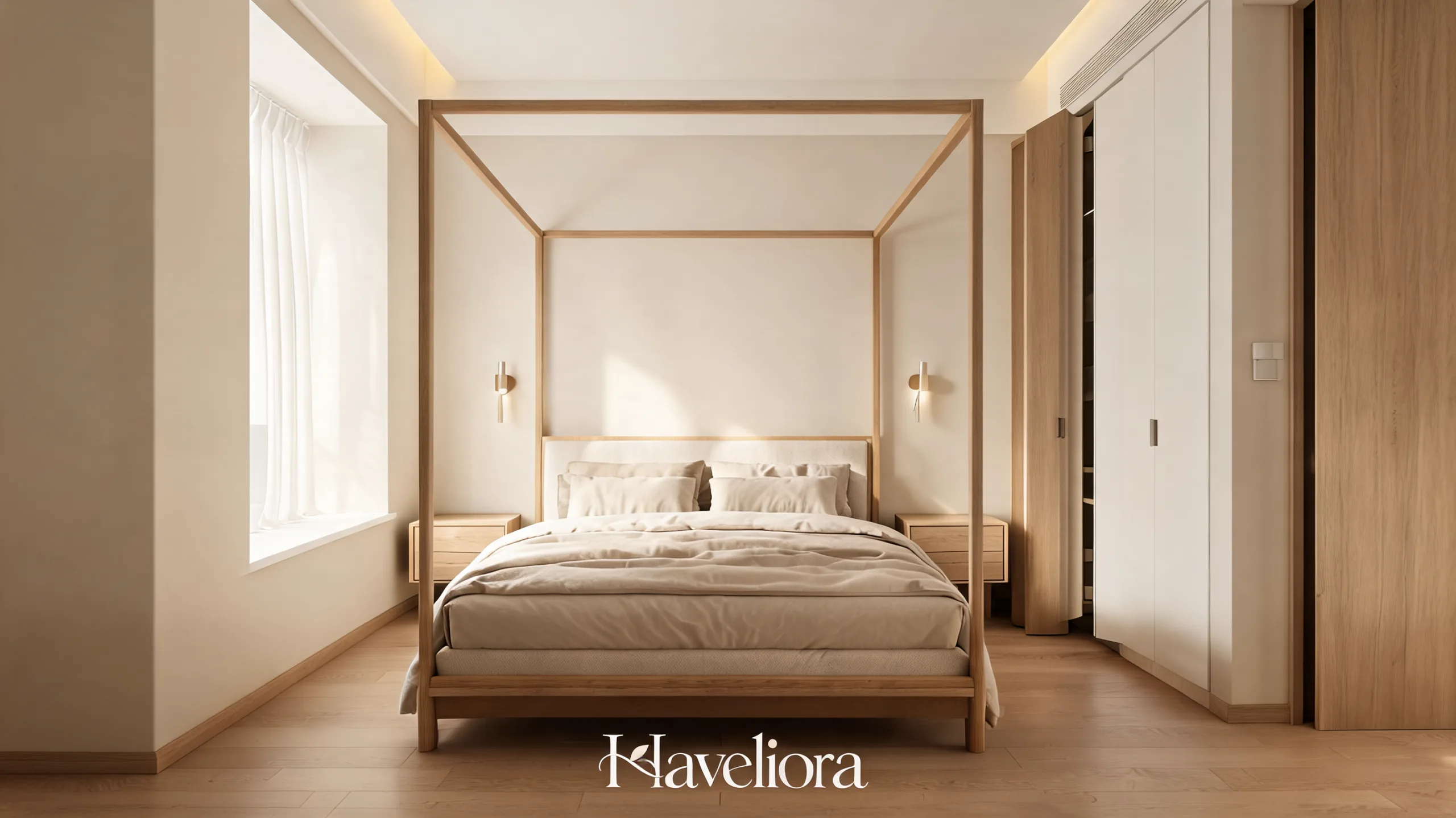
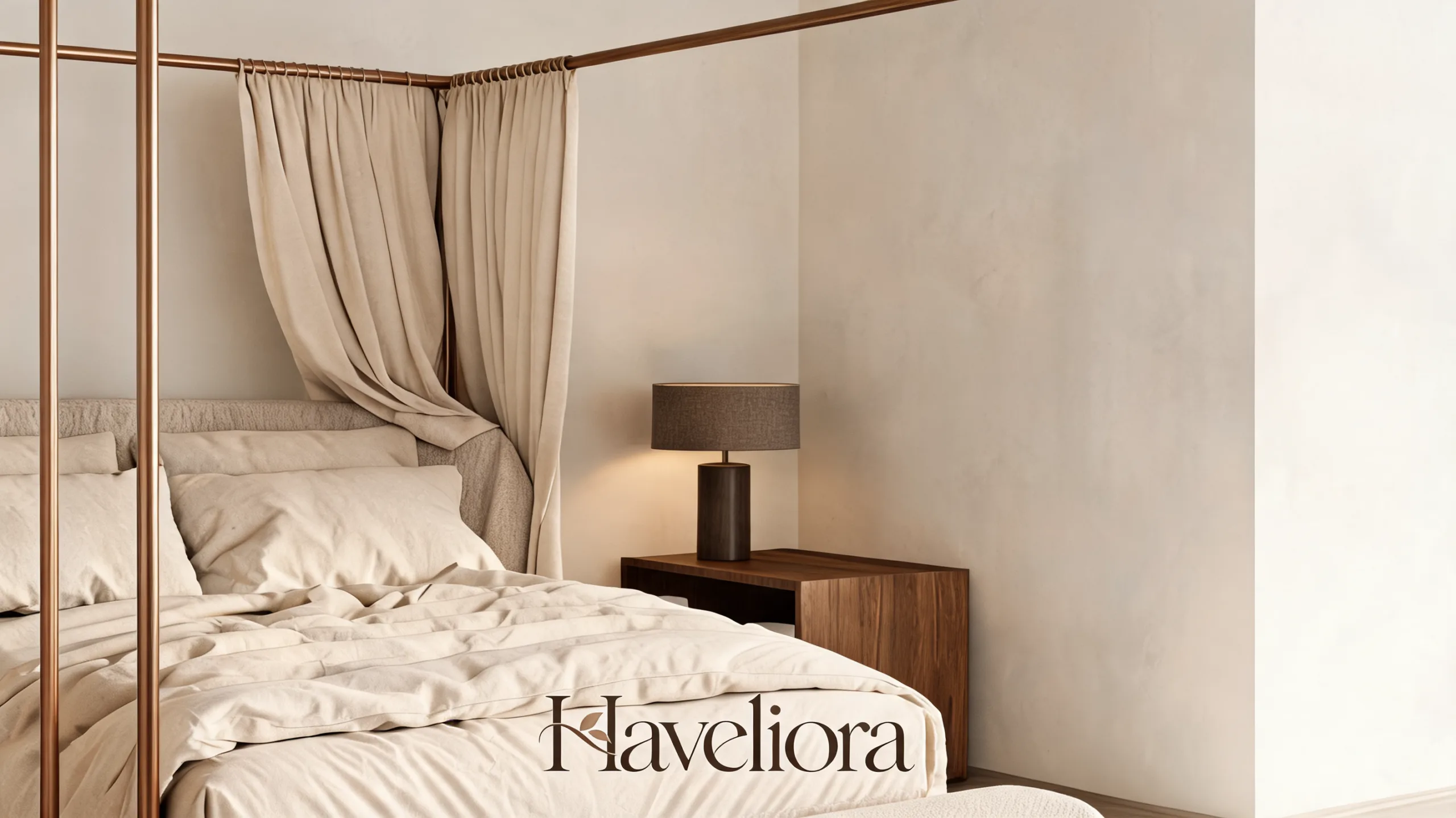
Not every canopy bed creates the same effect. A simple four-poster frame with a thin top rectangle reads as architectural and contemporary. A half-tester, where fabric or a canopy structure concentrates around the head of the bed, can provide softness without enclosing the entire mattress. A fully draped frame creates the strongest cocoon effect but also adds the most fabric, maintenance, and visual weight.
Open metal frame
Blackened steel, bronze, or painted metal works well when the room needs height without bulk. The narrow profile keeps the composition light. Metal is especially useful with patterned bedding, upholstered walls, or strong artwork because the frame itself does not add another wood tone.
Warm wood four-poster
Wood gives a canopy bed more furniture presence. Walnut, oak, stained ash, and painted timber can connect the bed to dressers, floors, or ceiling beams. Avoid forcing every wood in the room to match. A medium walnut canopy can sit comfortably with a lighter oak floor when the undertones are related and the rest of the palette provides separation.
Upholstered or wrapped frame
Fabric-wrapped posts and headboards push the room further toward a tailored, cocooning look. This treatment can be beautiful, but it is less forgiving in dusty rooms, homes with shedding pets, or spaces where fabric will be touched frequently. Use upholstery where it adds genuine comfort or acoustic softness rather than simply because it photographs well.
Decide whether the canopy needs fabric at all
A common mistake is assuming that a canopy frame looks unfinished without drapes. In many modern bedrooms, the empty frame is the stronger choice. The posts create architecture, while the ceiling remains open and the room feels easier to maintain.
Add fabric when it has a specific purpose: softening a very hard room, reducing the visual height of a tall ceiling, creating privacy in a shared suite, filtering morning light at the bed, or making the sleeping zone feel distinctly enclosed. Sheer linen produces a lighter effect; lined cotton or velvet feels more substantial and can absorb more sound, but it also blocks more light and adds more bulk.
For a room that already uses substantial window treatments, the canopy fabric does not need to repeat them exactly. Two fabrics can relate through tone or weave while remaining different enough to avoid a showroom effect. If you prefer a calmer bedroom overall, Haveliora’s neutral bedroom guide explains how to create depth without relying on strong color contrast.
Use drapery strategically instead of wrapping every side
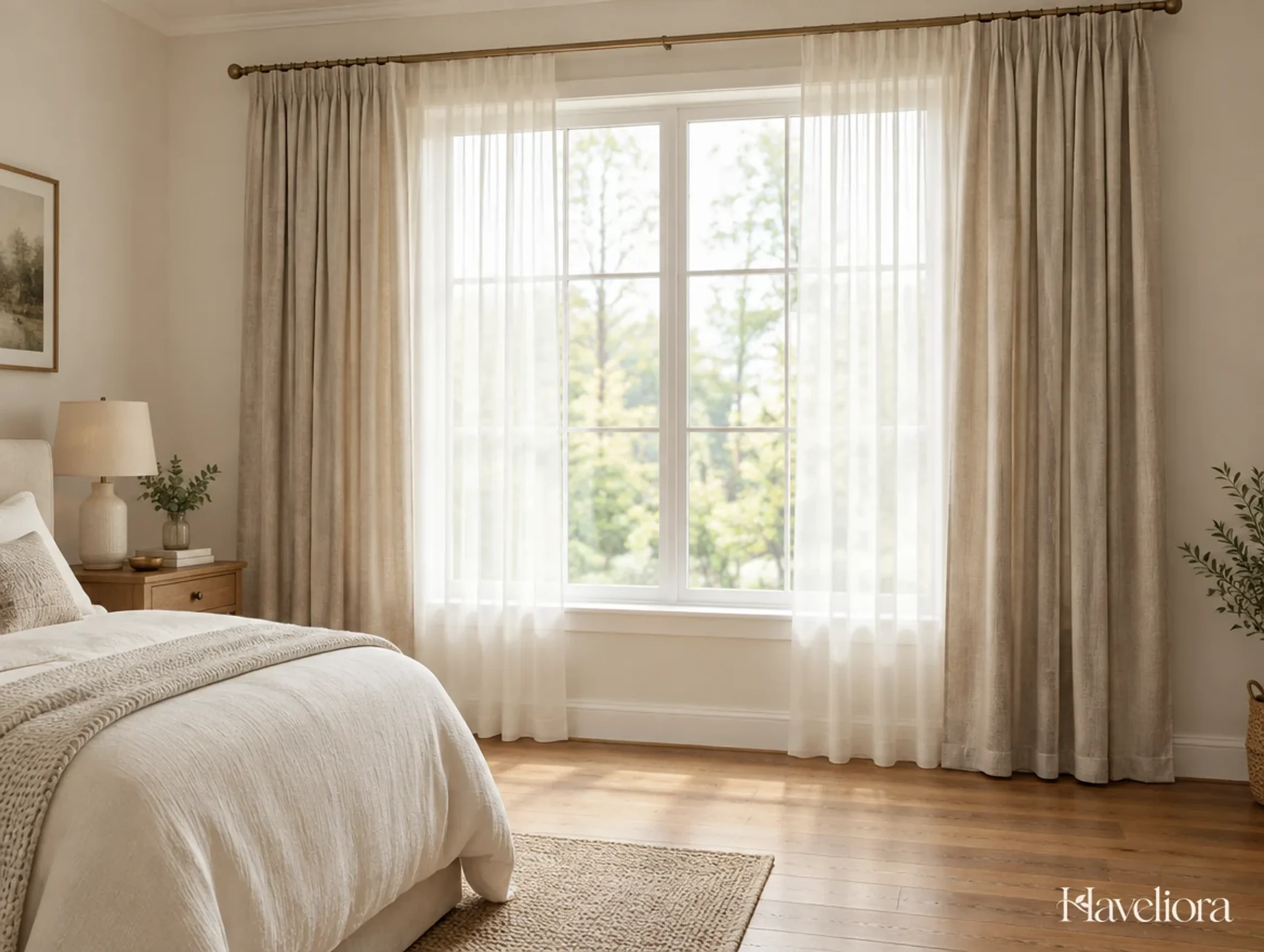
Full curtains around all four sides can be romantic, but they are not the only option. Fabric can be concentrated behind the headboard, hung only at the two head posts, draped loosely across the top rails, or installed as a ceiling-mounted panel that visually joins the canopy without touching the frame.
A partial treatment often works better in everyday bedrooms because it keeps access easy. It also reduces the amount of fabric that has to be cleaned. In a small room, two soft panels at the head can provide the emotional effect of a canopy while leaving the foot of the bed visually open.
If you use fabric near lamps, heaters, candles, or other heat sources, maintain appropriate clearances and follow the manufacturer’s installation guidance. Decorative softness should never create a fire risk.
Plan bedside lighting before committing to the posts
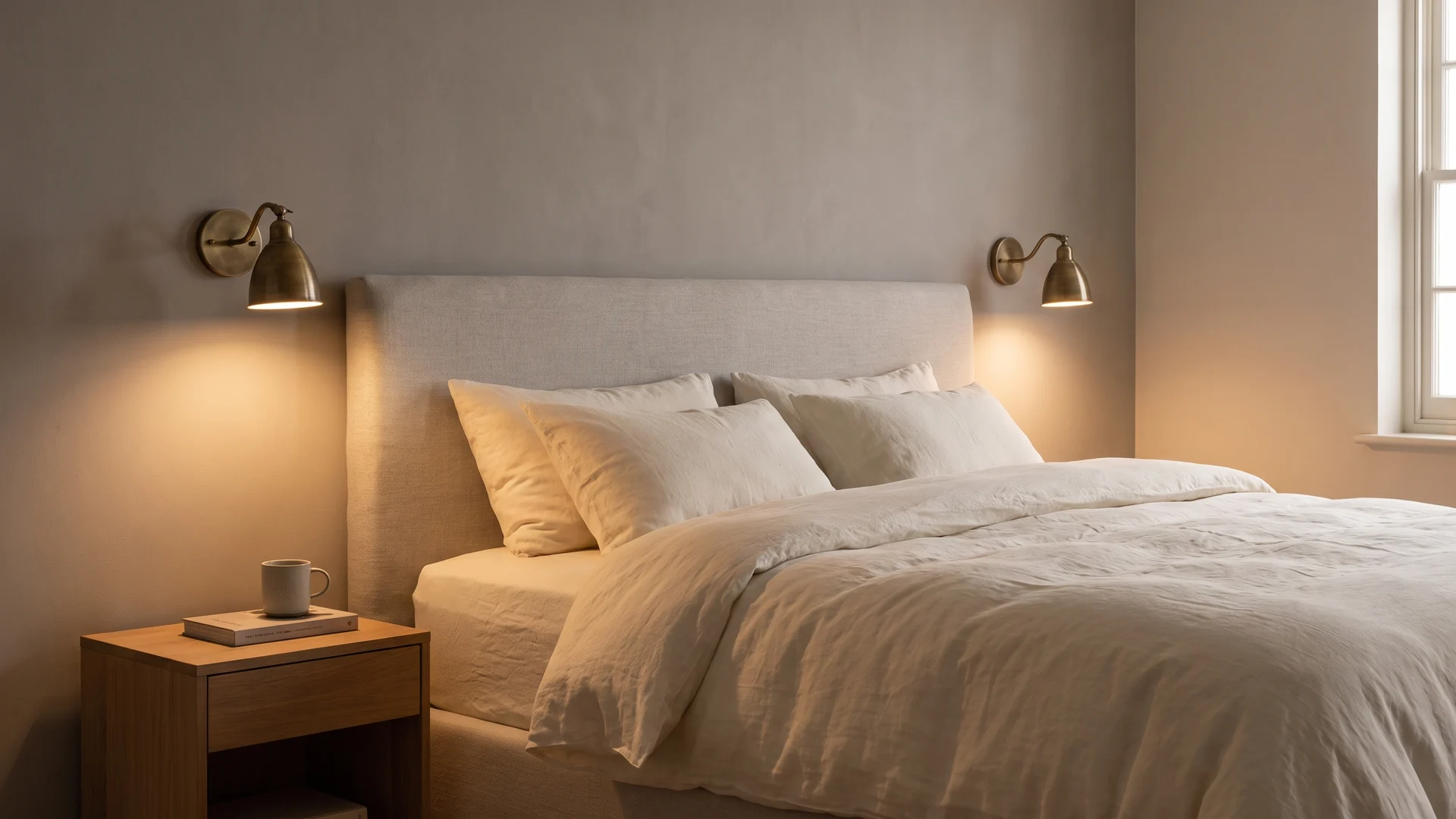
Canopy posts can interfere with swing-arm sconces, wide bedside lamps, pendant drops, and even the sightline to wall-mounted reading lights. Lighting should therefore be planned at the same time as the bed.
If you use table lamps, check that the shades will not collide with the posts when you reach for them. Wall sconces are useful because they preserve nightstand space, but their mounting points should sit comfortably inside or outside the frame rather than visually fighting the posts. Pendants can work beautifully, especially in tall rooms, but must be positioned so that the canopy top cannot touch them and so that no fabric can drift toward a hot bulb or fixture.
Layer the room beyond bedside lights. A canopy naturally makes the bed the focal point, so a gentle floor lamp near a chair, a low dresser lamp, or dimmable ambient light helps the rest of the room remain readable after dark. Haveliora’s bedroom lighting ideas go deeper into layering task and ambient light.
Match visual weight to ceiling height
The relationship between the top rail and the ceiling matters more than many product photos suggest. If the upper frame sits only a few inches below a low ceiling, the bed can feel jammed into the room. A lower-profile canopy or a half-tester is often better. If the ceiling is very high and the frame stops low, the bed can look underscaled.
Rather than chasing a universal measurement, evaluate the negative space. You should be able to see a deliberate band of wall and ceiling around the structure. The bed should look placed within the room, not wedged beneath it.
Vaulted ceilings can be especially effective with canopy beds because the rectangular frame creates a stable horizontal line beneath angled architecture. Keep the top of the bed visually simple so the two geometries do not compete.
Let the bed set the room’s proportion
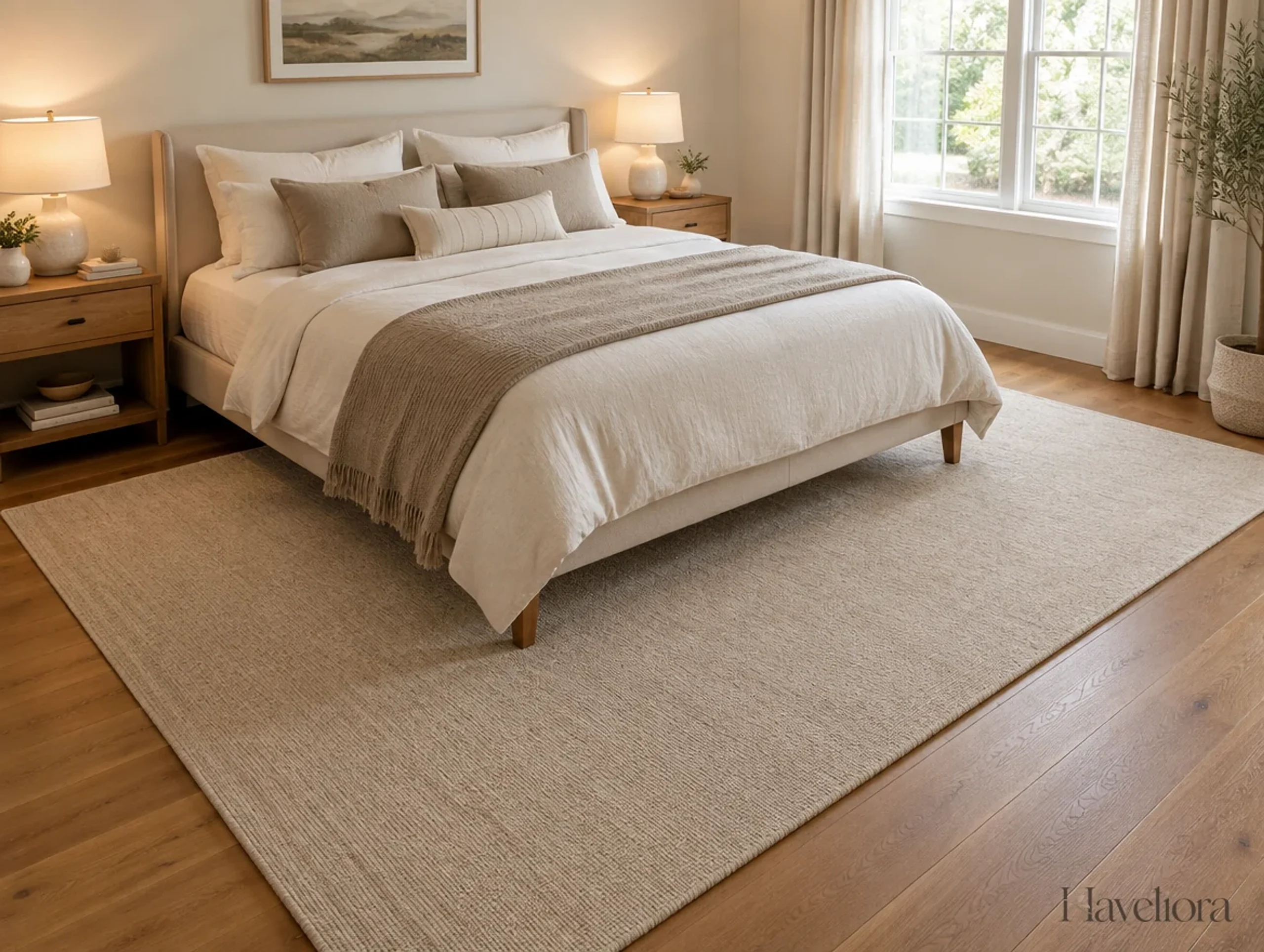
Once a canopy is present, other furniture should generally become quieter. A large armoire, oversized dresser, heavy bench, and dramatic canopy can make the room feel crowded even when every piece technically fits. Choose one or two secondary pieces with enough scale to relate to the bed, then leave breathing room.
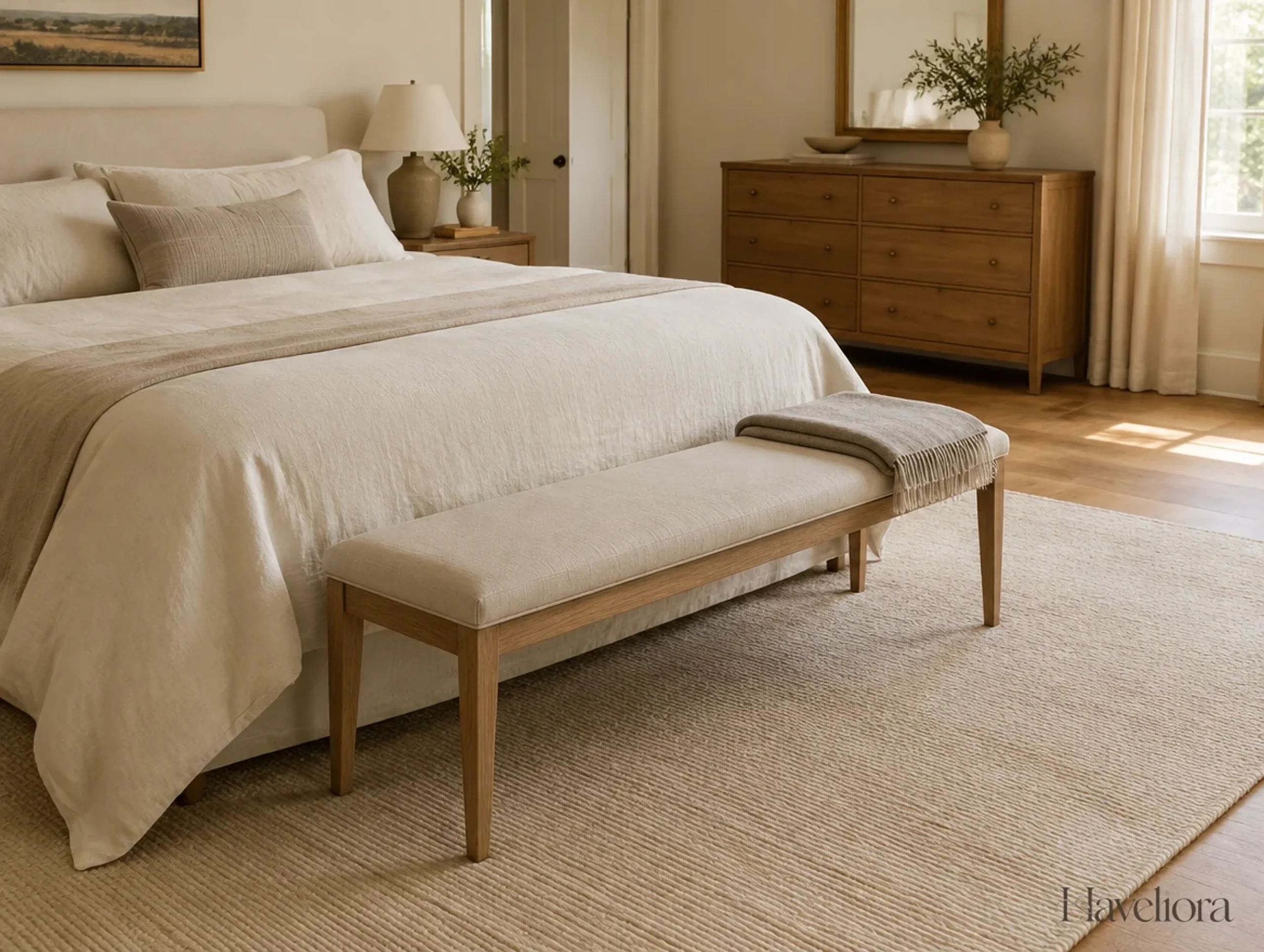
Nightstands should feel substantial enough that they do not look miniature beside tall posts. That does not necessarily mean wide. A compact cabinet with a strong vertical front can balance the bed better than a delicate spindly table. At the foot, a bench should be narrow enough to preserve circulation and low enough not to obscure the mattress and headboard composition.


Build a color scheme around the frame
Because a canopy creates strong vertical lines, the frame color becomes part of the room’s architecture. A dark frame on pale walls makes the geometry obvious. A painted frame close to the wall color creates a softer outline. Natural wood adds warmth and often works best when it is echoed once or twice elsewhere rather than repeated everywhere.
For a darker bedroom, consider a canopy painted in the same family as the walls. Deep green walls with a near-black green frame can create an enveloping effect without breaking the room into too many contrasting lines. If that direction appeals to you, Haveliora’s moody bedroom ideas explain how to keep a dark palette restful rather than heavy.
Bedding should support the canopy, not compete with it
A canopy is already a strong focal element. Bedding can therefore do more with texture and less with volume. Oversized piles of decorative pillows can make the whole composition top-heavy. A better approach is to create one strong horizontal layer: a neatly scaled duvet or coverlet, sleeping pillows, a limited number of decorative cushions, and perhaps a folded quilt or throw.
Pattern can work very well inside a canopy because the frame contains it visually. Stripes, block prints, florals, and checks can all feel intentional when one color connects them. If the canopy itself is draped in patterned fabric, keep the bedding simpler or use a smaller-scale coordinating motif.
Can a canopy bed work in a small bedroom?
Yes, but only when the structure earns the space. A thin four-poster frame can actually make a compact room feel more ordered because it gives the bed a crisp boundary. The key is avoiding bulky posts, projecting cornices, heavy curtains, and overlarge nightstands.
In a small room, prioritize a frame that follows the mattress footprint closely. Keep the top open. Mount reading lights on the wall if the nightstands are narrow. Use curtains only at the head if you want softness. And make sure wardrobe and bedroom doors can open fully without hitting the posts.
Do not assume that transparent or acrylic furniture is required to make the room feel bigger. A real wood bedside cabinet with useful drawers may be the better choice if it reduces loose objects and keeps the floor area organized.
Renter-friendly ways to create the canopy feeling
If a full canopy bed is impractical, you can create some of the same enclosure with a freestanding four-poster frame that requires no ceiling attachment. Another option is a tall upholstered headboard paired with floor-to-ceiling curtains behind the bed, creating the visual impression of a softened bed zone without hanging fabric overhead.
A folding screen behind one side of the bed can also create a sense of enclosure in a studio or shared room. Keep it stable and outside the main walking route. If you cannot alter walls, use furniture placement, fabric, and lighting to create the zone rather than temporary ceiling hardware that may not be rated for the load.
Cleaning and maintenance matter more with fabric canopies
Canopy beds collect dust on horizontal rails and, when draped, on fabric that is often above eye level. Choose a design you can realistically maintain. Removable curtain panels are easier to clean than complex swags fixed in place. Vacuum upholstered panels with an appropriate soft attachment and follow the fabric manufacturer’s care guidance.
If you have allergies or simply prefer lower-maintenance rooms, an open-frame canopy can provide almost all the architectural effect with far less textile surface area.
Common canopy-bed mistakes
- Buying by mattress size only. The frame can extend beyond the mattress and reduce circulation more than expected.
- Ignoring the ceiling fan. A tall top rail can conflict with fan blades or the required safety clearance.
- Adding curtains automatically. Fabric should serve the room, not be added because the frame has rails.
- Using too many dramatic pieces. Let the canopy be the primary gesture and edit the rest of the room.
- Forgetting cleaning access. If you cannot reach the top rails safely, the design will be difficult to maintain.
- Placing heat sources near fabric. Keep lamps, heaters, candles, and other heat-generating elements away from drapery.
- Choosing posts that are too bulky for the room. The wrong visual weight can make even a generous bedroom feel compressed.
A simple decision guide
| Room condition | Canopy approach | Why it works |
|---|---|---|
| Small bedroom | Thin open metal or timber frame | Adds structure without blocking wall and ceiling views |
| High ceiling | Taller four-poster with selective drapery | Brings the sleeping zone into proportion with the room |
| Dark, cocooning scheme | Frame close to wall color | Creates enclosure without excessive contrast |
| Pattern-rich bedroom | Simple open frame | Gives visual order while letting textiles do the decorative work |
| Minimal maintenance | Undraped frame | Preserves the architectural effect with fewer dust-catching surfaces |
| Renter | Freestanding canopy or tall headboard with curtains behind | Avoids permanent ceiling work |
How to measure for a canopy bed before you buy
A canopy frame is one of the few bedroom pieces where the overall dimensions matter almost as much as the mattress dimensions. Measure the room wall to wall, then mark the proposed frame footprint on the floor with painter’s tape. Include the posts, any projecting finials, and the actual width of the headboard rather than assuming everything follows the mattress edge. Then open every nearby door, drawer, wardrobe panel, and window treatment. If a post sits where a wardrobe door needs to swing, the bed is too large even if it technically fits between the walls.
Next, measure vertically. Note the finished ceiling height, the lowest part of any sloped ceiling, the underside of beams, and the position of ceiling fans or pendants. A canopy should have deliberate space above its top rail. When the frame nearly touches the ceiling, the room can feel compressed and the bed can become difficult to dust. In a low room, a visually thinner top rail is often more important than choosing the narrowest possible posts.
Finally, measure the everyday route around the bed. Think about changing sheets, reaching a window, opening the wardrobe, and carrying laundry through the room. A canopy is successful when it makes the bed feel architecturally grounded without turning ordinary movement into a negotiation.
How to choose between metal, wood, and upholstered frames
Material changes the visual weight of a canopy before color even enters the discussion. Slim metal reads as line rather than mass, which makes it useful in compact rooms or bedrooms with strong textiles. A dark bronze or blackened finish creates a crisp outline against pale walls, while a painted metal frame can almost disappear when it sits close to the wall color.
Wood is warmer and more substantial. It works particularly well when the bedroom already contains natural flooring, antique furniture, or architectural millwork. Rather than matching every wood species, look for compatible undertones. A medium walnut frame can sit comfortably on a lighter oak floor if the bedding and wall color separate the two surfaces. Very red wood against cool gray flooring is more difficult because the undertones compete even when the furniture shapes are attractive.
Upholstered or wrapped frames create the softest look but demand the most maintenance. Dust and lint collect on textile surfaces, and wrapped posts are handled when the bed is made. Use this approach where the tactile quality genuinely improves the room. If the same cocooning effect can be achieved with a simple frame and removable drapery, that may be the easier long-term choice.
Canopy beds and ceiling fans need special planning
A ceiling fan can make a canopy-bed layout impossible if the blades overlap the frame or the top rail sits within the fan’s movement zone. Do not assume that a centered fan will clear the bed because the mattress fits underneath it. The canopy posts and upper rails extend beyond the mattress, and the fan may also need manufacturer-specified clearance from walls, sloped ceilings, and other objects.
If the room depends on a fan for comfort, treat it as a fixed constraint. One solution is to choose a lower canopy with an open top and position the bed so the fan remains completely clear of the frame. Another is to use a wall-mounted or freestanding air-circulation strategy where appropriate. Moving or replacing electrical fixtures should be handled by a qualified professional rather than improvised around the furniture.
The same planning applies to pendants. A pair of hanging bedside lights can look beautiful beside a canopy, but the drops should sit where fabric cannot drift into them and where the upper rail does not interrupt the light. Wall sconces are often easier in tight rooms because they reduce conflicts above the bed.
What a canopy bed should cost you in visual space
Every large object consumes two kinds of space: physical floor area and visual attention. A canopy bed consumes more visual space than a plain platform bed because it creates vertical lines from the floor almost to the ceiling. That is not a flaw; it is the reason the bed can organize a room. The mistake is adding the canopy and then keeping every other large-scale gesture unchanged.
If the bed becomes taller and more architectural, the dresser may need to become simpler. If the canopy is dark, the nightstands may work better in a quieter material. If the frame carries fabric, the curtains can often be plainer. Editing these secondary elements allows the canopy to feel intentional instead of crowded.
This is especially important in bedrooms that already have a fireplace, large bay window, detailed ceiling, or heavily paneled wall. Decide which architectural feature should lead. A canopy can complement another focal point, but two or three dominant features competing at equal strength usually make the room harder to read.
Budget-friendly ways to get the canopy effect
A full custom canopy bed is not the only route. The most affordable version is often a simple freestanding four-poster with clean rails and no permanent ceiling attachment. Because the frame itself supplies the architecture, inexpensive bedding can still look more considered when the proportions are right.
If the frame you own is too plain, focus on the area behind the headboard. Floor-length curtains mounted on the wall behind the bed can mimic the vertical softness of a canopy without hanging fabric overhead. A tall upholstered headboard combined with those curtains can create a similar sense of enclosure, particularly in rented homes where ceiling work is undesirable.
Another option is to use paint strategically. A darker rectangle behind the bed, a color-drenched wall and ceiling, or a painted ceiling border can visually frame the sleeping zone for far less than a new bed. These approaches do not reproduce the physical structure of a canopy, but they solve the same design problem: giving the bed stronger definition inside the room.

How to make a canopy bed work with patterned rooms
Pattern does not have to disappear when a canopy enters the room. In fact, the frame can help contain pattern by creating a clear boundary around the bed. The safest approach is to vary scale. If the curtains use a large botanical print, choose a finer stripe or a quiet solid for the bedding. If the canopy fabric itself carries pattern, let the surrounding walls or window treatments become calmer.
Look for one repeating color rather than one repeating motif. A rust tone in a floral canopy panel can reappear in a small stripe on a cushion and again in artwork without making the room look coordinated by formula. That loose repetition is more natural than using the same fabric in several places.
Pattern also affects how heavy the canopy feels. A dense dark print makes the enclosure more obvious; a light sheer with a small repeat softens it. In a small bedroom, patterned fabric concentrated at the head of the bed can provide personality without visually closing all four sides.
A practical canopy-bed shopping checklist
- Overall frame dimensions: confirm width, length, and total height, not just mattress size.
- Post thickness: slim posts preserve more visual space; heavier posts create more furniture presence.
- Top-rail design: check whether the rails can carry fabric if you plan to add drapery, and whether the manufacturer permits it.
- Clearance: verify doors, wardrobes, windows, fans, pendants, and walking routes.
- Assembly: make sure the longest rails can physically reach the bedroom through halls, stairs, and doorways.
- Maintenance: decide how you will dust upper rails and clean any fabric before committing to an elaborate treatment.
- Lighting: plan bedside lamps or sconces before the posts determine where fixtures can sit.
- Long-term flexibility: if you expect to move, a freestanding open frame is generally easier to reuse than a ceiling-fixed fabric installation.
When a canopy bed is the wrong choice
There are rooms where the strongest design decision is to skip the canopy. A very low ceiling with a central fan may leave no safe or visually comfortable space above the frame. A bedroom with multiple narrow doorways may not allow the rails to be carried in. A room where the bed must sit tightly between built-ins can look more resolved with a substantial headboard instead.
Maintenance preferences matter too. If dusting high rails, laundering panels, or reaching above the mattress will become a chore, the bed may create more work than comfort. In that case, use other tools to create enclosure: taller curtains, a deeper wall color, an upholstered headboard, a rug large enough to frame the bed, and layered lighting.
The point of the canopy is not to prove that the room can hold one. It is to make the sleeping area feel calmer, more proportionate, and more intentional. If another solution achieves those goals with fewer compromises, choose the simpler solution.
How to style the room after the canopy is installed
Once the frame is in place, resist finishing the room all at once. Live with the bed for a few days and notice where the visual weight has shifted. A previously substantial dresser may suddenly look too heavy. Artwork that felt balanced above an ordinary headboard may now compete with the posts. A pair of lamps that seemed large enough may look underscaled.
Make adjustments in order of function. First confirm that the lighting is useful and that circulation works. Then refine the rug and nightstands so the bed feels anchored. Only after those pieces are resolved should you add artwork, decorative pillows, or canopy fabric. This order prevents the common problem of buying small decorative pieces to solve a large-scale proportion issue.
The finished room should feel edited, not empty. A canopy already gives the eye plenty to follow, so fewer well-chosen objects usually create a stronger result than filling every nightstand, wall, and bench.
Final thoughts
The most successful canopy bedrooms do not look as if a dramatic bed was dropped into an ordinary room. The frame belongs to the architecture, the lighting works around it, the furniture gives it enough space, and the textiles are chosen with maintenance as well as atmosphere in mind.
If the room is already comfortable and functional, a canopy can make it feel more intentional. If circulation, storage, and lighting are unresolved, solve those first. A canopy is powerful because it defines the bed so clearly; that same strength makes poor proportions difficult to hide.
Other Articles

Bedroom Ceiling Ideas That Add Character Without Crowding the Room
Fall Table Decor Ideas for a Warm, Beautiful, Usable Table