Bows have moved from a finishing detail to a headline holiday motif. In 2026, design coverage is showing ribbon on trees, mantels, wreaths, chair backs, gifts and small tabletop arrangements, often in velvet, silk-look fabric and deeper heritage colors rather than bright novelty ribbon. Good Housekeeping has highlighted the broader bow-decor revival, while current Magnolia holiday coverage from both Good Housekeeping and Homes & Gardens includes bows and velvet as important parts of the season’s visual language.
The easiest way to make the idea feel elegant is restraint. A few well-scaled bows can connect a Christmas tree to a mantel or dining area; tying ribbon to every branch, candlestick, cabinet handle and chair usually turns the same motif into clutter. The goal is repetition with hierarchy: one ribbon family, several carefully chosen locations and enough undecorated greenery, wood and table surface for the room to breathe. See Good Housekeeping’s bow-decor trend coverage and Homes & Gardens’ Magnolia Christmas 2026 coverage for current context.
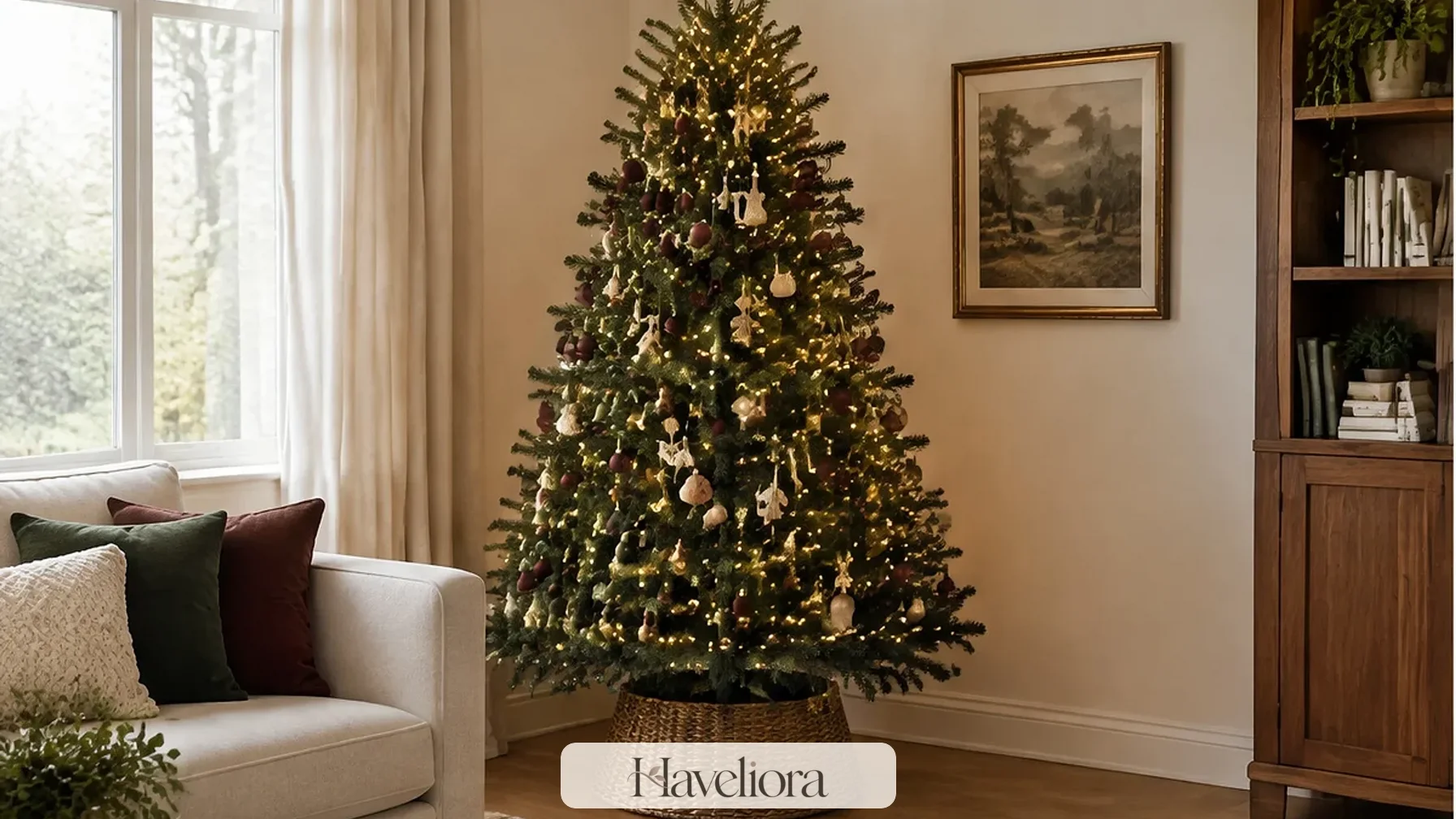
Choose one ribbon family before decorating anything
A coordinated holiday room does not require one exact ribbon on every surface, but it helps to decide the general material, color and mood first.
Velvet for depth
Velvet absorbs light and creates a rich, soft shape, especially in burgundy, deep green, chocolate, navy or black. It works well on trees, wreaths and gift wrap, but heavy velvet can overwhelm very small branches or delicate garlands.
Silk-look or satin for lighter movement
A thinner, fluid ribbon creates longer tails and a dressier line. Use it where the fabric can hang freely without brushing candles, food or high-traffic furniture.
Linen and cotton for quieter rooms
Matte ribbon can suit natural greenery, wood ornaments and understated holiday schemes. It also transitions more easily into winter decor after Christmas.

Buy ribbon by length, not by the number of bows you imagine
Before shopping, measure the places where ribbon will actually appear and estimate the length needed for one test bow. A full tree can consume much more ribbon than expected, especially when tails are long. Buying by the planned locations helps avoid both shortages and a box of unused seasonal fabric.
Keep one short sample tied in the intended shape before cutting the rest. Velvet, wired ribbon and soft satin behave differently; the amount needed for a balanced loop and tail changes with the material. Once the sample looks right on the tree or wreath, use it as the reference for the remaining pieces instead of cutting by eye every time.
Vary bow size by location
A bow that looks substantial on a gift can disappear on a large tree, while the same large bow can overwhelm a dining chair.
Tree bows
Use a few larger bows where the tree has enough visual mass to support them, then smaller bows as secondary accents. Step back frequently so the bows create rhythm rather than a regular polka-dot grid.
Wreath and garland bows
One bow can often carry an entire wreath. On a mantel garland, two smaller bows at the outer ends can create balance without hiding the greenery.
Dining-chair bows
Use narrower ribbon and fewer chairs. Tying only the two end chairs can reference the motif without making every seat difficult to use.

Use wired ribbon when structure is useful, soft ribbon when drape matters
Wired edges help loops hold their shape on a tree or wreath and make it easier to adjust a bow after it has been stored. Softer unwired fabric creates more natural tails and works well on gifts, chair backs and loose draping. Neither is automatically more elegant; the right choice depends on the shape you want and how often the ribbon will be handled.
Hide cut wire ends and rough edges so they do not scratch ornaments, furniture or hands. If ribbon is attached with floral wire or reusable ties, keep the fastening behind the greenery rather than wrapping it tightly around delicate branches.
Let the tree keep its natural shape
Bows should sit within the silhouette of the tree rather than covering the branches so completely that the tree becomes a ribbon display.
Place bows in visual gaps
Use ribbon to fill a sparse area or create a stronger line through the tree. Avoid tying bows onto every visible branch tip.
Keep greenery visible
Leave undecorated areas around bows, lights and ornaments. Negative space allows individual decorations to remain legible from across the room.

Work with inherited ornaments
If the tree already holds colorful or sentimental ornaments, choose ribbon that connects a repeated color rather than introducing another competing palette.
Place the first bows before the ornaments
If bows are a major part of the tree design, position the largest ones after the lights but before the smaller ornaments. This establishes the rhythm early and prevents ribbon from covering sentimental ornaments later. Step back after every few placements and check the tree from the room’s main doorway rather than working only at arm’s length.
Once the bows are distributed, hang larger ornaments in the remaining visual gaps, then use smaller pieces to refine the balance. This order helps the tree stay layered without every branch competing for attention.
Try long tails instead of oversized loops
A bow can feel substantial without becoming bulky. Narrower loops with longer tails often create a more elegant line on a tree, wreath or banister.
Use tails to create vertical movement
On a Christmas tree, long tails can lead the eye down the branches and reduce the need for many separate bows. Keep them short enough that they do not become tangled with floor-level gifts or pets.
Trim tails deliberately
A clean diagonal, straight cut or subtle notch looks more intentional than frayed ends. If the ribbon sheds heavily, seal or finish it in a way appropriate to the material.
Use tails to bridge sparse areas without adding another ornament
Long ribbon tails can visually connect two sections of a tree or soften a sparse branch without adding more hard objects. Angle them along the natural direction of the greenery rather than hanging every tail perfectly vertical. A slight change in direction makes the tree feel less grid-like.
Keep lower tails shorter in homes with pets, small children or robot vacuums. Ribbon that reaches the floor can become a tug point and may pull ornaments or lights with it. The elegant version is still the one that works safely in the household.
Pair bows with simpler ornaments
When ribbon becomes one of the tree’s largest visual elements, the ornaments can become quieter.
Use glass, brass and wood as background texture
Simple glass baubles, metal ornaments and inherited wood pieces reflect light without competing with the fabric. A few character ornaments can remain as focal points.
Reduce duplicate motifs
If the tree has many bows, it probably does not also need dozens of ribbon-shaped ornaments. Let one form dominate and allow the remaining decorations to vary.
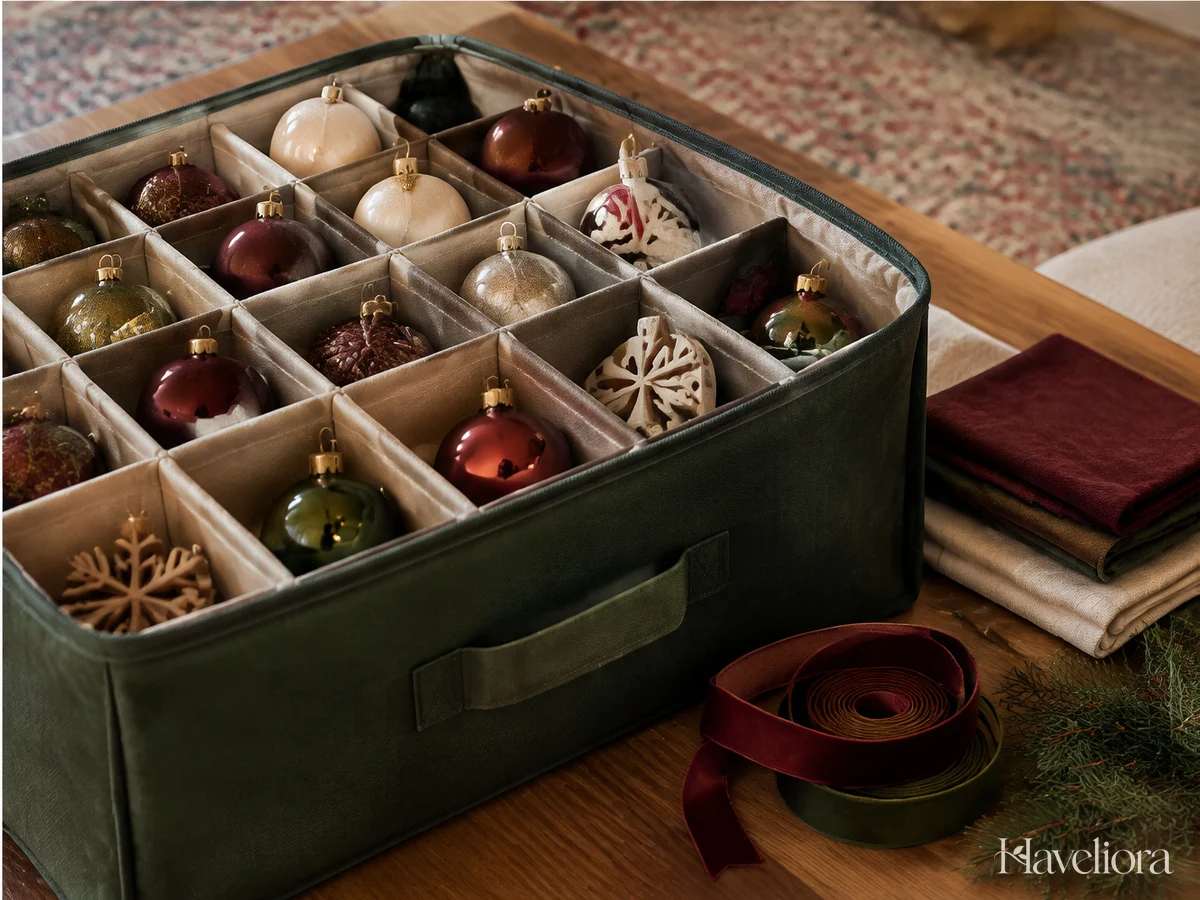
Match ornament density to ribbon density
If the tree has many large velvet bows, reduce the number of medium-size baubles and let a smaller group of meaningful ornaments remain visible. If the ribbon is thin and sparse, the ornament collection can be fuller. The two layers should share the visual workload rather than each trying to cover the tree independently.
Use lights as the third layer. Warm white lights can create sparkle around matte velvet and wood ornaments, while highly reflective tinsel plus glossy ribbon plus glass ornaments may make the surface too visually busy. Choose where the shine will come from.
Use bows beyond the tree selectively
Repeating ribbon in a few locations can make separate holiday zones feel connected.
Mantel
A restrained evergreen garland with one or two bows can connect visually to the tree. Keep fabric clear of the fireplace opening and any real flame.

Stair garland
Ribbon can mark the top, bottom or key turns of a stair garland rather than appearing on every baluster. Make sure long tails cannot catch a handrail or trail into the walking path.
Door wreath
One properly scaled bow is usually enough. Check that the ribbon does not interfere with the door handle or weather sealing.
Use the same ribbon family, not necessarily the same width
A broad velvet ribbon that works on the tree may be too bulky for a chair or napkin. Keep the color and material family but scale the width down for smaller applications. This creates continuity while respecting the size and function of each object.
The same principle works for gift wrap. Large packages can handle wider ribbon; small boxes look more refined with a narrower band. Variation keeps the room from looking as though one roll of ribbon was applied indiscriminately to every surface.
Bring ribbon to the dining room without sacrificing the table
The dining area benefits from the same restraint. The table still needs space for food, plates, glasses and serving dishes.
End-chair bows
A narrow ribbon on the two end chairs creates a holiday cue without making every chair back decorative. Tie it where it does not press uncomfortably against the person seated.
Napkin ribbon
A short reusable length can wrap a folded napkin, but avoid elaborate knots that guests must dismantle before eating.
Gift continuity
Using the same ribbon family on nearby gifts can connect the dining room or tree area without adding another decorative object.
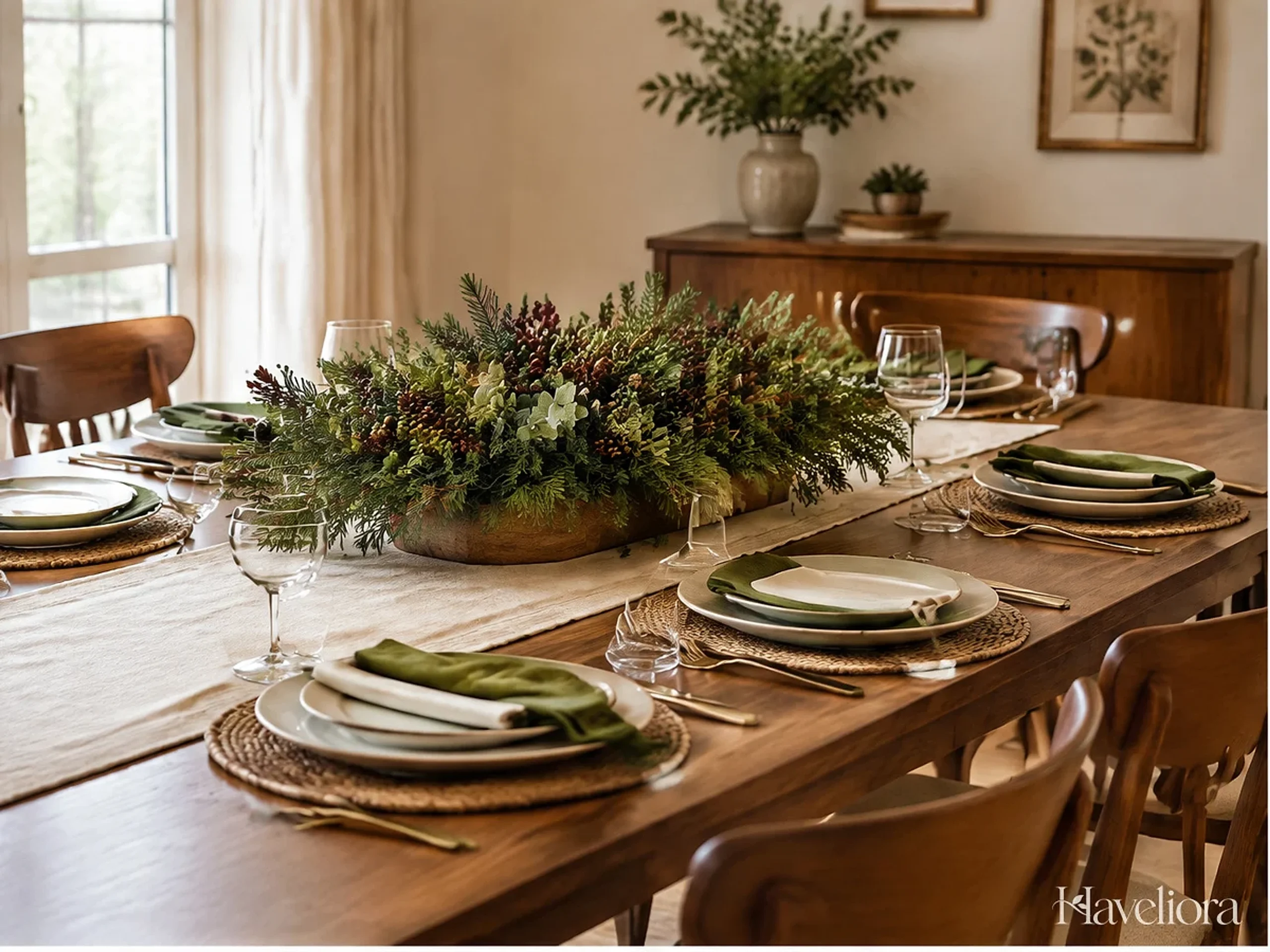
Protect chair comfort and table function
A bow tied at the center of a chair back may press into someone’s shoulders. Test the chair with a person seated and move the ribbon lower, higher or to the outer rail if needed. On upholstered chairs, avoid pins or clips that can damage the fabric.
At the table, use ribbon where it can be removed or moved in seconds. A decorative knot around a napkin is fine; ribbon wound through serving dishes and candlesticks creates extra work before food can be placed. Holiday styling should make the meal feel special without making the table harder to use.
Coordinate ribbon with the room, not only the Christmas palette
The most elegant bow color often comes from the permanent room rather than a holiday trend forecast.
Burgundy in warm traditional rooms
Deep red works naturally with dark wood, brass, cream and green foliage. It feels richer when used sparingly than when every textile repeats the same shade.
Chocolate or tobacco in neutral rooms
Brown ribbon can create a quieter seasonal look and connects easily to walnut furniture, kraft paper and amber glass.
Blue or black in cooler rooms
Navy, midnight blue or restrained black velvet can suit rooms with cool stone, silver metal or blue-gray textiles. Pair the dark ribbon with warm white lights so the tree does not feel severe.
Keep fire and heat safety separate from styling
Ribbon and other fabric decorations should be treated as combustible material. Keep them away from open flames, candle wicks, hot bulbs, fireplace openings and other heat sources.
Use flameless candles near ribbon
Battery candles can provide the visual effect without placing fabric near a flame. If real candles are used elsewhere, keep ribbon and greenery outside the heat and flame zone and follow basic candle-safety guidance.
Protect the fireplace opening
Mantel bows should sit high enough and far enough from the firebox to remain outside heat exposure. Do not let long ribbon tails hang toward the opening simply because the photograph looks dramatic.
For a fuller fireplace-specific plan, see Haveliora’s Christmas mantel ideas.
Let permanent room colors choose the holiday shade
Look at the sofa, rug, curtains, wall color and wood tone before buying ribbon. A burgundy bow may feel natural in a room with warm walnut and cream but overly formal in a pale coastal room. A brown, olive or muted blue ribbon may connect more quietly to the existing materials.
This room-first approach also reduces the need for separate decorations in every space. The tree can carry the strongest ribbon while the mantel or dining room repeats the same color in a narrower or more matte material.
Mix new ribbon with old ornaments
One reason bow decor is useful is that it can refresh an existing ornament collection without replacing it.
Choose ribbon from a repeated ornament color
If the tree contains many red heirloom ornaments, a deeper burgundy ribbon can connect them. If the ornaments are mostly silver and glass, a navy or green ribbon may provide enough contrast.
Let sentimental pieces stay visible
Do not bury inherited ornaments beneath fabric simply because the trend emphasizes bows. Ribbon should create a frame for the collection, not replace it.
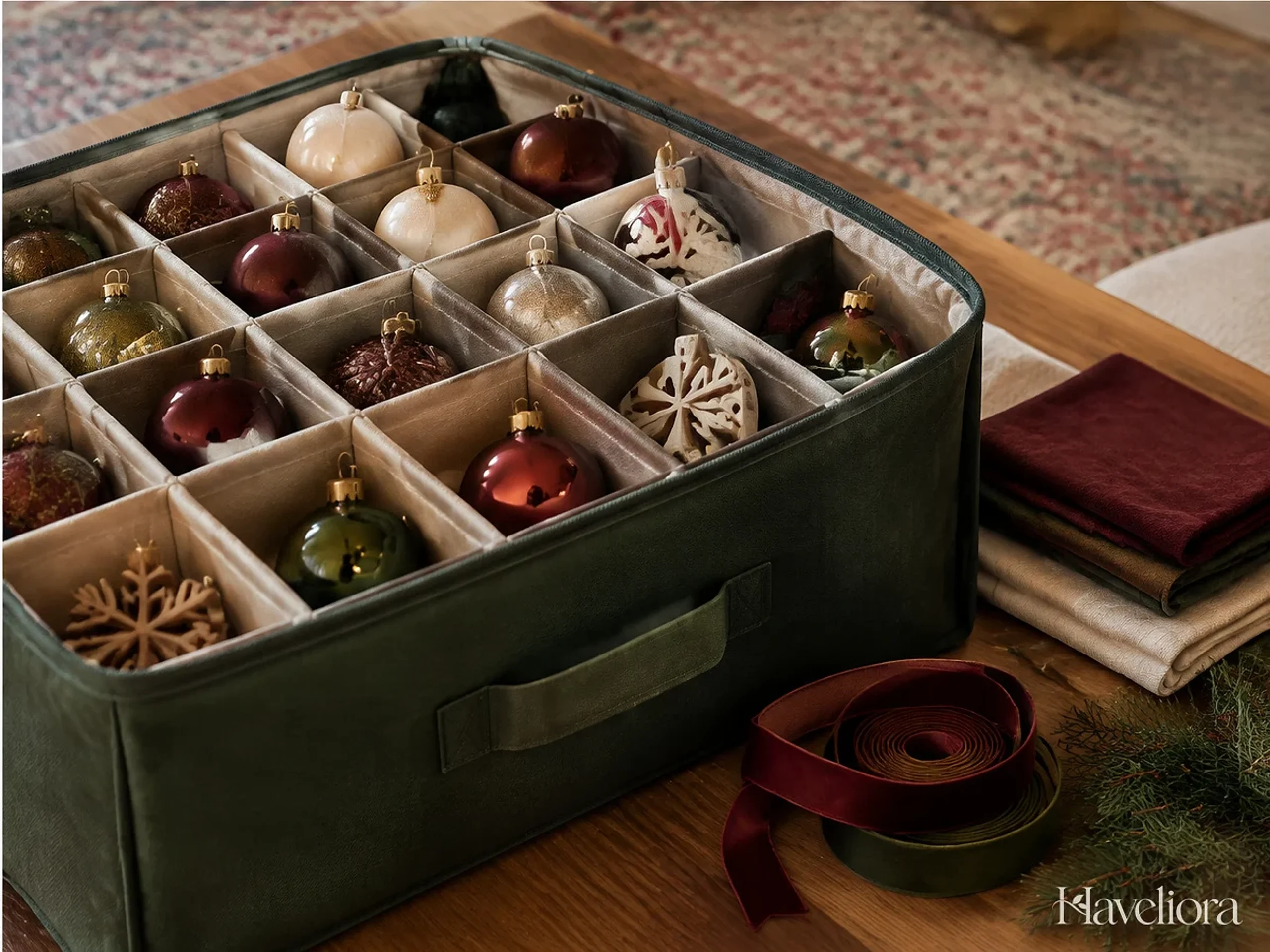
Use family ornaments as the reason for the ribbon choice
Lay several favorite ornaments on a table before choosing ribbon. Identify a recurring metal, color or material—perhaps deep red glass, brass caps, blue painted details or natural wood. A ribbon that echoes one of those existing notes makes the tree feel refreshed without requiring a new ornament collection.
If the ornaments are very mixed, choose a neutral ribbon such as cream, tobacco, deep green or black and let it act as a visual frame. The ribbon should bring order to the collection without making heirloom pieces feel secondary.
Use bows in a small home without adding visual bulk
Compact rooms often look better with fewer, thinner ribbons because every decoration is seen at close range.
Keep the tree palette narrow
One ribbon, warm lights and a smaller ornament collection can make a compact tree feel intentional without increasing its physical footprint.
Use vertical locations
A wreath, the top of a bookcase or two dining chairs can carry the motif while tables and floors remain clear.
Avoid ribbon on cabinet handles and drawers
Decorating every handle looks festive for a photograph but interferes with everyday use. Keep working storage working.
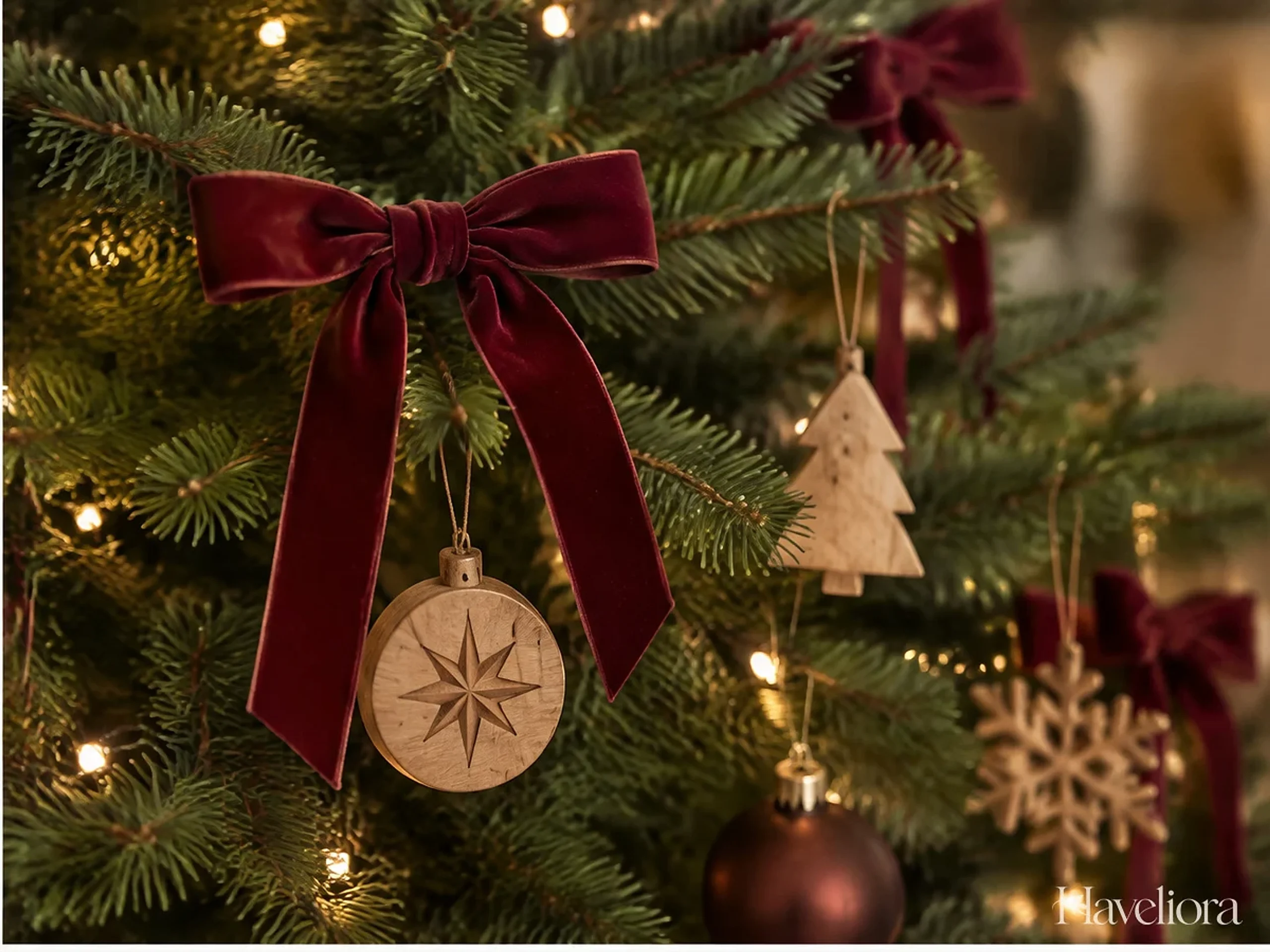
Haveliora’s Christmas home decor ideas provides a broader approach to seasonal decorating without crowding small rooms.
Prioritize vertical impact instead of decorating every surface
In a small room, use bows where they are seen without occupying working space: upper tree branches, a wreath, the end chairs at the dining table or the top of a narrow mirror. Avoid adding fabric to drawer pulls, kitchen handles and low shelves that are touched constantly.
A compact home also benefits from a narrow palette. One ribbon color, greenery and warm lights can create enough repetition to feel festive even when the tree and mantel are only a few feet apart. Extra bow locations may simply make the same motif appear crowded.
Store ribbon so it can return next year
Better ribbon is worth saving, but only if it is stored without crushing the loops or creasing long tails unnecessarily.
Untie when possible
Reusable ribbon lasts longer when bows are untied gently rather than cut from the tree. Roll long lengths loosely around a clean card or spool.
Keep velvet from being compressed
Store velvet in a dry container with enough space that the pile is not permanently flattened by heavy ornaments. Separate ribbon from glittery or sharp items that can snag it.
Label by color and length
A simple note makes it easier to reuse ribbon next season without buying duplicates because you forgot what was stored.
Store hardware with the ribbon
If reusable floral wire, soft ties or small clips were used to secure bows, keep them in the same storage box as the ribbon. This makes next year’s installation faster and reduces the temptation to use random fasteners that could damage greenery or furniture.
Photograph one finished bow before taking the decorations down. The picture becomes a simple reference for loop size, tail length and placement next season. You do not need to recreate the room exactly, but a reference helps preserve the parts of the arrangement that worked well.
Edit the room before adding the final bow
Holiday layers accumulate quickly: greenery, stockings, lights, candles, gifts, ornaments and table decor all arrive within a few weeks.
Use an exchange rule
When bows are added to a mantel or tree, remove another competing decoration if the area becomes too dense. The ribbon should help organize the display, not simply join everything already there.
Photograph the room from the doorway
A photo reveals whether bows appear evenly distributed or concentrated in one busy cluster. It also shows whether the motif is repeated so often that the room feels commercial rather than personal.

Use outdoor bows only with materials suited to weather exposure
Ribbon on an exterior wreath or garland faces moisture, wind and sunlight that indoor velvet does not. Use materials sold for outdoor seasonal use and secure them so loose tails cannot whip against doors, lights or railings. Bring delicate fabric indoors rather than expecting it to survive rain or snow simply because it looks beautiful in an entry photograph.
Check exterior decorations periodically after storms or strong wind. A bow that has loosened can pull on garland, lights or wreath hardware, so outdoor styling should be easy to inspect and retie.
Keep the look useful after the trend passes
Ribbon is one of the most reversible holiday trends because it does not require replacing permanent furniture or architecture. Good ribbon can be reused on gifts, wreaths or a different tree scheme, and the rest of the holiday collection can stay unchanged.
Spend more on material and less on quantity. A few substantial lengths of velvet or woven ribbon will usually look better than dozens of pre-made bows in identical sizes. If the bow trend feels less current next year, the ribbon can return to gift wrapping or appear in much smaller doses.
Use a final doorway test before calling the room finished
Stand in the main doorway and identify where your eye goes first, second and third. The tree or mantel should usually lead, while smaller bow details support them. If every chair, gift, wreath and shelf calls for equal attention, remove two or three ribbon moments and look again.
Then walk through the room normally. Open cabinets, pull out chairs, use the fireplace if applicable and carry a serving tray. A bow that interferes with one of those routines belongs somewhere else. The finished room should remain easy to live in throughout the holiday season.
Make bows efficiently without turning the project into craft clutter
If you are tying many bows yourself, create a simple repeatable process rather than spreading ribbon, scissors, wire and offcuts around the room for days. Cut one approved sample, measure the tail length and use a small box for reusable fasteners and trimmed ends. Work at a table with enough clear space that fabric stays clean and untangled.
Do not pre-cut every length before testing the first few placements on the actual tree or garland. Branch density and viewing distance may change the scale you prefer. Adjusting after three bows wastes far less material than discovering after twenty that the loops are too small.
Use pre-made bows selectively
Pre-made bows can save time, especially for hard-to-reach wreaths or outdoor garlands, but check the fabric and fastening quality before buying a large set. Identical factory bows can create a rigid grid on a tree if they are all placed at the same height and angle. Rotate them slightly and combine them with a few hand-tied pieces where more variation is useful.
If a pre-made bow has an obvious plastic clip or bright wire, position the fastening behind greenery so the visible part remains fabric. The attachment should also release without tearing the branch when decorations come down.
Keep bows practical around children and pets
Ribbon tails at floor level can become tug toys, and small clips or wires can fall when decorations are moved. Keep loose fasteners out of reach, shorten low tails and secure tree bows firmly enough that normal brushing against branches does not dislodge them.
On dining chairs used by children, skip long trailing ribbon that can wrap around legs or catch on the floor. The room can still repeat the bow motif at higher, less accessible points such as a wreath or upper tree branches.
Use a simple count to prevent visual overload
There is no universal correct number of bows, but setting a rough maximum before decorating can help. Start with fewer than you think you need, distribute them across the tree or room and live with the arrangement for an evening. If the composition has clear gaps that genuinely feel unfinished, add a few more. If the greenery, ornaments and lights already read clearly, stop.
This approach is more reliable than filling every planned location automatically. The final number should be determined by the room’s scale and the visual weight of the ribbon, not by how many bows came in the package.
Make a small test batch before cutting all the ribbon
Ribbon behaves differently by material, width and edge construction. Tie two or three sample bows first, place them on the actual tree or garland and view them from the main doorway. If the loops disappear from a distance, increase the scale; if the ribbon hides too much greenery, reduce it. Once one sample works, use it as the reference for the rest instead of estimating every cut separately.
Keep the working area organized while you decorate
Use one table for ribbon, scissors and reusable fasteners rather than spreading craft materials through the room. Collect short offcuts immediately and keep wire or clips together so they do not end up on the floor. This matters even more in homes with children or pets, where loose fastening pieces and trailing ribbon can become hazards.
Photograph the finished arrangement before taking it down
A quick photo records the loop size, tail length and locations that worked. Next year, the image can save time without forcing an exact repeat. Store ribbon loosely, protect velvet from heavy objects and label the box by color and length so usable material does not get replaced unnecessarily.
Final perspective
Christmas bow decor feels elegant when ribbon provides rhythm instead of coverage. Choose one ribbon family, vary the scale by location, leave greenery and ornaments visible, and repeat the motif only in a few connected places. Protect working surfaces and walking routes, keep fabric away from heat and open flame, and let sentimental ornaments remain the heart of the tree.
The strongest bow-decor rooms still look beautiful when half the ribbon is removed. That is a useful editing test: if the room needs dozens of bows to feel festive, the underlying Christmas scheme may need stronger greenery, lighting or personal ornaments rather than more fabric.
Chocolate Brown Fall Decor Ideas for a Warmer Seasonal Palette