Fall table decor works best when the table still functions as a table. It should leave room for plates, glasses, serving dishes, conversation, and the ordinary movement of a meal. The most inviting autumn tables do not rely on tall centerpieces or a large collection of themed objects. They use linen, branches, low candles, seasonal produce, warmer color, and handmade-looking ceramics to make the meal feel more intentional without making it harder to serve.
That practical approach is especially useful for everyday dinners and smaller homes. A long formal table can carry a more elaborate centerpiece, but a compact apartment table may need only a linen runner, two low candles, and a small branch arrangement. The amount of decor should respond to the available surface, not to a photograph of a much larger dining room.
Fall color also does not have to mean bright orange. Rust, amber, burgundy, olive, brown, ochre, warm cream, dusty blue, plum, and natural wood can all create an autumn mood. The strongest palette usually comes from the room itself: the table finish, dining chairs, rug, wall color, and dishes you already own.
If you are refreshing the whole house for the season, pair this guide with our fall home decor ideas and fall lighting ideas. Those articles help connect the table to the rest of the home without repeating the same decorations in every room.
1. Start With Linen and Leave Serving Space Clear
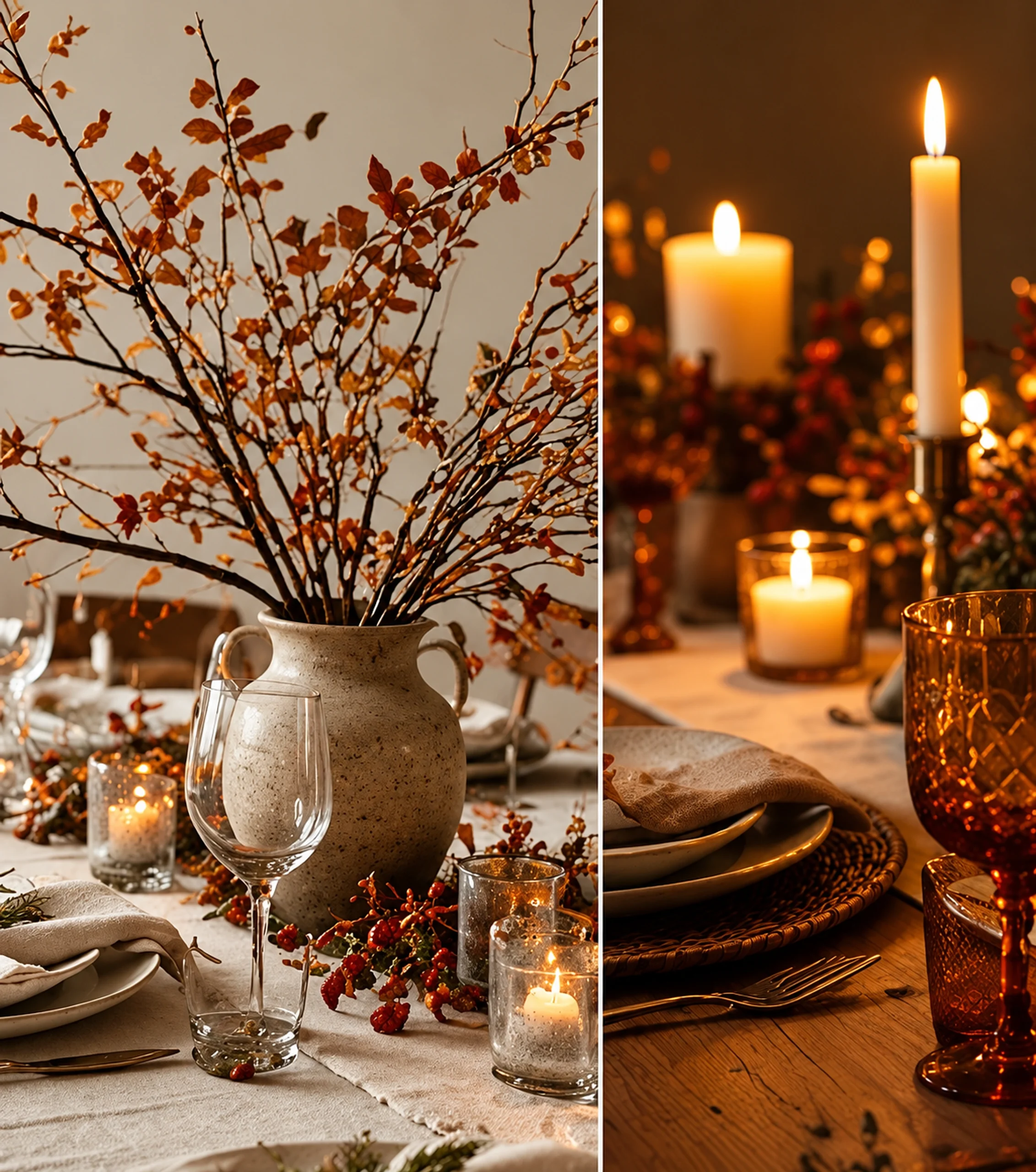
Textiles are the easiest foundation because they add softness without taking much vertical space. A full tablecloth creates a more formal effect, a runner adds a central layer while keeping the wood visible, and simple cloth napkins can introduce seasonal color without covering the table.
Choose the textile for how the table is used. A family dinner may benefit from washable linen, cotton, or a blend that can handle spills. A delicate fabric that requires special care may be better for an occasional gathering than an everyday fall table.
Do not assume every surface needs a runner. A beautiful wood table may look warmer when it remains mostly visible. In that case, use napkins and a low centerpiece for the seasonal layer.
Leave clear zones for serving. Before styling, place empty dinner plates and imagine where bowls, platters, bread, and drinks will go. A centerpiece that occupies the only useful middle space becomes an obstacle as soon as the meal begins.
Use the branch arrangement as one concentrated focal point. A few olive-like branches, turning leaves, grasses, or another locally available seasonal material can provide height without a dense floral arrangement. Keep it low or airy enough for people to see one another.
Once the textiles and natural material are in place, stop and evaluate. The table may already feel seasonal without any additional decor.
2. Use Amber Glass and Low Candles for Evening Depth
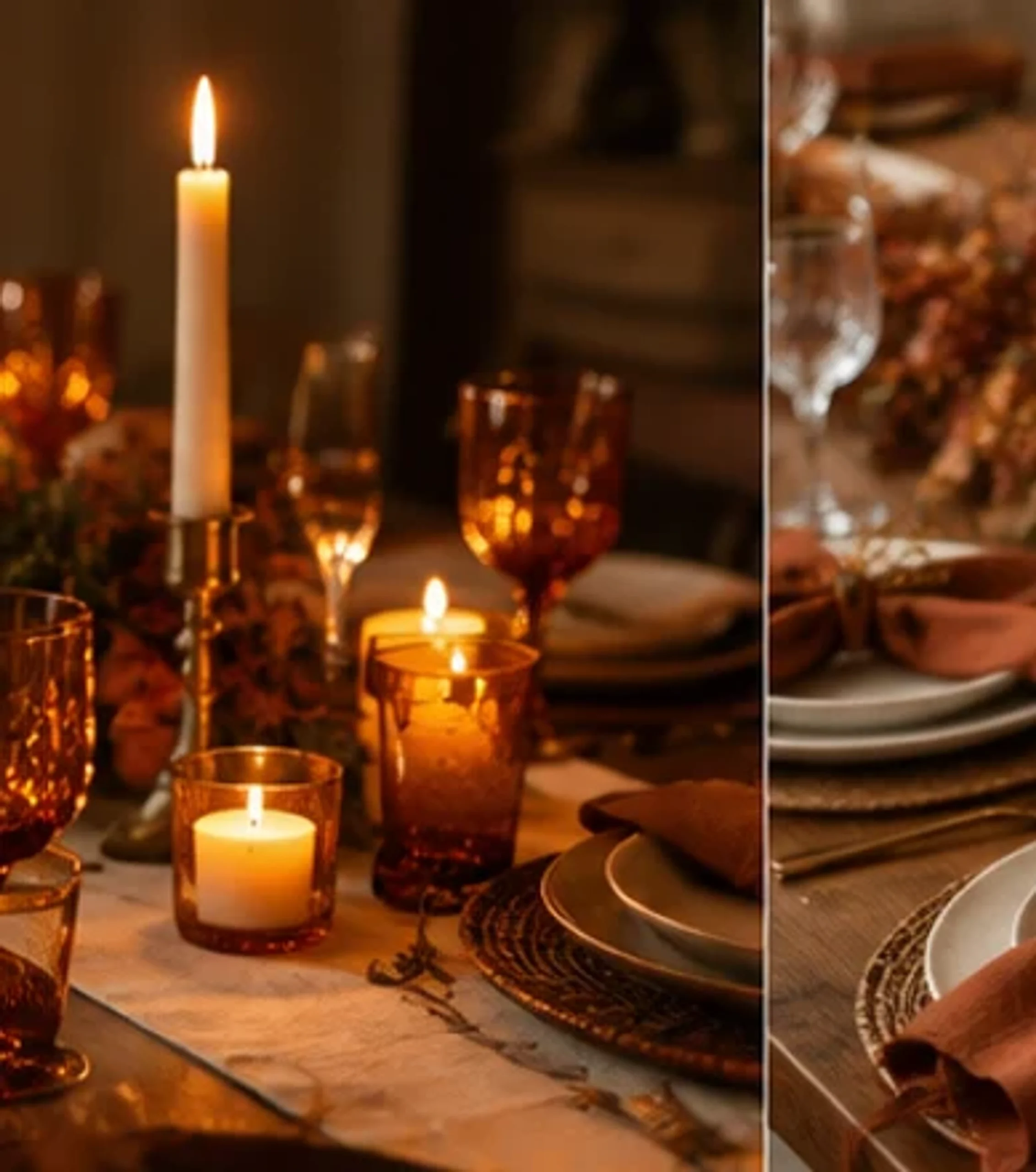
Amber glass is effective in fall because it adds color through transparency. Drinking glasses, a small vase, or one bottle can warm the table without introducing another opaque object. The color also relates naturally to wood, brass, rust, and candlelight.
You do not need a full matching set. A few amber water glasses can sit beside clear stemware. One amber vessel in the center may be enough if the place settings are already colorful.
Keep candles low enough for conversation. Votives or short tapers in stable holders can provide atmosphere without forcing people to look around them. Real flame should always be monitored and kept away from branches, paper, napkins, hair, loose clothing, and anything else that can burn.
If open flame is not practical, use flameless candles or rely on the dining light and nearby lamps. A good lighting plan can create the same warm evening mood without putting flames between serving dishes.
Candle holders can introduce metal or ceramic texture. Brass, blackened metal, glass, stone, or simple pottery all work. Choose one material family rather than placing several unrelated holders across a small table.
At the end of the meal, the table should still be easy to clear. Avoid wax-dripping arrangements or fragile glass that make normal cleanup difficult.
3. Use Muted Rust as an Accent Rather Than the Entire Palette
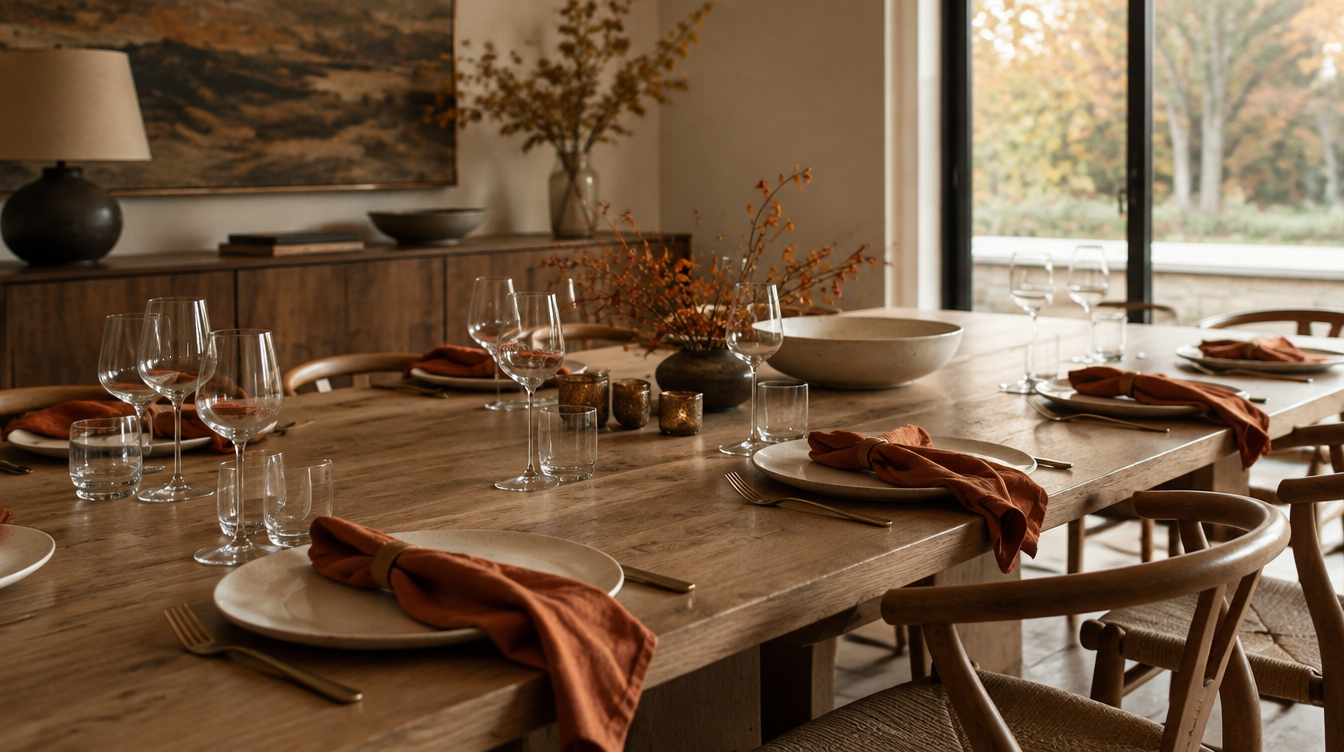
Rust is one of the easiest autumn colors to overuse because it is strongly seasonal. On a table, it is usually most effective in one textile layer: napkins, runner, or a small floral element.
Pair rust with neutral dishes so the color remains the accent. Cream, white, warm gray, brown, clear glass, and natural wood all give it enough contrast. If your dinnerware already contains pattern or color, choose a quieter napkin.
The exact rust should relate to the room. A muted clay tone works well with pale wood and cream. A deeper burnt orange may suit walnut or dark walls. Burgundy or cinnamon may feel more natural in a room where bright orange looks disconnected.
Repeat the accent once elsewhere if needed—perhaps in a small branch, candle, or artwork visible behind the table. You do not need rust in every place setting and centerpiece element.
Napkin folding can remain simple. A loose fold, roll, or flat placement beneath the cutlery looks more relaxed than complex sculptural folds and takes less time to reset.
If you entertain frequently, keep seasonal napkins separate from the everyday set but choose a material that can still be washed easily. Useful textiles are more likely to become part of the tradition year after year.
4. Use Seasonal Produce and Branches Instead of a Pumpkin-Heavy Theme

Pumpkins can be beautiful, but they are not the only way to make a fall table feel seasonal. Apples, pears, grapes, pomegranates, nuts in shells, figs, squash, herbs, branches, and seed heads can create a harvest feeling with more variety.
Use food that can still be eaten rather than treating produce as disposable decor. A bowl of pears can move to the kitchen afterward. Grapes can be served with cheese. Herbs can be used in cooking. This makes the table feel abundant without creating waste solely for appearance.
Keep the arrangement low and contained. One bowl, shallow platter, or line of a few pieces along the runner is enough. Scattered produce across every place setting can interfere with plates and glassware.
Branches add height, but choose stems that do not shed heavily over food or block sightlines. A narrow vase with two or three branches can create more impact than a dense arrangement.
Natural materials vary by region and availability. Use what makes sense locally rather than trying to recreate a specific harvest photograph. The table will feel more personal when the materials relate to your own season and home.
If the centerpiece must be moved before the meal, it may be too large. Design it to remain in place whenever possible.
5. Let Handmade-Looking Ceramics Carry the Texture

Ceramics bring irregular edges, glaze variation, and tactile texture to the table. You do not need handmade pottery specifically; even commercially produced dishes with a softer glaze or slight variation can create a more relaxed effect than a highly glossy matching set.
Mixing dinnerware can work if there is one common quality. Cream plates with brown bowls, white dishes with handmade mugs, or neutral plates with patterned side dishes can feel collected rather than mismatched.
Use serving bowls and platters as part of the decor. A beautiful bowl filled with food is more useful than a decorative centerpiece occupying the same space.
Keep the number of different glazes under control. If the table already uses amber glass, rust napkins, and seasonal produce, neutral ceramics may be the calm element. If the rest of the setting is very simple, the dishes can carry more color.
Stack only what the meal requires. Decorative chargers, multiple unused plates, and several pieces of cutlery can make an everyday table feel unnecessarily formal. Let each place setting reflect the actual menu.
Texture should support eating, not complicate it. Check that rims, glazes, and shapes are comfortable to use and suitable for your cleaning routine.
6. Adapt the Fall Table to a Compact Apartment

Small tables need the most editing because every decorative inch competes with food and place settings. Start with the number of people who will sit down, then reserve the middle for serving before adding decor.
A single small bowl, low vase, or pair of flameless candles may be enough. Use napkins as the main color layer because they occupy no extra central space. If the table is attractive, skip the runner entirely.
Round tables often need less decoration because the center is compact. One small arrangement can serve every seat. Rectangular tables can use a narrow line down the center as long as serving dishes still fit.
Nearby surfaces can carry the seasonal extras. A console, windowsill, or shelf can hold branches, candles, or decorative objects so the dining table remains functional.
Lighting becomes more important in a small space because one pendant or nearby lamp may illuminate both dining and living zones. Use that atmosphere instead of adding more items to the tabletop.
For more compact dining advice, our small dining area ideas guide covers table shapes, seating, circulation, and storage.
How to Choose a Fall Table Color Palette
Begin with the permanent colors: table, chairs, rug, walls, and dinnerware. Choose one seasonal accent that relates to them. Warm wood may pair with olive or burgundy. A pale room may suit rust or ochre. A blue room can use brown, copper, or deep plum.
Keep the palette to two or three main colors plus natural materials. Metallic finishes can count as neutrals when used lightly.
Use stronger color in textiles or glassware because those pieces are easy to change. Keep expensive dinnerware flexible enough to work beyond one season.
How to Set a Fall Table for an Everyday Dinner
Use only the plates, cutlery, and glasses the meal requires. Add cloth napkins if you enjoy using them, one low centerpiece, and enough light to make the table feel intentional.
The everyday table should be easy to clear and reset. Avoid decorations that need to be stored elsewhere every time food arrives.
A bowl of fruit or branches that can remain after dinner makes the table feel seasonal even when it is not formally set.
How to Set a Fall Table for Guests
Plan serving space before decorating. If dishes will be passed at the table, reserve a clear zone. If food will be served from a sideboard or kitchen, you have more room for a centerpiece.
Use place cards only when they serve a real purpose. Small handwritten cards can be charming for larger gatherings but are unnecessary for an intimate dinner.
Keep centerpiece height below conversation level or use airy branches with clear sightlines.
How to Use Candles Without Making the Table Difficult
Place candles where sleeves, napkins, hair, and serving dishes are unlikely to pass over them. Use stable holders and never leave flame unattended.
Keep fragrance subtle or skip scented candles during meals because strong scent can interfere with food. Flameless options can provide glow without heat or wax.
If the table is crowded, move candlelight to a sideboard or nearby shelf instead.
How to Use a Tablecloth for a More Formal Fall Setting
A tablecloth can transform the room quickly because it creates one large color and texture field. Linen, cotton, or a subtle pattern can soften a wood or glass table.
Choose a drop that suits the table and does not tangle around diners’ knees. Wash and press only as much as the look requires; a relaxed linen cloth does not need to be perfectly crisp.
If the cloth is patterned, keep the centerpiece and dinnerware simpler.
How to Use a Runner Without Losing Table Space
A runner can define the center without covering the whole table. Keep it narrow enough that plates do not sit half on and half off the fabric.
Use it to organize the centerpiece: branches, low candles, and a bowl can stay within the runner’s line, leaving the outer areas free for places and serving.
How to Mix Metals on a Fall Table
Brass candlesticks, stainless cutlery, and a silver serving piece can coexist. The table does not need one metal finish. Repeat the dominant metal once or twice and let the others function normally.
Warm metals feel seasonal, but do not replace useful cutlery merely to match the decor.
How to Use Natural Materials Without Making the Table Rustic
Pair branches, wood, or produce with clean glassware, simple dishes, and tailored linen. The contrast keeps natural materials from turning into a rustic theme.
A single wood bowl or branch arrangement can provide enough organic texture. You do not need burlap, twine, and unfinished wood in every element.
How to Transition the Table From Fall to Thanksgiving
Keep the foundation and add only what the gathering needs. The same linen, dishes, amber glass, and low centerpiece can work. Add place cards, a larger serving bowl, or one deeper color accent if desired.
A table that already functions well does not need a complete Thanksgiving redesign.
How to Transition From Fall to Winter
Remove the strongest harvest elements and keep the neutral foundation. Linen, wood, amber glass, candles, and ceramics can remain. Replace branches or produce with winter greenery or a simpler bowl.
This gradual change reduces seasonal storage and keeps the dining area connected to the rest of the home.
How to Store Seasonal Table Decor
Keep fall napkins, small candle holders, and specialty pieces together in one labeled container. Store glass safely and wash textiles before packing so stains do not set.
Do not store perishable natural elements. Compost or use them appropriately when the season ends.
Common Fall Table Decor Mistakes
The first is using a centerpiece too tall for conversation. The second is occupying all the serving space. The third is buying many themed objects instead of using food, textiles, and materials already in the home.
Another mistake is making the palette too literal. Orange pumpkins are optional, not mandatory. Finally, avoid open flame where the table is too crowded to use it safely.
Frequently Asked Questions
How do I decorate a fall table simply?
Use cloth napkins, one low natural centerpiece, and warm light. Leave enough clear surface for the meal.
What can I use instead of pumpkins?
Branches, pears, apples, grapes, pomegranates, squash, herbs, nuts, dried grasses, ceramics, or a bowl of seasonal produce can all suggest harvest season.
What colors work for fall besides orange?
Burgundy, olive, brown, ochre, rust, plum, warm cream, dusty blue, amber, and natural wood all work well.
How high should a fall centerpiece be?
Low enough that diners can see and talk across the table, or airy enough that stems do not create a solid visual barrier.
Can I mix dishes on a fall table?
Yes. Keep one common quality such as color family, material, or shape so the mix feels intentional.
How do I decorate a tiny dining table?
Let napkins carry the color, use one small low centerpiece, keep most of the tabletop free, and move extra seasonal decor to a nearby shelf or console.
A One-Hour Fall Table Reset
Clear the table completely. Choose one textile layer, place the dishes you actually use, add one low natural centerpiece, and check the available serving space. Set the lighting for evening, then remove anything that feels unnecessary.
How to Plan the Table Around the Food First
The fastest way to make a fall table frustrating is to style it before you know how the meal will be served. Begin with the menu. If several large platters and bowls will sit on the table, reserve the center and decorate mainly through napkins, glassware, and a very small arrangement. If food will be served buffet-style from the kitchen or sideboard, the center can carry a little more decoration.
Set out empty serving dishes before the event. This simple rehearsal reveals how much space the meal really needs. A long branch arrangement may look beautiful until the casserole dish has nowhere to go. Designing around the food keeps the table generous instead of merely decorative.
Think about passing routes too. Guests should be able to reach bread, water, condiments, and serving bowls without leaning over candles or fragile decor. Low arrangements and grouped objects make this easier.
How to Make a Fall Breakfast Table Feel Special
Fall table decor does not have to wait for dinner. A breakfast table can feel seasonal with almost no extra work. Use a warm mug, a small bowl of apples or pears, one linen napkin, and a branch in a narrow vase. Morning light supplies most of the atmosphere.
Keep the arrangement easy to remove because breakfast surfaces often double as work or homework space later in the day. A single tray can hold the seasonal items and move aside in one step.
Warm wood, ceramics, and a simple textile are enough. There is no need for candles or formal place settings in the morning unless you genuinely enjoy them.
How to Set a Fall Table for Brunch
Brunch often uses more serving pieces than dinner because pastries, fruit, coffee, juice, and shared dishes arrive together. Keep the centerpiece especially low and narrow. Let the food provide much of the color.
A runner can organize the middle visually while leaving the outer edge clear for plates and cups. Use one small vase at the end rather than a large central bouquet if coffee pots and pitchers need the middle.
Mixing casual ceramics with simple glassware helps the table feel relaxed. Brunch benefits from comfort more than formality.
How to Use Flowers Without Making the Table Feel Like Spring
Flowers can still work beautifully in fall. Choose color and form rather than a rigid seasonal list. Burgundy dahlias, rust-colored chrysanthemums, muted roses, branches with berries, dried grasses, seed heads, or deep green foliage can create a richer mood.
You do not need a dense florist-style arrangement. A few stems in a narrow vase often suit the table better because they preserve sightlines. Use what is locally available and appropriate to the season rather than importing a specific look.
Keep strongly scented flowers away from the dining area if the fragrance competes with food. The arrangement should support the meal, not dominate it.
How to Use Fruit as Both Decor and Food
Fruit is useful because it brings natural color and can still be eaten. Pears, apples, grapes, figs, and pomegranates can sit in a low bowl or platter, then move to the kitchen after the meal.
Choose fruit in good condition and wash or handle it appropriately if it will be served. Do not place inedible coatings, glitter, paint, or decorative chemicals on food you plan to eat.
A mixed bowl often looks better than arranging individual pieces down the entire table. Keep the presentation simple enough that guests understand it is food, not untouchable decor.
How to Use Place Cards Without Making the Table Formal
Place cards are useful for larger gatherings, mixed groups, or situations where seating matters. They do not have to look formal. A small folded card, handwritten tag, or name tied to a napkin can work.
Keep them legible and easy to remove once people sit. Avoid elaborate holders that consume space or become another object to store. For a small family dinner, place cards are usually unnecessary.
How to Layer Plates Without Creating Extra Washing
Layering plates can make a place setting look substantial, but every layer should have a function. If the meal includes salad and a main course, two plates may make sense. If not, one dinner plate is enough.
Decorative chargers can define each place but also take up width and create extra storage. Use them only if the table is large enough and you enjoy the effect.
The most elegant table is not necessarily the one with the most pieces. Restraint makes the food and materials easier to appreciate.
How to Use Cloth Napkins Every Day
Cloth napkins can be practical when they are washable, durable, and easy to store. You do not need a separate set for every season. A neutral linen, olive cotton, rust stripe, or warm check can work from fall into winter and beyond.
Keep folding simple and store clean napkins close to the dining area. If frequent washing is inconvenient for your household, use cloth napkins for gatherings and keep everyday routines simpler.
How to Style the Table When It Is Not Set for a Meal
Most of the time, the dining table is not fully set. Create an everyday fall arrangement that can remain between meals: one bowl of fruit, a low vase with branches, or a tray holding two candlesticks and a small object.
Keep at least half the tabletop visually open. This allows the table to accept mail, homework, a laptop, or an impromptu meal without a major clearing process.
When guests arrive, the everyday centerpiece can become part of the formal setting instead of being replaced.
How to Decorate a Console or Sideboard Beside the Table
Move some seasonal decoration off the dining surface and onto a nearby console. A lamp, branches, bowl, or small arrangement can provide height and atmosphere without taking serving space.
Use the sideboard for drinks, dessert, or serving dishes during a meal. Leave enough surface free that decor does not prevent it from doing that job.
A nearby lamp can also create warmer evening light than adding more candles to the table.
How to Set a Fall Table Outdoors
Outdoor fall dining needs more practical control. Wind can move paper, napkins, lightweight candles, and branches. Use stable vessels, heavier linens, and low arrangements.
Check temperature and lighting. A portable lamp may be more reliable than candles in wind. Blankets can be useful for guests, but keep them away from heaters and flame.
Bring food and textiles indoors promptly after the meal. Dew and moisture can damage fabrics and make surfaces slippery.
How to Create a Fall Table With Almost No Seasonal Purchases
Use your normal dishes, everyday glasses, a branch from an appropriate local source, fruit from the kitchen, and one textile you already own. Move a bowl, vase, or candlesticks from another room temporarily.
Seasonal style often comes from rearrangement and color relationships rather than from objects labeled “fall.” This approach reduces storage and makes the table feel more connected to the rest of the home.
How to Make the Table Feel More Luxurious Without Making It Formal
Use better proportions and materials rather than more objects. A generous linen napkin, weighty glass, good ceramic plate, and stable candle holder can make a simple setting feel substantial.
Keep spacing consistent and align the place settings. Clean glassware, relaxed but tidy textiles, and centered plates create polish without extra decoration.
Good light matters too. A dimmable pendant or nearby lamp can make ordinary materials look richer after sunset.
How to Reset the Table After a Gathering
Clear food first, extinguish any real candles, collect glassware, and remove stained textiles promptly. Return edible produce to the kitchen and dispose of wilted natural materials appropriately.
Leave one simple everyday arrangement rather than rebuilding the full event setting. The dining room can stay seasonally warm without remaining party-ready every day.
A Practical Fall Hosting Checklist
Confirm the number of seats, test chair clearance, plan serving locations, choose one low centerpiece, check lighting, prepare linens, and decide whether candles are appropriate. Keep extra napkins and water within easy reach.
Do the practical setup first. Decorating becomes easier once you know exactly how much surface and circulation remain.
Final Thought
The best fall table decor makes the meal feel warmer without making the table harder to use. Start with linen, natural material, and good light; introduce seasonal color through napkins, glass, produce, or ceramics; and keep the centerpiece low and restrained. When there is still room for food and conversation, the table feels generous rather than decorated for decoration’s sake.
Other Articles

Canopy Bed Ideas for a Modern, Cocooning Bedroom
Christmas Mantel Ideas for a Warm, Beautiful, Uncluttered Fireplace