

Warm wood kitchens have returned to the center of kitchen design because they solve a problem that many all-white and cool-gray rooms struggle with: they make a hardworking space feel visually warmer without requiring constant decoration. Wood brings grain, variation, and depth to cabinets, islands, shelves, and furniture, so the room can feel complete even when the counters are relatively clear.
That does not mean every cabinet has to be wood. Some of the most livable kitchens combine oak or walnut with painted cabinetry, stone, stainless steel, plaster, or tile. The goal is not to create a “wood kitchen” as a theme. It is to use natural grain where it adds warmth and let other surfaces provide contrast and practicality.
Design coverage in 2026 has continued to highlight wood as a durable direction rather than a short-lived novelty. Homes & Gardens’ 2026 cabinet trend report notes a continued move toward richer, darker woods, while its guide to wooden kitchen ideas emphasizes the material’s warmth and long-term appeal. The useful lesson is not that one species or stain is mandatory, but that wood can create character without making the kitchen less functional.
If your kitchen is small, keep our small kitchen ideas nearby. For a cleaner contemporary approach, the modern kitchen guide shows how warm materials can coexist with simple lines.
1. Use White Oak When You Want Warmth Without Visual Heaviness
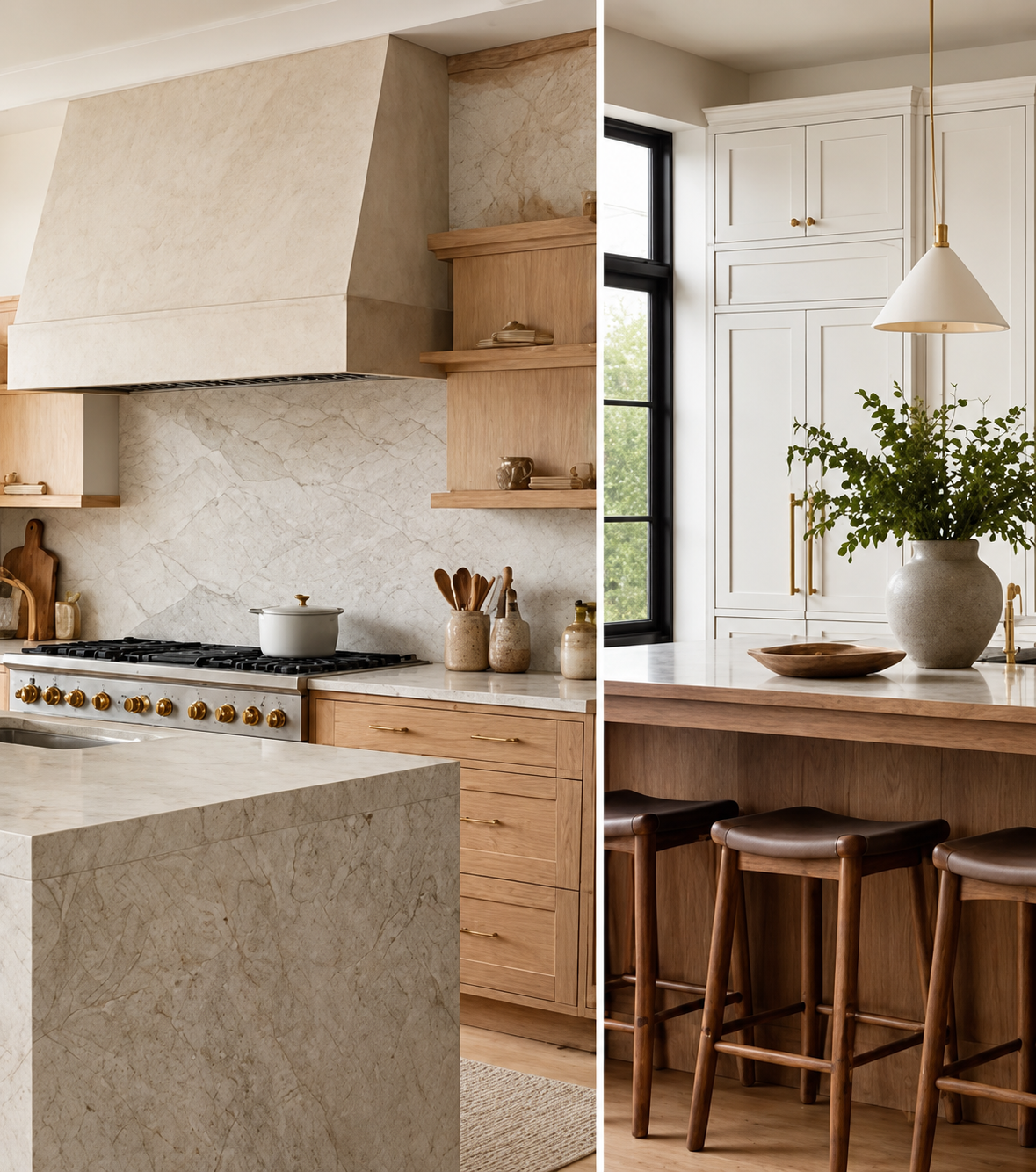
White oak is popular because it offers warmth without automatically making the room feel dark. Its grain is visible enough to provide character, but the overall tone can remain pale and calm. That makes it useful in small kitchens, north-facing rooms, and homes where you want natural material without the visual weight of a very dark cabinet finish.
The key is to avoid making the wood too yellow or too gray. A finish that is heavily whitewashed can lose the natural warmth that made you choose wood in the first place, while an orange stain can make the room feel dated quickly. Sample the finish beside the floor, stone, wall paint, and artificial lighting before committing to a full cabinet run.
White oak pairs naturally with pale stone, warm white paint, muted green, soft gray, brushed stainless steel, brass, and blackened metal. You do not need all of those materials. Choose a restrained combination and let the grain provide much of the visual detail.
If you are using oak only in part of the room, give it a clear role. An island, pantry wall, tall cabinet bank, open shelving, or breakfast area can carry the wood while the main cabinets remain painted. This often feels more intentional than alternating random cabinet doors between wood and paint.
Consider how the grain is matched on larger surfaces. Vertical grain can emphasize height, while horizontal grain can make a run of cabinets feel longer. On very prominent doors, poorly aligned grain may be more noticeable than the hardware. Ask your cabinetmaker or supplier how panels will be cut and matched.
Finally, remember that wood changes. Natural materials can darken, mellow, or shift slightly with light exposure and time. That development is part of the material rather than a defect. If you want a perfectly uniform color that never changes, a wood-look manufactured surface may suit your expectations better.
2. Use Walnut to Create Depth Without Making the Whole Kitchen Dark

Walnut creates a stronger visual statement than pale oak because the color and grain are naturally richer. It works particularly well as a concentrated feature: an island, breakfast bar, tall cabinet wall, or furniture-style pantry. Used this way, it gives the room depth without forcing every surface to become dark.
Pair walnut with enough lightness to preserve contrast. Cream, warm white, pale stone, soft plaster, or muted gray-green can provide relief. Bright optic white can sometimes feel too sharp beside rich brown wood, so test warmer whites first.
Metal finishes can shift the mood. Polished nickel or stainless steel can keep walnut crisp and contemporary. Brass adds warmth and can push the room more traditional or luxurious. Black hardware creates strong definition but can become visually busy if the cabinet doors already have prominent grain.
Walnut is also effective in kitchens with stainless appliances because the warm wood prevents the metal from making the room feel cold. The contrast between organic grain and industrial material can be more interesting than trying to hide every appliance.
If the room is small, limit the darkest walnut to one major zone and keep upper cabinets or walls lighter. Dark wood at eye level across every wall can make a compact kitchen feel enclosed, while a single walnut island or pantry wall often feels grounded and deliberate.
When mixing walnut with other wood in the home, exact matching is unnecessary. Look for undertones and intensity. A warm oak floor can coexist with walnut cabinetry when the contrast is clear and another material, such as stone or paint, separates the two.
3. Use a Full Wood Pantry Wall for a Furniture-Like Effect
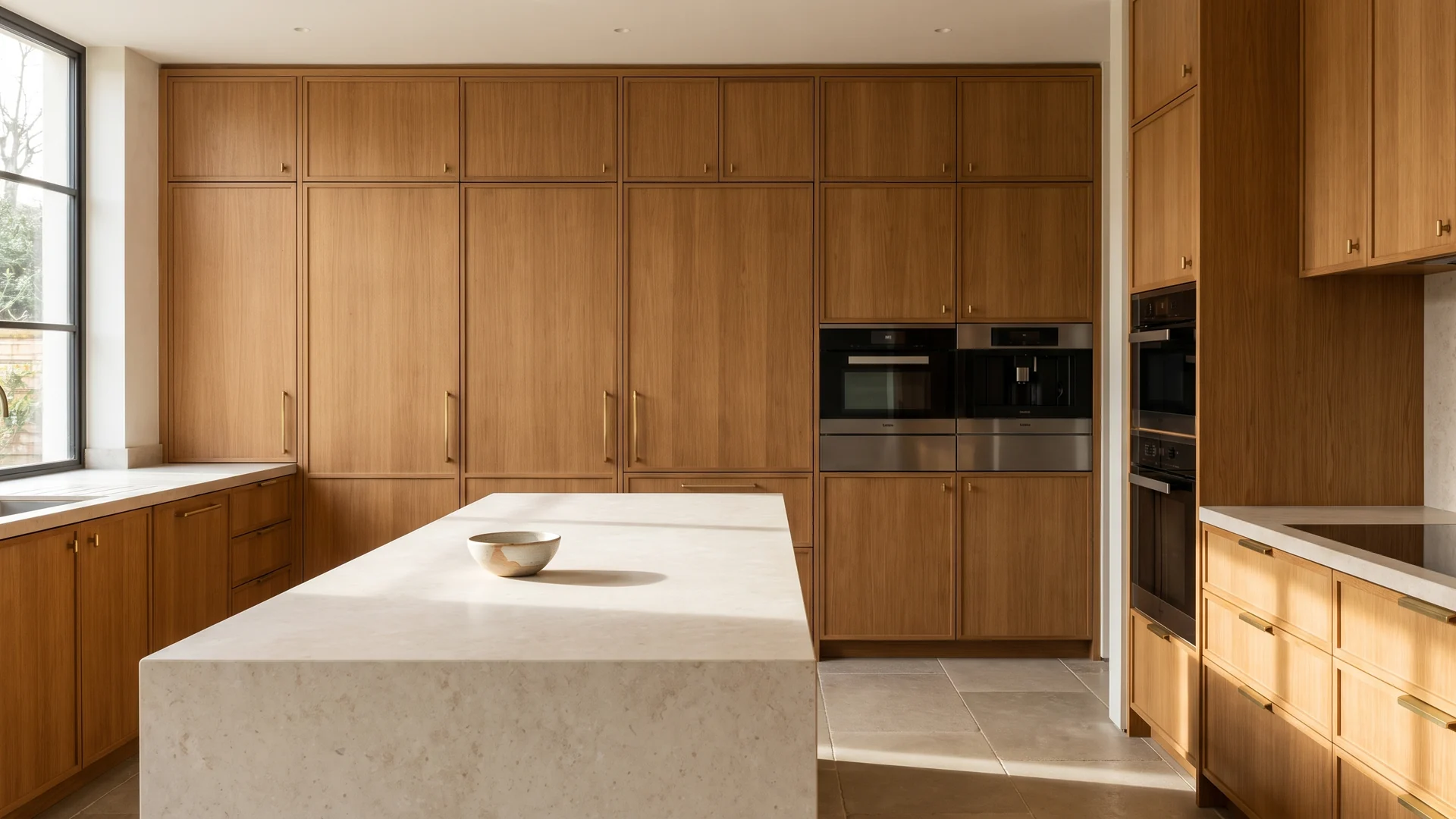
Tall cabinets are visually powerful because they occupy so much vertical area. Finishing a pantry wall in wood can make the kitchen feel more like a furnished room and less like a collection of utilitarian boxes. The effect is strongest when the doors are kept visually calm and the hardware is restrained.
Use the pantry wall to contain the things that create everyday clutter: food, small appliances, cleaning products, serving pieces, or even a concealed coffee zone. A beautiful wood elevation becomes more valuable when it also reduces the amount of equipment left on the counters.
Think carefully about door proportions. Very tall doors can look elegant but may be heavy or prone to movement depending on the material and construction. Dividing the elevation into practical sections can improve function while preserving a clean appearance.
Ventilation and appliance specifications matter if refrigerators, ovens, or other equipment are integrated into the tall run. Do not let the desire for a seamless wood wall override manufacturer clearance or airflow requirements. The most convincing “built-in” look is one that works safely.
Inside, prioritize access over symmetry. Pull-out shelves, drawers, and adjustable storage can make a tall pantry far easier to use than deep fixed shelves where items disappear at the back. A beautiful door does not compensate for storage you cannot reach.
If the wood wall feels too dominant, break it with one open niche, stone shelf, painted doorway, or nearby light wall. You do not need to interrupt the cabinets themselves; contrast elsewhere in the room may be enough.
4. Add Wood Through Open Shelves Only Where They Will Be Useful

Open shelves can introduce wood without replacing cabinets, but they should be chosen for function rather than as an obligation. A shelf near the coffee maker can hold mugs. One beside the dining area can carry bowls and glasses. A shelf above a low counter can keep frequently used dishes accessible.
The mistake is using open shelves only to display objects that have to be dusted and rearranged. In a kitchen, grease and airborne residue can make purely decorative shelves more work than they are worth. Keep the contents useful and easy to clean.
Shelf depth matters. Too shallow and dinner plates may not fit securely; too deep and the shelf can project awkwardly into the workspace. Measure the objects you plan to store rather than choosing depth from appearance alone.
Mounting must suit the load and wall construction. Solid wood shelves carrying dishes can be heavy before anything is placed on them. Use appropriate fixings and, when necessary, professional installation. Concealed brackets create a clean look but need proper structural support.
Styling can remain simple. Stack bowls, line up glasses, place a small lamp or ceramic jug at one end, and leave some breathing room. The wood itself already adds visual interest through grain and tone.
If you tire of open shelving, one or two short shelves are easier to change than an entire upper cabinet wall. That makes them a useful lower-commitment way to test whether you enjoy visible storage.
5. Mix Wood and Painted Cabinets Instead of Forcing One Finish Everywhere
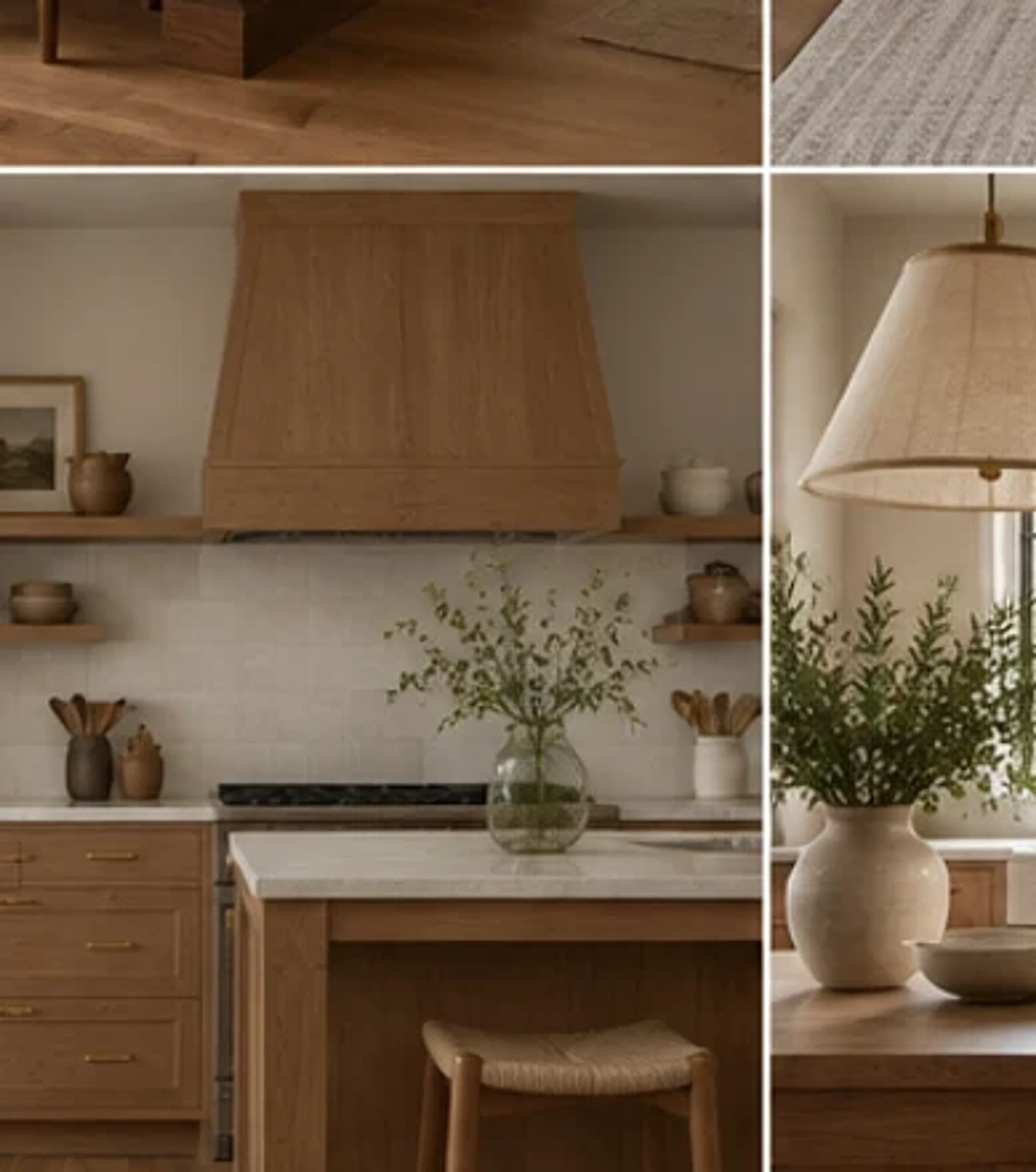
A mixed kitchen can feel more tailored because different cabinet zones serve different visual purposes. Wood may anchor the island, tall storage, or lower cabinets, while painted units keep upper areas lighter. The combination can also help connect the kitchen to adjacent living or dining rooms.
Choose the paint color from the wood rather than independently. Warm woods often pair well with cream, mushroom, olive, muted blue, warm gray, or deep charcoal. Very cool gray can make some woods look unexpectedly orange; a warmer neutral may create an easier transition.
Decide where the finish changes at a logical architectural point. An island is a natural place for contrast. So is a pantry wall or a separate run of cabinets. Randomly alternating doors or drawers can make the kitchen feel busy.
Hardware can unify the two finishes. Using the same pull across wood and painted cabinets creates continuity. Alternatively, one zone can use knobs and another pulls if the change follows the architecture, but too many hardware styles may weaken the relationship.
Countertops and backsplashes also bridge the finishes. A continuous stone surface can connect a painted perimeter to a wood island. A restrained tile can prevent the room from becoming a competition between grain and pattern.
For a more contemporary room, keep the cabinet profiles simple and let the material contrast do the work. For a more traditional kitchen, framed doors, visible hinges, or furniture-like details can support the mix without making it feel arbitrary.
6. Let Linen, Ceramics, and Everyday Objects Soften the Wood
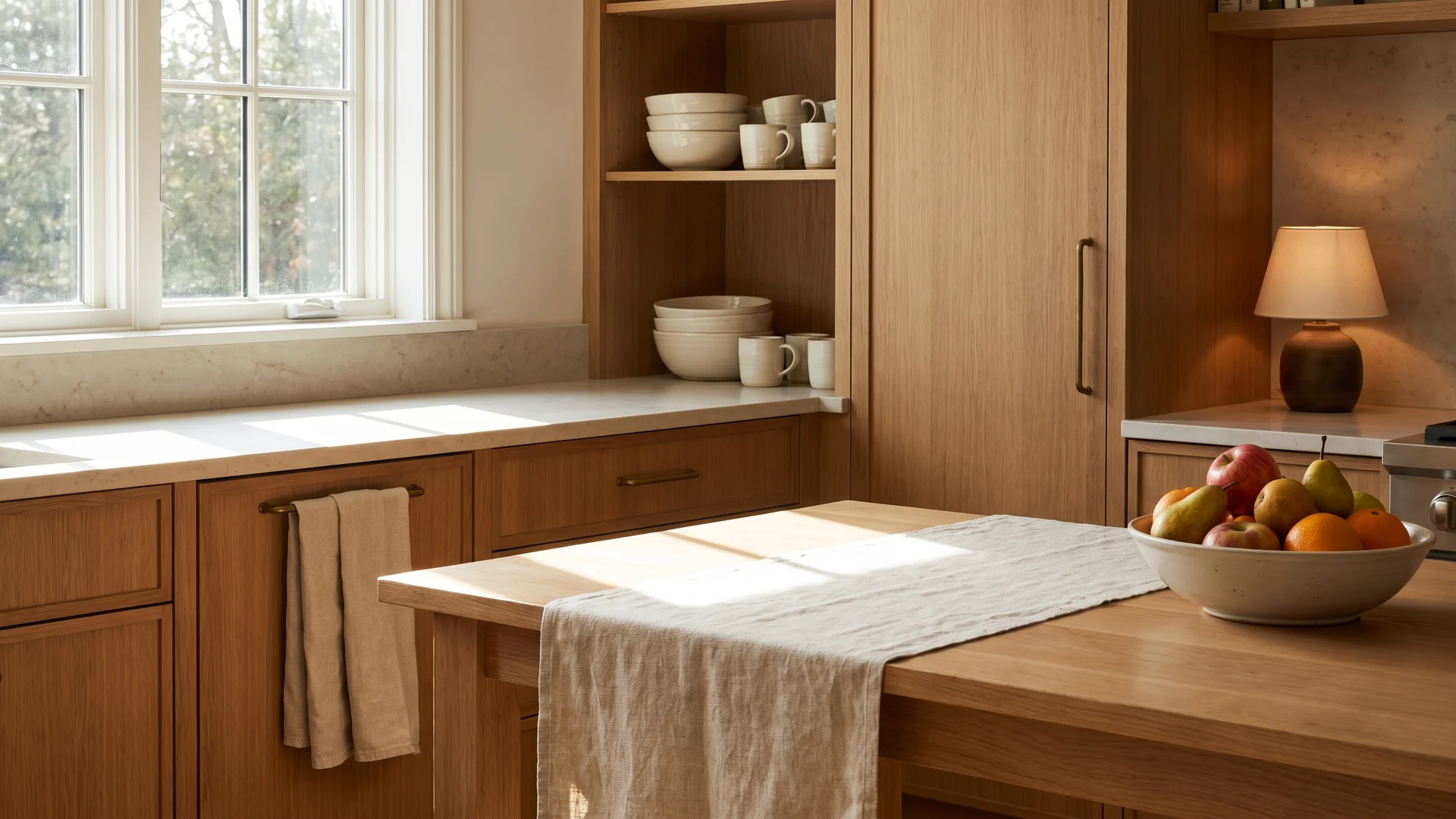
Wood cabinetry can be visually rich, but a kitchen still contains many hard surfaces: stone, metal, glass, tile, and appliances. Textiles and everyday objects soften that material mix. A linen runner, cafe curtain, hand towel, seat cushion, or fabric shade can add softness without cluttering the working surfaces.
Ceramics work well because they are both useful and decorative. A bowl for fruit, utensil crock, stack of everyday mugs, or serving platter can remain visible if it is genuinely used. Choose objects with enough scale to hold their own against the wood rather than filling the counter with many tiny items.
Keep work zones clear. The area around the sink, cooktop, and main preparation surface should stay easy to wipe and use. Concentrate decorative objects in quieter corners or on shelves away from splashes and heat.
A small lamp can also soften the room after dark, provided it is positioned safely away from water and cooking heat. Layered kitchen lighting has become increasingly popular because it allows the room to shift from a bright workspace to a softer evening space when cooking is finished.
Plants can add another organic note, but choose locations based on light and maintenance rather than filling every sill. One healthy plant is more effective than several struggling ones.
The final result should feel like a working kitchen with beautiful materials, not a wood showroom decorated for a photograph.
How to Choose the Right Wood Tone for Your Kitchen
Start with the floor. If it is staying, it is one of the largest surfaces in the room and will influence the cabinet wood. You do not need an exact match; in fact, a clear contrast can be easier to manage. Two nearly identical woods that differ slightly can look like a mistake, while a pale oak floor and richer walnut island can feel intentional.
Next, look at natural light. Strong sunlight can intensify warm undertones. Cooler northern light may make gray stains look flatter. Sample large pieces vertically and horizontally because wood appears different depending on how light crosses the grain.
Then consider the adjacent rooms. An open-plan kitchen should not look as though it belongs to a completely different house. Repeat a wood tone, paint color, or metal finish from nearby spaces to create continuity.
Light Wood or Dark Wood: Which Is Easier to Live With?
Light wood reflects more light and can help a small kitchen feel open. It also tends to show less dust than very dark smooth finishes, though stains and marks vary by species and finish. Dark wood creates stronger contrast and can feel especially rich with pale stone or paint, but it may need more lighting and visual relief.
The choice is not only aesthetic. Consider fingerprints, sunlight, maintenance, and how much of the room will be wood. A dark island can be easy to live with even when an entire dark cabinet wall would feel too heavy.
How to Mix Wood Cabinets With Wood Floors
Do not force them to match exactly. Instead, vary either the tone or the grain. If the floor is medium oak, choose cabinets that are clearly lighter, darker, or more neutral. Use the countertop as a visual break.
Repeat one undertone across both materials. Warm red woods can fight with strongly gray-stained cabinetry. Samples should be viewed together in the room, not separately under showroom lighting.
Rugs or runners can help separate the two wood fields, but choose materials suitable for a kitchen and keep them secure underfoot.
Warm Wood Kitchen Ideas for Small Spaces
Use wood strategically rather than everywhere. Lower cabinets in wood with lighter uppers can keep the room airy. A wood island or peninsula can become the main feature while the perimeter remains painted.
Keep cabinet profiles simple when the room is compact. Heavy molding plus prominent grain can add too much visual activity. Let the wood itself provide texture.
Use good task lighting under upper cabinets so the work surface remains bright. Darker wood especially benefits from lighting that keeps the counters visible.
If storage is limited, avoid replacing too many closed cabinets with open shelves. One shelf can add warmth; losing essential storage can make the kitchen feel cluttered quickly.
How to Make an Existing Kitchen Feel Warmer With Wood
You do not need new cabinets. Replace a small painted island top with butcher block where appropriate, add wood shelves, introduce wood stools, use cutting boards that are actually functional, or bring in a small freestanding cabinet.
A wood-framed lamp, tray, bowl, or rail can add the material in small doses. Choose fewer, larger useful pieces instead of many decorative wood accessories.
If the cabinets are white or gray, a wood table or island can create the biggest change because it introduces a broad natural surface at the center of the room.
How to Keep a Wood Kitchen From Looking Too Rustic
Pair the wood with cleaner materials: honed stone, simple tile, stainless steel, polished nickel, flat plaster, or streamlined lighting. Use contemporary cabinet profiles and avoid adding distressed finishes unless you genuinely like them.
Keep the styling restrained. Wood already provides movement and texture. Too many woven baskets, cutting boards, branches, and rustic ceramics can push the room into a theme.
Modern art, simple stools, or crisp lighting can create useful contrast and keep the kitchen feeling current.
How to Keep a Modern Wood Kitchen From Feeling Cold
If the cabinetry is very clean-lined, soften it with linen, warm light, ceramics, and a few rounded shapes. A curved pendant, upholstered stool, or cafe curtain can make the room feel more relaxed.
Use more than one light source. Under-cabinet lighting, pendants, and a small lamp can reveal the wood grain at different times of day.
Allow a few everyday objects to remain visible. A room with no evidence of cooking can feel less welcoming than one with a fruit bowl, cookbook, or favorite mug within reach.
Where to Spend and Where to Save
Spend on cabinet construction, durable finishes, hinges, drawer hardware, and work surfaces. These are difficult to change and affect everyday use. If you are investing in wood fronts, good finishing and installation matter more than decorative accessories.
Save on items that can be changed later: stools, textiles, small lamps, open shelves, and countertop styling. Secondhand wood furniture can add more character than expensive decorative objects.
Common Warm Wood Kitchen Mistakes
The first is choosing the stain without viewing it beside the floor and stone. The second is using too many wood species with no clear relationship. The third is making every surface warm, which can leave the room without contrast.
Another mistake is sacrificing storage for open shelving because the wood looks attractive. Keep the kitchen functional first. Finally, avoid treating natural variation as a flaw; real wood is not a printed uniform pattern.
Frequently Asked Questions
Are wood kitchens still in style in 2026?
Yes. Current design coverage continues to highlight natural wood, including richer dark woods and grain-forward cabinetry. More importantly, wood has long been used in kitchens because it brings warmth and can work across many styles.
What countertop works with wood cabinets?
Pale stone, warm white quartz, soapstone, darker stone, stainless steel, and many engineered surfaces can all work. Choose based on maintenance, budget, and the contrast you want rather than a single trend.
Can I mix oak and walnut in the same kitchen?
Yes, when the contrast is clear and the rest of the palette is controlled. Use paint, stone, or metal as a bridge, and avoid several additional wood tones unless the room is large enough to support them.
What paint colors work with warm wood?
Cream, mushroom, warm white, olive, muted blue, soft gray-green, charcoal, and some deeper reds can work. Sample the paint beside the exact wood because undertones vary.
Do wood cabinets make a small kitchen look smaller?
Not automatically. Pale or medium woods can feel very light, and even dark wood can work when it is concentrated in one zone and balanced with lighter walls and counters.
How do I update a white kitchen with wood?
Add a wood island, shelving, stools, table, freestanding cabinet, or a few substantial useful wood objects. One broad wood surface often has more impact than many small accessories.
A Practical Planning Checklist
Collect samples of the floor, cabinet wood, countertop, backsplash, and paint. View them together in morning and evening light. Measure appliance clearances, door swings, and major work zones. Decide where wood will be the main material and where another finish will provide relief.
Then build the lighting plan around the work surfaces. Only after the fixed materials and function are settled should you choose stools, textiles, and accessories. This order keeps the most expensive decisions focused on longevity rather than short-term styling.
How to Choose Between Veneer, Solid Wood, and Wood-Look Finishes
Not every wood kitchen uses solid timber doors. High-quality veneer can provide real wood grain over a stable substrate, often with better consistency and less movement across large panels. Solid wood can be beautiful and repairable, but construction and finishing matter because natural wood responds to humidity. Wood-look laminates and engineered surfaces can offer durability and color consistency at a different price point.
Ask what the visible surface actually is, how edges are finished, and how the material should be cleaned. A sample door is more useful than a small swatch because it shows how the grain, sheen, and edge treatment look at cabinet scale. If the room receives strong sunlight, ask how the finish is expected to age.
The “best” material depends on your priorities. If you value natural variation, repairability, and authentic grain, real wood or veneer may be worth the investment. If you need strong consistency, easy cleaning, or a specific budget, a durable wood-look surface can be a sensible choice. Judge the construction as well as the appearance.
How to Coordinate Warm Wood With Kitchen Lighting
Lighting can make the same wood look honey-colored, gray, orange, or flat. Before finalizing the cabinet finish, view the sample under the lighting conditions the finished kitchen will use. Daylight is only half the picture; kitchens are often used early in the morning and after sunset.
Under-cabinet lighting is particularly important because it illuminates the worktop and the lower edge of upper cabinets. A consistent light source can help the stone, backsplash, and wood read as one composition. Avoid leaving the main preparation area in shadow while decorative pendants receive all the attention.
Pendants over an island can emphasize grain because light falls across the vertical cabinet faces. If the island is walnut or another dark wood, enough surrounding light helps preserve the detail rather than turning the island into a dark block.
For a fuller lighting strategy, the principles in our living room lighting guide—layering general, task, and accent light—translate well to kitchens, with task lighting taking even greater priority.
How Warm Wood Works With Popular Kitchen Color Families
Warm white and cream are the easiest partners because they give the grain a quiet background. Olive and moss make wood feel earthy and grounded. Dusty blue provides cooler contrast, especially with oak. Burgundy and oxblood can look rich with walnut when used selectively. Mushroom and taupe create a tonal, understated palette.
Recent coverage of warm kitchen colors has highlighted browns, wood tones, deep reds, muddy neutrals, earthy greens, and warm charcoals as ways to create an inviting room without relying on stark white. The most useful takeaway is to choose color in relation to the wood and natural light rather than copying one fashionable combination.
Keep one element quieter when another is expressive. Highly figured wood may need simpler paint and stone. A bold colored cabinet run may pair better with restrained oak. Balance is more durable than asking every surface to be a focal point.
How to Future-Proof a Wood Kitchen
Choose proportions and construction for long-term use, then let smaller details carry trend changes. Door profiles, cabinet layout, storage access, and worktop height are expensive to alter. Hardware, stools, paint, shades, and textiles can be updated later.
Do not over-specialize storage around appliances or gadgets you may not own in five years. Adjustable shelves and flexible drawers age better than highly specific compartments. The same principle applies visually: a wood finish you genuinely like is safer than a dramatic stain chosen only because it is prominent on social media this month.
Good maintenance also extends the life of the design. Follow the cabinet manufacturer’s cleaning advice, address water quickly around sinks and dishwashers, and use appropriate protection where heat or steam is concentrated. Beautiful material performs best when the details around it are properly planned.
A Final Sample Check Before Ordering
Lay the cabinet sample beside the countertop, backsplash, flooring, hardware, and wall color at the same time. View the group in morning daylight and again under the evening lighting you expect to use. If one material suddenly looks orange, gray, or too busy, adjust it before placing the order rather than hoping the finished room will correct the mismatch.
Photograph the sample group from several angles and step back. The camera can reveal strong contrast that is easy to miss at close range. Then make the decision from the real materials, not the photograph alone. This final check takes very little time compared with changing cabinetry after installation.
Final Thought
A warm wood kitchen succeeds when the material is allowed to feel natural rather than forced into a theme. Use pale oak for lightness, walnut for depth, a pantry wall for furniture-like storage, or shelves for a smaller commitment. Mix wood with paint when the room needs contrast, and soften the hard surfaces with textiles, ceramics, and warm light. The best result is not simply a kitchen with more wood; it is a kitchen that feels warmer, more useful, and more connected to the rest of the home.
Other Articles

Cozy Collected Kitchen Ideas for a Warm, Lived-In Look
Collected Living Room Ideas That Feel Personal, Not Cluttered


