In a small kitchen, extra storage is only helpful when it makes cooking easier. A cupboard packed tightly to the back may hold plenty but hide the pan you need. A narrow cart can add a useful surface or become the obstacle you move every time you open the oven. The difference is usually planning rather than the size of the product.
Start by following one ordinary meal through the room. Where do you unload ingredients, wash them, prepare them, cook, and clean up? Notice the repeated movements and the surfaces that become crowded. Those observations give you a clearer brief than a general wish for more space.
The six small kitchen ideas below work around that brief. They focus on improving the usable parts of a compact room without assuming you can renovate. Keep the room’s existing appliances, door openings, ventilation, and safe clearances in view throughout the process.
Explore the six ideas
1. Protect a Continuous Working Route
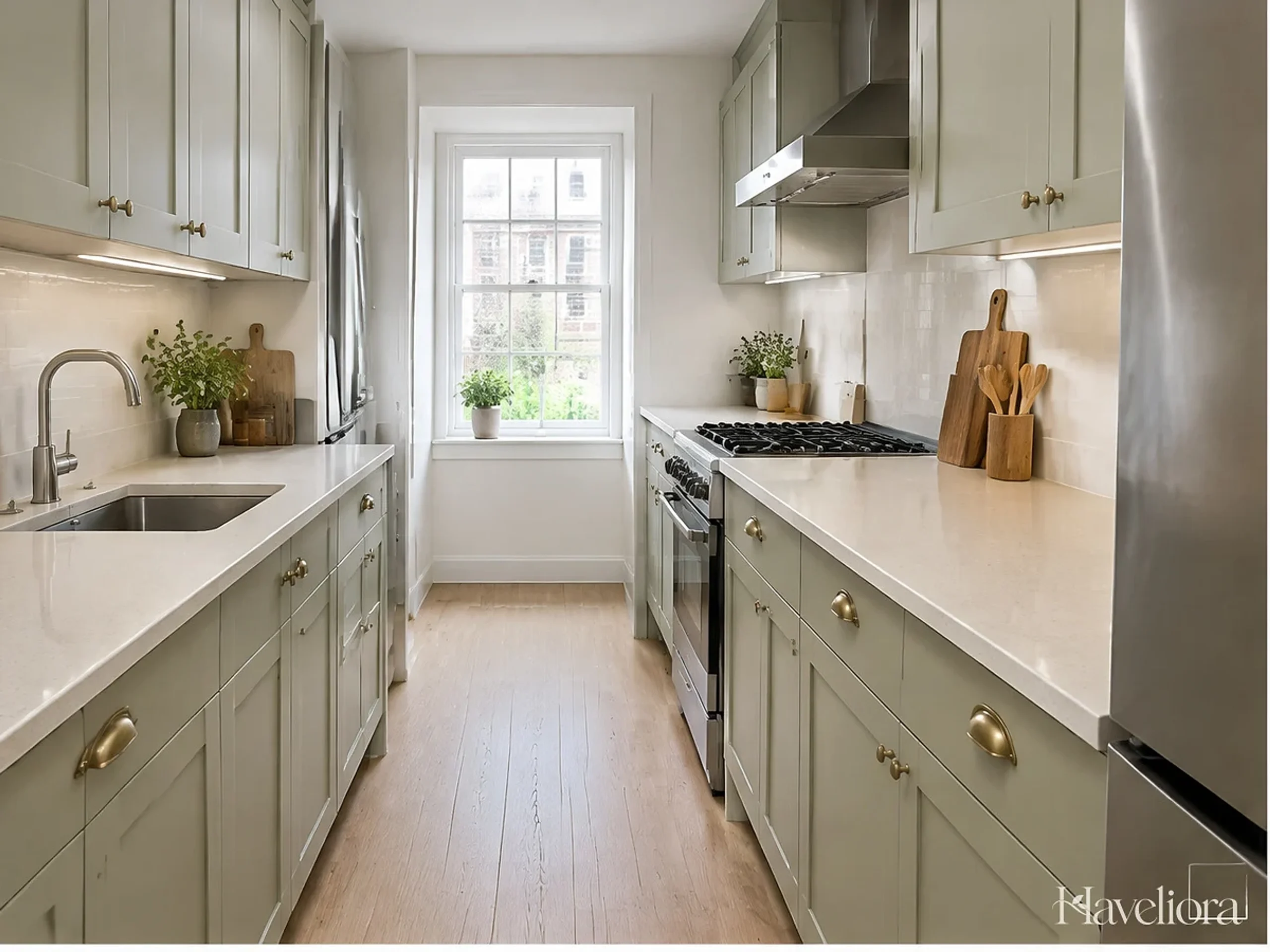
Mark the route between the fridge, sink, preparation area, and cooker. The exact arrangement will vary, but it should not require you to negotiate a chair or storage trolley every time you move between tasks. In a narrow galley, keeping the center open may be more valuable than adding another work surface.
Check the room with appliance doors open. An oven, dishwasher, or fridge can occupy far more operating space than its closed dimensions suggest. Consider where a second person would stand while one appliance is being used. Do not treat that open-door space as permanently available for furniture.
Reserve a sensible place for unloading groceries and assembling ingredients. It does not need to be large, but it should not be covered with decorative objects. A kitchen often feels more capable when one counter remains ready rather than every surface serving several unrelated purposes at once.
Keep exits, ventilation, and the appliance manufacturer’s clearances unobstructed. The room’s safe operation takes priority over a visually balanced arrangement. Avoid copying a compact-kitchen image without considering where heat, steam, and open doors would go.
To test the layout, prepare a simple meal with the proposed arrangement. Make a note each time you move something out of the way; those items are the first candidates for relocation.
2. Organize Drawers Around the Tasks They Support

Empty one drawer or cupboard completely before buying organizers. Sort its contents by use and remove items that no longer belong in the kitchen. Then measure the internal space, including hinges, runners, and any obstruction that reduces the usable opening.
Keep everyday cooking tools near the task they serve when the layout allows. Store pans where you can retrieve them without lifting a precarious stack, and give lids or boards a defined place. A divider can help, but it must suit the drawer’s dimensions and the weight of its contents.
Choose organizers after deciding what will remain. Purchasing a matching set first can leave you arranging the kitchen around containers rather than around the equipment. Some drawers work better with a few adjustable dividers than with many small fixed compartments.
Be realistic about reach. Frequently used heavy items should be stored where you can handle them safely. High shelves are better reserved for suitable lighter or occasional objects, not equipment you need to lift down every day.
A good rule of thumb: you should be able to take out the item you need and put it back without emptying half the drawer. Capacity that only works when nothing moves is not practical capacity.
3. Give Permanent Counter Space Only to the Appliances That Earn It

List how often you use each appliance rather than deciding by appearance. Daily equipment may deserve an accessible permanent position. Something used occasionally can be stored conveniently, provided its weight and shape make moving it reasonable.
Check the operating instructions before placing an appliance under a cupboard or inside a storage recess. Heat, steam, ventilation, and access requirements vary. A machine should not be operated in a position chosen only because it hides neatly from view.
Consider outlets and cable routes at the same time. The U.S. Fire Administration advises plugging cooking appliances directly into a wall outlet rather than an extension cord. Get qualified electrical advice when the available outlets do not support the arrangement safely.
Keep the remaining supplies compact. A coffee area does not need every mug and ingredient on display. Store refills close by and leave enough surface to use the machine and set down a cup. A tray can help contain small items, but it should not make the appliance unstable or interfere with its operation.
For one week, track which appliances you actually touch. Use that evidence to decide what stays out instead of letting the counter become permanent storage for the entire collection.
4. Add a Cart Only When You Have a Parking Place for It

A cart can provide storage or a temporary surface, but it needs somewhere to live when it is not being moved. Mark both its parked position and the space required to use it. If it always blocks a cupboard or door, it may create more work than it saves.
Check stability, load limits, and the design of the wheels. Use locking wheels as intended and avoid treating a light storage trolley as a heavy-duty preparation bench. The product should suit the task rather than simply fit the available gap.
Choose the contents carefully. A cart used for serving may need a clear top and a few lower supplies. A pantry trolley needs containers that remain secure while moving. Do not overload the highest shelf or stack objects where they could fall into a walkway.
Keep the cart away from cooker heat and appliance operating clearances. Its mobility should not become an excuse to park combustible materials in an unsafe place between uses. Consider whether a shallow fixed shelf or better-organized cupboard would solve the same problem with less movement.
Test with an existing object: place a box of the same dimensions in the proposed parking spot for a day. Repeatedly moving it is a clear sign that the location needs reconsideration.
5. Make Pantry Storage Easy to Read
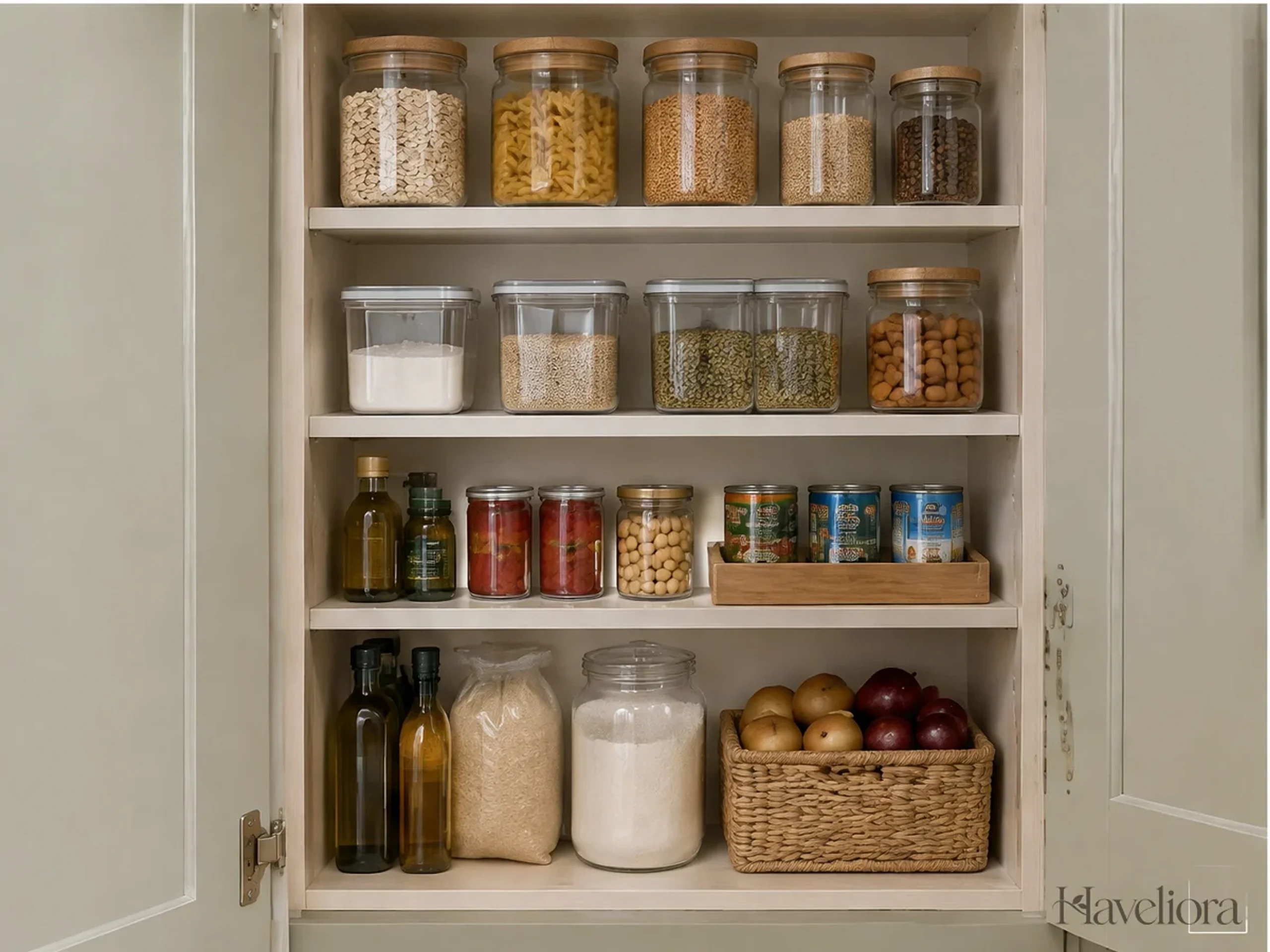
Deep shelves can hide ingredients behind one another. Group similar items and arrange them so you can see what you own without dismantling the shelf. A pull-out basket or shallow bin may help, but choose it around the shelf dimensions and the weight it will hold.
Do not decant everything simply for a coordinated appearance. Original packaging often carries useful cooking, ingredient, allergen, and storage information. If you transfer food to another container, keep the information you need and follow appropriate storage guidance.
Reserve the easiest-to-reach area for the ingredients you use most. Place suitable heavier items lower and avoid unstable stacks. Occasional serving pieces or spare supplies can occupy less convenient positions, provided they can still be retrieved safely.
Leave enough flexibility for ordinary shopping. A pantry that only fits a precisely matched set of jars may become awkward as soon as you buy a different package. Some adjustable space is more useful than a perfectly filled arrangement.
To keep the pantry working well, check the shelf before shopping and return new items to their category. The organizing system should help you notice what is already there rather than hide it behind identical containers.
6. Use a Dining Surface That Matches the Frequency of Meals
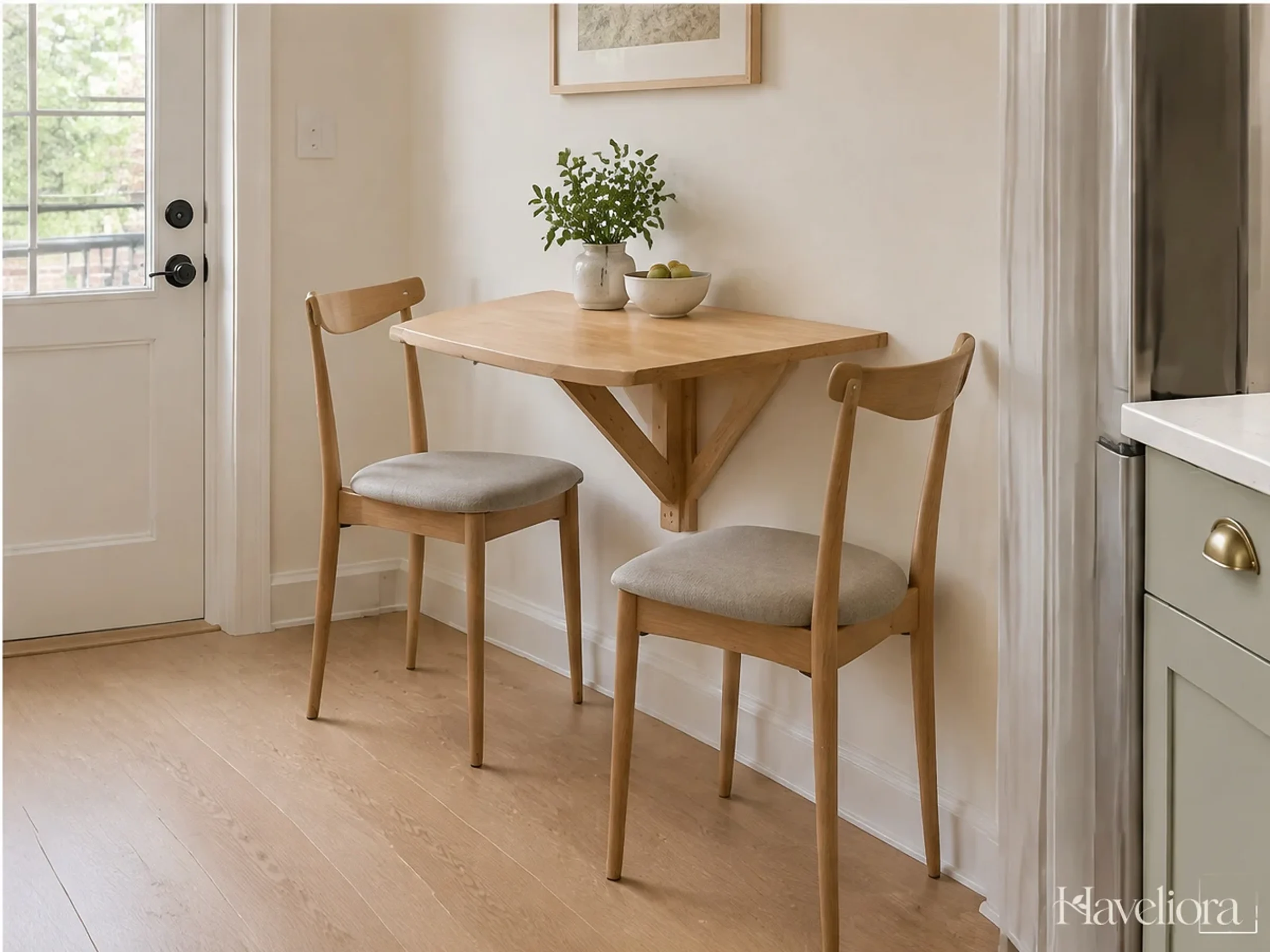
A fold-down or drop-leaf table can suit occasional dining, but its open position matters more than its closed footprint. Check knee space, chair movement, and the route around the table while someone is seated. A surface that fits only when nobody uses it is not a successful solution.
Consider how often you will fold it. If the table is used several times a day, a small fixed version may be less frustrating than repeatedly clearing and operating a mechanism. Choose flexibility only when it supports your routine.
Check the manufacturer’s installation and load requirements, especially for wall-mounted designs. The wall must support the system appropriately. Keep dining furniture outside appliance clearances and do not use a table to conceal a route that needs to remain open.
Keep decoration minimal and removable. One low bowl or a set of placemats can be enough. Chairs that tuck in neatly help, but seat comfort and support still matter. A compact kitchen does not require you to accept an uncomfortable perch for every meal.
For more layout options, compare round tables, benches, and drop-leaf designs in our small dining area guide.
Choose Improvements in the Right Order
Start with the working route and available preparation surface. Then organize existing drawers and cupboards. Only after those changes should you decide whether the room needs an additional cart, shelf, or table.
Keep a measurement note containing cabinet interiors, appliance door openings, and the narrowest route. Add the dimensions of any proposed storage product. This makes it easier to reject pieces that look clever but do not solve your kitchen’s actual problem.
Once the room works well, use a small number of decorative details to connect it visually. Our kitchen decor ideas focus on that finishing stage, while modern kitchen ideas explore a quieter material palette.
Frequently Asked Questions
Does a small kitchen need an island?
No. An island is useful only when the room has the required operating and circulation space around it. A clear counter, better drawer organization, or a suitable movable surface may serve a compact kitchen more effectively.
Should I remove cupboard doors for open storage?
Not automatically. Consider cleaning, appearance, capacity, and whether the contents are suitable for display. One selected open shelf can provide character without exposing every practical item in the kitchen.
What is the most useful low-cost change?
Clear one preparation area and reorganize the storage closest to it. Move rarely used objects out of the easiest positions and test the new arrangement during an ordinary meal. This can reveal whether any purchase is necessary.
A small kitchen feels more capable when its working space is easy to reach and reset. Choose improvements by the work they support rather than the amount of storage they promise on paper.
Other Articles

Modern Kitchen Ideas With Warm Materials and Clean Lines
Kitchen Decor Ideas That Keep Your Counters Useful