

Living room lighting should make the room easier to use, not simply brighter. The best schemes let you move from daytime activity to evening conversation, reading, television, or quiet time without reaching for one harsh ceiling fixture. That is why the most comfortable living rooms tend to use several smaller sources at different heights: a floor lamp beside a chair, a table lamp near the sofa, a picture light over art, or a portable lamp on a shelf.
This does not mean every living room needs six lamps. It means the light should follow the activities and architecture of the room. A compact apartment may need only two well-placed lamps plus a useful ceiling source. A larger room with several seating zones may need more. The important question is whether each source earns its place.
Layered lighting continues to be a major design direction in 2026, with designers emphasizing warm pools of light, decorative shades, portable lamps, picture lights, and combinations of ambient, task, and accent lighting. That trend aligns with a practical truth: one source rarely handles every living room task well. This guide shows how to build a flexible plan without turning the room into a lamp showroom.
If you are updating the whole space, pair this guide with our fall living room ideas, cozy living room ideas, or modern living room ideas. Those articles cover layout, textiles, and furniture; here we focus on light.
1. Give the Sofa a Useful Pool of Light
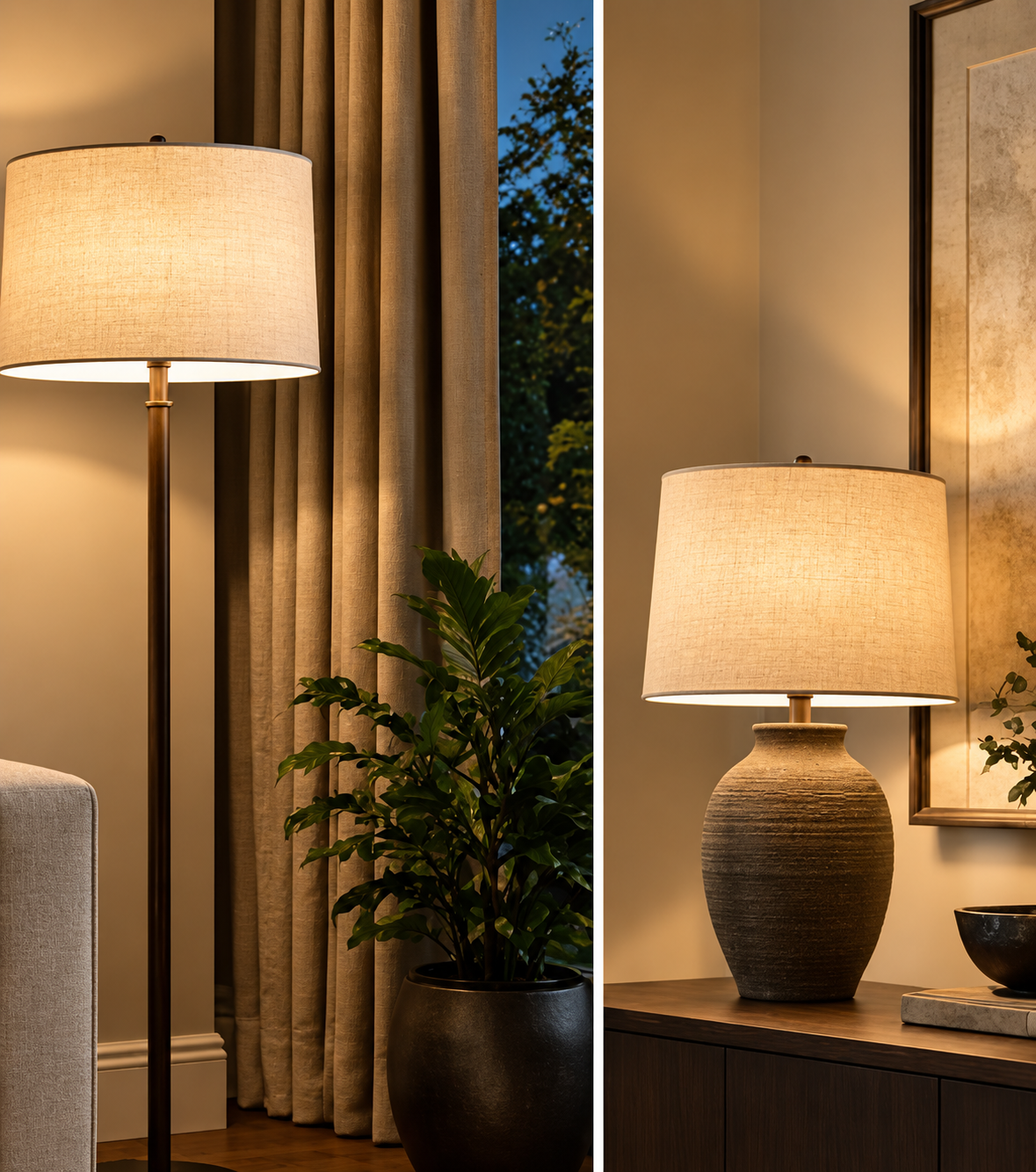
The sofa is usually the most-used piece of furniture in a living room, so begin there. Sit in every position you use regularly and notice what happens after dark. Can you read comfortably? Can you see a drink or remote without turning on the ceiling light? Does one seat fall into shadow while another is overlit?
A floor lamp can solve several of these problems without requiring more table space. Place it close enough to the seating that the light reaches the user, but not where the base narrows the walking route. An arched lamp can bring light over a deep sofa, while a more upright design can serve a chair or corner. Directional shades are useful when reading is the priority; fabric or opal shades create a broader, softer glow.
Do not choose height by appearance alone. The bulb should not shine directly into your eyes from the normal sitting position. Sit down before deciding where the lamp belongs. If you can see the bare bulb below the shade, raise or lower the fixture, change the shade, or reposition it.
Scale matters visually too. A very delicate lamp can disappear beside a large sectional, while an oversized arc may overwhelm a small sofa. The fixture should feel related to the furniture without matching it. A slim metal lamp beside a plush sofa can create a useful contrast, while a broad paper or fabric shade can soften a cleaner-lined room.
Floor lamps are especially valuable in rentals because they require no electrical work. If you are using an extension cord or long cable, keep it out of the circulation path and follow the manufacturer’s safety instructions. A better-looking room is not worth creating a trip hazard.
2. Use Table Lamps to Spread Light Around the Room

Table lamps are the easiest way to build a second layer because they are movable, affordable across many price points, and available in almost every style. The trick is to distribute them according to the room rather than treating them as a matching pair that must sit symmetrically on either side of the sofa.
A lamp on a side table can support reading and conversation. Another on a console across the room can prevent the background from disappearing after dark. A third may not be necessary. Turn off the ceiling light and assess whether the room has enough visual depth before adding more.
Height is important. A low lamp may illuminate the table but leave the seating dark. A very tall lamp may expose the bulb or throw light above eye level. Sit near the lamp and make sure the shade shields glare. If the lamp is mainly decorative, it can be lower, but it should still contribute something to the room.
Matching lamps are not required. In fact, different lamps can make a living room feel more collected. Connect them through one shared quality: similar shade color, related metal finish, ceramic material, rounded shape, or comparable visual weight. This creates cohesion without making the room look purchased as a set.
Shades make a noticeable difference. Pleated fabric, linen, paper, woven fiber, and opaque colored shades all change the spread of light. A pale shade may send more light outward; a darker shade can create a focused glow above and below. Choose the shade for the effect you need, not only the pattern you like.
3. Use a Picture Light to Make Art Part of the Evening Room

Artwork often disappears when the room is lit only from below by table lamps. A picture light can bring attention back to the wall and create another layer of illumination without needing a large decorative fixture. It is particularly effective above a single substantial piece of art, a pair of framed works, or a console vignette.
The light should support the artwork rather than overpower it. Avoid a fixture so bright that it creates a hot spot or glare on glass. The beam should spread reasonably across the piece. If the art is highly reflective or valuable, consult appropriate conservation guidance before installing a strong light directly above it.
Picture lights can also be used over shelves, built-ins, or a mantel when the fixture and wiring suit the location. Plug-in and rechargeable versions offer lower-commitment options, though the cable or charging routine needs to be considered. A beautifully placed fixture that is never charged does not help the room.
The finish can connect to other metal details without matching exactly. Aged brass above art can warm a room with black floor lamps. Bronze can bridge dark wood and warm upholstery. A painted or black fixture can disappear into a darker wall when you want the light rather than the hardware to be the focus.
Because picture lights sit higher than table lamps, they help the room feel vertically layered. That variety is one reason a room with several modest sources can feel more sophisticated than one evenly flooded by a ceiling light.
4. Add Wall Sconces Where Floor and Table Space Are Limited

Sconces are useful in small living rooms because they put light on the wall instead of consuming a side table or floor area. They can frame a sofa, illuminate a reading chair, highlight a fireplace wall, or brighten a narrow passage between furniture.
Hardwired sconces create the cleanest appearance, but plug-in designs can work well when electrical changes are not practical. Run cords neatly along the wall and keep them away from walking routes. Some plug-in sconces include fabric-covered cords that are intended to remain visible; others look better with a paintable cord cover.
Placement should be determined by the fixture and the activity. A reading sconce beside a chair needs to reach the reader. An ambient sconce can sit higher and wash light across the wall. Do not install both at the same height simply because a diagram says so.
Use painter’s tape to mark the position and sit in the room before drilling. Check the view from the sofa, the walking path, and nearby artwork. If the shade or arm extends far into the room, make sure it will not be hit when people pass.
Wall lights can also make a large room feel more intimate by illuminating the perimeter. When the edges of the room have gentle light, the center does not need to be as bright. This is especially effective in fall and winter when the windows become dark surfaces earlier in the evening.
5. Use Portable Lamps for Shelves, Consoles, and Awkward Corners

Rechargeable portable lamps have made it easier to light places that were previously ignored because there was no outlet nearby. A shelf, bookcase, console, drinks table, or corner of a built-in can gain a small pool of light without visible wiring.
Use portable lamps as accent sources rather than assuming they can replace a proper reading lamp. Their output and battery life vary, and some are designed primarily for atmosphere. Check the specifications and consider how often you are willing to recharge the lamp.
The portability is an advantage. A small lamp can move from a shelf to the coffee table for dinner, then to a side table when you are reading. It can also help you test where a permanent lamp would be useful before committing to wiring or a larger fixture.
Keep scale modest. A shelf lamp should not block access to books or create a precarious arrangement. On a console, leave enough space for the objects that already belong there. The lamp should add light, not create another clutter problem.
Portable lamps are also useful for seasonal adjustments. In fall and winter you may use them frequently; in brighter months they can move to another room or spend more time stored. That flexibility makes them a practical addition when the basic lighting is already adequate.
6. Build an Evening Scene With Several Low Sources
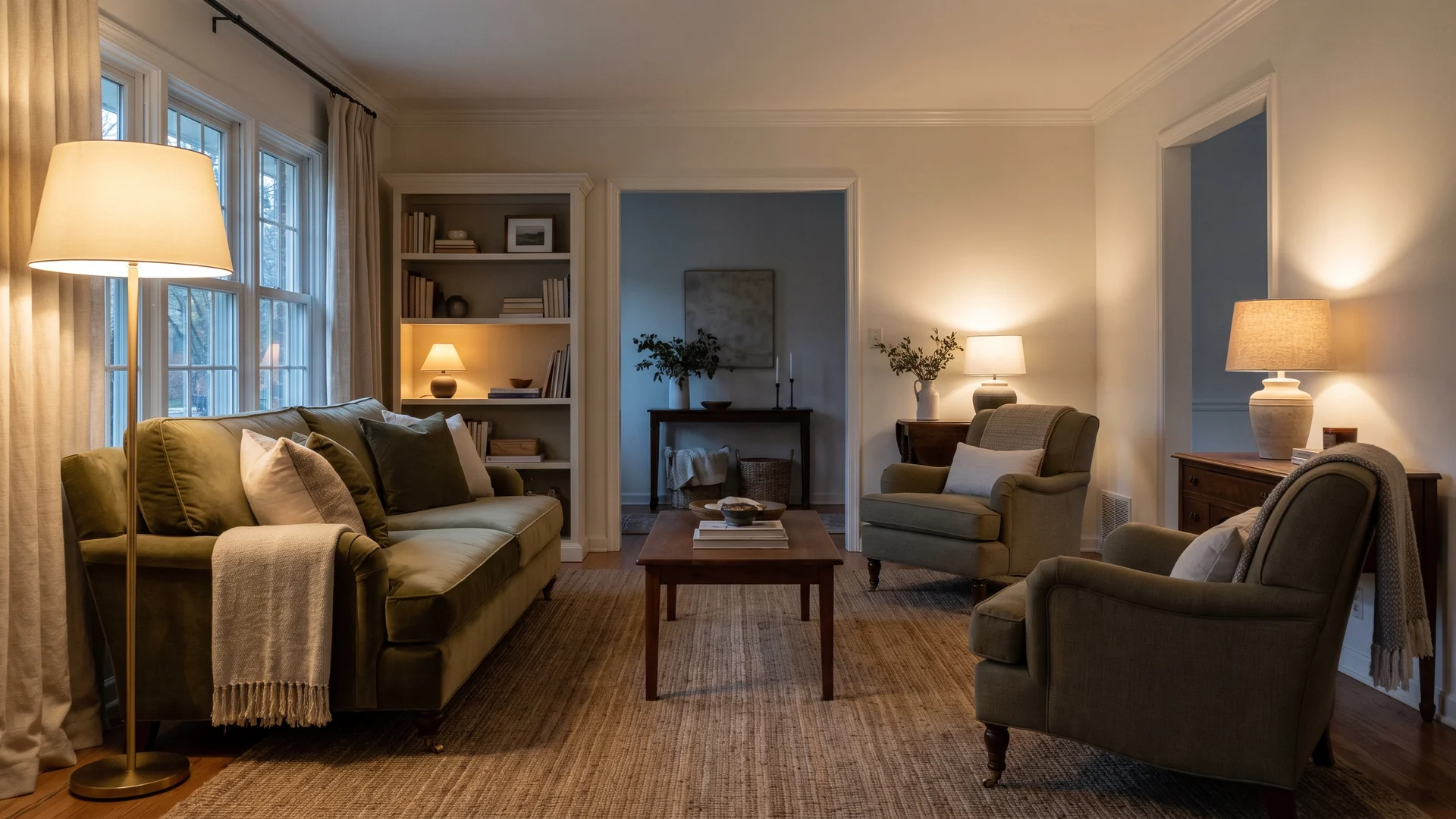
The final test of a living room lighting plan happens when the overhead light is off. The room should still be usable. You should be able to sit, talk, read, find a drink, walk across the space, and see the main surfaces without feeling as though you are sitting in darkness.
Turn on the floor lamp near the sofa, one table lamp on the opposite side of the room, and any accent source near art or shelving. Step back. The light should create several overlapping areas rather than isolated bright circles surrounded by blackness.
Brightness does not need to be equal. A reading lamp may be the strongest source, while a portable shelf lamp is much lower. That hierarchy helps the eye understand the room. If every lamp is equally bright, the space can begin to feel flat again.
Dimmers can make general lighting more flexible, but they are not a substitute for layering. A dimmed ceiling fixture still produces light from one point. Combining it with lamps can be effective, especially when the ceiling fixture is decorative or provides useful fill.
For fall, the evening scene can become part of the seasonal atmosphere without any themed decor. Warm pools of light on wood, fabric, books, and art naturally make the room feel more intimate. Our fall living room guide shows how to combine that light with textiles and layout.
How Bright Should Living Room Lighting Be?
There is no single ideal brightness for a living room because the room may host conversation, television, reading, games, work, and entertaining. A dark wall color absorbs more light than a pale one. A shaded lamp distributes light differently from an exposed bulb. The best plan provides several sources that can be combined.
When shopping for bulbs, compare lumens for brightness rather than watts. The FTC’s Lighting Facts guidance explains that lumens describe light output while watts describe energy use. Use that information to choose bulbs for the task, then judge the result in the actual fixture.
A reading lamp needs enough usable light at the page, while an accent lamp can be much dimmer. The ceiling source can be brighter because it may be used for cleaning or activities that need broad visibility. You do not need every bulb in the room to have the same output.
What Color Temperature Works in a Living Room?
Warm white light is commonly used in living rooms because it complements wood, fabric, warmer paint colors, and evening relaxation. Color temperature is measured in Kelvin, with lower numbers appearing warmer and higher numbers appearing cooler. Rather than selecting a number because it is fashionable, test how it looks with your walls and furnishings.
Keep nearby sources reasonably related. A very cool lamp beside a very warm one can make the wall color and upholstery appear inconsistent. There can be small differences for task lighting, but the overall evening room should feel coherent.
Remember that lampshades change the apparent color too. A cream fabric shade warms the light, while colored glass or dark fabric can alter it further. Judge the complete fixture, not only the bulb specification.
How to Light a Living Room With a Television
Television rooms need enough ambient light to reduce the contrast between the bright screen and a completely dark room, but the light should not reflect directly in the screen. Place lamps to the side or behind the viewing position rather than directly opposite the television.
A small lamp on a console to one side, a floor lamp behind the sofa, or low accent light on a shelf can create visual comfort without becoming distracting. Test reflections from the main seats. A lamp that works beautifully from one angle may create glare from another.
Do not place decorative lights where they compete visually with the screen. The purpose is to soften the surrounding darkness, not create a second focal point.
Living Room Lighting for Small Spaces
Small rooms benefit from fixtures that use walls and furniture efficiently. A plug-in sconce can replace a table lamp. A slim floor lamp can fit behind a chair. A portable lamp can illuminate a shelf without another cable.
Avoid filling every corner with a lamp simply because layered lighting is recommended. Two or three well-placed sources may be enough. The room still needs clear walking routes and usable surfaces.
Mirrors can reflect light visually, but check the angle so they do not reflect bare bulbs or the television. In a compact room, one strategically placed mirror can do more than several small ones.
How to Mix Lamp Styles Without Making the Room Look Random
Start with one common thread. The fixtures might share warm metal, cream shades, rounded forms, ceramic bases, or black details. They do not need to match in every way.
Vary the scale. A substantial floor lamp can balance a smaller table lamp and a discreet picture light. If every fixture is the same height and visual weight, the room may look repetitive.
Let the architecture and furniture influence the style. A traditional room can hold a contemporary lamp when another detail connects it. A modern room can gain warmth from a vintage ceramic base. Lighting is an easy place to introduce a slightly different era or material.
A Practical Shopping Order
Buy lighting in the order of need. First solve the main task near the sofa or reading chair. Then add a source on the opposite side of the room to create balance. Only after those are working should you consider accent lights for art, shelves, or consoles.
Measure before ordering. Record table depth, available floor space, outlet locations, ceiling height, and the distance between seating and walls. A lamp that is too large can become an obstacle; one that is too small may not produce useful light.
Keep receipts and test the fixture in the room before committing to more from the same collection. The shade, bulb, and wall color can change the effect dramatically.
Common Living Room Lighting Mistakes
The biggest mistake is relying on one overhead fixture. Another is choosing decorative lamps that are too dim for the activities they are supposed to support. Exposed bulbs at eye level can create glare, and very dark shades may reduce the output more than expected.
Do not ignore switch location. A lamp that is difficult to reach may remain unused. Smart plugs, cord switches, or compatible remotes can improve convenience when the existing layout is awkward.
Finally, avoid buying every light at once. Lighting is easiest to edit after you experience the first few sources in the room.
Frequently Asked Questions
How many lamps should a living room have?
There is no fixed number. Use enough sources to support the main activities and create comfortable evening light. A small room may need two or three; a large room with several zones may need more.
Can I use different lamps in the same room?
Yes. Connect them through color, material, shade style, or overall visual weight. Mixed lamps often make a room feel more personal than a matching set.
Should I avoid the ceiling light completely?
No. A ceiling light can be useful for cleaning, entertaining, or broad visibility. The goal is simply not to depend on it for every evening situation.
Are rechargeable lamps worth using in a living room?
They are useful for shelves, tables, and locations without outlets, provided their brightness and battery life suit the job. Treat them as flexible accent sources rather than replacements for every lamp.
What is the best light for reading in a living room?
A focused lamp close to the reader is usually most effective. Floor lamps, adjustable table lamps, and swing-arm sconces can all work. Position the light so the page is illuminated without the bulb shining directly into your eyes.
How can I make a living room feel warmer with lighting?
Use several lower sources, warm-looking shades, and fixtures that illuminate wood, textiles, books, and art. Avoid forcing one bright source to light the entire room.
How to Plan Lighting Around the Shape of the Room
The shape of the living room should influence where light goes. A long narrow room usually benefits from sources at several points along its length so one end does not disappear after dark. A square room may need more emphasis on corners and the center seating group. An open-plan room needs lighting that helps distinguish the living area from the dining or kitchen zone without making each area feel unrelated.
In a long room, avoid placing both lamps beside the same sofa and leaving the far end dependent on spill light. Put one source near the primary seating and another near the far wall, console, chair, or bookcase. The purpose is to create a visual path through the room. If the far end has artwork or shelving, lighting it can make the whole space feel deeper.
In an open-plan space, repeat one characteristic across zones. That might be warm shades, a brass detail, black metal, or similar color temperature. The fixtures themselves can be different because the tasks are different. A pendant over the dining table, small lamp on the kitchen counter, and floor lamp in the living area can feel connected without matching.
Rooms with fireplaces or built-ins often already have a visual center. Use lighting to support it rather than competing. A pair of sconces, picture light, or low lamps nearby can keep the feature visible after dark. If the television shares the same wall, be careful not to create reflections or overly bright points close to the screen.
How to Light a Living Room With Dark Walls
Dark paint absorbs more light, so a fixture that feels adequate in a pale room may seem weaker in a deep green, brown, navy, or charcoal space. The solution is not necessarily a much brighter bulb. Often the room benefits more from additional sources positioned around the perimeter.
Light-colored shades can help spread illumination while the dark walls provide contrast. A warm cream shade against a deep wall becomes part of the design even when the lamp is off. Metal or glass details can add small reflections, but use them selectively so the room does not become glossy.
Direct some light toward walls and art rather than keeping every beam aimed downward. Illuminated vertical surfaces make the room feel less cave-like because the boundaries remain visible. A picture light, wall washer, shaded sconce, or table lamp close to a wall can accomplish this.
If the furniture is also dark, create at least one lighter field through a rug, lampshade, curtain, or upholstery. Lighting works best when it has surfaces capable of reflecting some of the light back into the room.
How to Use Lighting to Improve Conversation Areas
Conversation feels more comfortable when faces are visible without being overlit. A lamp beside or slightly behind seating can provide soft illumination, while a bright downlight directly overhead can create unflattering shadows. For a seating group, think about where the light falls on people rather than only on furniture.
If two chairs face a sofa, a lamp between the chairs can serve both seats and visually connect them. A table lamp behind the sofa can create a backdrop without taking space in the center. When there is no suitable table, a floor lamp can do the same job.
Keep the center of the conversation area relatively free of glare. Candles can be atmospheric, but a cluster of bright flames directly between people may be distracting. A low rechargeable lamp can offer a similar sense of intimacy with more predictable light.
How to Make Lamps Look Intentional During the Day
Lighting is part of the room even when it is switched off. During the day, the shape, scale, and materials of lamps contribute to the composition. This is why a lamp that produces good light can still feel wrong if its proportions are disconnected from the furniture.
On a large console, a tiny lamp can look lost. On a narrow side table, an oversized ceramic base may leave no room for a drink. Balance the lamp with the furniture beneath it. You do not need perfect symmetry, but the object should feel anchored.
Shades are especially visible during daylight. A plain linen shade can calm a decorative base; a pleated or patterned shade can make a simple lamp more distinctive. If you change only one part of an existing lamp, the shade is often the easiest way to update its character without replacing the entire fixture.
When to Use a Dimmer and When to Add Another Lamp
A dimmer is useful when the ceiling fixture or wall lights already illuminate the room evenly but need to adapt to different activities. It allows one fixture to move from brighter general light to a softer level for conversation. However, dimming a single ceiling fixture does not create the same depth as having light at several heights.
Add another lamp when a specific area remains dark or when a task lacks direct light. If the reading chair is dim, a floor lamp is more useful than increasing the brightness of a ceiling light. If the far wall disappears, a small console lamp or sconce may help more than dimmer controls.
The best rooms often use both. Dimmable general light provides flexibility, while localized lamps handle reading, conversation, and atmosphere. Check that bulbs and dimmers are compatible before installation.
A One-Evening Lighting Audit
You can evaluate the room without buying anything. At dusk, switch on the lights you normally use and take a photograph from the doorway. Then sit in the main seats and notice where you can see bare bulbs, where surfaces disappear, and where reflections occur.
Move existing lamps temporarily. A lamp from a bedroom or desk can help you test whether another source would improve a corner. If the room feels better, you have identified a useful location before spending money.
Repeat the test while watching television, reading, and talking with someone. The ideal setup may change between activities. Make a short list of the problems rather than a shopping list of fixtures. Solving the problems one by one produces a better lighting plan than buying a coordinated set all at once.
Final Thought
Good living room lighting is flexible. It follows the people in the room, supports the activities they actually do, and allows the atmosphere to change as the day changes. Start near the main seating, spread light to the opposite side, add a higher or lower accent where it earns its place, and stop before the room becomes crowded with fixtures. When the layers are useful, you can skip the big light most evenings without sitting in the dark.
Other Articles

Collected Living Room Ideas That Feel Personal, Not Cluttered
Comfort Stacking Living Room Ideas for a Cozy Home


