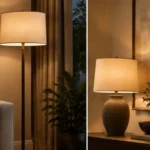
A living room does not need to be lit like an office in order to work well after dark. In fact, many rooms become less comfortable when the only option is one bright ceiling fixture that flattens every surface and throws hard shadows behind furniture. A better lighting plan distributes light around the activities that happen in the room: reading on the sofa, talking across a coffee table, watching television, finding a book, walking through the space, or simply sitting quietly at the end of the day.
The phrase “the big light” has become shorthand for that single overhead source people often switch off as soon as smaller lamps are available. The useful lesson is not that ceiling lights are bad. General lighting still matters for cleaning, finding lost objects, welcoming guests, and moving safely. The improvement comes from giving yourself other options so the room can change with the evening.
This guide shows how to layer living room lighting with floor lamps, table lamps, picture lights, sconces, portable lamps, and controlled overhead light. It is designed for real homes, including rentals and smaller rooms where rewiring is not always practical. If you want a wider comfort plan, our comfort stacking living room ideas explain how lighting works with textiles and everyday routines. For a more general decorating framework, see our cozy living room guide.
1. Put a Floor Lamp Beside the Seat That Needs It Most
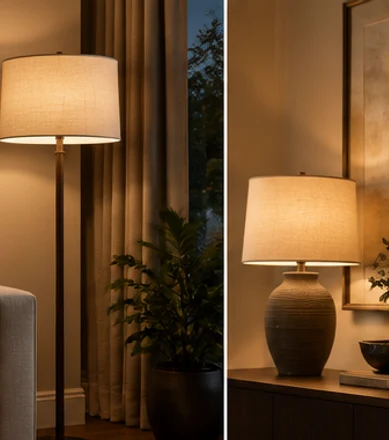
A floor lamp is often the fastest way to improve a living room because it adds useful light without taking space from a side table. The best position is not automatically in the emptiest corner. Put it beside the seat where someone reads, knits, works on a laptop, or spends the longest part of the evening.
Start with beam direction. A lamp with an open shade can spread general light, while a directional head can focus on a book or task. An uplighter can brighten the ceiling and make the room feel more evenly illuminated, but it may not provide enough focused light for reading. Decide what the lamp is expected to do before choosing its shape.
Height affects glare. Sit in the chair or on the sofa and look toward the proposed location. If the bulb will be visible at eye level, choose a better-shielded shade or move the lamp. A fixture can look elegant when viewed standing up and become uncomfortable the moment you sit down.
The base needs clear floor space and stability. Avoid forcing it into a narrow path where feet, pets, or a vacuum are likely to catch it. Arc lamps can reach over seating beautifully, but their large footprint and projecting arm need more space than product photographs often suggest. Measure the full shape, not only the base.
Cord placement matters too. Keep cords against walls or furniture where practical and follow the manufacturer’s guidance. Do not route ordinary electrical cords beneath rugs where they can be damaged or create unevenness. If the nearest outlet makes safe placement impossible, choose another location rather than stretching a cable across circulation.
2. Use Table Lamps to Balance the Room Horizontally
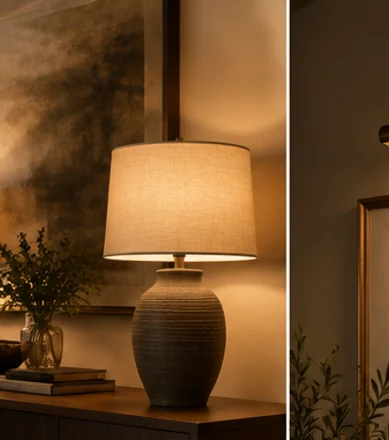
Table lamps create some of the most comfortable living room light because the source sits closer to eye level and furniture height than a ceiling fixture. A pair can balance a long sofa or console, but matching is optional. Two lamps of related scale can feel intentional even when their shapes differ.
Before placing a lamp on a side table, check what else the table needs to hold. If the lamp base leaves no room for a drink, remote, or book, the arrangement is visually complete but practically poor. A narrower base, wall light, or floor lamp may be a better choice.
Shade size should relate to both the lamp base and the furniture. A tiny shade on a large console can look accidental. A very wide shade beside a sofa may interfere with someone sitting down. Test the full silhouette from the normal walking route as well as from a photograph taken straight on.
When using two lamps across a room, think about their visual temperature and brightness. They do not need identical bulbs, but one cold bright lamp beside one very warm dim lamp can make the room feel uneven. Aim for a relationship that looks comfortable when both are on at the same time.
Console lamps are particularly useful behind a sofa or against a long wall. They create an intermediate layer between ceiling and floor and can make the room feel deeper. Keep fragile lamps out of narrow traffic routes and make sure the table is stable enough for the fixture.
3. Add a Picture Light When Artwork Deserves Evening Presence
Artwork often disappears after sunset because the room’s lamps are positioned for seating, not walls. A picture light can bring art back into the evening view and add a quiet layer of illumination without another lamp on a table.
The fixture should relate to the artwork rather than dominate it. A very wide light over a small framed print can look top-heavy; a tiny light over a broad canvas may create an obvious bright patch. Follow the fixture manufacturer’s guidance on coverage and placement, then judge the result from normal viewing distance.
Be cautious with delicate, valuable, or light-sensitive art. Strong or inappropriate lighting can affect some materials over time. If the piece is valuable or conservation-sensitive, seek appropriate advice before installing a dedicated light directly over it. For ordinary decorative art, low-heat modern fixtures used as intended are often straightforward, but the artwork itself should guide the decision.
A picture light can also illuminate shelving or a narrow wall feature, although the beam may behave differently than it does over flat artwork. Mock up the effect before permanent installation if possible. A plug-in or rechargeable option can help you test whether the layer is useful before making wiring changes.
Do not assume every artwork needs illumination. One highlighted piece can create a stronger evening focal point than a room in which every wall glows equally. Restraint keeps this layer from becoming theatrical.

4. Use Wall Sconces to Light the Perimeter Without Filling Surfaces
Wall sconces are useful in rooms where side tables are small or where you want the walls themselves to participate in the lighting plan. They can frame a fireplace, sit beside a bookcase, or add gentle light to a long wall that otherwise becomes dark after sunset.
Placement should respond to architecture. Centering sconces on a wall is less important than relating them to the furniture, trim, artwork, or feature they serve. A pair flanking a fireplace may need to align visually with the mantel and surrounding wall, while a single reading sconce should align with the seat rather than the room.
Hard-wired sconces create the cleanest look, but installation may require qualified electrical work. Plug-in versions are more accessible for renters and easier to change, provided cords can be routed safely. Choose a model designed for the installation method you intend to use rather than improvising.
Shade direction determines whether a sconce acts as task, ambient, or accent light. A shade that throws light upward can soften the wall and ceiling. A directional arm can support reading. Frosted glass may diffuse in several directions. Think about how the light lands, not only how the fixture looks unlit.
If you already have a visually busy wall, a simple sconce may be more successful than an ornate one. Lighting should help organize the room. It does not need to compete with every piece of art, molding, or shelving.

5. Use a Portable Accent Lamp for Shelves, Consoles, and Dark Niches
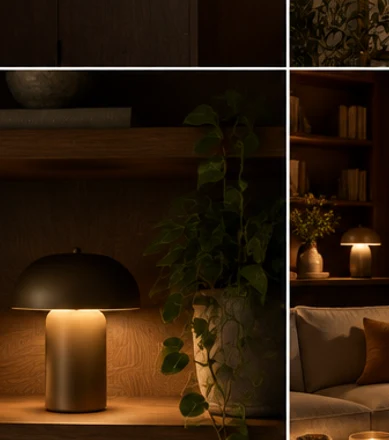
Small rechargeable lamps have made it easier to place light in areas without a convenient outlet. They are particularly useful on a bookshelf, console, bar cabinet, or small table where a permanent cord would be awkward. Their role is usually accent rather than primary task lighting.
Choose a lamp large enough to look deliberate on the surface. A very small glowing object can resemble a night light on a broad console. On a compact shelf, however, a low lamp may be exactly right. Scale it to the furniture and leave enough room around it that the surface remains useful.
Charging should fit your habits. If the lamp must be carried across the room every night, you may stop using it. A model with sufficient runtime and a convenient charging location is more likely to become part of the room rather than another device to manage.
Use portable lights to test permanent ideas. If a dark built-in shelf looks dramatically better with a small lamp for several weeks, you may later decide a wired solution is worth considering. If the light rarely gets switched on, you have learned that the area did not need illumination after all.
Follow the product’s charging, battery, and placement instructions. Keep the lamp stable and away from water, excessive heat, or fabrics where the manufacturer advises against such use.
6. Let Several Lamps Build the Evening Scene Together
The most successful living rooms rarely rely on one lamp at a time. The room may use a floor lamp for reading, a console lamp for general glow, and a small accent source across the room to prevent the far wall from disappearing. Each source can be modest because they work together.
Turn sources on in stages. Begin with the lamp closest to the main seating. If the room feels too contrasty, add one across the space. If a wall remains dark but does not bother you, leave it dark. You are not trying to achieve perfectly even illumination; some variation creates depth.
Television rooms need particular care. A lamp directly reflected in the screen can be distracting, while complete darkness around a bright television can feel tiring. Place low, indirect light where it softens the surrounding room without shining at the screen or viewer.
Conversation rooms benefit from seeing faces comfortably. Avoid strong downlight directly above someone’s head or a bare bulb in the eye line across the seating group. Shaded lamps placed to the side often create a gentler result.
Make the controls simple. If you have to cross the room four times to turn off lamps before bed, consider smart plugs, compatible switches, or a more practical arrangement. Technology is optional; convenience is the goal.

How to Build a Lighting Plan From the Activities in Your Room
Write down the five things that happen most often in the living room. Common answers include watching television, reading, talking, playing with children, working on a laptop, entertaining, listening to music, and walking through to another room. Give each activity a location.
Then evaluate the existing light at that location. A central ceiling fixture may already handle children’s play well. The sofa may need a lamp for reading. The doorway may be bright enough from an adjacent hall. The shelves may need no additional light at all. This process prevents the common mistake of buying fixtures for empty corners instead of for people.
Consider the room’s daylight separately. A reading chair that works perfectly at noon may become unusable at six in the evening. The lighting plan should function after dark because that is when the artificial sources prove their value.
If several tasks overlap in one area, choose an adjustable fixture or combine ambient and task sources. A floor lamp with a directional head may serve both conversation and reading. A dimmable table lamp can move from functional to atmospheric. Use controls only where they simplify the experience.
Bulb Choices: Brightness, Color, and Consistency
Start with the fixture’s requirements. Use the bulb type and maximum wattage specified, and make sure dimmable bulbs are paired with compatible controls. Bulb packaging provides brightness and color information that is more useful than old habits based only on wattage.
Warmer white light is popular in living rooms because it tends to flatter wood, cream, brown, and warm textiles. The exact color temperature is personal. If you dislike an amber cast, choose a slightly less warm option rather than forcing yourself to live with a room that feels yellow.
Consistency matters most when several sources are visible at once. Two adjacent lamps with dramatically different color temperatures can make a coordinated palette look mismatched. You can vary brightness by task while keeping the color appearance reasonably related.
For more consumer guidance on light-bulb labels, the Federal Trade Commission’s light-bulb shopping guide explains the information shown on packaging.
Living Room Lighting for Renters
Renters can create a layered room without touching permanent wiring. Floor and table lamps do most of the work. Plug-in sconces can add wall-level light where the lease allows mounting. Portable lamps can solve isolated dark areas. None of these needs to look temporary if the scale and placement are considered carefully.
Use furniture to conceal cords where it is safe to do so, but do not pinch cables behind heavy pieces or run ordinary cords under rugs. If a lamp cannot reach an outlet safely, move the lamp rather than creating a risky route.
Changing shades can improve an existing lamp for relatively little cost. A translucent shade may spread light more broadly; an opaque design can make a beam more directional. Make sure the shade is compatible with the fixture and provides appropriate clearance.
When you move, lighting is one of the easiest investments to take with you. That makes well-chosen lamps a sensible place to spend more than you might on a highly specific decorative object.
Lighting a Small Living Room Without Adding Clutter
In a small room, let fixtures occupy vertical space instead of every surface. A slim floor lamp, plug-in sconce, or wall-mounted picture light can preserve side tables. One lamp positioned strategically may serve two seats if its light spreads well.
Avoid filling every dark corner. Darkness at the perimeter is not automatically a problem. Light the route, the seating, and the task areas. Keeping some contrast can actually make a small room feel deeper.
Mirrors can reflect daylight and lamp light, but test the reflection from the sofa. A mirror that reflects a bare bulb or television can increase glare. The best reflected view is usually a window, shaded lamp, artwork, or calm part of the room.
For furniture-scale guidance, see our small living room ideas.
How to Make Existing Lighting Look More Intentional
Before buying a new fixture, align the ones you already own with the room. Move a table lamp toward the seating group, change a shade that exposes too much bulb, and remove a lamp that is doing no useful work. Clean shades and bulbs carefully according to their instructions; dust can affect both appearance and output.
Repeat one visual cue. That might be cream shades across otherwise different lamp bases, black stems on two fixtures, or warm metal used in a lamp and picture frame. Repetition makes mixed lighting look collected rather than accidental.
Keep decorative objects away from lamps when they interfere with light or airflow. A large vase beside a small shade can cast an awkward shadow. A stack of books under a lamp may raise it to an uncomfortable eye level. Let the fixture have enough space to do its job.
Common Living Room Lighting Mistakes
Buying for the empty corner instead of the activity. Put light where people need it.
Using exposed bulbs at eye level. Always evaluate glare while seated.
Making every fixture a statement. One memorable pendant or floor lamp is often enough; supporting fixtures can be quieter.
Ignoring cord routes. A good-looking lamp is not worth a cable across the main path.
Using only overhead light because the room is “bright enough.” Brightness and comfort are different questions.
Using only very dim lamps because the room is meant to be cozy. Reading, playing, and walking still require adequate visibility.
Frequently Asked Questions
Does a living room need a ceiling light?
Not every living room uses one regularly, but general light can be useful for cleaning, gatherings, or tasks that need broad visibility. The main improvement is giving yourself other sources so it is not the only option.
How many lamps should a living room have?
There is no fixed number. A small room may work with two well-placed lamps, while a larger room may use several. Count activities and dark zones rather than fixtures.
Where should I put a floor lamp?
Place it near a seat or activity that benefits from the light, while keeping the base and cord out of circulation. Evaluate the bulb and shade from seated eye level.
Should living room lamps match?
No. Related scale, shade color, finish, or shape can connect different fixtures. Function should guide each choice.
What is the easiest lighting upgrade for a rental?
A well-positioned floor lamp or table lamp usually provides the largest improvement with the least commitment. Plug-in sconces and portable lamps can add extra layers where appropriate.
Final Thought
The best living room lighting gives you choices. You can make the room bright enough to clean, focused enough to read, and soft enough to unwind without changing the entire design. Start with the seat you use most, light the activities around it, then add only the sources that solve a remaining need. The room will feel richer because the light has layers, not because every corner is illuminated.
Trend Context
Layered, lower-level lighting has been prominent in 2026 design coverage, particularly as homeowners move away from relying exclusively on one overhead source. For current context, see House Beautiful’s fall lighting trends.
A Weekend Lighting Reset Before You Buy Anything
On the first evening, use the room normally and make notes without moving anything. Mark where you read, where glare appears on screens, which switch you reach for first, and which dark areas genuinely bother you. The next morning, look at the same spaces in daylight and check whether furniture placement is limiting your options.
On the second evening, move only portable fixtures. Bring a lamp from another room, swap two shades, or place a floor lamp beside a different chair. Live with each change for at least part of the evening. This temporary experiment often reveals whether the problem is fixture type, placement, brightness, or simply a missing source.
Only after that test should you make a shopping list. Write the required role beside each item: “focused reading light,” “soft console light,” or “general light for the far end of the room.” That description is more useful in a store than “cozy lamp.” It keeps the purchase connected to the room’s needs.
When the new setup is complete, photograph it at night and check the walking route once more. If the room looks beautiful but a cord, base, or table has narrowed the path, adjust it. A layered lighting scheme is successful when you stop noticing the fixtures and simply notice that the room is easier to use.
How to Light an Open-Plan Living Room Without Making It Look Fragmented
Open-plan rooms need lighting that recognizes different activities without making every zone look like a separate set. Start by identifying the visual anchors: the sofa group, dining table, kitchen edge, and any route that connects them. Each area can have its own light, but repeating one characteristic—shade color, metal finish, warm color temperature, or simple geometric shape—helps the whole space read as one home.
The living area usually benefits from lower light than the kitchen. That contrast is fine. You do not need every zone to have identical brightness. What matters is that the transition feels intentional and that there are no uncomfortable jumps from a very bright island to a nearly black sofa. A floor lamp or console lamp at the boundary can soften the transition.
Pendants over a dining table or kitchen island already create strong visual statements, so living-room lamps can often be quieter. If every zone has a sculptural fixture competing for attention, the open room can feel visually busy even when the furniture is restrained. Let one or two fixtures lead and allow the others to support them.
Consider sightlines. From the sofa, you may see the dining pendant, kitchen counter lights, and two living-room lamps at once. Switch them on together before deciding whether the colors and brightness levels relate. A lamp that looks warm and pleasant by itself may appear orange beside much cooler kitchen lighting.
Controls should reflect the zones. Being able to switch off the kitchen while leaving the living room illuminated makes the seating area feel more settled in the evening. If the electrical layout does not allow that, use portable lamps and local switches where practical rather than assuming every fixed source must remain on.
Lighting Around a Television Without Creating Glare
Television changes the lighting problem because the screen is both a light source and a reflective surface. Complete darkness can make the contrast between the screen and the room feel extreme, while a lamp reflected directly in the screen can be distracting. The solution is usually soft light beside or behind the viewing area, not a bright fixture aimed toward the screen.
Sit in each main seat with the television off and look at the dark screen. Reflections are easier to see this way. Move table and floor lamps until the brightest reflection leaves the central viewing area. A shaded lamp to the side of the sofa or a gentle source behind the seating often works better than a lamp opposite the television.
If you use lighting behind the television, choose a product designed for that purpose and install it according to its instructions. Avoid loose cables or improvised attachments near heat sources. The light should reduce contrast subtly rather than create a glowing color effect that competes with the picture unless that is intentionally part of your setup.
Keep enough ambient light for movement. Someone should be able to enter the room, find a seat, and leave without relying on the television image for visibility. A low console lamp or distant shaded fixture can provide that background illumination.
How Seasonal Changes Affect Living Room Lighting
A lighting plan that feels generous in June may feel sparse in October because daylight ends earlier and the room is used under artificial light for longer. Instead of redesigning the scheme each season, identify one or two portable sources that can become more active during darker months.
A lamp near a window may be almost unnecessary on summer evenings but valuable in fall when the glass becomes a dark surface. A reading lamp may need a brighter bulb when you are using it for longer periods. Curtains that are closed earlier can also absorb or redirect light, so evaluate the room with window treatments in their evening position.
Holiday decorations can interfere with the established plan if they occupy tables, outlets, or sightlines. Protect the functional lamps first. Decorative string lights can add atmosphere, but they should not replace the sources needed for reading, conversation, and safe movement.
When spring returns, you may use fewer lamps again. That is not wasted design; flexibility is the point. A good living-room lighting scheme allows different combinations rather than demanding that every fixture be switched on every night.
Before You Call an Electrician
Permanent lighting changes can be worthwhile, especially when the room lacks useful switches or has fixtures in genuinely unhelpful positions. Before committing, test the intended function with portable lamps. If a plug-in sconce at one location transforms the reading seat, that evidence can inform a future hard-wired solution.
Make a simple plan showing furniture, outlets, existing fixtures, and the activities you want to support. Share the practical goal, not only a photograph of a fixture. A qualified professional can then advise on what is feasible and appropriate for the property and local requirements.
Do not attempt electrical work beyond your knowledge or what is permitted where you live. A beautiful lighting scheme still depends on safe installation. Permanent work should make the room easier to use for years, so it deserves more planning than a quick decorative purchase.
Other Articles

Collected Living Room Ideas That Feel Personal, Not Cluttered
Living Room Lighting Ideas That Skip the Big Light