
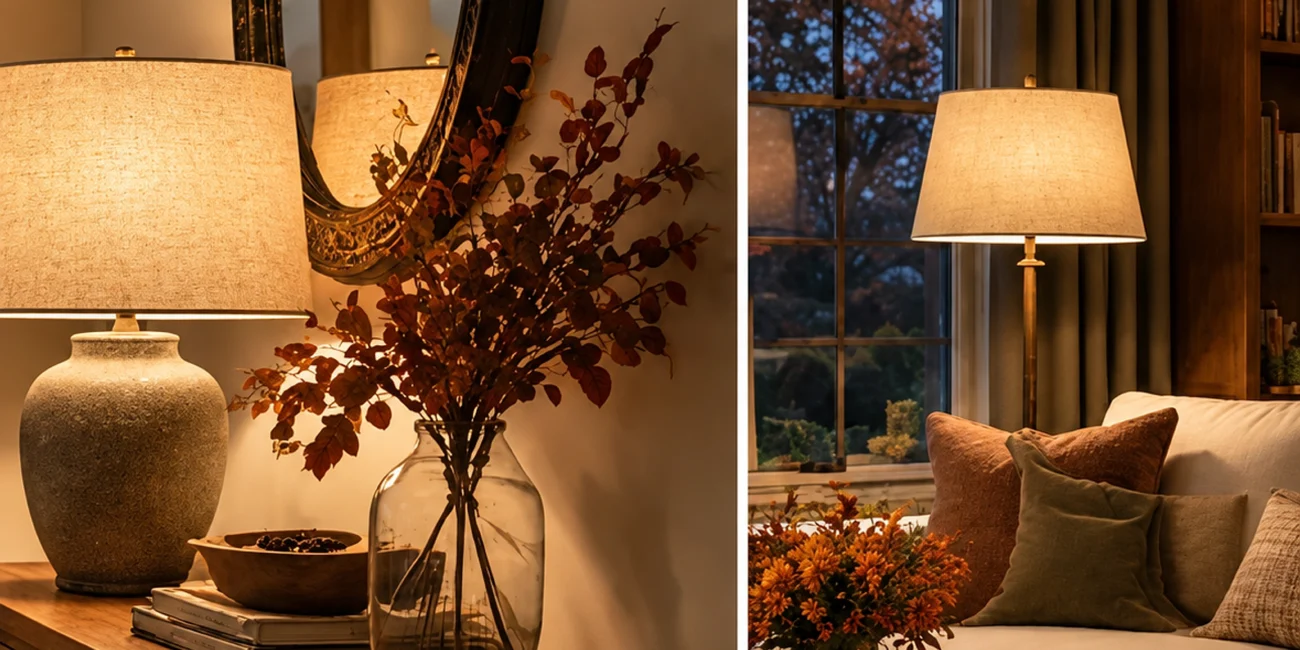
Fall lighting is less about adding decorative seasonal objects and more about changing how the home feels after sunset. As the days shorten, rooms that worked perfectly in summer can begin to feel flat, harsh, or dark in the wrong places. A few well-placed lamps can make the entry more welcoming, the living room easier to relax in, the dining table more inviting, and the bedroom calmer without changing the furniture.
The most useful fall lighting strategy is layering. Instead of relying on one bright ceiling fixture, spread light across the home at several heights and for several purposes: a lamp at the entry, a pair of living-room sources, a pendant over the table, a bedside lamp, a small kitchen light, and a focused reading source. You do not need every one of these in every home. You need enough options that the evening can become softer without becoming dim or unsafe.
Recent 2026 design coverage has emphasized layered light, decorative shades, portable lamps, and more characterful fixtures rather than one dominant “big light.” That direction fits fall particularly well because light becomes a larger part of the room once windows turn dark earlier. The ideas below focus on practical placement and atmosphere, not on changing every fixture for the season.
For room-specific help, see our living room lighting ideas and bedroom lighting ideas. If you are refreshing the whole home for autumn, our fall home decor ideas provides the broader seasonal layer.
1. Put a Warm Lamp in the Entryway

The entry is the first place where shorter days become noticeable. In summer, a hallway or console may receive enough borrowed daylight to feel bright until evening. In fall, that same area can turn into a dark transition between outdoors and the rest of the home.
A small table lamp can change that immediately. Place it on a console, chest, shelf, or safe wall-mounted surface where it does not interfere with keys, bags, or the route through the door. The lamp should illuminate the wall and nearby floor enough that the entry feels visible without becoming the brightest area in the home.
Choose a shade that works with the room. Linen, paper, pleated fabric, or a soft opaque shade can create a warmer pool of light than a clear exposed bulb. The base can be ceramic, wood, metal, glass, or stone; what matters is that the scale suits the furniture.
If the console is narrow, use a shallow lamp or wall sconce instead of a wide base that consumes the entire surface. A rechargeable lamp can work where there is no outlet, but check battery life and charging routine before relying on it every evening.
Keep the rest of the console simple. A lamp, key bowl, small artwork, and perhaps one seasonal branch may be enough. The lighting itself creates the autumn atmosphere, so the surface does not need pumpkins, signs, and several small decorations.
Use the entry lamp on a timer or smart plug only if the product and setup are appropriate. The goal is convenience, not a complex automation system. A light that comes on near dusk can make arriving home feel noticeably more comfortable.
2. Layer Several Living Room Lamps Instead of Increasing One Bright Source
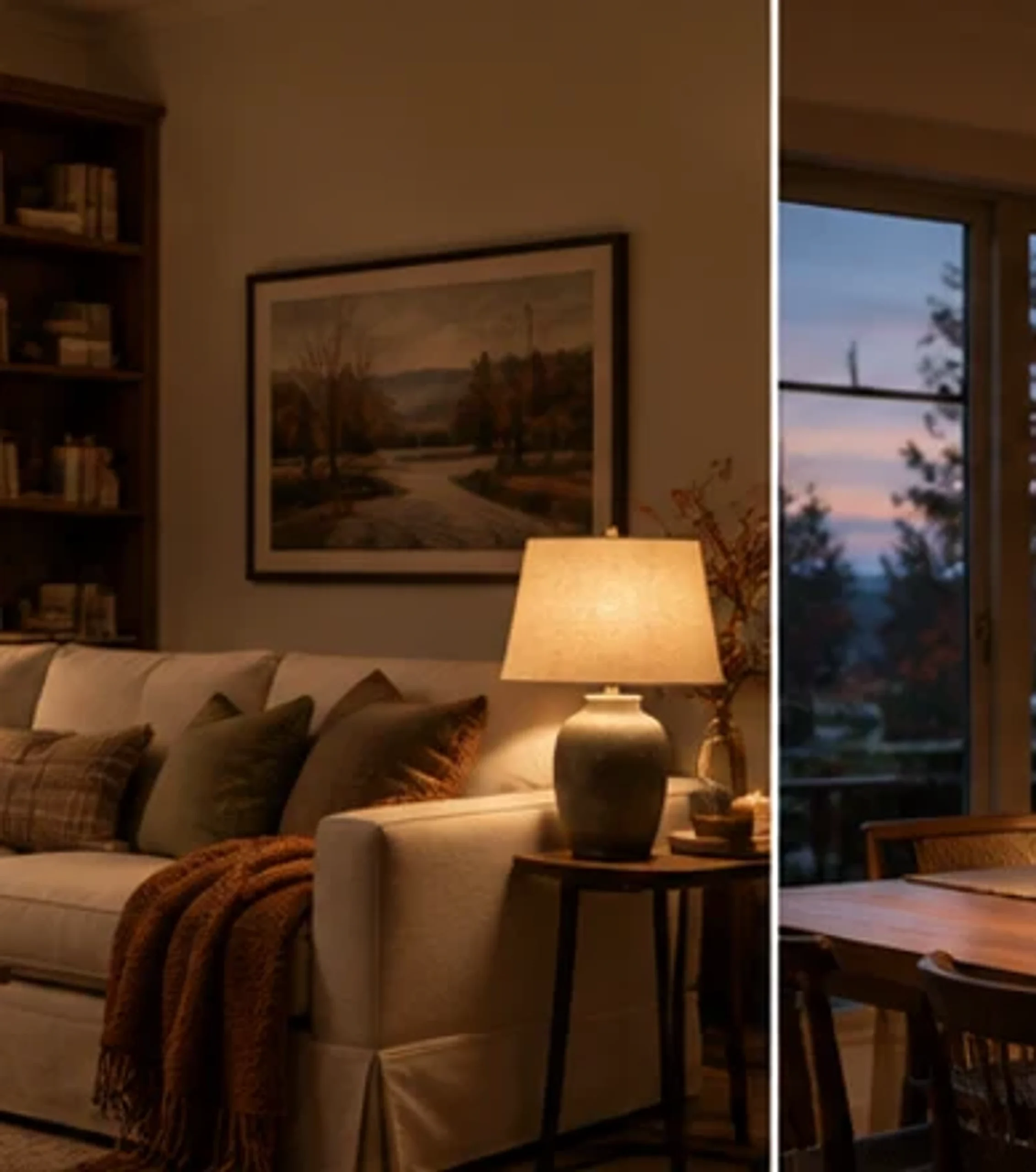
The living room is where layered lighting has the biggest impact because the room may support conversation, reading, television, games, and quiet time. One ceiling fixture can provide general brightness, but it rarely creates the comfortable atmosphere people want in fall.
Start near the main sofa or chair. Add a floor or table lamp where people actually sit. Then place a second source across the room so the background does not disappear into darkness. A small console lamp, shelf lamp, or wall light can provide enough balance.
The sources do not need identical brightness. The reading lamp may be stronger, while the opposite-side lamp is lower. That hierarchy helps the room feel dimensional rather than evenly illuminated.
Pay attention to screens. A lamp placed directly opposite the television can reflect in the glass. Move it to the side or behind the seating where it softens the room without creating glare.
Fall is a good time to change a lampshade rather than the entire lamp. A warmer textile, pleated shade, or darker trim can alter the light and the silhouette. Make sure the new shade is compatible with the fixture and bulb.
For a more detailed plan, our living room lighting guide covers floor lamps, table lamps, sconces, picture lights, television rooms, and bulb choices.
3. Let the Dining Light Create a Pool Around the Table

The dining table becomes more important in fall as meals move indoors and evenings lengthen. A pendant or chandelier can create a visual center by concentrating light around the table rather than flooding the entire room.
Scale the fixture to the table and ceiling. A tiny pendant over a long table can look accidental, while a large low fixture can block views and make conversation awkward. Tape or hang a temporary outline at the proposed height before installation if you are unsure.
Use a dimmer where the fixture and bulb are compatible. Brighter light can support homework, cleaning, or meal preparation. A lower setting can create a softer atmosphere for dinner without needing candles.
Shade material changes the effect. Fabric and paper can diffuse light. Opal glass creates a softer glow. Metal shades may direct more light downward. Clear glass exposes the bulb and can create more sparkle but also more glare.
If the table sits in an open-plan room, the pendant helps define the dining zone after dark. The living-room lamps can remain lower and softer, creating two distinct areas even without walls.
Keep the tabletop decoration low enough that the lighting remains the main vertical feature. A few branches, candles used safely, or a bowl can be enough.
4. Make Bedside Lighting the Main Fall Layer in the Bedroom

Bedrooms often need less seasonal decoration than other rooms because lighting and textiles already create strong mood. As evenings darken earlier, the bedside lamp becomes more important than the ceiling fixture.
Make sure the lamp is useful from bed. The shade should shield direct glare while allowing enough light to read or prepare for sleep. If the nightstand is narrow, a wall-mounted or plug-in sconce can free the surface.
Keep the light easy to switch off from bed. A beautiful lamp that requires crossing the room at night is less comfortable than a simpler fixture with an accessible control.
Add one secondary source away from the bed if the room has a dresser or reading chair. A small lamp can prevent the rest of the room from disappearing into darkness while keeping the ceiling light off.
Fall bedding can then stay restrained. One wool throw, a deeper cushion, or warmer sheet color may be enough because the light is already changing the atmosphere. Our fall bedroom ideas guide covers those layers in more detail.
Do not make the bedroom extremely dim in the name of coziness. You still need safe visibility and useful task light. The goal is flexibility, not darkness.
5. Add a Small Kitchen Lamp for the Hours After Cooking
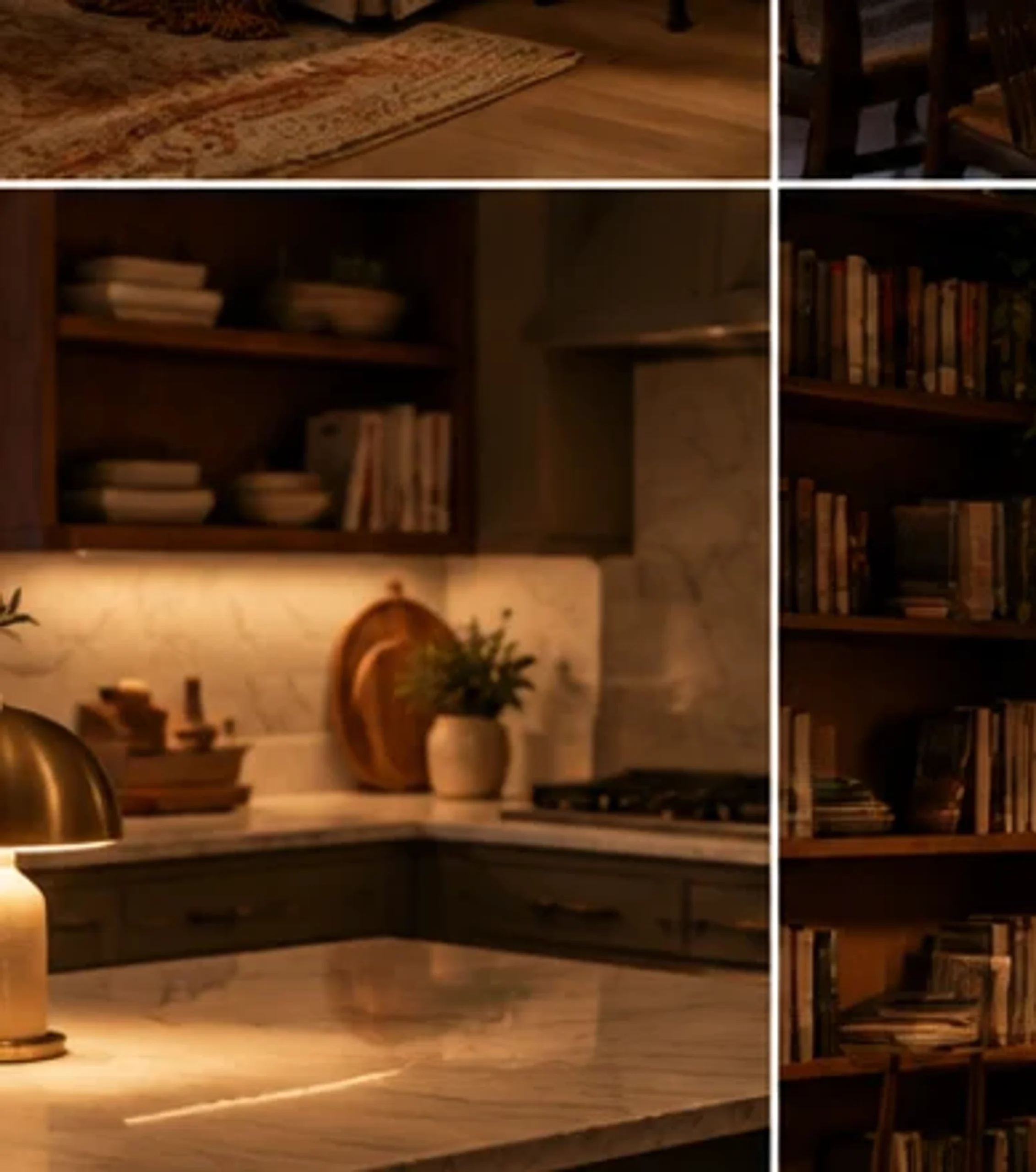
Kitchens need bright task lighting while cooking, but they do not need to remain at full brightness all evening. A small lamp in a safe, dry location can create a softer mode once the work is finished.
Place the lamp away from water, heat, and active preparation zones. A corner of a sideboard, open shelf, breakfast nook, or dry stretch of counter may work. Keep the cord out of paths and follow the lamp manufacturer’s guidance.
Use the small lamp as an accent, not as a substitute for task lighting. It should not be the only source while chopping food or cleaning a sharp tool. Think of it as the kitchen equivalent of a living-room table lamp.
A warm shade can make stone, wood, and ceramics look richer at night. If the kitchen has under-cabinet lighting, the two sources can sometimes work together to create a comfortable low setting.
Rechargeable lamps are useful when outlets are limited, but choose stable designs and keep them away from splash zones. Charging should happen in a suitable location.
This small change can make an open-plan kitchen feel more integrated with the living room in fall because both spaces can operate at a similar evening brightness.
6. Build a Reading Nook Around One Focused Floor Lamp

A reading corner is one of the simplest fall rituals to create because it combines light, comfort, and a slower activity. Start with the lamp, not the blanket. The light should reach the page without shining directly into your eyes.
A floor lamp is often practical because it removes the need for a large side table. Adjustable or directional designs can focus light where the reader sits. If the lamp has a broad shade, make sure it still provides enough illumination at the book.
Add a small surface for a drink, glasses, or current book. Then bring in one textile—a wool throw, cushion, or rug—rather than layering several decorative pieces at once.
Position the chair where the nook feels connected to the room but not directly in the main walking path. A corner near a window can work beautifully during the day, but still needs artificial light for evening.
Books can remain nearby on a shelf or small stack. The point is to make the activity easy enough that the corner is used rather than admired.
A focused reading lamp also helps the rest of the room stay dimmer. You do not need to raise the brightness everywhere just because one person is reading.
How to Choose Fall-Friendly Light Without Making the House Too Amber
Warm light can feel inviting, but extremely amber light may distort colors and make tasks more difficult. Rather than choosing the warmest possible bulb, aim for a comfortable warm-to-neutral appearance that suits the room and activity.
Check the Kelvin value on the bulb packaging and compare light output in lumens. For reading, cooking, or grooming, brightness and color quality matter more than seasonal mood. For a console or shelf lamp, a lower output may be enough.
Keep nearby sources reasonably consistent. A very cool ceiling light beside orange-toned table lamps can make the room feel visually disjointed. You do not need exact matches, but the sources should feel related.
How to Use Timers and Smart Plugs Simply
Automation can be helpful when the home becomes dark before you return in the evening. A lamp on a compatible timer or smart plug can create a welcoming entry or living room without leaving lights on all day.
Use reputable products appropriate to the electrical load and follow manufacturer instructions. Avoid complex routines if a simple timer achieves the same result.
Keep manual controls available. Seasonal lighting should remain easy to use even when an app or automation is unavailable.
How to Make Fall Lighting Work in Small Spaces
Use fewer fixtures that serve multiple purposes. A swing-arm wall light can illuminate a sofa and reading chair. A small portable lamp can move between dining table and shelf. A floor lamp can replace a side table lamp when surfaces are limited.
Keep bases out of narrow circulation routes. Wall-mounted and plug-in fixtures can save floor space, but cords still need to be managed safely.
Mirrors can reflect light, but place them so they do not multiply glare from exposed bulbs.
Fall Lighting for Open-Plan Homes
Use lighting to create zones rather than illuminating the entire plan equally. Pendants define the dining area, task light supports the kitchen, and lamps create a lower living-room layer.
Repeat one characteristic across zones—similar shade color, metal, or warm light appearance—so the home still feels connected.
Fall Lighting Without Buying New Fixtures
Move existing lamps. A bedroom lamp may work better in the entry during fall. A desk lamp can test a reading corner. Change a shade, clean dusty glass, or reposition furniture so a lamp reaches the activity more effectively.
Replace a failed or unsuitable bulb only when needed, and check compatibility with the fixture and dimmer. Cleaning and positioning can improve light more than adding another fixture.
How to Use Candles Safely as a Secondary Layer
Candles can add atmosphere, but they should never replace safe general lighting and should never be left unattended. Keep flames away from curtains, books, dried branches, children, pets, and unstable surfaces.
If candles create more worry than pleasure, use a small portable lamp instead. You can create the same low pool of light without flame.
How to Light Fall Decor Without Making It Look Like a Display
Let the room lighting reveal the seasonal objects rather than spotlighting every one. A lamp grazing a branch, bowl, or textured throw can create depth without dedicated decorative lights.
If you use string lights, keep them restrained and appropriate to the location. One small warm strand can work in a seasonal vignette, but covering every shelf and window may compete with the room’s normal lighting.
How to Transition Fall Lighting Into Winter
Most fall lighting should remain useful through winter. Lamps, shades, dimmers, reading lights, and kitchen accent lamps are not seasonal products. Keep them and adjust only the decorative layers around them.
Holiday lights can be added temporarily without changing the core plan. Once they are removed, the room should still feel comfortable because the everyday lighting was doing the real work.
Common Fall Lighting Mistakes
The first is making every bulb extremely warm. The second is buying decorative lamps without enough output for the activity. The third is adding so many small lights that the room becomes difficult to control.
Another mistake is ignoring cords and walking routes. A cozy lamp is not worth a trip hazard. Finally, do not rely on candles or string lights for tasks that need real visibility.
Frequently Asked Questions
What is the easiest fall lighting update?
Move or add one lamp near the place you use most after sunset, such as the sofa, entry, bedside, or reading chair. A useful pool of light changes the room immediately.
Do I need warm bulbs for fall?
Warm light often suits the season, but do not choose an excessively amber source. Use a comfortable warm-to-neutral light appropriate to the activity and room.
How many lamps should a living room have?
There is no fixed number. Use enough sources to support the main seats and keep the background from disappearing. Small rooms may need two or three; larger rooms may need more.
Can I use a lamp in the kitchen?
Yes, in a safe dry location away from heat, water, and active preparation areas. It should supplement, not replace, proper task lighting.
Are rechargeable lamps useful for fall?
They can be useful on shelves, consoles, and tables without nearby outlets. Check stability, brightness, battery life, and suitability for the location.
How do I make my home feel cozy without candles?
Use low table lamps, floor lamps, dimmed compatible fixtures, and portable lights to create several soft pools of light. Textiles and warm materials will reinforce the effect without flame.
A One-Evening Fall Lighting Reset
Wait until dusk, turn off the ceiling lights, and walk through the home. Note which seats, surfaces, and paths disappear. Move existing lamps first. Add one source only where the room still has a real problem. Clean shades and glass, check bulb compatibility, and make controls easy to reach.
How to Create a Fall Lighting Plan Room by Room
Instead of buying several lamps at once, walk through the home after sunset and assign each room a primary evening activity. The living room may need conversation and television light. The dining room needs a clear pool over the table. The bedroom needs reading and wind-down light. The kitchen needs bright work light first, then a softer after-dinner mode.
Write down the darkest useful spot in each room and the brightest uncomfortable spot. This creates a practical map. If one corner disappears, move a lamp there. If the ceiling fixture dominates, reduce its use or dim it when compatible. If the sofa is bright enough but the rest of the room falls into blackness, add a lower source across the room instead of increasing the reading lamp.
Work from the rooms used most often. Improving the living room and bedroom may change the experience of fall more than adding decorative lighting to every hallway. Seasonal atmosphere is strongest when it supports daily routines.
How to Choose Lampshades for Softer Fall Light
Lampshades affect both appearance and output. Pale linen and paper usually spread more light, while darker or more opaque shades direct light more narrowly. Pleated shades introduce texture and can make a simple base feel more decorative. Woven shades may create patterned light and should be judged after dark as well as during the day.
Check the shade proportions on the lamp base. A very small shade can expose the bulb and create glare. An oversized shade may crowd the table or block a view. If replacing only the shade, confirm the fitting type and bulb clearance before ordering.
Fall does not require brown or orange shades. Cream, olive, burgundy, soft stripe, parchment, mushroom, and muted blue can all feel seasonal when they relate to the room.
How to Use Picture Lights and Shelf Lights in Fall
Picture lights and shelf lights add a higher layer than table lamps and can keep art, books, or a mantel visible after sunset. This is particularly useful when the lower half of the room already has enough light but the walls disappear.
Use the light to reveal something worth seeing. A picture light over meaningful art or a small lamp on a bookcase creates depth. Avoid illuminating every shelf equally; one or two points are enough in most rooms.
Battery and rechargeable picture lights can be useful where wiring is difficult, but brightness and battery life vary. Hardwired fixtures create a more permanent solution when the placement is right and professional installation is appropriate.
How to Use Portable Lamps for Fall Entertaining
Portable lamps are useful during dinners, games, or gatherings because they can move to wherever the room temporarily needs light. A rechargeable lamp can sit on a buffet, drinks table, or dining table without adding a cord across the floor.
Keep the scale low enough that people can see across the table. A lamp should not become a visual wall between guests. Stable bases are important in crowded settings where elbows, plates, and serving dishes are moving around.
After the gathering, move the lamp back to its normal shelf or console. This flexibility is one reason a portable lamp can be more useful than a highly seasonal decorative light.
How to Use Light With Fall Textures and Materials
Lighting becomes more interesting when it falls across varied surfaces. Wool, linen, wood grain, aged metal, ceramics, and matte paint all respond differently to light. A lamp placed near a textured curtain or wood cabinet can make the material more visible without another decorative layer.
Glossy surfaces create stronger reflections and should be checked for glare. Matte materials absorb more light and may need a source slightly closer. Dark textiles can appear almost flat if the room is underlit.
Use light to reveal texture rather than buying more objects. A well-placed lamp can make an existing room feel more seasonal simply because the surfaces become richer after dark.
How to Make a Fireplace Area Feel Warm Without Using the Fire
A fireplace can become a focal point even when it is not lit. A lamp on a nearby console, picture light over the mantel, or pair of low lamps can keep the area visible. Avoid placing electrical fixtures where heat from an operating fire would affect them.
If you use candles on the mantel, follow fire-safety guidance and keep them away from greenery, fabric, paper, and other combustible materials. Battery candles or a nearby lamp can create a similar atmosphere without open flame.
Keep the hearth clear enough for safe use. Seasonal decor should never interfere with fireplace operation, screens, vents, or access.
How to Light a Fall Dinner Without Depending on Candles
Dim the compatible pendant or chandelier, add one low portable lamp on a sideboard, and let the table remain relatively clear. This creates layered light without placing flames between serving dishes.
If the dining fixture is not dimmable, turn it off and use nearby lamps only if the table remains safely visible. A meal should still be easy to serve and eat. Atmosphere should never make glassware, plates, or steps difficult to see.
Warm white table linen, amber glass, and wood can reinforce the effect without changing the bulbs themselves.
How to Light Stairs and Hallways in Darker Months
Fall coziness should not reduce safety in circulation areas. Stairs, landings, and halls need enough light to see changes in level, edges, and obstacles. Use the existing architectural lighting appropriately and replace failed bulbs promptly.
A small hall lamp can add atmosphere, but it should supplement—not replace—safe general illumination where steps are involved. Motion or automatic controls can be useful when professionally installed and suitable for the space.
Keep cords away from stairs and thresholds. Portable lighting belongs on stable surfaces, not on the floor of a circulation route.
How to Coordinate Fall Lighting With Darker Paint
If you use deeper wall colors in fall or already have a moody room, remember that dark surfaces absorb more light. Spread sources around the perimeter instead of trying to compensate with one extremely bright bulb.
Light-colored shades, mirrors, pale art mats, and cream textiles can reflect some light back into the room. A dark wall can look rich when illuminated, but almost featureless when left in shadow.
Test the paint and lighting together. The same olive or brown can look completely different beneath cool and warm sources.
How to Make Existing Ceiling Lights Feel Less Harsh
Start with the bulb and shade before replacing the fixture. A diffused bulb, appropriate lower output, compatible dimming, or a frosted cover can sometimes solve the problem. Clean the shade and diffuser because dust can alter both brightness and appearance.
If the fixture exposes the bulb directly at eye level, a different shade or fixture may be worthwhile. Harshness often comes from glare rather than too many lumens.
Keep ceiling lighting available for cleaning and tasks even if you rarely use it for relaxed evenings.
How to Build a Fall Reading Routine Around Light
Choose the chair first, then position the lamp where the light reaches the page from the side or slightly behind the shoulder. Keep the switch accessible. Add a small table for a drink or book and one comfortable textile.
Do not overstyle the corner. If it takes several minutes to move cushions and blankets before reading, the ritual will not last. The best fall nook is the one you use.
How to Keep Fall Lighting Energy-Conscious
Use efficient bulbs appropriate to the fixtures and turn off sources that are not serving the room. Layered lighting does not mean every lamp should be on simultaneously. Often two or three well-placed sources create a better atmosphere than six dim ones.
Timers and smart plugs can reduce lights left on unintentionally, but simple habits work too. Use the lowest number of sources that create the comfort you need.
A Fall Lighting Shopping Checklist
Before buying a lamp, record the available surface or floor footprint, outlet location, required cord length, desired activity, approximate brightness, shade type, and switch access. For ceiling or wall fixtures, add ceiling height, electrical box location, and professional installation requirements.
Buy one source, test it at night, and only then decide whether the room needs another. Lighting is highly dependent on the room, so gradual decisions are more reliable than ordering a matching set.
Final Thought
The best fall lighting ideas are useful long after autumn ends. Put light where people arrive, sit, eat, read, cook, and wind down. Build several lower layers instead of forcing one bright fixture to do everything, and let seasonal textiles or branches remain secondary. When the lighting supports the routine, the home naturally feels warmer as the evenings get darker.
Other Articles

Christmas Mantel Ideas for a Warm, Beautiful, Uncluttered Fireplace
New Traditional Interior Ideas for a Classic Home That Feels Fresh


