

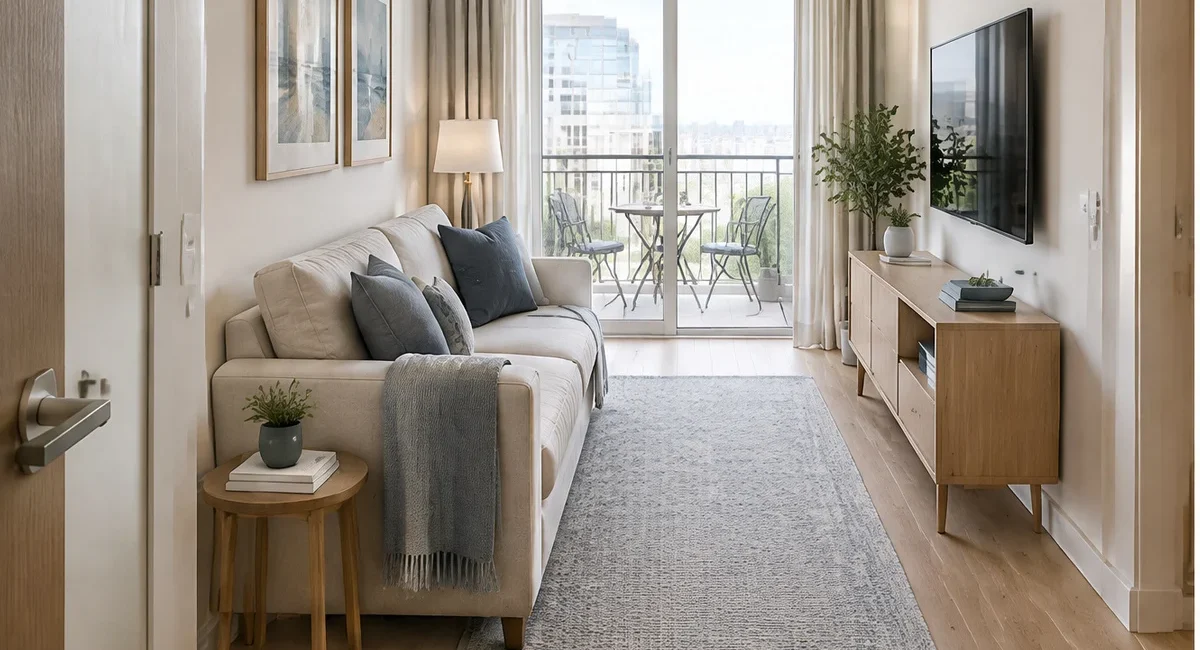
A small living room asks you to make choices, but those choices do not have to result in uncomfortable furniture or an empty-looking space. A generous seat with slim arms may work better than two tiny chairs. One useful cabinet can be calmer than several narrow shelves. The most effective arrangement is usually the one that makes the room’s priorities clear.
Before choosing furniture, identify the route through the room. People may need to cross it to reach a balcony, kitchen, or hallway. That route competes with the seating footprint, and no amount of attractive styling will make a blocked passage feel comfortable.
These small living room ideas concentrate on six decisions that affect daily use. They are particularly useful for apartments and compact homes where the living area may also need to handle work, dining, or occasional guests. Treat the images as examples of relationships between pieces, not as floor plans that must be copied exactly.
Explore the layout decisions
1. Draw the Route Through the Room First
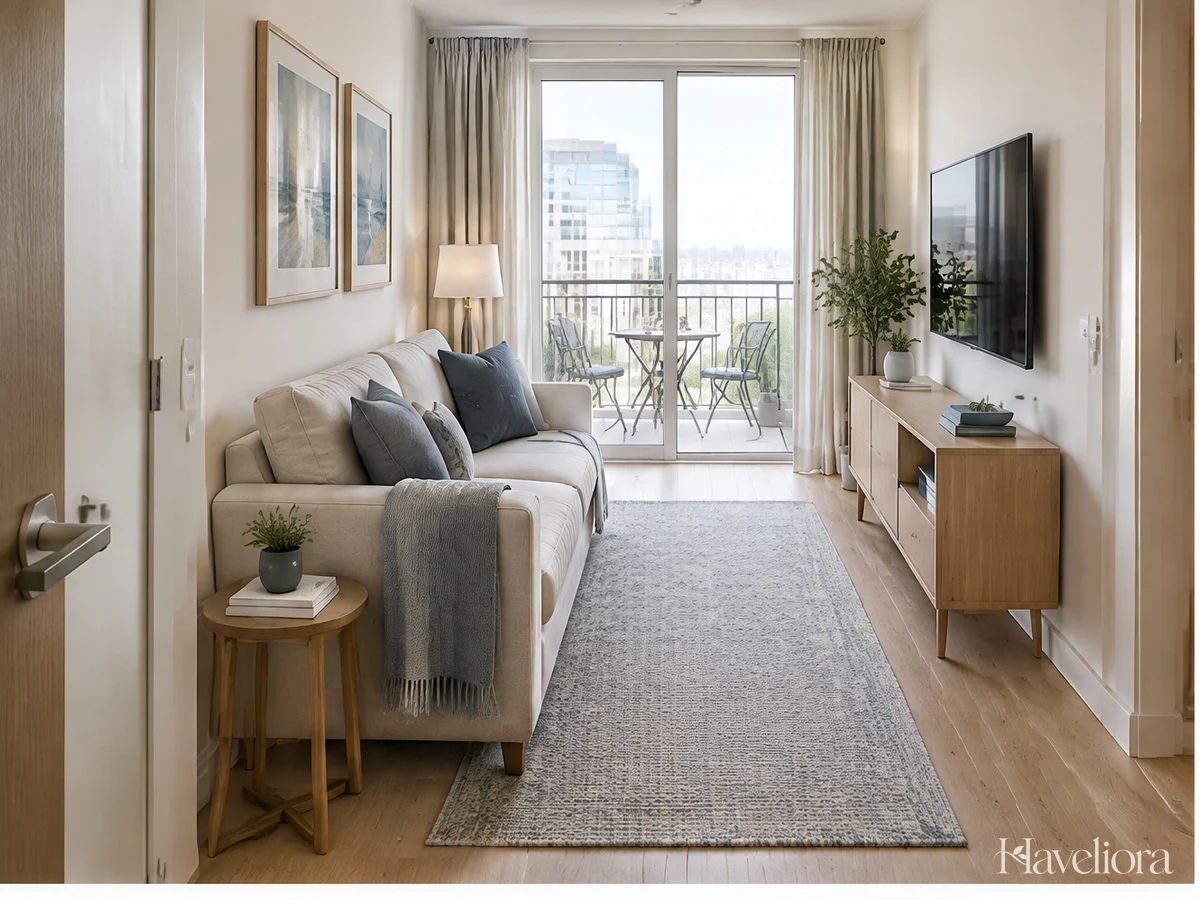
Sketch the room with door swings and the destinations beyond it. Then mark the path people naturally take. In a narrow room, a sofa along the long wall may leave a more direct route than one placed across the middle. In another layout, a small floating group may work better than pushing everything against the perimeter.
Test the arrangement physically. Use tape for the sofa, table, and storage footprints, then walk through with a bag or laundry basket. Notice where you turn sideways or step around a corner. These small inconveniences become more noticeable when the room is occupied.
Do not judge circulation with every chair perfectly tucked in. Pull out the seat people use most, open the cabinet, and imagine a guest standing near the doorway. The room should work in its ordinary state, not only immediately after tidying.
If the route cuts directly through the conversation area, consider shifting the sofa or replacing a bulky table before buying smaller versions of every object. Sometimes one strategic change recovers more usable space than a complete furniture replacement.
Planning priority: keep entrances, exits, and window access clear. The decorative arrangement belongs in the space left after these needs are respected.
2. Compare Usable Seating, Not Just Overall Sofa Width

Two sofas with the same outside width can offer very different amounts of usable seating. Thick arms, a deep back, and a projecting base all consume space. Compare the seat dimensions and how the furniture feels rather than relying only on the label small or apartment-sized.
Seat depth is a personal choice. A deep sofa may suit lounging but need supportive cushions for upright sitting. A shallower model may suit conversation but feel less comfortable for someone who likes to curl up. Think about the people who use the room most often.
Measure delivery access as well as the final position. Hallway turns, staircases, lifts, and doorway widths can determine whether a piece reaches the room. Check the manufacturer’s delivery information and whether legs or other components are designed to detach.
A sectional is not automatically too large, but its fixed return needs to suit the room. Mark the chaise section carefully and test which side makes sense. A separate ottoman may offer more flexibility when the layout changes for guests or another activity.
For a useful comparison, place a comfortable existing chair or sofa measurement beside the proposed one. This gives you a practical reference for seat height and depth rather than choosing from an image alone.
3. Use Supporting Furniture That Can Change Position
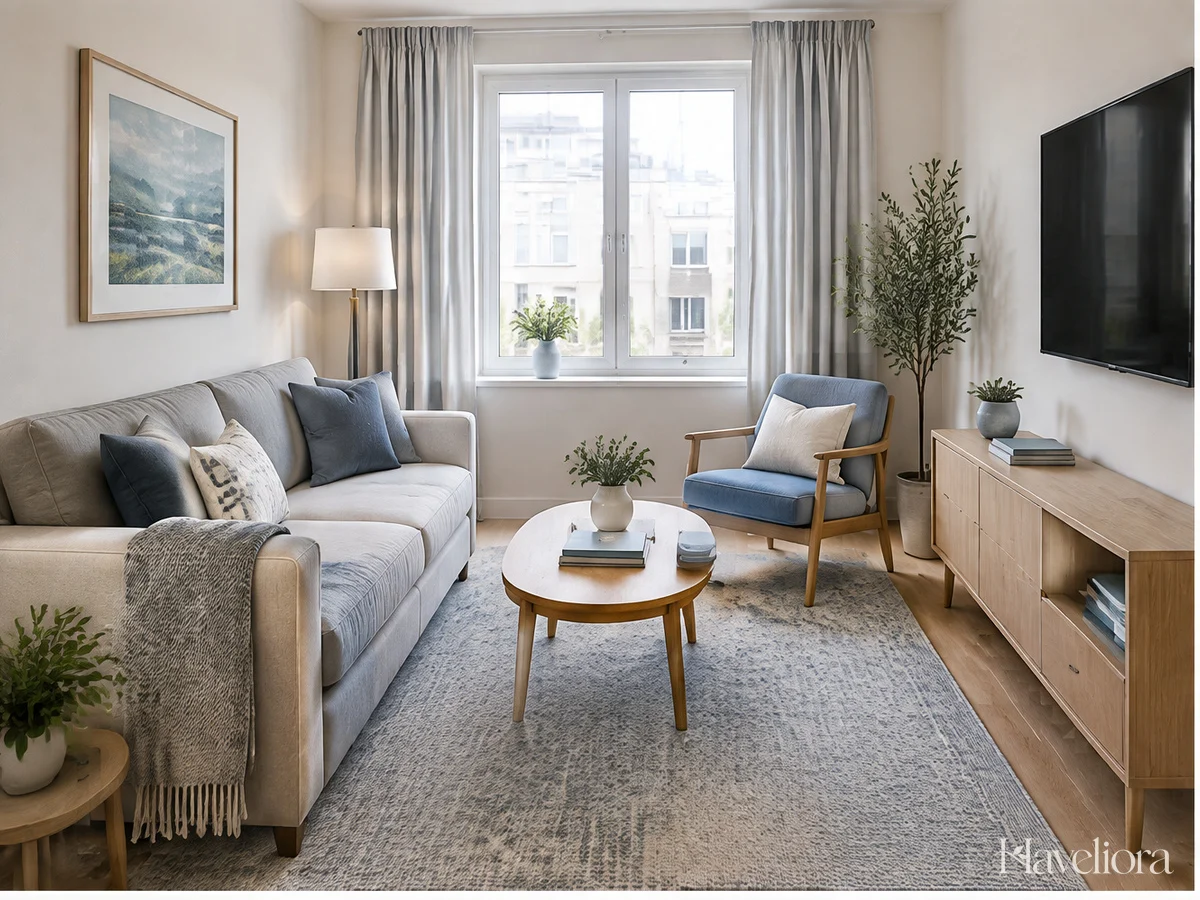
Supporting pieces should make the main seating more useful without locking the room into one configuration. A lightweight chair can turn toward conversation, while a nesting table can remain compact until an extra surface is needed.
Decide whether the coffee table is essential for your activities. If you regularly play games or eat a casual meal there, a stable central surface may deserve the space. If it mostly holds decorations, two smaller side tables may support the room better.
Look at shapes in relation to the route. An oval table can soften a tight turn, but it may offer less usable surface than a rectangle with the same overall measurements. Compare the actual top and base rather than assuming curved furniture is always more efficient.
Multifunctional pieces need to be easy to operate. An ottoman that opens for storage is only useful when the contents can be reached without moving half the room. A tray can supply a firm surface, but it should be stable and removed when the ottoman is used as a seat.
Avoid accumulating small pieces simply because each one fits: do not buy several small pieces simply because each fits individually. Evaluate their combined footprint and the work required to move them.
4. Consolidate Storage Along One Deliberate Area

Small rooms become busy when each category acquires its own piece of furniture. A bookcase, media stand, toy basket, and side cabinet may all be individually modest but collectively occupy most of the walls. Consider whether one better-organized unit can do several of those jobs.
Choose depth around the contents. Books, games, electronics, and paperwork need different amounts of space. A deep cabinet wastes circulation when it stores only shallow objects, while a very slim unit may force equipment to project beyond its surface.
Combine open and closed storage deliberately. Keep a small selection of attractive books or meaningful objects visible, and use doors or drawers for visually busy necessities. Leave appropriate ventilation for electronics and preserve access for maintenance.
Secure furniture and equipment according to the product instructions, especially when children use the room. Do not place a television on a piece that was not designed to support it. A streamlined appearance should not come at the cost of stability.
Before you order anything, measure the largest item you intend to store and test the door or drawer opening. Storage capacity is not useful when you cannot retrieve the contents comfortably.
5. Keep the Window Visually and Practically Open

A window can feel crowded when furniture, curtain folds, and a large plant all compete around it. Decide which pieces are necessary and give the opening enough room to function. The best treatment lets you control light and privacy without making access awkward.
Measure where curtains will stack when open. Where possible, use enough rod or track width for the fabric to sit mostly beside the glass. A lighter visual treatment may suit a compact room, but do not choose a sheer if it fails to provide the privacy you need after dark.
Use mirrors selectively. Check what they reflect from the main seats and doorway. A pleasing view can contribute to the composition, while reflected clutter adds another busy area. Follow the mirror’s mounting instructions and do not rely on casual leaning for stability.
Keep tall furniture from unnecessarily interrupting the view across the room. This does not mean every piece must sit on thin legs or be transparent. One solid cabinet can work well when its position leaves the window and main route clear.
For a quick test, remove one object from the window area and open the treatment fully. Assess the change before replacing the curtains or adding more reflective surfaces.
6. Give a Work Area a Clear Off-Duty State

When a living room also serves as an office, the goal is not always to hide every trace of work. It is to contain the activity so it does not spread across all the seating and surfaces. Choose one working position with appropriate support and room for the equipment you actually use.
A shallow desk or fold-away surface may suit occasional laptop work, but check its dimensions, load limits, and fixing requirements. Do not choose a decorative console as a desk without considering legroom, seat height, and the time you will spend there.
Provide a specific place for chargers, papers, and equipment when work ends. A drawer or nearby closed shelf can make the transition easier than carrying everything to another room. Route cables so neither the work chair nor people walking past catch them.
Connect the work area visually through a repeated material or color. The chair need not match the sofa, but a related wood finish or fabric tone can make the two functions feel part of one room. Avoid adding a second rug or elaborate wall display if the space already feels busy.
At the end of the day, close or clear the work surface, return the chair, and switch to the room’s leisure lighting. A simple reset helps the living area remain useful for more than one purpose.
A Furniture Test Before You Commit
Set up your proposed arrangement with tape, boxes, and the furniture you already own. Test three situations: sitting alone, sharing the room with another person, and opening every storage unit you use daily. Notice whether one configuration supports all three or requires constant rearranging.
Choose the largest piece first, then add supporting furniture only where it solves an unmet need. It is easier to select a side table after the sofa position is settled than to force a sofa around several tables purchased independently.
For a warmer finish once the plan works, use our cozy living room ideas. If the entire apartment needs to handle overlapping functions, continue with small apartment decorating.
Frequently Asked Questions
Is a sectional always wrong in a small living room?
No. A well-fitting sectional can provide useful seating, but the return must suit the room’s routes. Compare it with a sofa and movable ottoman before deciding. The flexibility of the second arrangement may matter more than the number of seats shown in a product description.
Should everything be pushed against the walls?
Not necessarily. Wall placement may help a narrow room, while a small floating seating group can work in an open plan. Test circulation and conversation rather than treating either arrangement as a universal rule.
What makes a small room look crowded?
Often it is the combined effect of many separate pieces, busy surfaces, and interrupted routes. Edit the total arrangement before replacing everything with smaller furniture. A limited number of useful pieces can feel more generous than numerous tiny alternatives.
The strongest small living room plan makes its trade-offs deliberately. Give the main seats enough comfort, protect the route through the room, and let every supporting piece justify the space it occupies.
Other Articles

Modern Living Room Ideas That Feel Warm, Not Stark
Cozy Living Room Ideas for a Home You Can Actually Relax In


