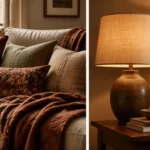
Comfort stacking is one of the most useful decorating ideas to emerge in 2026 because it starts with an experience rather than a shopping list. Instead of asking how many cushions a sofa needs or which seasonal accessory is trending, it asks a simpler question: what would make this room easier and more pleasant to use for the next few hours? In a living room, the answer may be a softer throw within reach, a lamp beside the chair you actually use, a rug that feels warmer underfoot, or a table that gives a cup of tea somewhere stable to land.
The phrase sounds decorative, but the strongest version is practical. Comfort is layered through light, textiles, temperature, sound, scent, seating, and small routines. You do not need all of those layers at once. The point is to notice which one is missing and improve it without overcrowding the room.
This guide translates comfort stacking into a living room that still looks composed. It works especially well for fall, when evenings become longer and the room is used more intensively after sunset. If you want a broader year-round foundation first, start with our cozy living room ideas. For compact rooms, our small living room guide will help protect circulation while you add layers.
1. Layer Throws and Cushions Around the Way People Actually Sit
The easiest mistake in a comfort-focused living room is to make the sofa look soft while making it harder to use. A seat covered in cushions may photograph beautifully, but if everyone has to move three of them before sitting down, the decorative layer is working against the room.
Begin with the seating positions. Notice where you lean, where your feet land, and whether you regularly pull a throw over your legs. Keep the most useful textile within reach of that place. A basket across the room can look tidy, but a folded blanket over the sofa arm may be more practical if you use it every evening.
Mix textures rather than quantities. A linen or cotton cushion beside a wool throw creates variation without requiring five different patterns. If the sofa is already heavily textured, add smoother pieces. If it is a plain flat weave, one nubby or brushed material can bring enough contrast.
Seasonal color works best as a secondary decision. Tobacco, olive, rust, ochre, chocolate, and muted plum can add autumn depth, but you do not need to use all of them. Choose one deeper note and repeat it once. The room will feel more deliberate and less like a collection of fall merchandise.
Washability matters. Living room textiles are handled, sat on, dropped, and shared. Check care instructions before buying. Comfort that requires constant worry is not much comfort at all.
2. Create Small Pools of Light Instead of Flooding the Whole Room
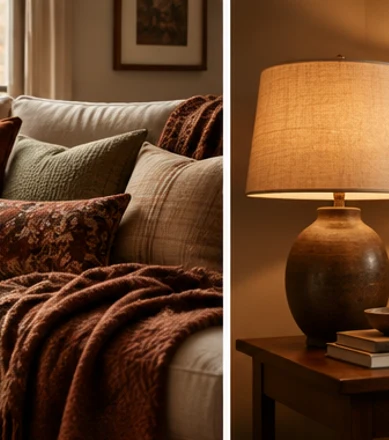
Light is one of the most powerful comfort layers because it changes how every other material looks. A bright ceiling fixture can flatten texture and make an evening room feel exposed. A floor lamp by the sofa, a table lamp beside a chair, and a smaller accent light can create depth while still providing enough illumination for reading, conversation, and movement.
Switch off the main light one evening and notice where the room fails. If the sofa becomes too dark to read, that is a task-light problem. If the far corner disappears completely, an accent or general light may help. If the coffee table remains visible but the television reflects a bright lamp, reposition the source rather than adding more brightness.
Place lights near activities. A lamp behind a decorative chair that nobody uses contributes less than a lamp beside the seat where someone reads every night. A console lamp near the entrance can help the room feel welcoming when you arrive after dark. A picture light can make artwork visible without adding another lamp base to a small surface.
Keep the light sources visually related but not necessarily matching. Similar shade colors, warm metal, dark stems, or repeated shapes can create coherence. The room will feel more collected if the fixtures have individual roles.
For a deeper lighting plan, see our living room lighting ideas. The central principle is simple: light the activities first, then the atmosphere.

3. Add Warmth Underfoot Where the Seating Area Needs It
A rug changes more than the floor. It defines the conversation area, softens sound, adds tactile warmth, and can connect furniture that otherwise looks scattered. For comfort stacking, the best rug is not automatically the thickest. It is the one that suits the traffic, cleaning needs, doors, and furniture arrangement.
Use the sofa and main chairs to establish the rug’s scale. A tiny rug floating beneath the coffee table can make the seating group feel disconnected. Where possible, let at least the front legs of the major seating pieces relate to the rug. In a small room, a correctly sized rug can actually make the space feel calmer because it reduces visual fragmentation.
Material should match the household. Wool can provide warmth and resilience; flatweaves can be easier around low doors; washable designs can be practical in homes with children or pets. No material is automatically superior. Think about what will happen to the rug on an ordinary Tuesday, not only how it looks on installation day.
Layering rugs can add texture, but it also adds edges. Make sure the layers remain stable and do not create a trip point. If the floor is already visually busy, one larger rug may be more restful than a layered arrangement.
Use pattern to solve a real visual need. A subtle pattern can disguise everyday marks and connect several colors in the room. A very high-contrast pattern can become the main feature. Decide whether you want the rug to anchor quietly or lead the scheme.

4. Build One Reading Corner That Is Genuinely Comfortable
A reading corner is a perfect example of comfort stacking because it combines several small decisions: the chair, the light, the side table, the foot position, and perhaps a throw. When those elements work together, the corner earns its space. When one is missing, the chair often becomes a place to leave clothes or bags.
Start with the chair. Sit in it for longer than a minute before deciding it is comfortable. Seat depth, arm height, back angle, and cushion firmness are personal. A chair that is ideal for one person may be tiring for another.
Then add the light. It should illuminate the page without shining directly into the eyes. A floor lamp can save table space. A table lamp works when the surface is large enough for both the lamp and a book or drink. If the corner receives good daylight, remember that the evening version still needs its own light.
Give the hand somewhere to put things. A narrow round table, small stool, or shelf may be enough. The table does not need styling beyond what you use. In fact, leaving it mostly clear is often what makes the corner feel luxurious.
Finally, decide whether the corner needs its own textile. One small throw can distinguish it from the main sofa without introducing another color. If the room is compact, do not force a reading corner into circulation space; make the main seat better instead.

5. Use Vintage Wood and Patina to Keep Softness From Feeling Generic
A room built entirely from new soft furnishings can still feel anonymous. One older wood piece, worn brass detail, handmade ceramic, or framed personal item can add the sense of continuity that makes comfort feel personal rather than staged.
Vintage does not mean filling the room with antiques. A single side table can provide enough contrast beside a contemporary sofa. An older frame can make new art feel more grounded. A wood stool with visible grain can introduce warmth without taking much space.
When combining old and new, look for shared proportions or colors. A vintage table may have a traditional shape but a wood tone that relates to the modern media console. A brass lamp may connect to older picture frames. Those relationships prevent the room from feeling like unrelated finds.
Condition matters. Patina is attractive when the piece is structurally sound and clean. Loose joints, sharp edges, unstable legs, or flaking finishes need attention. Comfort includes trust in the furniture.
If secondhand shopping is not practical, use materials with visible character instead of imitation aging. Natural wood grain, woven fibers, handmade-looking ceramics, and varied metal finishes can add texture without pretending to be older than they are.

6. Turn a Small Evening Ritual Into Part of the Room
Comfort stacking becomes meaningful when the room supports a routine. Maybe you make tea after dinner, read for twenty minutes, listen to music, or watch one episode of a show. The living room can quietly prepare for that ritual without turning it into a display.
If you drink something in the room, provide a stable surface within reach. A coaster, small tray, or side table is more useful than a styled stack that has to be moved. If you read, keep one book nearby rather than creating a decorative pile. If music matters, make the speaker easy to use and keep the area around it uncluttered.
Scent can be part of the atmosphere, but it should not dominate. Ventilation, allergies, pets, children, and personal sensitivity all matter. If you use candles, follow fire-safety guidance and keep them away from curtains, books, dried foliage, and other combustible materials. A lamp can provide warmth without an open flame.
Sound also affects comfort. A rug, curtains, and upholstered furniture can soften a room that echoes. You do not need acoustic panels for an ordinary living room; simply notice whether hard surfaces are making conversation feel sharp.
The ritual should be easy to reset. If the coffee table takes ten minutes to restore every night, simplify it. Comfort stacking is most successful when the room supports relaxation without creating more work afterward.

How to Comfort-Stack a Living Room in the Right Order
Start with temperature and seating. If the room is physically uncomfortable, decorative changes will not solve it. Adjust the textiles you actually use and make sure the primary seat supports the people who spend time there.
Next, improve evening light. Then address the floor with a rug or mat where it adds real comfort. After those larger layers, add one personal or vintage element and refine the surfaces around daily routines. Scent, seasonal branches, and small accessories should be last because they contribute atmosphere but rarely solve the room’s biggest problem.
This order helps protect the budget. It also keeps the room from becoming crowded with low-impact purchases. If your living room already feels comfortable, you may need only one change. More layers are not automatically better.
Comfort Stacking in a Small Living Room
In a small living room, every layer should perform more than one job where possible. A soft ottoman can support feet and act as a flexible table with a tray. A wall-mounted light can free a side table. A storage bench can provide seating and hold spare blankets. Multifunction does not mean every object needs a gimmick; it means avoiding pieces that consume valuable floor space without supporting the routine.
Keep the center of the room easy to move through. Large floor cushions, baskets, and layered rugs may be cozy in photographs but frustrating if you have to step around them. Use softness on the sofa, chair, walls, and windows before filling the walking route.
Our small living room ideas cover scale and circulation in more detail. Comfort begins with being able to move through the room without thinking about it.
Common Comfort-Stacking Mistakes
Adding softness without editing. New throws and cushions will not make a crowded room calmer. Remove what is not being used first.
Confusing dimness with atmosphere. A comfortable room still needs task light. Make the room readable, then reduce sources as the evening progresses.
Buying matching sets. Comfort tends to feel more personal when materials relate without looking identical. Repeat a color or finish rather than purchasing every accessory from one collection.
Ignoring maintenance. Choose textiles, rugs, and surfaces that can handle your household. A room that is difficult to clean or reset will not stay relaxing.
Stacking every sensory layer at once. Strong scent, loud pattern, heavy texture, dim light, and many objects can become overstimulating. Pick the layers that matter to you.
Frequently Asked Questions
What does comfort stacking mean in home decor?
It means building comfort through several practical and sensory layers, such as useful seating, soft textiles, warm lighting, rugs, personal objects, and small routines. The goal is not maximum decoration; it is a room that supports how you relax.
Do I need to buy new furniture to try comfort stacking?
No. Moving a lamp, bringing out a stored throw, clearing a side table, and repositioning a chair can change the experience without new furniture.
How many cushions should a sofa have?
Enough to support comfort without needing to be removed every time someone sits down. The number depends on sofa size, depth, and how the household uses it. Function is a better guide than a fixed formula.
Can comfort stacking work in a minimalist living room?
Yes. Use fewer, better-chosen layers: one rug, one throw, two useful lamps, and a small number of personal objects. Comfort does not require visual abundance.
How do I keep a cozy living room from looking cluttered?
Use large useful layers before small decorative ones, keep walking routes clear, and leave some surfaces partly empty. Repeat a limited palette so varied textures still feel connected.
Final Thought
Comfort stacking works because it treats the living room as a place where life happens. Start with the seat, light, floor, and small routines you repeat. Add warmth where it improves those experiences and stop before the room becomes harder to use. A truly cozy room does not announce how comfortable it is; it simply makes staying there easy.
Trend Context
For more context on the term, see Better Homes & Gardens on the 2026 comfort-stacking trend. Haveliora’s approach above focuses on applying the idea through practical living-room decisions rather than recreating a trend checklist.
How to Comfort-Stack for Different Kinds of Households
The same living room will feel comfortable in very different ways depending on who uses it. A household with young children may value washable textiles, rounded tables, clear floor routes, and storage that can be reset quickly. A home with pets may need rugs and throws that tolerate regular cleaning. Someone who lives alone may prefer one exceptionally comfortable chair and a compact side table rather than a full seating group. The useful question is not what a cozy living room is supposed to contain; it is what makes your particular evenings easier.
For families, begin with the shared activity. If everyone gathers for movies, make sure the primary seats have a clear view and nearby surfaces for drinks. If conversation matters more, angle chairs toward one another instead of lining everything up toward a screen. Keep frequently used blankets in an accessible basket or cabinet, but do not let storage containers consume the walking space they are meant to tidy.
For people who work from the living room, comfort stacking needs a daytime boundary. A laptop, charger, notebook, and headset should have somewhere to go when work ends. That may be a drawer in the media cabinet, a lidded box on a shelf, or a slim basket beside the desk. The evening room will feel more restorative when work equipment does not remain scattered across the coffee table.
If guests use the room often, think about flexible comfort rather than permanent extra furniture. A light side table that can move between chairs, a small stool that doubles as an occasional perch, or an ottoman that supports feet and additional seating can be more useful than filling the room with chairs that are rarely occupied.
Accessibility matters too. Keep essential routes wide enough for the people who use them, choose seating heights that are comfortable to stand from, and avoid loose textiles or unstable tables in places where they create a hazard. Comfort should reduce effort, not hide it under decoration.
How to Shop for Comfort Without Creating Clutter
Before buying anything, name the discomfort in one sentence. “The sofa feels cold in the evening” points toward a textile. “I cannot read comfortably” points toward a lamp. “There is nowhere to set down a drink” points toward a table. “The room echoes” suggests softer surfaces. That sentence prevents a vague desire for coziness from becoming a cart full of unrelated objects.
Measure the location and photograph it from the angle you usually see. A side table that looks compact in a showroom can block the gap between a sofa and doorway. A floor lamp with a wide base can occupy more room than its shade suggests. Measurements are especially valuable when you are adding layers to a small space, because every new footprint interacts with the circulation that already works.
Choose broad-impact purchases before decorative ones. A correctly sized rug affects the entire seating group. A useful lamp changes every evening. One good throw is more noticeable than four small ornaments. When the large practical layers are resolved, you may discover that the room needs very little else.
Consider maintenance at the point of purchase. Read textile care labels, check whether a rug can be cleaned in a way that suits your household, and think about how often a pale upholstery fabric will be touched. There is no prize for choosing the most delicate version of a material. A room feels more luxurious when you can use it without anxiety.
Secondhand pieces can add character and keep a comfort-focused room from looking like a catalog, but inspect their structure. A well-made wood table with surface wear can be charming. An unstable chair with loose joints is not made better by patina. Clean and repair pieces appropriately before bringing them into regular use.
A Ten-Minute Evening Reset That Preserves the Cozy Feeling
A comfortable living room should not require an elaborate closing routine. If the space takes half an hour to restore after normal use, the decorating system is too demanding. A simple reset can keep soft layers available without allowing the room to become visually noisy.
Start with the surfaces. Return cups and dishes to the kitchen, put remotes in one predictable place, and close or stack the book you are using. Leave the coffee table partly empty rather than restyling it every night. Clear surface area is what makes the remaining objects feel intentional.
Next, fold or drape the throws according to how they will be used tomorrow. They do not need perfect folds. A relaxed fold on the sofa arm is enough if that is where you reach for it. Put spare blankets away so the room contains only the layers that are in active use.
Fluff seating only as much as the cushions need. Over-arranging a sofa every evening can turn comfort into maintenance. If cushions constantly collapse or slide, the insert, cover size, or sofa depth may be the underlying issue. Fixing that problem is more useful than repeatedly styling around it.
Finish with the light. Turn off decorative sources you no longer need and leave the final route to the door safely visible. This small sequence allows the room to end the day in a calm state without becoming untouched or formal.
How to Carry Comfort Stacking From Fall Into Winter
One reason comfort stacking is more useful than seasonal decorating is that most of the layers can stay. As fall becomes winter, the room may need a warmer throw, heavier curtain use, or a brighter task lamp during earlier sunsets, but the basic seating, rug, reading corner, and evening routine remain relevant.
Instead of replacing the autumn palette, deepen it selectively. A rust cushion can stay beside chocolate, cream, forest green, or navy. Natural wood and brass continue to work through winter. If holiday decor enters the room, let it occupy a limited area rather than covering every surface that was previously functional.
Temperature changes can also alter how a room is used. A chair near a drafty window may become less appealing, while the seat nearest a warm interior wall becomes everyone’s favorite. Observe that behavior before moving furniture permanently. Sometimes a seasonal shift in where people sit can be solved with a curtain, throw, or small layout adjustment.
When spring arrives, remove the heaviest layer first rather than stripping the room completely. The rug, lamps, personal objects, and collected furniture are not seasonal. Comfort stacking works best when it helps you identify which parts of the room are foundational and which can change lightly throughout the year.
A Final Comfort Audit
Sit in every primary seat and look around from that height. Can you reach a surface? Is there enough light for what you do there? Does a cushion push you forward awkwardly? Is the rug edge underfoot stable? Does a basket or side table narrow the route? These small questions reveal more about comfort than a photograph taken from the doorway.
Then evaluate the room when nobody has prepared it for a photo. Leave the book, remote, and blanket where they naturally end up after an evening. If the space still feels composed, your system is working. If everything looks messy the moment the room is used, it probably needs better storage, fewer decorative layers, or clearer homes for everyday objects.
The final test is whether the room invites you to use it. Comfort should not make you afraid to crease a cushion, move a throw, or put a mug on the table. The best stack of layers is the one that supports ordinary life and can be restored with minimal effort.
Comfort Stacking Without Changing Your Decorating Style
Comfort stacking is not a style category, which is one of its strengths. A modern living room can use the idea through a clean wool throw, sculptural lamp, generous rug, and one comfortable reading chair. A traditional room might rely on patterned cushions, wood furniture, shaded lamps, and curtains. A minimalist room can remain visually quiet while becoming more comfortable through better upholstery, one tactile textile, and lighting placed closer to the people who use it.
Do not buy rustic objects because the word “cozy” makes you think the room should look rustic. Do not add vintage pieces if you prefer crisp contemporary furniture. Keep your existing visual language and improve the sensory experience within it. A room feels authentic when comfort supports the style you already enjoy rather than replacing it with a seasonal costume.
This also applies to color. A black-and-cream living room can be comfortable. So can a colorful room. Warmth is created by relationships between light, material, scale, and use, not by a mandatory beige palette. If the sofa color already suits you, leave it alone and focus on what the room needs physically.
That restraint is useful for long-term decorating. Trends can introduce a helpful idea, but your home should not need a new identity every year. Use comfort stacking as a method for evaluating the room: notice friction, solve it with the smallest effective change, and keep the parts that already work.
When the room supports your habits naturally, comfort stops looking like decoration and starts feeling like good design.
Other Articles
Living Room Lighting Ideas That Skip the Big Light
Fall Living Room Ideas for a Cozier, More Layered Space