A spa-like bathroom is not defined by a freestanding tub or a shelf full of matching bottles. At home, the qualities that matter most are often simpler: a clear place to set something down, a towel within reach, light that suits the task, and a room that is straightforward to clean and reset.
The atmosphere comes from reducing unnecessary friction as much as from choosing attractive materials. If you have to move decorative objects to reach the tap or step around a basket after showering, the styling is working against the feeling you want.
This guide treats spa-inspired design as a calm, practical approach rather than a promise of health benefits or a demand for expensive renovation. The six ideas focus on the room as a whole, the wash area, textiles, lighting, ventilation, and a restrained material mix. Start with the parts you use every day and let the decoration remain secondary.
Build a calmer bathroom
1. Choose a Quiet Direction Before Buying Spa Accessories

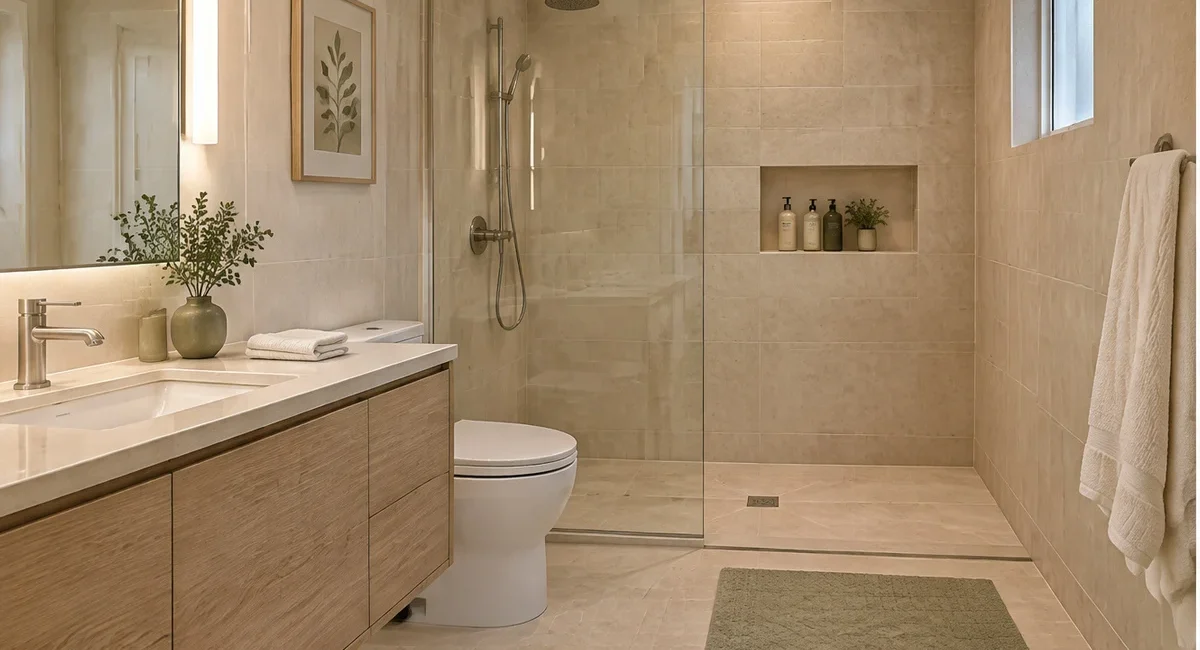
Begin with the permanent surfaces. Warm pale tile, a wood-look vanity, and simple metal fittings can provide a calm direction, but many other combinations can work. You do not need to remove existing color to create a more settled room.
Choose a limited group of related tones for the removable pieces. Towels, a suitable curtain, and a bath mat can connect visually without all being identical. When the tile already has a strong pattern, keep these textiles quieter so the room does not acquire a second competing scheme.
Look at the bathroom from the doorway and identify the most visually demanding area. It may be a crowded shelf rather than a permanent finish. Editing that area can have more impact than buying a new collection of accessories labeled spa.
Keep the room’s scale in mind. A large decorative ladder, tall plant, or wide stool may look relaxed in a spacious photograph but consume the only useful floor area in your home. A clear corner can contribute more to the atmosphere than another piece of furniture.
Before you buy anything, describe the room in terms of two or three qualities you want, such as warm, uncluttered, and easy to maintain. Use those qualities to judge each proposed purchase rather than building a list of decorative objects.
2. Make the Wash Area Feel Ready to Use
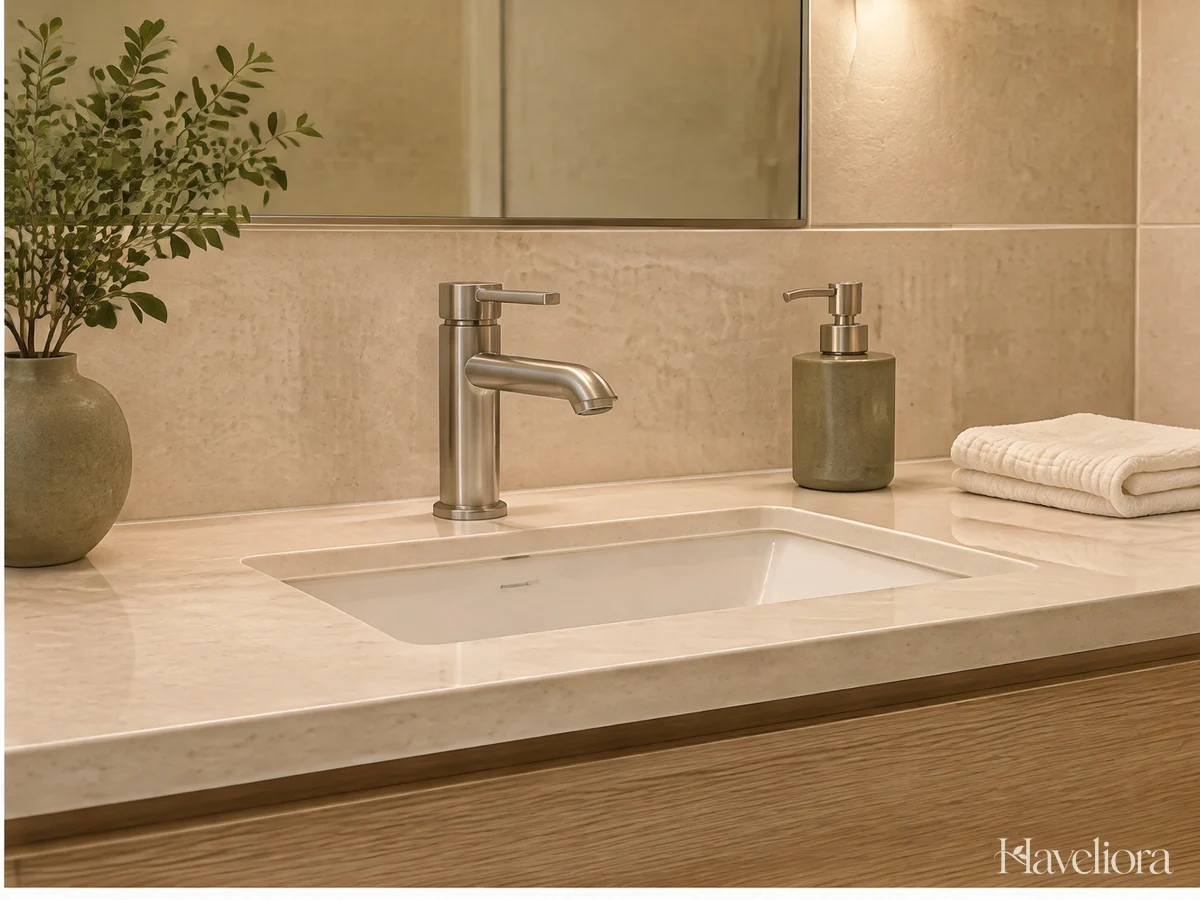
Keep the items used at the basin close and move the rest into appropriate storage. The aim is not an empty room but a clear distinction between daily essentials, spare products, and decoration.
Choose a small, washable grouping if you enjoy a coordinated appearance. A dispenser and a shallow tray may be enough. Check that each item is stable, easy to operate, and suited to repeated moisture. Keep important product labels and instructions available rather than sacrificing them for a uniform bottle collection.
Leave a genuine landing area. You may need somewhere for glasses, a small toiletry bag, or the items involved in an ordinary routine. A counter covered edge to edge with attractive objects is still unavailable counter space.
Make the cleaning routine simple. You should be able to lift the group and wipe beneath it without dismantling a complicated arrangement. Check underneath trays and containers rather than allowing moisture to collect out of sight.
A useful distinction is this: a spa-inspired look should reduce the number of decisions you make each morning. If the arrangement requires careful restyling after every use, simplify it until the useful objects naturally return to their places.
3. Choose Towels and Mats for the Way They Will Be Used

Soft-looking textiles can contribute to the atmosphere, but feel, care, and drying space matter more than appearance alone. Choose towels you enjoy using and can wash according to their instructions. A very bulky towel may not suit a room with limited hanging space.
Give used towels a clear destination. Separate the display of clean spares from the place where damp towels hang. A rolled stack can be attractive in a guest area, but it does not solve the everyday need for rails or hooks.
Choose a bath mat appropriate for the floor and intended wet use. Keep it flat and follow cleaning and drying guidance. Do not substitute a delicate decorative rug merely because its color looks calmer.
Limit the visible supply to what the room can accommodate comfortably. Store larger quantities elsewhere when necessary. A bathroom does not need a tower of towels to feel generous; it needs the right towel in a useful place.
For the textile palette, repeat one warm neutral across the main textiles and introduce a quieter secondary tone through a small detail. This can create continuity without requiring every fabric to have the same weave or exact shade.
4. Separate Useful Light From Evening Atmosphere

The bathroom may need clear light for grooming and a gentler setting at another time. Think about those uses separately rather than making the whole room permanently dim in pursuit of atmosphere.
Assess the mirror area from the position where you use it. Notice whether the existing light produces glare or strong shadows. A fixture that looks decorative from the doorway may not serve that task well.
Any new lighting needs to suit its bathroom location and applicable electrical requirements. Use appropriately specified fixtures and qualified installation where needed. Ordinary portable lamps, trailing cords, and electronics placed on bath trays are not substitutes for a suitable system.
When dimming is part of the plan, check compatibility among the bulbs, fittings, and controls. Do not assume that all components work together because each is described as dimmable. A professional can help resolve the details when the installation is being changed.
If you are not changing the wiring, review the permitted bulb choices and the surrounding reflective surfaces first. A cleaner mirror and a simpler nearby arrangement may improve the useful light without requiring a new decorative fixture.
5. Treat Ventilation and Moisture Control as Part of the Design

A bathroom cannot be made more comfortable by covering up a moisture problem. Before adding accessories or changing paint, inspect the room for recurring dampness, leaks, or ventilation that is not working as expected. These issues deserve attention in their own right.
The EPA’s moisture guidance recommends fixing water problems and using appropriate ventilation, including a bathroom fan or an open window where suitable. Follow the room’s installed system and get professional help for problems beyond straightforward maintenance.
Keep ventilation openings unobstructed. A decorative shelf, curtain, or plant should not be placed where it interferes with the equipment. Preserve access to plumbing and fittings so maintenance does not require dismantling an elaborate decorative arrangement.
Choose shower storage that is easy to clean and stable in its intended position. Keep only the products used there regularly rather than moving the whole spare supply into the enclosure. Follow fixing and load instructions for any added shelf or caddy.
The design benefit is simple: when the practical systems are reliable and accessible, the room can stay visually simpler. You do not need baskets or accessories to disguise areas that should instead be repaired or reorganized.
6. Use a Small Number of Materials With Different Textures

Material contrast can make a restrained bathroom feel more considered. A matte tile, a grained cabinet front, and a simple metal fitting offer different surfaces even when their colors are quiet.
Do not choose every material at its most visually dramatic. Strong stone movement, patterned tile, prominent wood grain, and decorative metal can all compete. Let one surface lead and allow the others to support it.
Compare actual product requirements. A wood-look surface and natural wood may have different care needs; similar-looking tiles may differ in suitability for floors or wet areas. Follow the manufacturer’s specifications and professional guidance rather than relying on appearance.
For an existing bathroom, introduce material variety through suitable removable pieces instead of assuming the tile must change. A practical ceramic dispenser, coordinated textile, or simple frame in a dry area may supply enough contrast.
For a personal finish, choose one small artwork or object that you genuinely enjoy, provided its material and position suit the room. A calmer bathroom can still have character; it simply does not need every surface to carry a decorative statement.
A Calm-Bathroom Reset Without a Renovation
Start by returning the room to its useful essentials. Clear the vanity, reduce the products in the shower, and identify where every used towel will hang. Address any maintenance concern before planning a decorative refresh.
Next, choose one textile improvement and one organizing improvement. That might mean towels better suited to the available rail and a drawer insert that fits around the plumbing. These purchases have a clear job and are easier to evaluate than a collection of themed accessories.
Finally, add one visual detail and stop. Review the bathroom during the busiest part of the day. If the arrangement remains easy to use and reset, the styling is supporting the routine rather than becoming another task.
For more finishing options, see everyday bathroom decor ideas. For a tight footprint, use the layout decisions in our small bathroom guide.
Frequently Asked Questions
Do I need a bathtub to create a spa-like bathroom?
No. A well-organized shower room can provide the same calm design direction. Focus on clear surfaces, suitable lighting, useful textiles, and a connected palette rather than adding a fixture the room cannot comfortably support.
Should I use candles for atmosphere?
They are not necessary. Suitable installed lighting can provide a gentler setting without introducing an open flame. A decorative flameless option can be considered only where its product specifications and placement suit the bathroom conditions.
What is more important: accessories or materials?
For an existing room, practical organization often deserves attention first. Then use the materials already present as the basis for a few suitable accessories. Expensive finishes do not compensate for a cluttered or inconvenient daily routine.
A spa-inspired bathroom at home is most successful when it feels ready for ordinary use. Keep the functions clear, make maintenance straightforward, and let the quieter decorative choices reinforce that ease.
Other Articles

Small Apartment Decor Ideas for Rooms That Do More Than One Job
Small Bathroom Ideas That Make Every Surface Work Harder