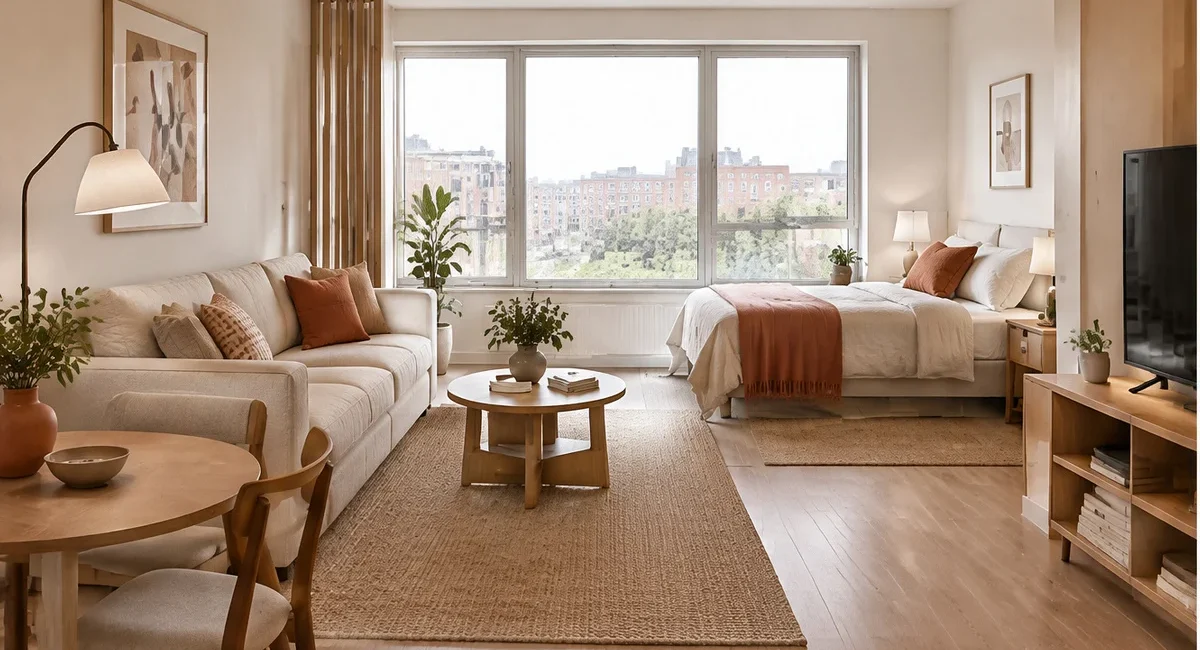
Decorating a small apartment is often an exercise in sharing. The living area may also hold a dining table, a work surface, or the edge of a sleeping space. The challenge is not simply making the apartment look bigger. It is helping those activities coexist without making every transition feel like a complete rearrangement.
A good arrangement gives each main activity a clear place while allowing some furniture and storage to serve more than one purpose. It also accepts that not every corner needs a separate function. Empty space can be the part that lets the apartment work.
These small apartment decor ideas focus on six decisions: zones, multifunctional pieces, dividers, dining, storage, and lighting. They are intended for ordinary compact homes, including rentals where changes may need permission. Begin with the layout and daily routines, then use a connected palette to make the separate parts feel like one home.
Six ways to organize a compact apartment
1. Define the Main Activities Before Placing the Furniture

List the activities that happen most often: sleeping, eating, working, relaxing, and storing everyday belongings. Rank them by frequency and the amount of uninterrupted space they need. This prevents an occasional activity from taking over the best part of the apartment.
Place the largest essential piece first, then protect the routes between doors, windows, and fixed facilities. In a studio, the bed may set the main boundary; in a one-bedroom apartment, the sofa and dining table may determine the living area’s flow.
Use furniture orientation to make a zone legible. A sofa can face away from a sleeping area, while a rug can gather the seating without adding a physical barrier. You do not need a different rug, wall color, and divider for every activity.
Test the apartment in its busiest normal state. Pull the dining chairs out, open storage, and place the work chair where it is used. A plan that looks spacious only when everything is closed may be inconvenient to live with.
A practical compromise is to give a frequent activity a permanent position and an occasional one a simple setup routine. A guest bed used a few times a year should not necessarily determine the comfort of every ordinary evening.
2. Choose Dual-Purpose Furniture With a Simple Changeover
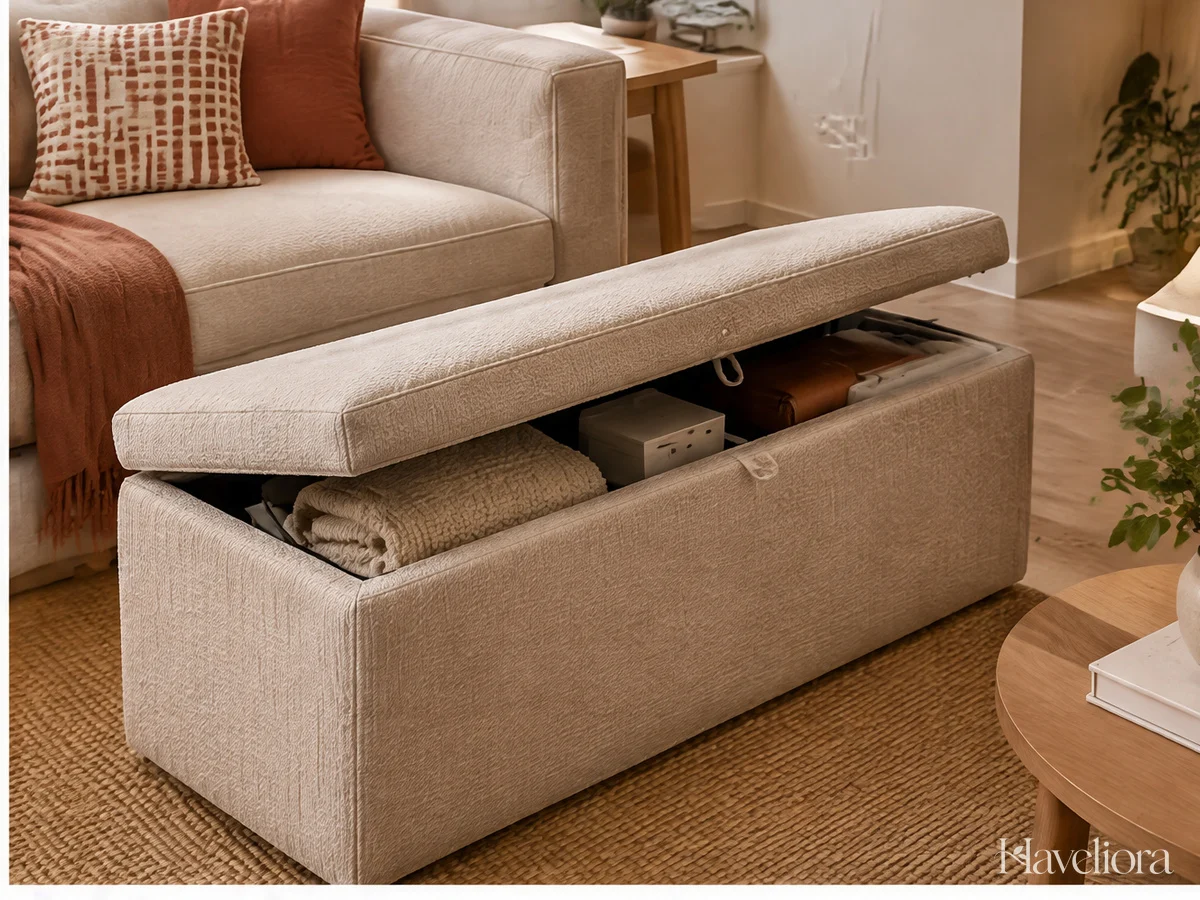
Multifunctional furniture is appealing, but the second function needs to be easy to access. A storage ottoman is useful when you can open it without moving several decorations. A folding table is useful when its open position leaves room to sit comfortably.
Evaluate the changeover as carefully as the main use. Where do the cushions go when a sofa bed opens? Where are extra chairs stored? Does a lift-top table need objects removed before it can operate? These details determine whether the promised flexibility becomes part of daily life.
Check dimensions in every operating position. A compact closed footprint can expand into a much larger area, and moving parts need the space specified by the manufacturer. Follow load limits and instructions rather than treating a clever mechanism as universally suitable.
Do not ask one piece to do so many jobs that it does none comfortably. A dining chair can sometimes serve occasional desk work, but a setup used for long working days deserves appropriate support and dimensions. The apartment’s size does not eliminate the need for comfort.
When choosing multifunctional furniture, prefer a piece with one excellent main function and one genuinely useful additional function over a complicated product whose every use involves rearranging the room.
3. Create Privacy Without Taking Away All the Light
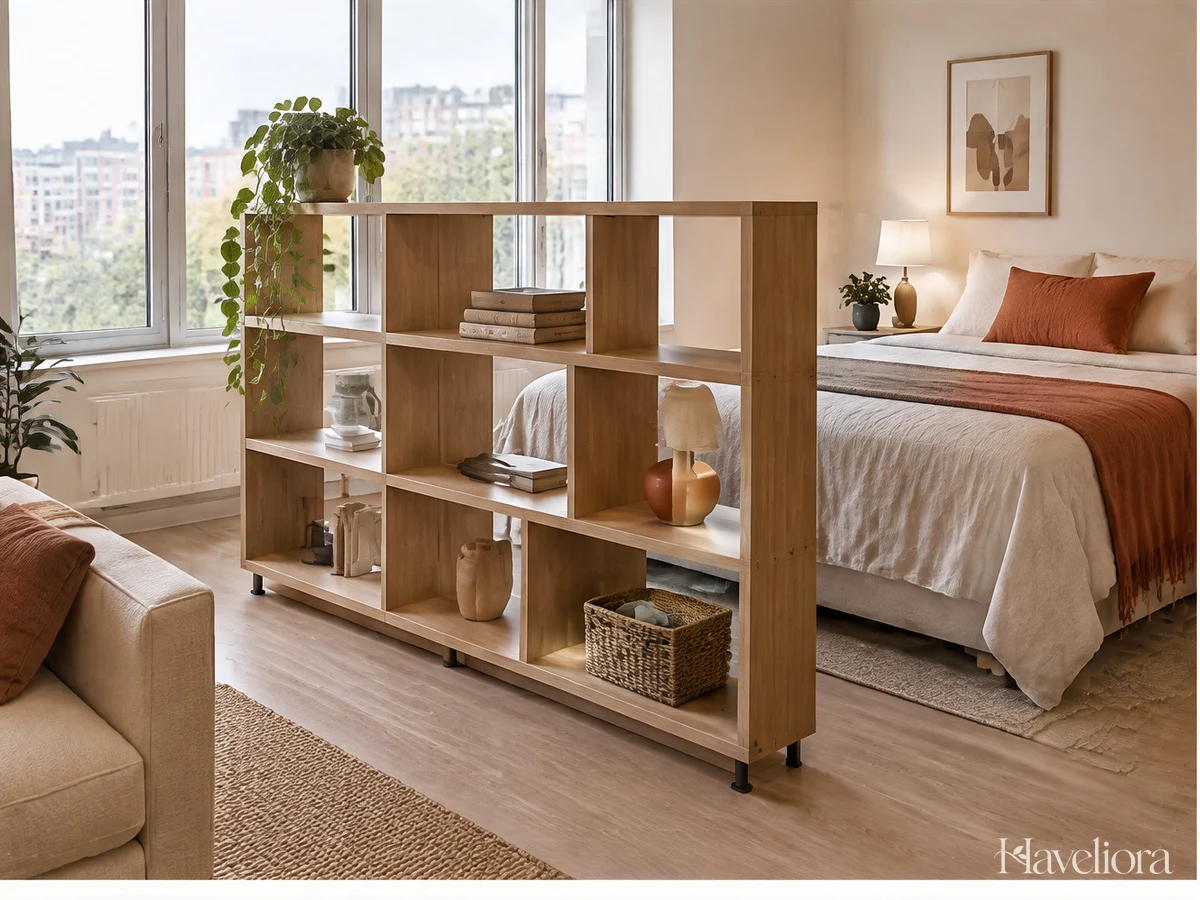
Decide how much separation you actually need. You may want to hide the bed from the entrance rather than create a fully enclosed room. A lower divider, a carefully positioned storage piece, or the orientation of the sofa may solve that narrower problem.
Consider where daylight enters and how it travels through the apartment. A tall solid unit placed across the only window’s light can make the inner area less pleasant to use. An open-backed piece or a partial-height boundary may be a better compromise when privacy requirements allow it.
Use storage furniture only as its design permits. A bookcase should not become a freestanding room divider unless it is suitable and can be secured appropriately. The CPSC’s Anchor It resources explain the importance of furniture stability and restraints.
Keep the divider outside essential circulation and exit routes. Do not create a bedroom-like enclosure without considering ventilation, access, and applicable requirements. For structural alterations or substantial new partitions, get appropriate professional advice and any required permission.
Before committing to a divider, mark the proposed divider line with boxes or a temporary visual boundary. Live with the route for a day before selecting a permanent piece.
4. Give Dining a Place That Works With Occupied Chairs

A small table is not automatically a small dining arrangement. Chairs need space to pull out and people need somewhere to move behind them. Measure the occupied setup rather than choosing a table because its top fits a gap.
Match the arrangement to normal use. Two comfortable everyday seats may be more valuable than four cramped seats kept permanently around a table for occasional guests. An extendable or drop-leaf option can help when its extra size has a practical temporary position.
Consider whether the table also supports work or hobbies. If so, plan storage for those supplies so meals do not require moving a pile onto the sofa. A nearby drawer or shelf can make the shared function manageable.
Use a repeated material to connect dining to the rest of the apartment. A wood tone from the storage unit or a fabric color from the sofa can be enough. The dining furniture does not need to match everything around it, but it should feel like part of the same overall plan.
Before you buy the table, sit at a mock-up of the proposed table position with the chairs you expect to use. For detailed alternatives, see our small dining area ideas.
5. Consolidate Storage Instead of Adding a Unit to Every Gap

Small apartments often acquire storage one problem at a time. A basket handles one category, a shelf another, and a narrow cabinet fills the remaining corner. Eventually, the collection takes up more useful space than a single well-planned storage area would.
Group the belongings before choosing furniture. Decide which items need daily access, which can be stored farther away, and which no longer need to stay. Buy for the contents you actually have rather than an abstract wish for maximum capacity.
Choose depth and opening style carefully. Shallow storage can preserve a route, while deeper storage may be necessary for particular equipment. Doors and drawers need operating space. A large capacity is not helpful when the contents are difficult to retrieve.
Balance closed storage with a small display area. Keep visually busy items behind doors and let a few books or meaningful objects remain visible. The apartment can feel personal without every possession being part of the decorative scheme.
To test the storage system, return everything to its proposed place after an ordinary evening. If the system is too complicated to reset quickly, simplify the categories or move the most-used storage closer to the activity.
6. Let the Lighting Change With the Apartment’s Activities
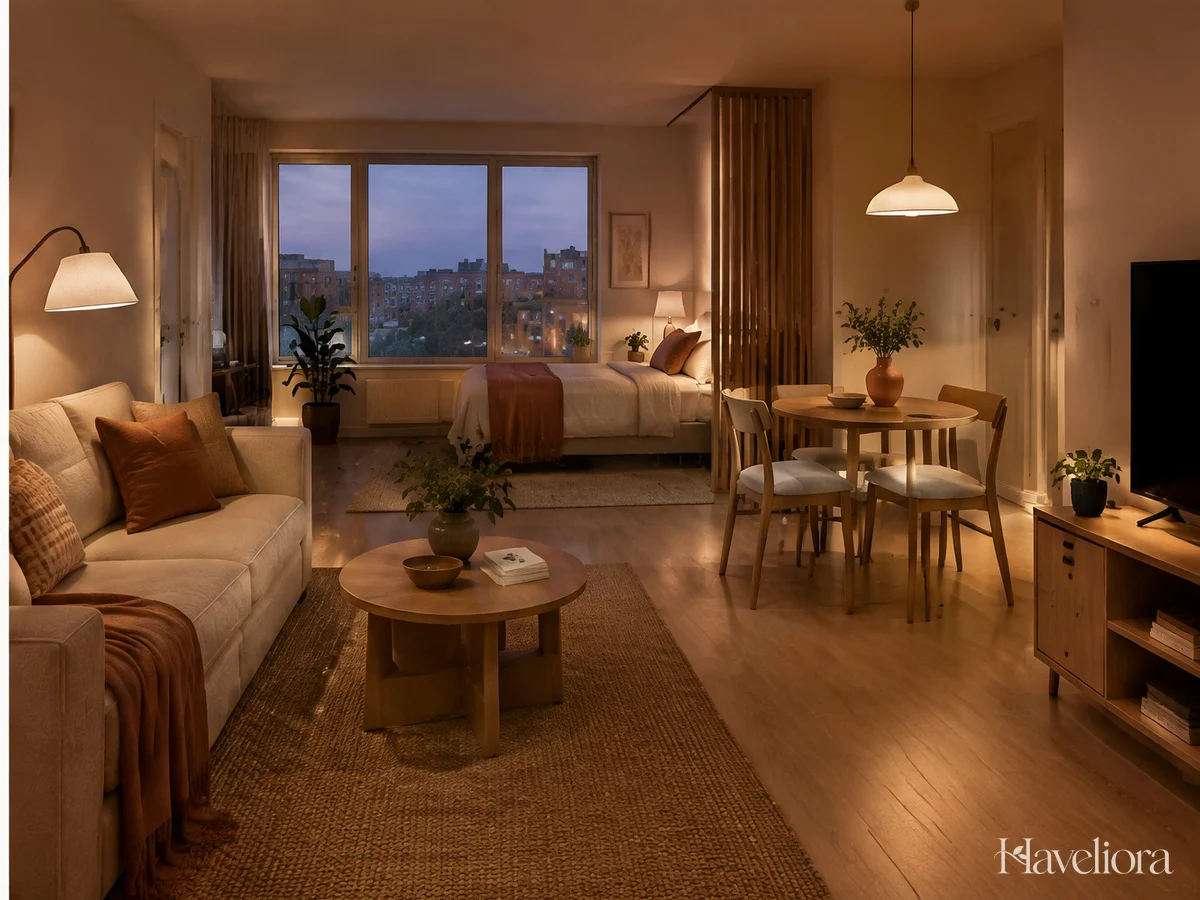
One central ceiling fixture may illuminate the apartment but provide little flexibility. A reading lamp, dining light, and suitable work light can support different tasks independently. This is particularly useful when one person works while another relaxes nearby.
Place the light where the task happens and check it from the seated position. Avoid glare in screens and direct light in someone’s eyes. A decorative lamp should still have a useful relationship to the furniture around it.
Plan cable routes with the layout. A floor lamp in the right visual position may be impractical if its cord crosses the only walking path. Use suitable outlets and follow product instructions; get qualified electrical help for changes beyond the intended plug-in setup.
Keep the fixtures visually related without making them identical. A shared finish or similar shade color can connect different forms. Too many competing statement lamps can make a compact room feel busy even when their lighting functions are useful.
At the end of the workday, switch off the working light, put the supplies away, and use the seating area’s lamps. A clear change in setup can help the same room feel ready for a different activity.
Build a Small-Apartment Plan in Three Passes
First, resolve the fixed conditions and main routes. Mark doors, windows, heating equipment, and the essential furniture. Make sure the apartment works before assigning every remaining corner another purpose.
Second, solve storage and shared functions. Choose where the work supplies go after use, how dining chairs move, and how any convertible furniture opens. The transitions are as important as the individual activities.
Third, connect the palette. Repeat a few colors and materials through the apartment while allowing each area a small difference. This creates continuity without making every room look identical.
For a focused seating plan, use our small living room guide. To make the arrival area work harder, explore small entryway ideas.
Frequently Asked Questions
Should every piece be multifunctional?
No. Some pieces deserve to do one essential job well. Use dual-purpose furniture where the second function is genuinely convenient, and avoid mechanisms that make ordinary use more difficult.
How do I make a studio feel less like one crowded room?
Give the main activities clear positions, protect the route through the apartment, and use a limited palette to connect them. A partial boundary or furniture orientation may provide enough separation without adding several dividers.
Can a small apartment contain dark furniture?
Yes. Judge the amount, position, and usefulness of the piece rather than applying a blanket color rule. A darker cabinet can be an intentional anchor when surrounding surfaces and furniture remain quieter.
A successful compact apartment makes its changes of use straightforward. Plan the transitions, keep the storage convenient, and leave enough unassigned space for everyday life to happen comfortably.
Other Articles
Small Entryway Ideas for a Tidy, Welcoming Arrival
Spa-Like Bathroom Ideas for a Calmer Daily Routine