

A bathroom refresh does not have to begin with new tiles. In many rooms, a better first step is deciding what should remain on the vanity, where wet towels can dry, and which colors already appear in the permanent finishes. When those practical details are resolved, even a modest bathroom can feel more deliberate.
Decoration has a particular job here. It needs to withstand everyday use, leave surfaces accessible, and avoid turning a wet room into a display of delicate objects. A beautiful tray is only helpful when it is easy to clean. A new towel is only useful when there is room to hang it after a shower.
These bathroom decor ideas focus on six areas you can review without assuming a full renovation. They work for family bathrooms, guest bathrooms, and compact rentals, with the appropriate permission for any changes. Start with the fixtures and surfaces you are keeping, then build a smaller collection of practical, coordinated details around them.
Explore the six refresh ideas
1. Build the Palette Around the Fixtures You Are Keeping

Look at the tile, floor, basin, and cabinet before choosing an accent color. These large surfaces already form a palette. A new towel or curtain should relate to them rather than begin an entirely separate scheme.
Choose a small set of colors with clear roles. You might keep warm white as the background, repeat a sandy tone from the floor, and add muted blue through towels. The exact shades matter less than whether they work well together in the room’s actual light.
A shower curtain can make a substantial visual difference because it occupies a broad vertical area. Compare its fabric and pattern with the tile rather than choosing from a small online thumbnail. A plain curtain may calm detailed tile, while a subtle stripe can give simpler finishes some movement.
Keep functional requirements separate from appearance. Use a suitable liner or curtain system for the shower, follow its care instructions, and choose a length that works with the enclosure. A fabric that looks appealing when dry still needs to handle its intended position.
To start, place your proposed towel and curtain samples beside the existing tile. Reject a combination that needs several additional purchases to make it feel connected. A small, clear palette is easier to maintain as everyday products enter the room.
2. Leave the Vanity With a Clear Working Area
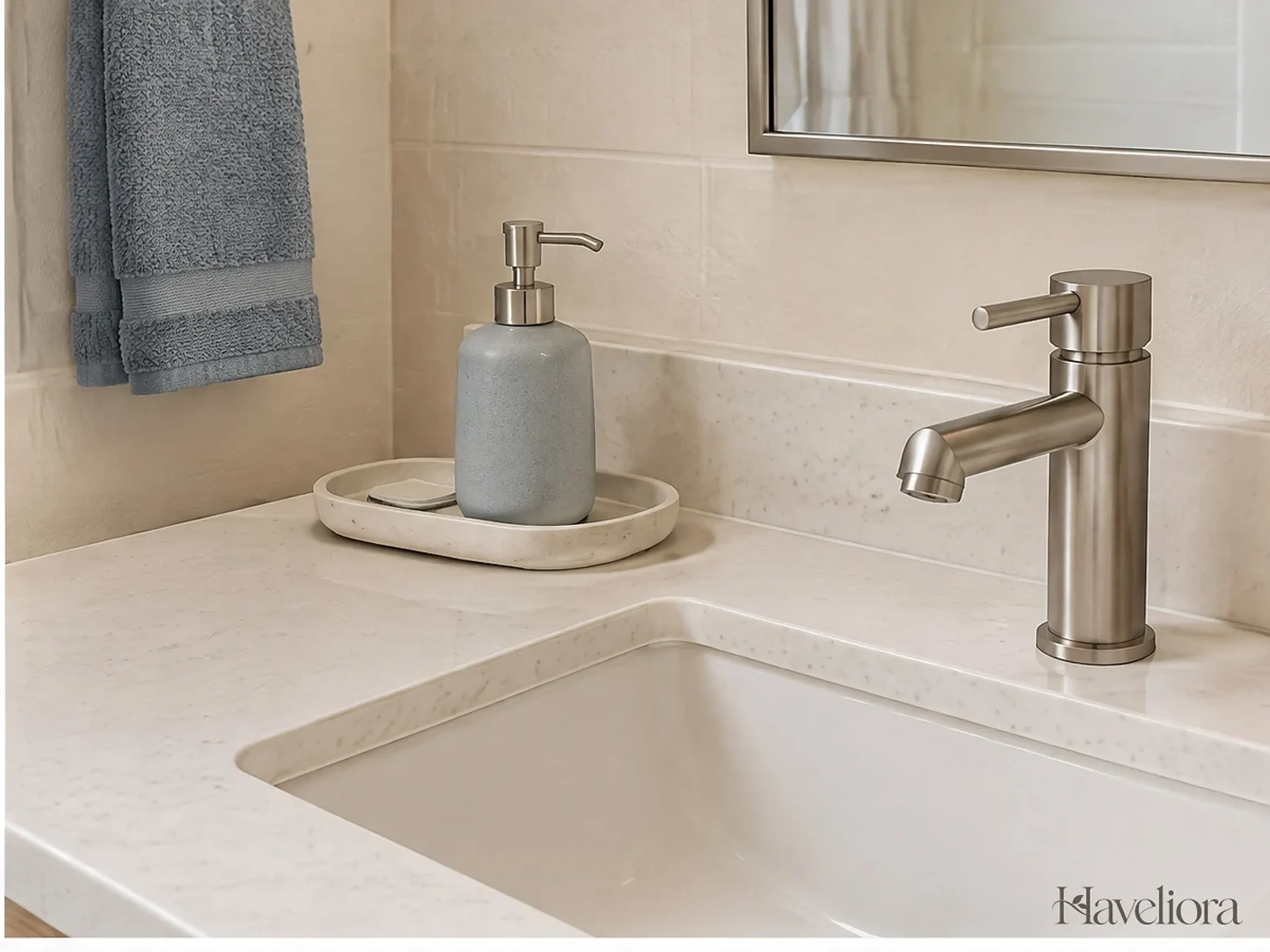
Empty the vanity surface and return the objects you use at the sink. This usually reveals which items are there for convenience and which have simply accumulated. Keep the frequently used essentials close while moving occasional supplies into appropriate storage.
A shallow tray can organize a small group, but it should leave room to put something down. Choose a material suited to the location and easy to lift for cleaning. A tray that traps water beneath it or covers most of the counter creates another maintenance problem.
Decide whether matching containers genuinely help. A refillable soap dispenser can provide a quieter appearance, but it needs to work reliably and be easy to refill. Do not transfer products in ways that lose important labels, directions, or warnings. Keep medicines and cleaning products in suitable storage with their identifying information intact.
Check the arrangement with wet hands. Can you operate the tap, reach the towel, and move the dispenser without knocking something over? An everyday room benefits from a layout tested in use rather than one judged only from the doorway.
As a simple rule, keep one practical group on the vanity and let the remaining surface stay available. You can add character elsewhere without making the basin compete with decorative objects.
3. Treat Towel Placement as Part of the Layout

Towels can introduce color and texture, but their most important position is the one they occupy after use. Consider where each person will hang a wet towel, not just where neatly folded spare towels look attractive.
Give the regular towels enough separation for the arrangement to remain practical. A tightly layered display may be suitable for unused spares but inconvenient for damp towels. Choose rails or hooks around the wall space and the way the household actually uses the room.
Place a hand towel within comfortable reach of the basin. Avoid making someone step around the door or stretch across a decorative grouping. Check that hanging fabric does not interfere with switches, heating equipment, cabinet doors, or the route through the bathroom.
Store spare towels in a dry, accessible area rather than crowding every available ledge. A small guest selection can remain visible when there is enough room, while the larger supply stays elsewhere. Read care instructions and choose fabrics you are willing to wash and maintain regularly.
A simple color approach: use one main towel color and repeat it in a smaller detail such as a bath mat or print. You do not need every textile to match exactly, but a limited group can make the room feel less visually scattered.
4. Consider the Mirror and Lighting Together

A mirror is one of the bathroom’s largest visual elements. Its shape can soften a rectangular vanity or reinforce a cleaner-lined scheme, but size and placement need to suit the people using it. Check the usable view rather than centering it solely as a decorative object.
Assess the lighting from the position where you wash, shave, or apply makeup. A dramatic ceiling fixture may not provide the task lighting you need at the mirror. Notice glare, strong shadows, and reflections before selecting additional fittings.
Use fixtures suitable for their bathroom location and the applicable electrical requirements. Do not bring in a portable table lamp to imitate a styled photograph near water. Electrical alterations should be handled by an appropriately qualified person, with product specifications and local requirements taken into account.
If you are not changing the wiring, review the existing mirror and permitted bulb choices first. A better-suited mirror shape or an approved bulb adjustment may improve the area without introducing a new installation. Follow the fixture’s ratings rather than choosing a bulb only for its appearance.
To connect the finishes, repeat the mirror frame’s finish in one other detail, perhaps a handle or towel rail. That small relationship can bring the area together without replacing every metal fitting in the bathroom.
5. Organize Storage Around Morning and Evening Routines
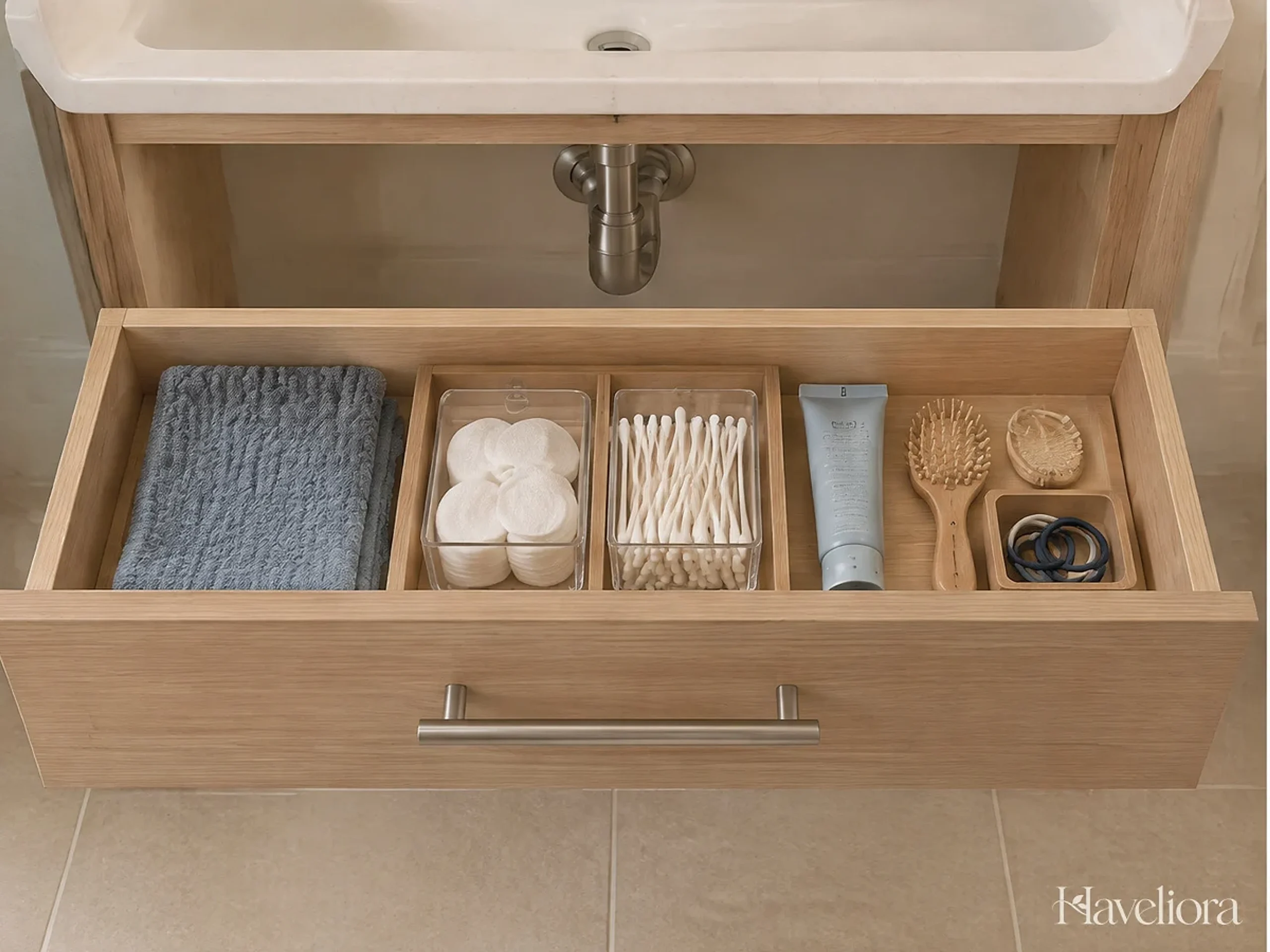
Sort supplies into the groups you use together. Daily skincare, hair accessories, spare toiletries, and cleaning materials should not all compete in one unstructured drawer. The organizing system can be simple as long as the destinations are clear.
Measure the internal space before buying inserts. Plumbing, drawer runners, and cabinet hinges can reduce the useful area. An organizer that fits the outside cabinet dimensions may still prevent a drawer from closing or make important access awkward.
Keep the easiest positions for daily items and put refills in a separate place. Do not overfill the storage simply because the products are hidden. You should be able to take out and return what you need without emptying the entire compartment.
Choose materials you can clean and inspect. Avoid covering a damp or leaking area with containers and treating the problem as solved. The EPA emphasizes controlling moisture and fixing water problems; decoration and storage do not replace addressing a leak.
Test the arrangement during your normal routine: go through your usual morning sequence with the new arrangement. Move anything that repeatedly requires an awkward reach. Useful organization is measured by daily access, not by how precisely the containers line up in a photograph.
6. Add Character in a Dry Area Away From the Main Tasks
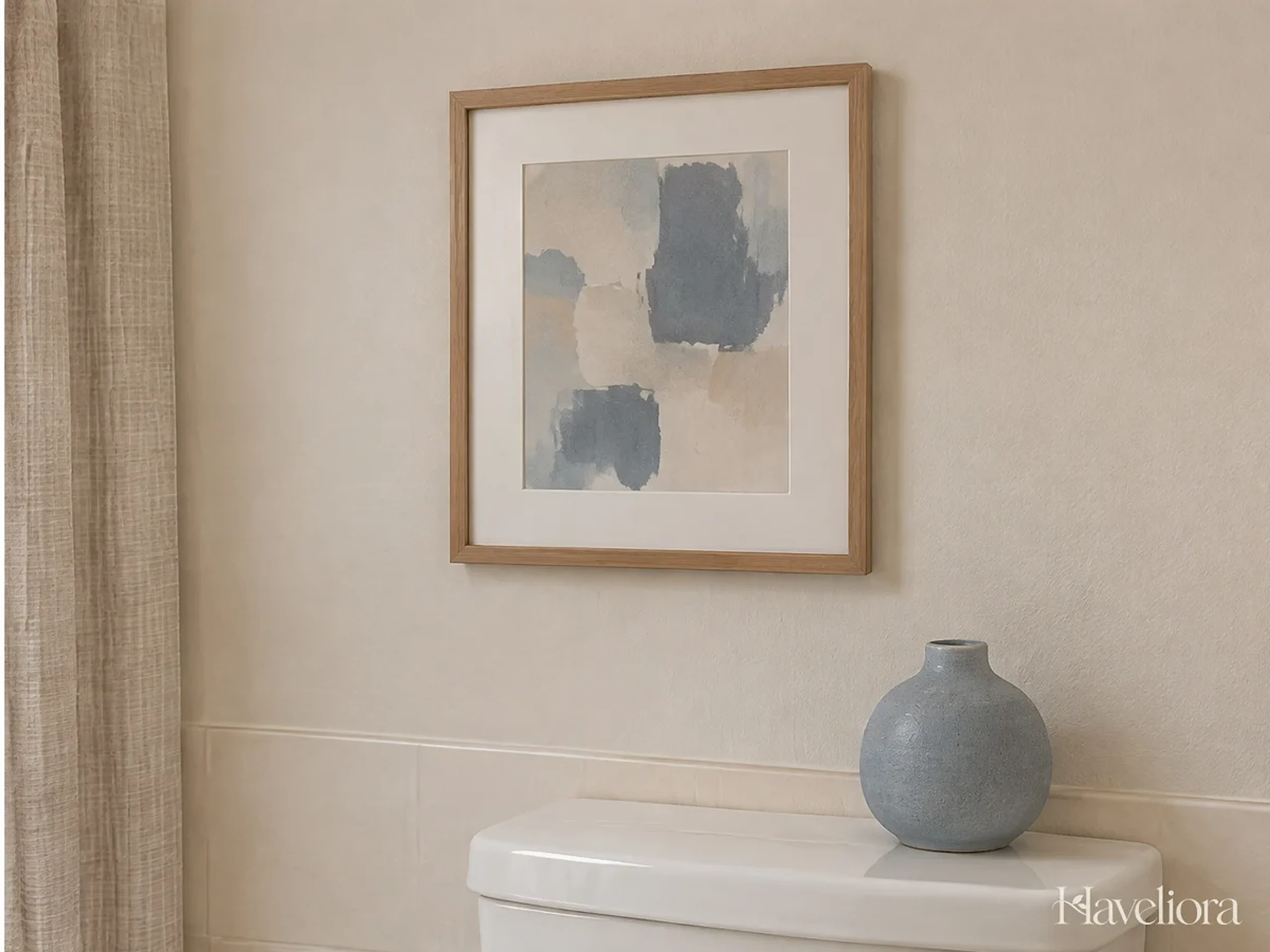
Once the practical areas work, look for one place that can support decoration. A dry wall beside the door, a suitable shelf, or a small section above a cabinet may be enough. The room does not need a decorative object on every available surface.
Choose artwork and framing with the location in mind. Even outside the shower, humidity can affect materials. Follow care guidance and reserve valuable or delicate pieces for a more suitable environment. A replaceable print may be a more practical choice than an irreplaceable original.
Use one object with a shape or color you enjoy. A simple ceramic piece can relate to the vanity palette, while a small print can introduce a gentle accent. Avoid tall or unstable arrangements where a towel, door, or elbow could catch them.
Greenery is optional. The room’s light and maintenance conditions need to suit the exact plant, and the pot should not interfere with ventilation or cleaning. A botanical image can supply the visual theme without adding a living plant that struggles in the space.
Keep the final touch restrained: choose the object last, after the sink, towels, and storage are resolved. The best decorative detail is the one that does not make an ordinary bathroom routine more complicated.
A Refresh Sequence for an Existing Bathroom
First, deal with maintenance and cleaning needs. Note any leaks, failed ventilation, damaged fittings, or unstable storage before selecting accessories. These are functional issues, not gaps that a new textile can cover.
Next, choose one coordinated group of removable details: perhaps towels, a suitable curtain, and a practical dispenser. Use the existing tile and cabinet as the reference. Live with those changes before deciding the room needs more decoration.
Finish by adding one personal detail in a suitable position. For tighter layouts, explore our small bathroom ideas. For a quieter, more spa-inspired atmosphere, continue with spa-like bathroom styling.
Frequently Asked Questions
What is the simplest bathroom update?
Clear the vanity, improve the towel arrangement, and choose a small connected palette for the removable pieces. These changes can make the room feel more deliberate without altering the permanent fixtures.
Should every accessory match?
No. Repeating a color or material can connect different pieces. A completely matching set is not necessary, particularly when the tap, tile, or cabinet already introduces a finish you are keeping.
Can I put ordinary room decor in a bathroom?
Only when the material and placement suit the conditions. Consider moisture, splashing, stability, cleaning, and electrical suitability. Keep delicate objects and ordinary portable electrical lamps out of unsuitable wet locations.
A fresh bathroom is not simply one with new accessories. It is one where the useful details have clear places and the decoration respects how the room works every day.
Other Articles

Small Bathroom Ideas That Make Every Surface Work Harder
Modern Kitchen Ideas With Warm Materials and Clean Lines


