A micro den is a small space with a clear purpose: reading, watching a movie, working for an hour, listening to music, or having a quiet conversation away from the main living area. It can be a tiny spare room, an enclosed corner, a box room, part of a landing, or even a generous closet that no longer serves its original purpose. What makes it a den is not size. It is the decision to give a compact area one or two specific jobs and make those jobs comfortable.
Small homes often become frustrating when every room is asked to do everything. The living room becomes office, media room, library, guest room, playroom, and storage zone at once. A micro den can relieve that pressure without requiring more square footage. By giving one small area a stronger identity, the rest of the home can become simpler.
The best micro dens are edited. They do not contain miniature versions of every piece of living-room furniture. They choose one excellent seat, one useful light, one surface, and storage only where it supports the activity. Because the room is small, each item has a larger visual and practical effect.
If your home has limited square footage overall, our small apartment decor ideas and small living room ideas can help you coordinate the den with the rest of the space.
1. Build a Tiny Reading Den Around One Comfortable Chair
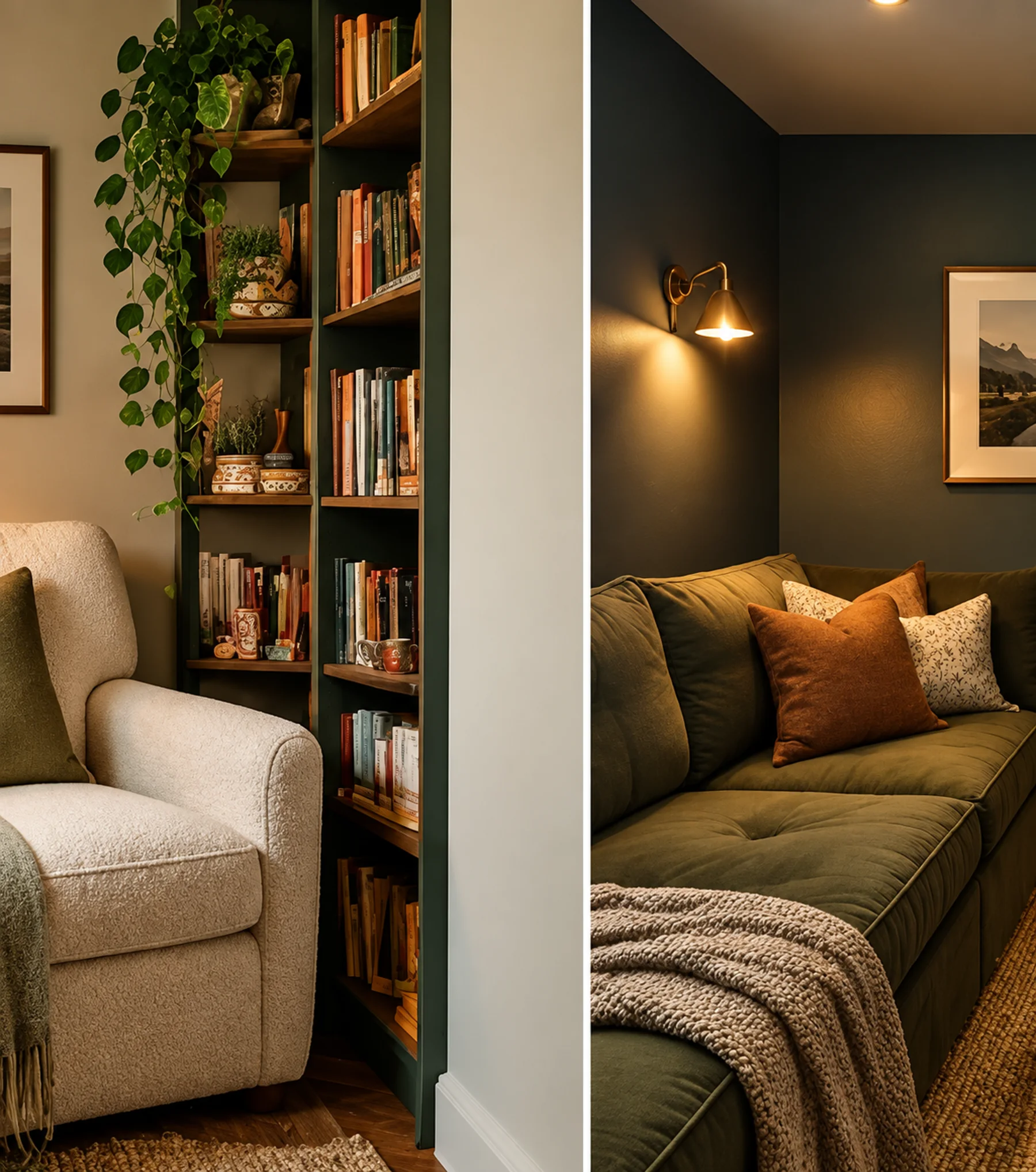
The easiest micro den to create is a reading room because it needs very little furniture. Start with the chair. Comfort matters more than visual drama. Sit in it before committing if possible, and make sure the depth, back angle, and arm height suit the way you read.
Then add light close enough to reach the page. A floor lamp saves table space, while a wall-mounted or plug-in sconce can keep the floor clear. A table lamp works when the side table is large enough to hold both the fixture and a book or drink.
The side table can be small, but it should be stable. Round tables are useful in tight corners because there are no sharp edges to navigate. A narrow pedestal, stool, or wall-mounted ledge can work when floor space is extremely limited.
Books do not need to fill the room. Keep the current reading stack nearby and store the larger collection elsewhere if shelves would make the den too crowded. If the room has one empty wall, shallow shelving can turn it into a true reading zone without reducing the walking path significantly.
Use a rug only if it helps define the area and lies flat. In very small rooms, a rug that nearly fills the floor can look calmer than a tiny island beneath the chair. If the existing floor is attractive and comfortable, skipping the rug may make the den feel more spacious.
Finish with one personal element: art, a framed photograph, a small textile, or a plant if the light supports it. A micro den should feel intimate, not decorated in miniature.
2. Create a Compact Media Den Instead of Forcing a Television Into Every Room
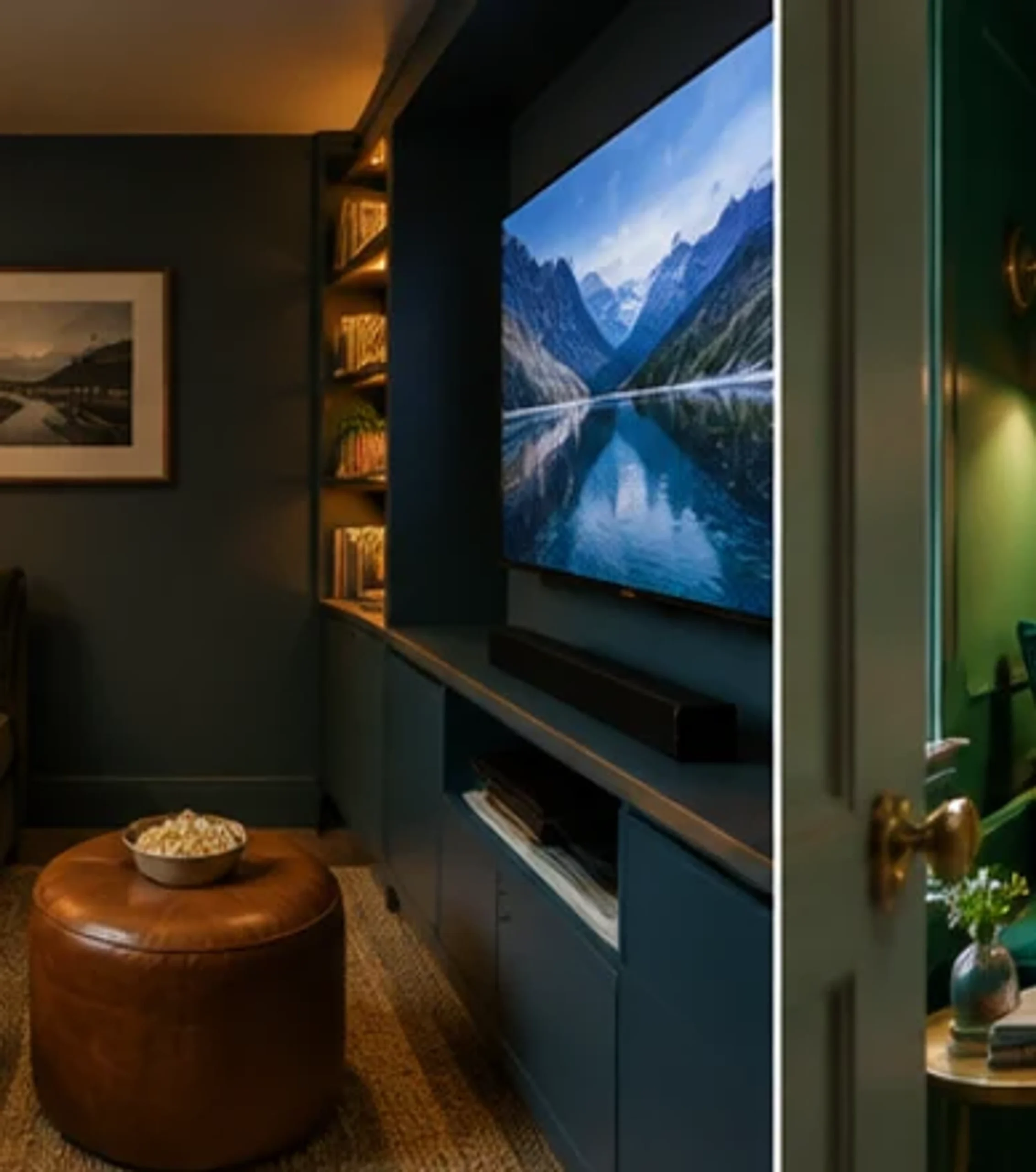
A media den can be valuable when the household wants a television but does not want the screen to dominate the main living room. The room does not need to be large. A compact sofa or two comfortable chairs, a properly sized screen, and controlled light may be enough.
Start with viewing distance and circulation rather than choosing the biggest screen that fits the wall. The screen should be comfortable to watch from the primary seat, and people should be able to enter the room without walking directly between the viewer and the display.
Keep storage shallow. A wall-mounted screen with a narrow console can preserve more floor than a deep media cabinet. If equipment is minimal, one closed unit for remotes, games, cables, and accessories may be enough.
Lighting should support viewing without reflecting in the screen. A low lamp behind or beside the seating can reduce the contrast between a bright display and a dark room. Avoid placing a lamp directly opposite the screen where it creates glare.
Soft materials can improve the room acoustically and visually. Curtains, a rug, upholstered seating, and even books absorb some of the hard reflections created by bare walls and floors. You do not need acoustic panels unless the room has a real sound problem.
Keep the den flexible. A small ottoman can serve as footrest, extra seat, or table with a tray. Nesting tables can appear when needed and disappear when floor space matters. The room should support a relaxed evening without becoming difficult to move through.
3. Make a Tiny Room Feel Intentional With Deeper Color

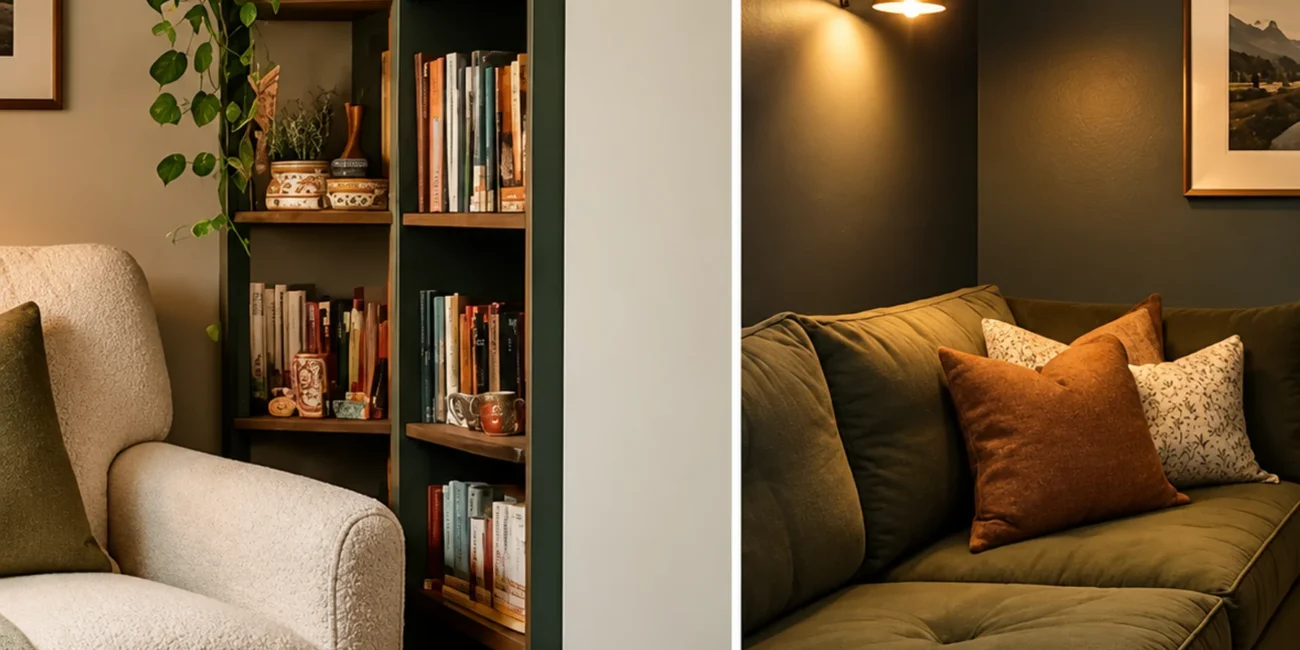
Small rooms do not have to be painted white. A micro den can be an ideal place for deeper color because the room is already intimate. Olive, chocolate, burgundy, smoky blue, aubergine, charcoal, or deep teal can make the space feel deliberate rather than apologetically small.
The key is contrast. If the walls are dark, keep at least one major element lighter: the sofa, curtain, rug, or ceiling. If the seating is dark too, use lighter artwork, cushions, or lampshades to maintain definition.
Paint samples should be tested in the actual room because small spaces often receive limited or directional daylight. A color that looks sophisticated online may become almost black in a north-facing room or surprisingly bright beside warm artificial light.
Use the small scale to your advantage. A deeper wall color can make mismatched furniture look more connected because the background becomes stronger. It can also make books, art, and wood tones feel richer.
Do not assume a dark den needs dim lighting. Good task and ambient light are even more important because dark surfaces absorb more light. A bright reading lamp and softer secondary source can give the room both function and atmosphere.
If you rent, create the same effect with a large curtain, removable wall covering, deep-colored bookcase, or one substantial textile rather than permanent paint.
4. Turn the Micro Den Into a Tiny Library
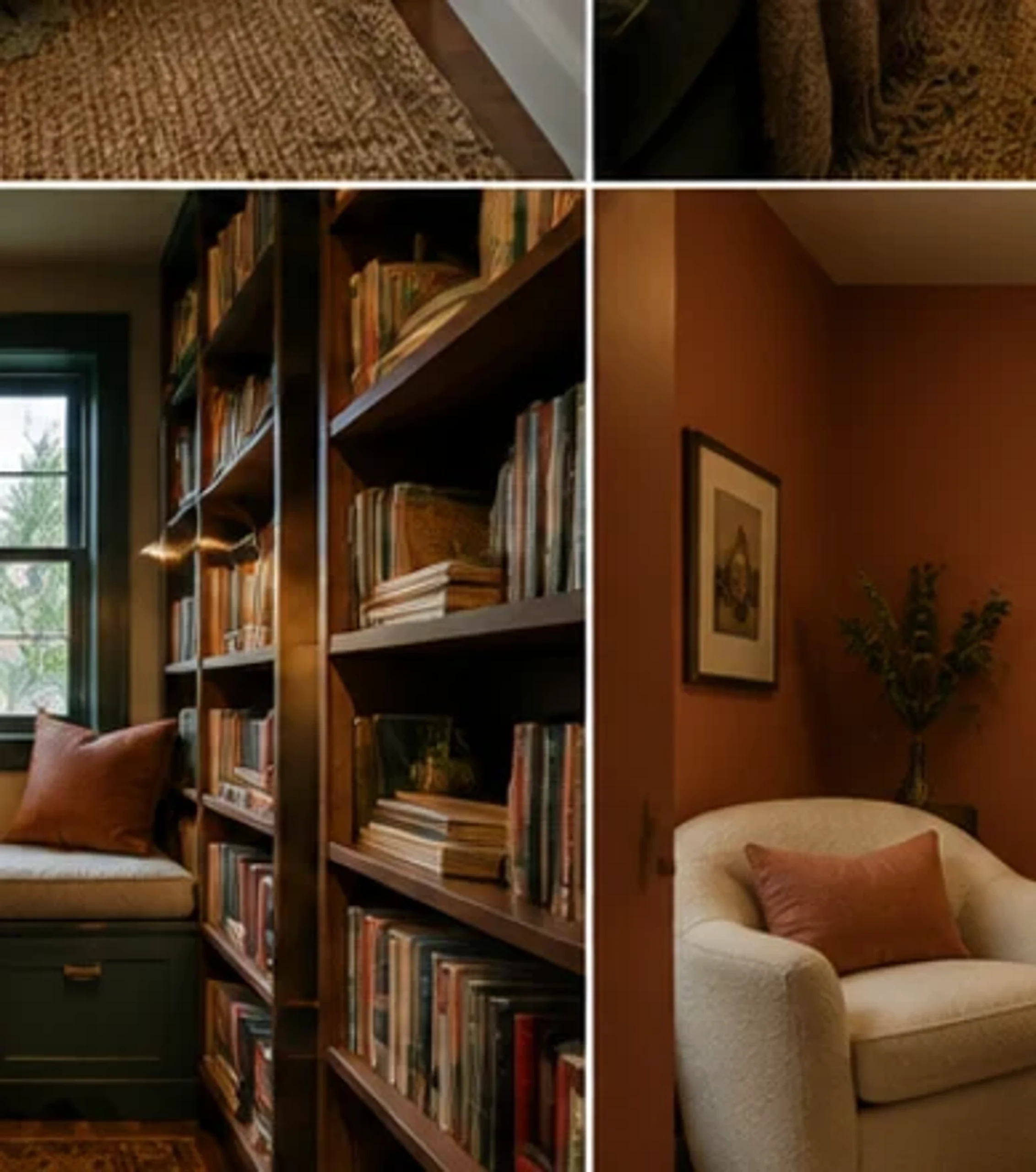
Books are ideal for a micro den because they provide both function and visual character. A single wall of shelves can give the room a strong identity without requiring decorative styling.
Use the full height of the wall if storage is limited, but reserve the highest shelves for books or items you use less frequently. Keep a safe step stool nearby if upper storage requires access. Do not create a library that is visually impressive but practically unreachable.
Shelf depth should suit the books. Standard paperbacks and hardcovers do not need deep cabinetry. Shallow shelves preserve precious floor space and prevent books from disappearing behind one another.
Leave room for the chair to recline or for a person to stand and browse. Shelving on every wall can make a tiny room feel tighter than one strong book wall and one quiet wall.
Lighting should address both reading and browsing. A lamp beside the chair supports the page. A ceiling or wall source can make book spines readable without forcing the reading lamp to illuminate the entire room.
Organize books in a way that works for you. Subject, author, size, or a loose personal system are all valid. Styling entirely by color may look attractive but can make the collection harder to use. A den library should remain a library first.
5. Use Two Compact Chairs for a Conversation Den
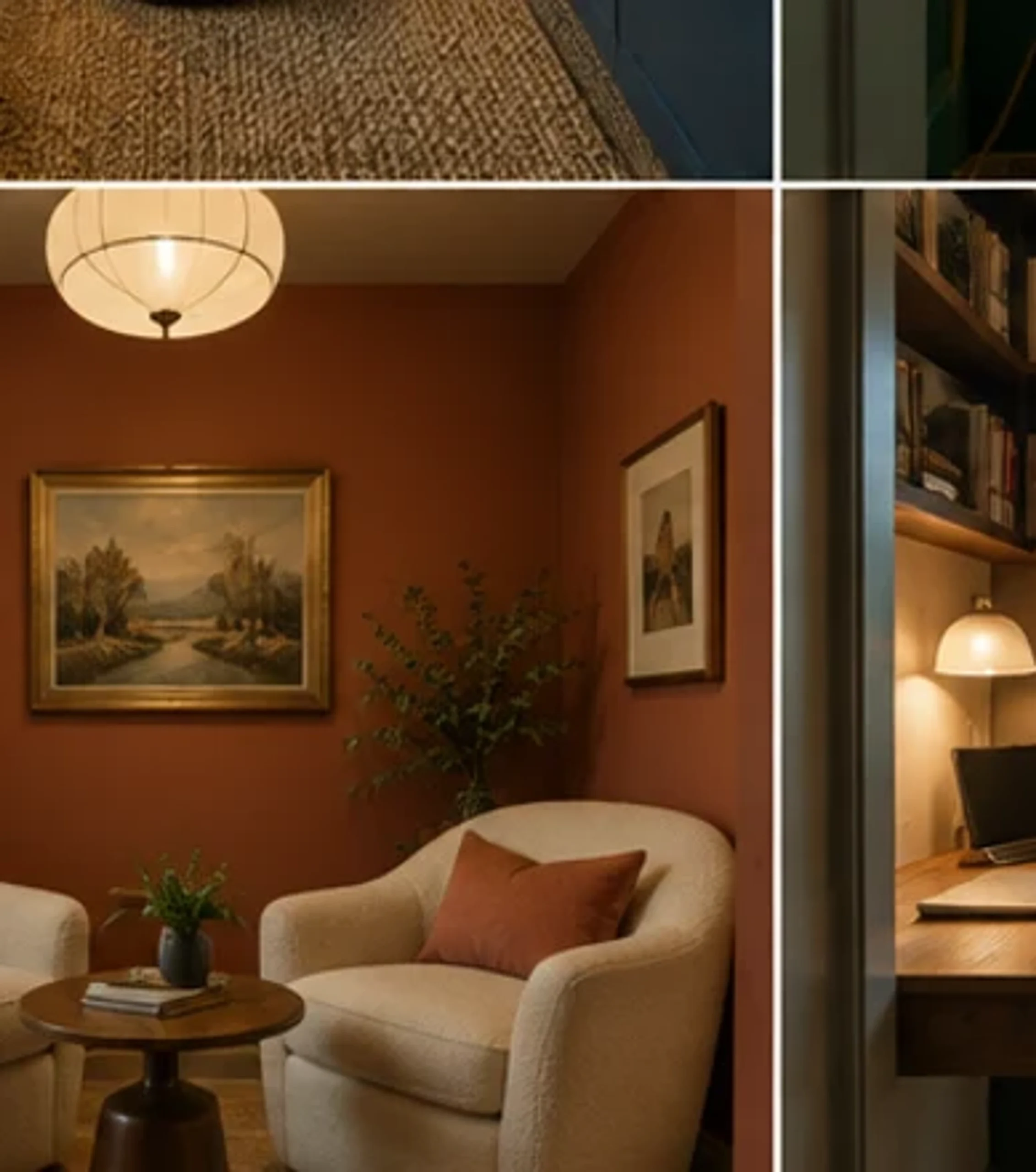
Not every den needs a sofa. Two compact chairs can create a more flexible conversation room and may fit awkward dimensions better. This layout works well for coffee, reading together, card games, or a quiet conversation away from the main living room.
Choose chairs with comfortable seats but modest arms and backs. Very bulky lounge chairs can consume the entire room, while armless chairs may save space but feel less relaxing. Measure the full footprint, including the angle of any splayed legs.
A round table between the chairs is often easier to navigate than a square one. Keep it large enough for two drinks or a small lamp but small enough that knees and chair arms have space.
Orient the chairs toward one another rather than automatically pushing them against the walls. Pulling furniture inward can make the room feel more purposeful, even if the gap behind the chairs is modest.
Use one shared light if possible. A floor lamp between or slightly behind the chairs can serve both seats. If each chair needs a reading light, wall-mounted fixtures can prevent the room from filling with small tables.
A conversation den benefits from quiet acoustics. Curtains, upholstery, and a rug can soften a room with hard floors and bare walls. Keep the decoration minimal so the room remains focused on people rather than objects.
6. Combine a Small Work Surface With a Relaxed Corner
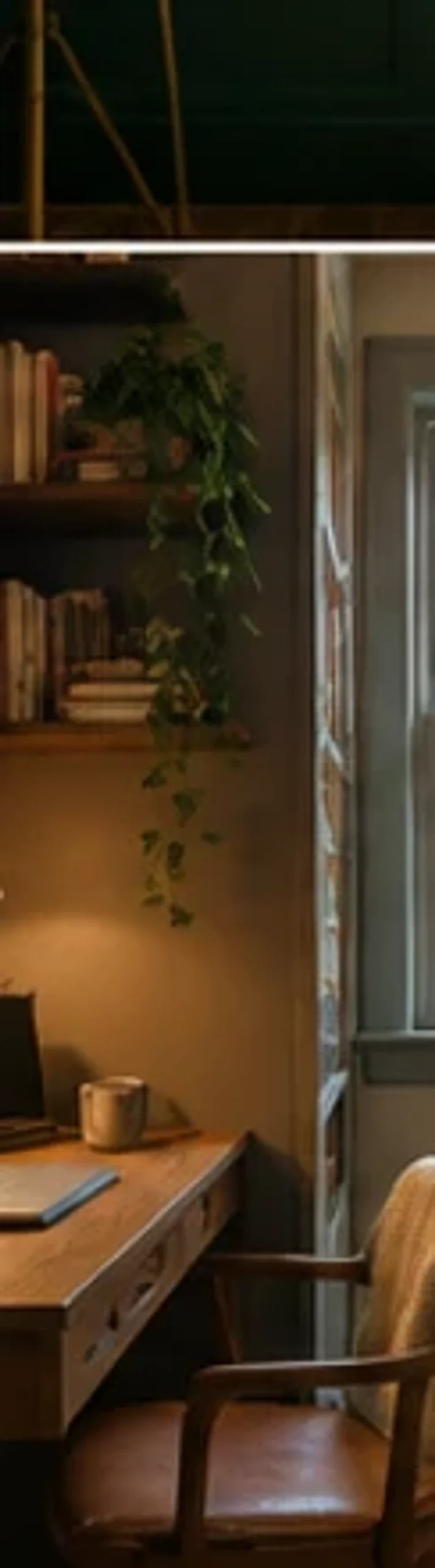
A micro den can be a useful hybrid when you need a small work area but do not want the room to feel like an office after hours. The trick is to keep the desk compact and give the relaxed zone equal visual importance.
Use a shallow desk or wall-mounted surface rather than a deep executive desk. Laptop work, writing, and occasional admin often require less depth than a full desktop setup. If you use a large monitor or equipment, measure it before choosing the furniture.
Storage should close or visually recede. A drawer, wall cabinet, or lidded box can hide papers and chargers so the work surface can reset at the end of the day. That reset is what allows the room to switch identities.
Place the relaxed chair away from the desk when possible. Even a small angle can create psychological separation. A different light—task lamp at the desk, warm floor lamp by the chair—reinforces the shift.
Keep the color palette consistent across both zones so the room does not look divided in half. Use one rug, one wall color, and related materials, then let furniture function create the distinction.
If the room must support video calls, consider the background from the desk before hanging art or installing shelving. A calm wall or edited bookcase is easier to maintain than a display that needs constant rearrangement.
How to Decide What Your Micro Den Should Be
Do not begin with furniture. Begin with the activity that has nowhere comfortable to happen in the rest of the home. If you always read on the bed because the living room is noisy, build a reading den. If the television dominates the main room, create a media den. If remote work spills onto the dining table, a work-and-reading den may solve two problems.
Choose a primary activity and one secondary activity at most. A tiny room asked to be office, gym, guest room, library, media room, and craft room will usually perform none of those roles well.
Write down the three physical requirements of the primary activity. Reading needs a seat, light, and surface. Media needs a seat, screen, and controlled light. Work needs a desk, chair, and power. Let those requirements determine the furniture.
How to Measure a Micro Den Before Buying Furniture
Measure the room at floor level and again where furniture backs or shelves will sit. Older rooms may not be perfectly square. Record door width, swing, window position, radiator or vent locations, outlets, and any low ceiling areas.
Use painter’s tape to mark furniture footprints. Then walk through the room, open the door, sit in a temporary chair, and imagine reaching the table. A piece that fits on paper can still feel too large once the circulation is considered.
Measure furniture depth as carefully as width. A deep sofa or chair can consume a small room even when its width seems modest. Slimmer depth often matters more than choosing a narrow seat.
Micro Den Storage Without Making the Room Feel Like a Closet
Prioritize closed storage for unattractive necessities and open storage for books or objects you genuinely want to see. One cabinet can be enough. Do not line every wall with boxes simply because the room is small.
Use vertical space where appropriate. High shelves can store infrequently used items, but keep daily items within easy reach. Furniture with hidden storage can help, provided it remains comfortable and easy to open.
Avoid storage that blocks the floor route. Tall narrow cabinets are often more efficient than several low units in a room where every inch of floor matters.
Micro Den Lighting
Use at least one task light and one broader source if the room is used after dark. In a reading den, the task lamp may do most of the work. In a media den, a low background source may be more important. In a work den, the desk needs clear illumination while the relaxed corner can stay softer.
Keep switches and controls easy to reach. Plug-in sconces, floor lamps, and table lamps are useful in rooms with limited wiring. Manage cords along walls rather than across walking paths.
Color and Pattern in a Very Small Room
Small rooms can carry strong color because the boundaries are already close. If you use a deep wall, simplify the major furniture. If you use patterned upholstery or a strong rug, keep the wall quieter.
Repeat one color from the main pattern elsewhere and stop. Too many small accents can make the room feel visually busy. One large artwork can be calmer than a wall filled with tiny frames.
How to Make the Den Feel Connected to the Rest of the Home
Repeat one material or color from the adjacent room: the same wood tone, a related wall color, or a metal finish. The den can be more dramatic without feeling unrelated.
Keep the threshold clear. Avoid placing furniture so close to the door that entering feels awkward. A small room feels more generous when the first step inside is unobstructed.
Rental-Friendly Micro Den Ideas
Use freestanding shelves, plug-in lighting, removable hooks where appropriate, rugs, curtains, and furniture that can move with you. A deep-colored curtain or bookcase can create a jewel-box effect without paint.
Do not overinvest in custom storage for a temporary room unless it can be reused elsewhere. Modular shelves and compact tables are easier to adapt after a move.
Common Micro Den Mistakes
The first is buying furniture before defining the activity. The second is choosing miniature furniture that is technically small but uncomfortable. The third is filling every wall with storage.
Another mistake is ignoring light. A tiny room with one bright ceiling fixture can feel harsher than a larger room. Finally, avoid trying to make the den visually match the entire house exactly. A small room can carry more personality as long as one or two elements connect it to the surrounding spaces.
Frequently Asked Questions
What is a micro den?
It is a very small room or defined area designed around one or two focused activities such as reading, watching television, working, listening to music, or conversation.
How small can a den be?
There is no minimum design size. If the area can safely hold the furniture required for the activity while preserving access and circulation, it can function as a den.
Should a tiny den be painted light or dark?
Either can work. Light colors can keep the room airy, while deeper colors can create a deliberate cocooning effect. Choose based on the daylight, furniture, and atmosphere you want.
Can a closet become a den?
Sometimes, if it has appropriate dimensions, ventilation, access, lighting, and any required building or safety compliance. Do not convert a space in a way that blocks required egress or creates unsafe conditions.
What furniture does a reading den need?
Usually one comfortable seat, a useful reading light, and a small surface. Shelves are optional.
How do I stop a micro den from feeling cluttered?
Choose one primary activity, limit furniture, use closed storage for unattractive items, keep the walking path clear, and leave at least one wall or surface relatively quiet.
A One-Weekend Micro Den Plan
Day one: empty the space, measure it, define the primary activity, and mark furniture footprints with tape. Day two: place the essential seat or desk, add the task light, bring in one storage element if needed, and finish with one textile or artwork. Live with the room before adding anything else.
How to Choose Furniture That Is Small Without Feeling Temporary
Compact furniture often fails because it is chosen only by width. A narrow chair with a shallow seat may fit the room beautifully and still be uncomfortable after twenty minutes. A tiny desk may leave no room for a laptop and notebook. A slim sofa may look perfect against the wall but offer poor back support. In a micro den, comfort has to survive the reduced scale.
Measure the seat depth, seat height, arm width, and overall projection rather than relying on a product’s “apartment size” label. A chair with slimmer arms can save several inches without reducing the usable seat. A sofa with a straight back may fit better than one with a deep reclined profile. A wall-mounted desk can save floor area while still offering a generous working surface.
Use full-size templates. Cardboard, taped newspaper, or painter’s tape can represent the footprint. Then place a dining chair or other temporary object inside that outline and sit there. This simple test reveals whether the room still has enough space to open the door, reach the table, and move around the furniture.
Avoid buying several undersized pieces just to “fill” the room. One properly proportioned chair and one useful table usually look more intentional than a collection of miniature furniture. Small spaces become calmer when the furniture count is low and each piece earns its footprint.
How to Create Privacy in a Micro Den Without Building a Wall
Some micro dens are carved from open-plan areas rather than enclosed rooms. Privacy can come from a curtain, folding screen, open bookcase, or furniture orientation. The goal is usually visual separation rather than complete sound isolation.
A ceiling-mounted curtain can create a flexible boundary and disappear when the den needs to open back into the room. Choose a fabric with enough weight to feel substantial but not so heavy that it overwhelms the space. If natural light passes through the den into another area, use a lighter or more translucent textile.
An open bookcase can define the edge while preserving sightlines. Keep it stable and properly anchored where required. Use the shelves for books and a few objects rather than packing both sides completely, which can turn the divider into a visual wall.
Furniture itself can create a boundary. The back of a compact sofa or desk can define the den without adding another object. This is especially useful in studios where every piece needs to perform more than one job.
How to Use Sound and Softness in a Tiny Retreat
A small den can feel more private when sound is softened. Rugs, curtains, upholstered seating, books, and fabric shades all reduce the hard reflections created by bare floors and walls. You do not need to cover every surface. A few soft elements can change the acoustic character noticeably.
For a media den, place the speakers and screen before adding decorative furniture. Avoid trapping speakers inside closed cabinets unless the equipment is designed for it. If sound carries into adjacent rooms, lower volume and better speaker positioning may help more than adding thick decorative materials.
For a work den, consider background noise from the rest of the home. A door, curtain, or bookshelf can provide some separation, but it will not create true soundproofing. If confidential calls or high isolation are required, professional acoustic treatment may be necessary.
For a reading den, quiet is often more psychological than technical. A comfortable chair turned away from the main room, a focused lamp, and a small rug can create a feeling of separation even when some household sound remains.
How to Make a Windowless Micro Den Feel Comfortable
A windowless den needs a stronger lighting plan because there is no daylight to establish the room’s rhythm. Use at least two sources at different heights. A ceiling or wall source can provide general light, while a floor or table lamp handles the activity.
Do not try to imitate daylight with an extremely cool, bright bulb. Choose light that suits the task and makes the wall color, upholstery, and wood look natural. A mirror can reflect existing light, but place it so it reflects something pleasant rather than a bare bulb or cluttered doorway.
Color can still be deep. In fact, a windowless room may feel more intentional when it embraces enclosure rather than trying unsuccessfully to look sunlit. Warm cream, muted olive, tobacco, burgundy, or smoky blue can all work when the lighting is layered.
Ventilation and comfort are important in enclosed spaces. If the room lacks adequate airflow or is not legally suitable for occupied use, address that before furnishing it as a regular den.
How to Make a Micro Den Work for Guests Occasionally
A tiny den can sometimes support an overnight guest, but the room should not become a poor guest room every day in order to handle one night a year. If occasional sleeping is useful, consider an ottoman bed, compact daybed, or chair bed only if it remains comfortable in its everyday role.
Check the open dimensions before buying. A sleeper that fits when closed may block the door or leave no walking space when extended. Mark both footprints on the floor.
Provide a small place for a phone, water, and bag, plus a clear route to the door. If the room lacks ventilation, egress, or other requirements for sleeping, do not treat it as a bedroom. Local rules and safety should determine whether overnight use is appropriate.
How to Style Shelves Without Losing Useful Storage
In a small den, shelves should carry more books and useful objects than decorative filler. Start with what needs to be stored, then add only a few personal pieces. A shelf that is half decor and half empty baskets may look styled but wastes valuable volume.
Use vertical book stacks sparingly to vary the rhythm. Keep heavy books on lower shelves. Small framed art can lean against the back of a shelf when there is enough depth, but do not hide books you need behind decorative objects.
Closed boxes are helpful for cables, paperwork, game controllers, or office supplies. Choose boxes that fit the shelf precisely so they do not project into the room or waste depth.
How to Create a Den With Almost No Budget
Move furniture before buying anything. A chair from the bedroom, lamp from the living room, small table from the hallway, and books from another shelf may be enough to establish the room. Once the activity works, you can decide whether any piece actually needs upgrading.
Paint is relatively low-cost when the walls need a stronger identity. A deeper color can make mixed secondhand furniture look more connected. If painting is not possible, a curtain, rug, or large artwork can provide the same visual anchor.
Secondhand furniture is especially useful because micro dens often need unusual dimensions. Search by measurements and function rather than style labels. A vintage side table or older armchair may fit an awkward corner better than a new matching set.
How to Know When a Micro Den Is Finished
Use the room for a week. If you repeatedly carry in a drink with nowhere to set it, add a surface. If the chair is comfortable but the light is poor, fix the light. If a cabinet is never opened because another chair blocks it, reconsider the layout.
Remove anything that is moved out of the way every time the den is used. That item is probably not earning its place. A small room reveals unnecessary furniture quickly.
The finished den should be easy to reset in a minute or two. Books have a home, cords are controlled, the main seat is clear, and the route to the door remains open. That simplicity is what allows the small space to feel like a retreat rather than overflow storage.
Final Thought
A micro den succeeds because it does less, better. Give the space one strong purpose, choose furniture for comfort rather than novelty, and protect enough floor area that the room remains easy to enter and use. Whether it becomes a reading nook, media room, tiny library, conversation retreat, or hybrid work zone, a clear purpose can make even a very small room feel valuable.
Other Articles

Small Home Library Ideas for Making Room for More Books
Warm Bathroom Ideas That Feel Personal, Calm, and Lived-In