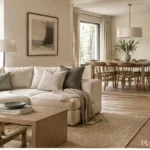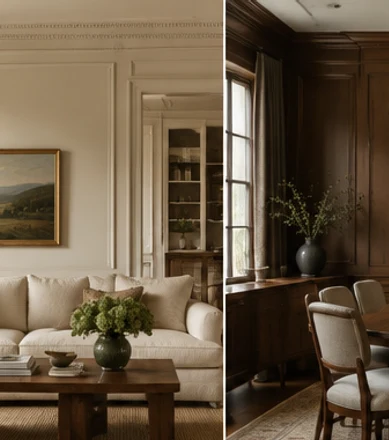

A room can look expensive and still be uncomfortable to use. The sofa may be too deep for the people who sit there, the curtains may obstruct the window, or the beautiful table may leave nowhere for everyday belongings. For this guide, cozy luxury means something more grounded: a home where comfort, proportion, and finishing details receive careful attention.
That approach does not depend on displaying recognizable brands or buying the most decorative version of every object. A modest room can feel considered when the furniture fits, the textiles are pleasant to use, and the lighting gives you options. The effect comes from relationships and care rather than a collection of costly surfaces.
The six cozy luxury decor ideas below focus on where that attention is most worthwhile. They move from the largest proportions to fitted textiles, lighting, bedding, personal contrasts, and the storage that keeps the result livable. Use them as a way to prioritize improvements, not as a reason to replace useful pieces.
Focus on the details that matter
1. Put Proportion Ahead of Decorative Quantity

Start with the relationship between the largest pieces. The sofa, rug, table, and storage unit should look and work comfortably together. A rug that barely reaches the table or a lamp dwarfed by a large sideboard can make the room feel unresolved even when every item is attractive.
Measure before deciding that a piece needs replacing. Sometimes moving the rug or changing the furniture spacing improves the relationship. Use tape or paper templates to compare possible sizes and look at the arrangement from more than one viewpoint.
Do not equate generous proportions with oversized furniture. A large sofa can overwhelm a modest room, while a smaller but well-supported seating group can feel much more comfortable. The right scale is the one that leaves room for movement and ordinary activities.
Give one major element the visual lead. A beautiful wood table may need quieter surrounding accessories; an expressive chair can sit against a simpler background. When every object tries to become a statement, the room can lose the calm you were seeking.
Start with the relationship that bothers you most: identify the one size relationship that bothers you most. Correcting that may do more than buying several smaller decorative pieces to distract from it.
2. Pay Attention to Fit, Fullness, and Everyday Care

Curtains, cushions, and covers often look more considered when their fit suits the furniture and architecture. A simple fabric with the right drop and fullness can be more convincing than an elaborate one that stops awkwardly or stretches too tightly across a window.
Measure from the planned installed position, not from a convenient reference point. Account for the curtain heading, track or rod, and how the panels will stack when open. Choose a hem that works with cleaning, floor conditions, and nearby furniture.
For cushions and upholstery, consider support as well as appearance. A cushion should add comfort rather than force someone toward the edge of the seat. Test the feel and check the care instructions before buying a fabric mainly for its texture in a photograph.
Keep the number of layers manageable. Several beautiful textiles can become an inconvenient pile when they have no place to go during normal use. One well-chosen throw may be enough to give a plain sofa or bed additional depth.
For everyday comfort, choose the version you can maintain comfortably. A delicate finish that makes everyday life feel restricted is not necessarily a better choice than a simpler, durable one you enjoy using.
3. Give the Room More Than One Comfortable Lighting Setting

A thoughtfully lit room can change with the activity. Reading needs light in a particular place, while conversation may feel better with several gentler sources. An overhead fixture alone rarely gives the same flexibility.
Choose a lamp for its light direction and control as well as its shape. Sit in the intended position and check whether the bulb creates glare or an awkward reflection. A sculptural shade is only useful when its effect suits the room.
Place switches within comfortable reach and plan cables alongside the furniture. Do not create a beautiful reading corner whose cord crosses the walking route. Follow the product’s ratings and compatibility requirements, and use qualified help for electrical changes.
Keep the fixtures related without making every one identical. A repeated metal finish, ceramic tone, or shade color can connect different shapes. Let one fitting be expressive while the others provide quieter support.
In the evening, use the room with the main ceiling light off. Notice where another source would improve a task or prevent an uncomfortable dark area. Add light for that reason rather than simply to fill another side table.
4. Make Comfort the Bedroom’s Main Investment

The bed should be easy to settle into. Begin with the bedding you find comfortable, then add a small number of visual layers. Smooth sheets, a softly textured cover, and one folded blanket can create depth without requiring a large cushion arrangement.
Choose layers around the climate and your preferences. A heavy throw may be attractive but unnecessary in a warm room. A lighter coverlet can supply a similar visual change without becoming something you remove and store every night.
Keep the bedside arrangement equally practical. A reachable lamp, clear surface, and useful drawer contribute more to everyday comfort than several decorative objects. Check the relationship between table and mattress height while sitting in bed.
A bench or chair is optional. Add it only when the room has enough operating space and the seat has a real role. A crowded route around an impressive bed does not create a generous experience.
Where to focus: prioritize the layers and functions you touch daily before artwork or accent furniture. For a fuller bedroom plan, explore our cozy bedroom ideas.
5. Let One Older or Personal Piece Add Character

A room assembled from one matching collection can be visually coordinated yet lack individuality. An inherited table, a handmade ceramic piece, or an artwork selected for personal reasons can introduce a detail that belongs specifically to your home.
Connect the contrasting piece through one shared quality. Its wood may relate to a cabinet, its shape may echo a lamp, or a color in the artwork may appear in a textile. You do not need to eliminate every difference.
Check condition and function when using older furniture. A side table should remain stable, the height should suit the seat, and the surface should handle its intended use. Character does not require accepting a piece that is unsafe or inconvenient.
Give the object enough space to be noticed. Surrounding a meaningful piece with many generic accessories can weaken its presence. A quieter setting often makes the personal detail more memorable.
Ask yourself: which object would you keep regardless of the current decorating direction? Use that as a starting point for a small arrangement instead of buying an entire set of accessories to make the room look collected.
6. Make Everyday Order Easy to Maintain

A refined-looking room should not depend on moving all practical belongings elsewhere before anyone sees it. Give remotes, books, charging equipment, and other daily objects storage close to the activity they support.
Choose the storage around the contents. A shallow drawer may be ideal for small equipment but unsuitable for larger games or blankets. Check the internal dimensions, door swing, and retrieval space before deciding the cabinet has enough capacity.
Keep display areas selective. A lamp, one meaningful object, and a small group of books may be enough on a console. Leave a usable section clear rather than arranging every inch as a permanent still life.
Maintain access to equipment and follow its ventilation and support requirements. Closed storage should not mean trapping electronics in unsuitable compartments or concealing problems that need attention. Secure furniture and televisions as directed by their manufacturers.
A good standard: a normal evening reset should be straightforward. If restoring the room requires a lengthy styling routine, simplify the decorative arrangement or make the storage destinations more convenient.
How to Prioritize a Limited Budget
Spend according to repeated discomfort, not the item with the most impressive description. A poorly fitting curtain, unusable chair, or harsh lamp may deserve attention before a decorative surface you rarely touch.
Consider repair, adjustment, or a smaller change first. A sound chair may need a more suitable cushion; an existing curtain may need a different position or correct length; a useful cabinet may work better after organizing its interior. Not every improvement requires replacement.
Choose one major upgrade at a time and live with it. This makes the benefit easier to judge and leaves room to revise the plan. The most considered homes often develop through practical decisions rather than one large purchase of coordinated objects.
For a cleaner-lined version of this approach, see warm modern living room ideas. For a more edited whole-home direction, explore warm minimalist decor.
Frequently Asked Questions
Does a luxurious-looking room need expensive furniture?
Not necessarily. Proportion, fit, care, and the relationship between pieces can make a substantial difference. Choose useful quality where it matters to your routine rather than treating price as the only indicator.
Should I add metallic accessories?
Only when they support the palette and the function. A small repeated metal finish can connect the room, but a large quantity of shiny objects does not automatically make it feel more refined.
How do I keep the room from feeling too formal?
Use comfortable seating, practical textiles, adaptable lighting, and personal objects. Leave enough space to use the surfaces normally. A room becomes more inviting when its appearance does not discourage everyday life.
Cozy luxury is most convincing when that care shows up in everyday use. Focus on the fit, comfort, and useful details, then let a restrained decorative layer make those decisions visible.
Other Articles
Fall Home Decor Ideas for a Warm, Uncluttered Seasonal Refresh
Neutral Home Decor Ideas That Connect Rooms Without Making Them Identical