
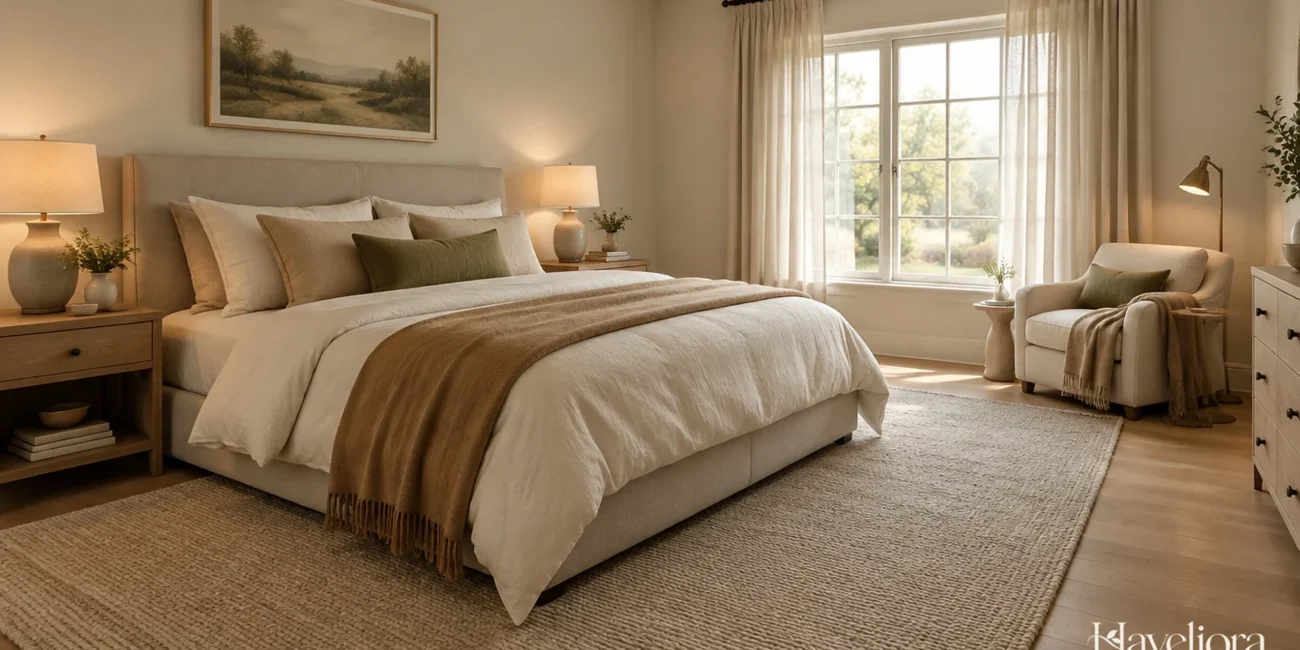
A cozy bedroom is a room you enjoy using, not a collection of objects you have to move before going to bed. The lamp is within reach. The floor beside the mattress feels comfortable underfoot. There is somewhere to put a book, and enough clear space to open a drawer without negotiating a bench.
These cozy bedroom ideas bring that everyday comfort together with warm colors, layered textiles, natural materials, and thoughtful styling. You do not need to adopt all twenty-one ideas or replace furniture that already works. Choose the changes that solve a problem in your room, then use the images to imagine how those choices could look together.
Start by looking at your bedroom twice: once in daylight and once with your evening lights on. Notice what feels too bright, too bare, too crowded, or difficult to use. That small assessment is more revealing than buying another accessory without a plan.
The simplest starting point: improve one source of light, one large textile, and one everyday storage problem. A shaded bedside lamp, a comfortable coverlet, and a clear nightstand can change the room without a complete makeover.
In this guide
Colors and bedding · Lighting and rugs · Furniture and windows · Color, pattern, and art · Greenery and storage · Finishing touches · A practical refresh plan · Common questions
1. Build a Warm Neutral Foundation
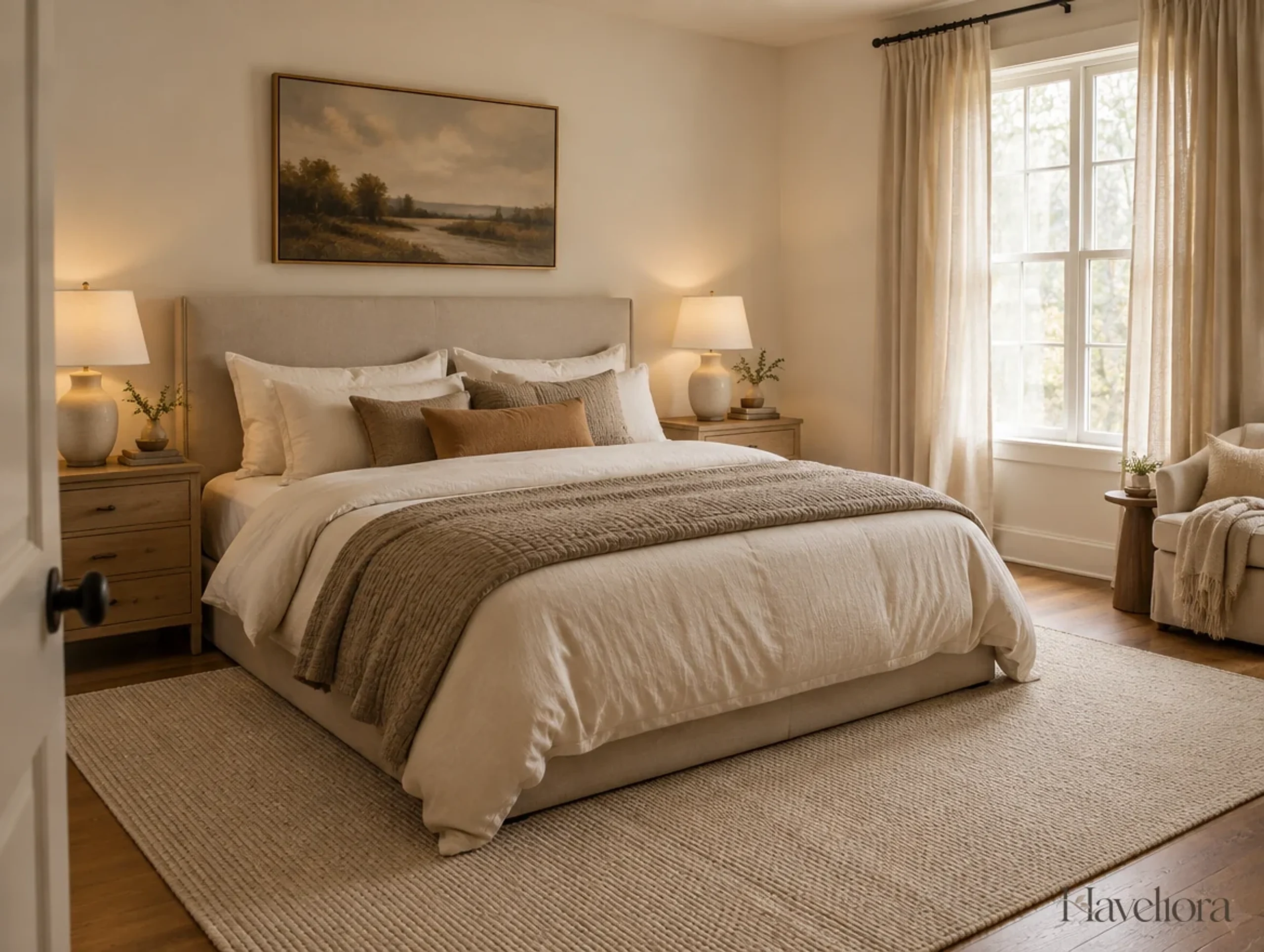
For a warm, light bedroom, try an ivory background, oatmeal upholstery, and a deeper mushroom or caramel accent. This gives the eye a quiet sequence of light, medium, and darker tones. Making every surface the same beige can flatten the room; a little contrast helps the bed, curtains, and furniture remain distinct.
Begin with the elements you are keeping. A honey-colored floor, gray carpet, or dark wood bed already contributes color. Bring fabric samples close to those surfaces before selecting paint, rather than choosing a shade in isolation and hoping the furniture will follow.
Test paint in the actual room. Benjamin Moore’s Color Handbook recommends observing samples in different positions and at different times of day. A neutral that works beside the window may look different behind the headboard.
For a simple first step, keep the walls and largest bedding layer light, then introduce one deeper neutral through a throw or bedside cabinet.
2. Layer the Bed Without Overloading It
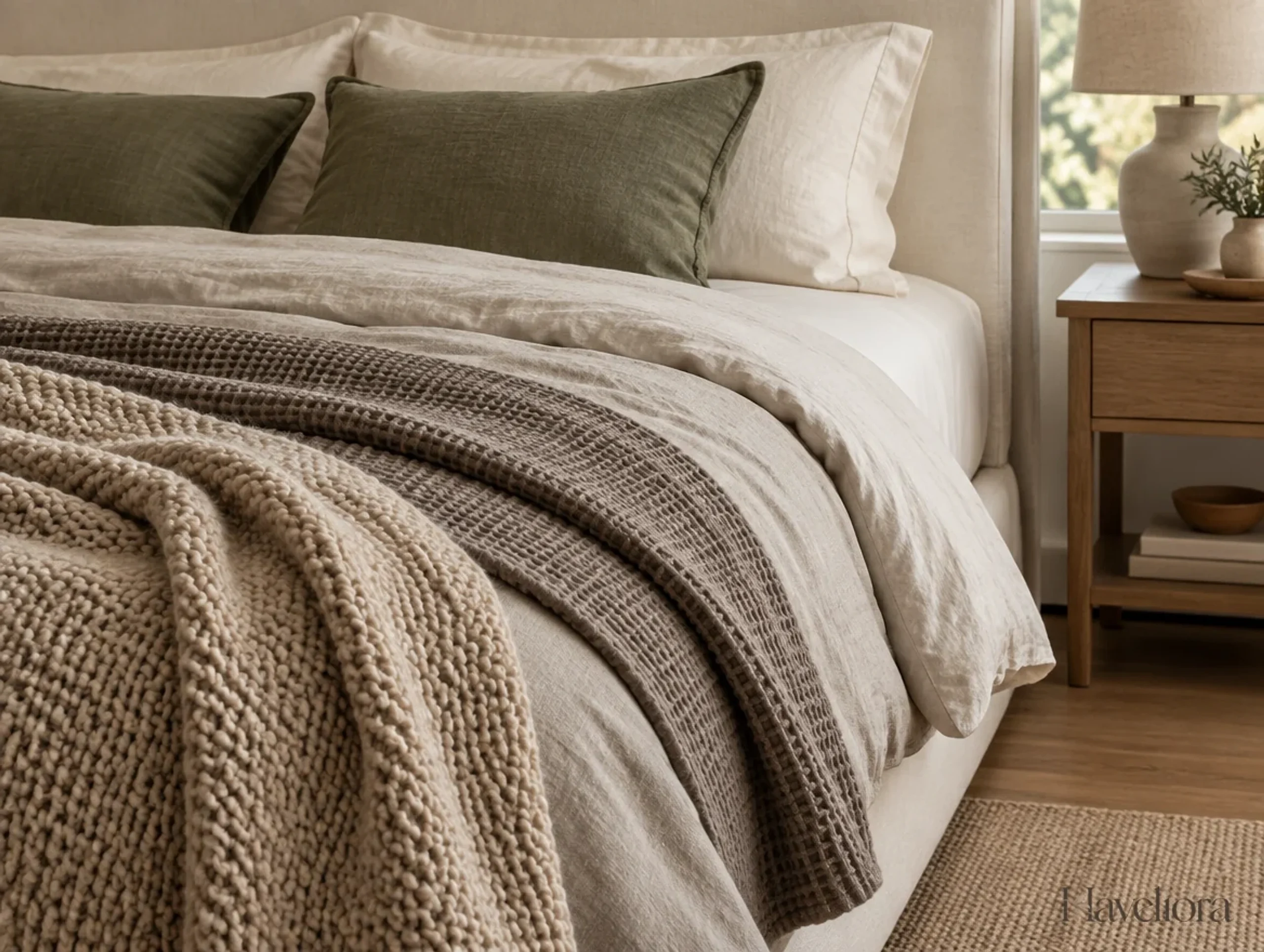
Build the bed around the layers you actually need: sheets, a duvet or coverlet, and an optional throw. The contrast between a smooth sheet, a lightly textured cover, and a chunky knit can look rich without requiring a large stack of decorative pillows.
Give each layer a role. The main cover provides the dominant color; the folded blanket introduces texture; a smaller cushion can repeat a color elsewhere in the room. Leave enough of the main bedding visible so the arrangement does not become a collection of competing fabrics.
Practical comfort matters more than the styling formula. In a warm climate, use a lighter cover and fold a decorative throw at the foot rather than adding heavy bedding you will remove every night. Check care labels and washing requirements before combining pieces that need very different maintenance.
Keep it simple: start with your sleeping pillows and one decorative cushion. Add more only when the bed still feels easy to use.
3. Create Separate Pools of Gentle Light

Keep an overhead light for tasks such as cleaning, but give yourself alternatives for the evening. A bedside lamp and a separate reading light can make the room feel more considered than a single bright ceiling fixture. Place light where you use it, rather than distributing lamps only for symmetry.
For a warm appearance, consider bulbs around 2700–3000 K; ENERGY STAR explains that this range produces warmer-looking white light. Brightness is a separate choice: the FTC’s light-bulb guide explains that lumens, rather than watts, indicate brightness. A warm bulb can still be too bright for a particular bedside lamp.
Test a lamp while sitting in bed. The shade should limit direct glare while allowing enough light for what you are doing. Check bulb, fixture, and dimmer compatibility, and follow the fixture’s stated ratings.
For a low-effort improvement, change one harsh bedside bulb and evaluate the result before replacing all your lighting.
4. Place a Rug Where Your Feet Land
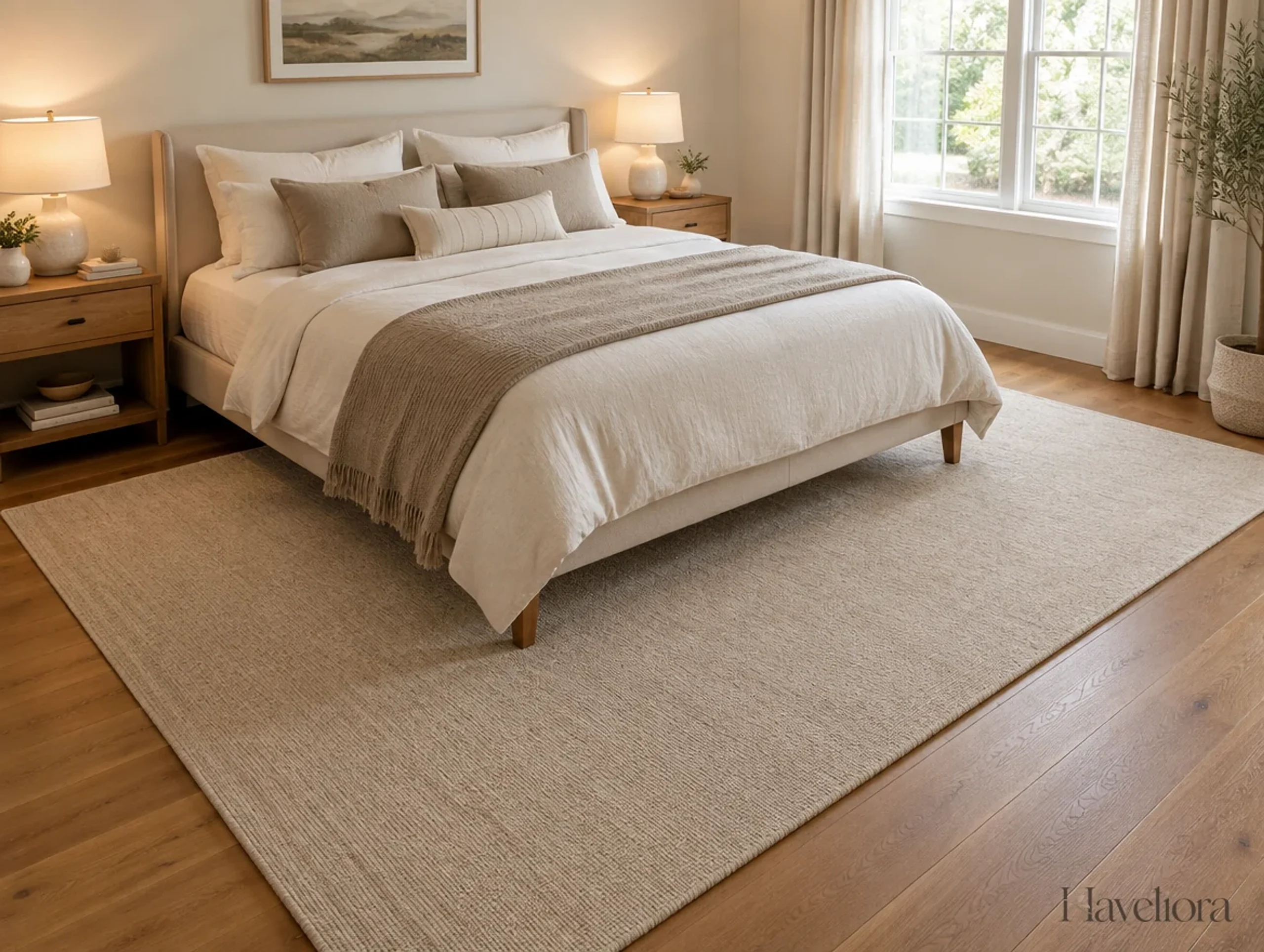
Judge a rug by the area it covers around the bed, not simply by whether it fits underneath. You want a comfortable landing on the sides you use and a proportion that relates to the whole bed frame. A small rug mostly hidden by furniture contributes little to the experience of the room.
Mark a possible outline with painter’s tape before ordering. Open doors and drawers, walk around the bed, and check whether the rug would meet a floor vent or another piece of furniture awkwardly. Include the full frame in your measurements, especially when it extends beyond the mattress.
A low-contrast pattern is a useful option when you want texture without a strong focal point. For a narrow bedroom, two coordinated bedside runners may be more workable than one large rug. Use a suitable nonslip backing or pad for your floor and keep edges flat.
Avoid buying by label alone. A standard size is not automatically right just because it is marketed for a particular bed size.
5. Introduce Wood in a Deliberate Way

Wood offers a natural visual contrast to fabric and painted surfaces. A bedside cabinet, bench, or simple frame can introduce grain and variation to a bedroom that otherwise feels very uniform. You do not need an entirely new matching furniture set.
When mixing finishes, choose one as the main wood tone and repeat a second in a smaller detail. A walnut cabinet can feel intentional beside an oak bed when a picture frame or tray echoes the cabinet’s darker color. The connection matters more than an exact match.
Consider the floor as part of this composition. If the floor and bed are both visually strong, a plain rug or upholstered headboard can give them some separation. In a room with several painted pieces, one wooden surface may be enough to change the balance.
Start small: try a wooden tray or frame before deciding that your existing furniture needs replacing.
6. Let the Headboard Anchor the Bed

A headboard gives the sleeping area a clear shape against the wall. Upholstery is a good direction when you want an additional textile surface; wood can work just as well when the bedding and window treatments supply the softness.
Look at proportions with the pillows in place. A headboard that appears tall in a product photograph may nearly disappear behind your bedding, while an oversized design may compete with a low ceiling or nearby window. Measure the visible space rather than relying on the product image alone.
Think about how you use the bed, too. If you regularly sit up to read, consider the headboard’s construction, support, and cleanability. A washable or easily maintained fabric may be a better everyday choice than a delicate texture. Follow the manufacturer’s mounting instructions and confirm compatibility with your frame.
Keep it calm: let an interesting headboard stand on its own before adding elaborate artwork directly above it.
7. Soften the Window With Well-Fitted Curtains
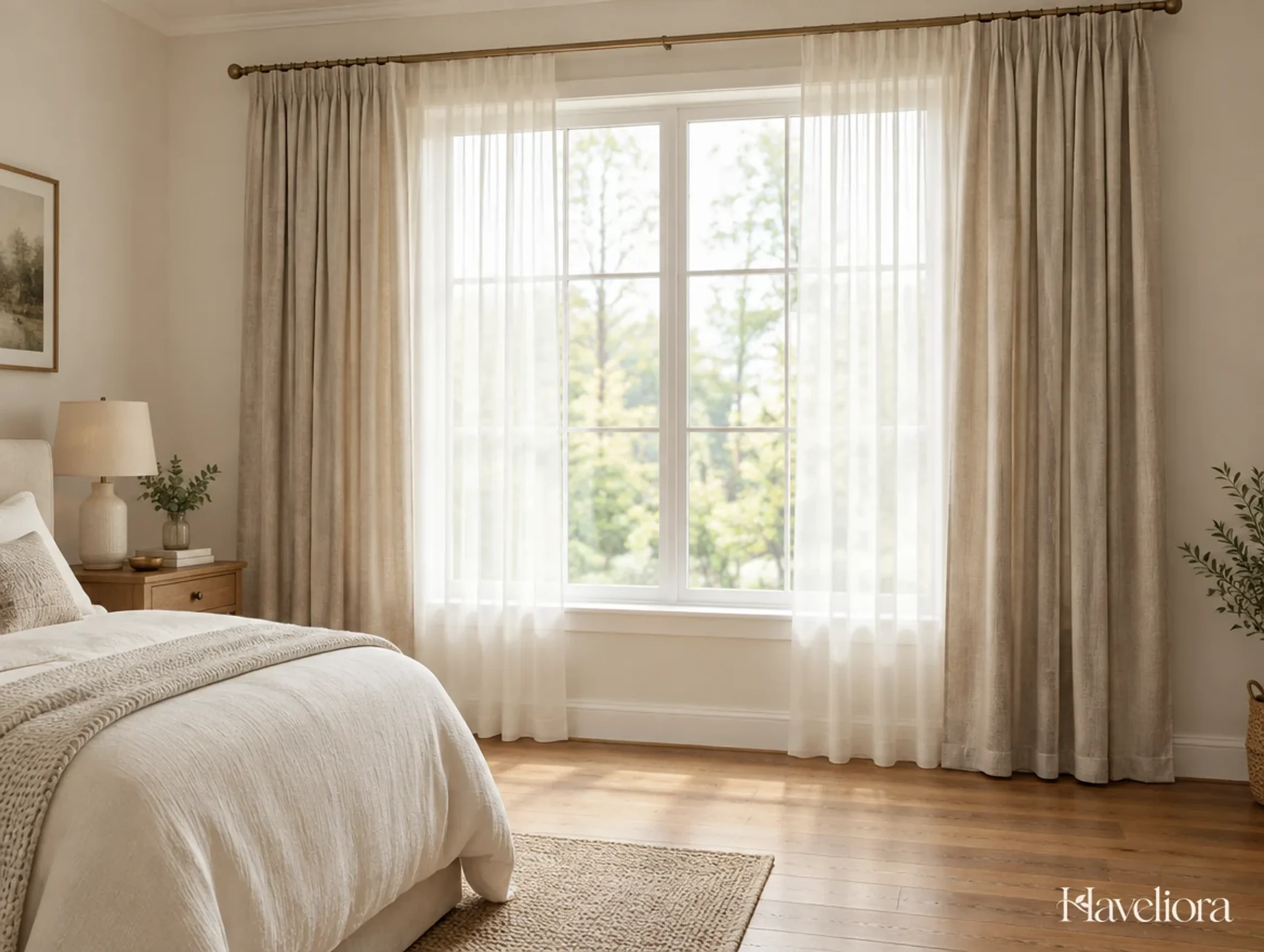
Full-length curtains can give a bedroom a more finished outline, particularly when their color relates to the walls or bedding. A plain woven fabric often does enough decorative work without a bold pattern.
Measure from the installed or planned track position, not from the top of the window frame. Think about how the panels will stack when open: curtains should not unnecessarily cover the glazing or catch behind a bedside table. A hem that clears or just meets the floor is easier to live with than long folds that collect dust.
Choose privacy and light control separately from appearance. A decorative sheer may look attractive during the day but provide insufficient privacy at night. A lined curtain or an additional shade can address that. Keep fabric away from heaters, and do not obstruct vents or an exit window.
Before you order, check the panel width as well as the length; overly stretched fabric can look unfinished even in the right color.
8. Make the Bedside Table Useful First

Work backward from what needs to be within reach: a lamp switch, glasses, a book, and perhaps a glass of water. Allocate room for those objects before adding a vase. A bedside arrangement that is beautiful but leaves nowhere to put anything will not stay that way for long.
A small drawer is helpful for items you use but do not want to display. A tray can collect glasses or jewelry, although a tray filled with unrelated objects simply becomes a smaller cluttered surface. Keep charging cables from crossing a walking route.
Check the relationship between the tabletop and mattress height while sitting in bed. You should be able to reach what you need comfortably. In a tight room, a narrow cabinet may work better than a deep table; wall-mounted options require suitable fixing and weight limits.
To test the styling, remove one decorative object and see whether the arrangement becomes easier to use.
9. Add Seating Only When the Room Can Afford It
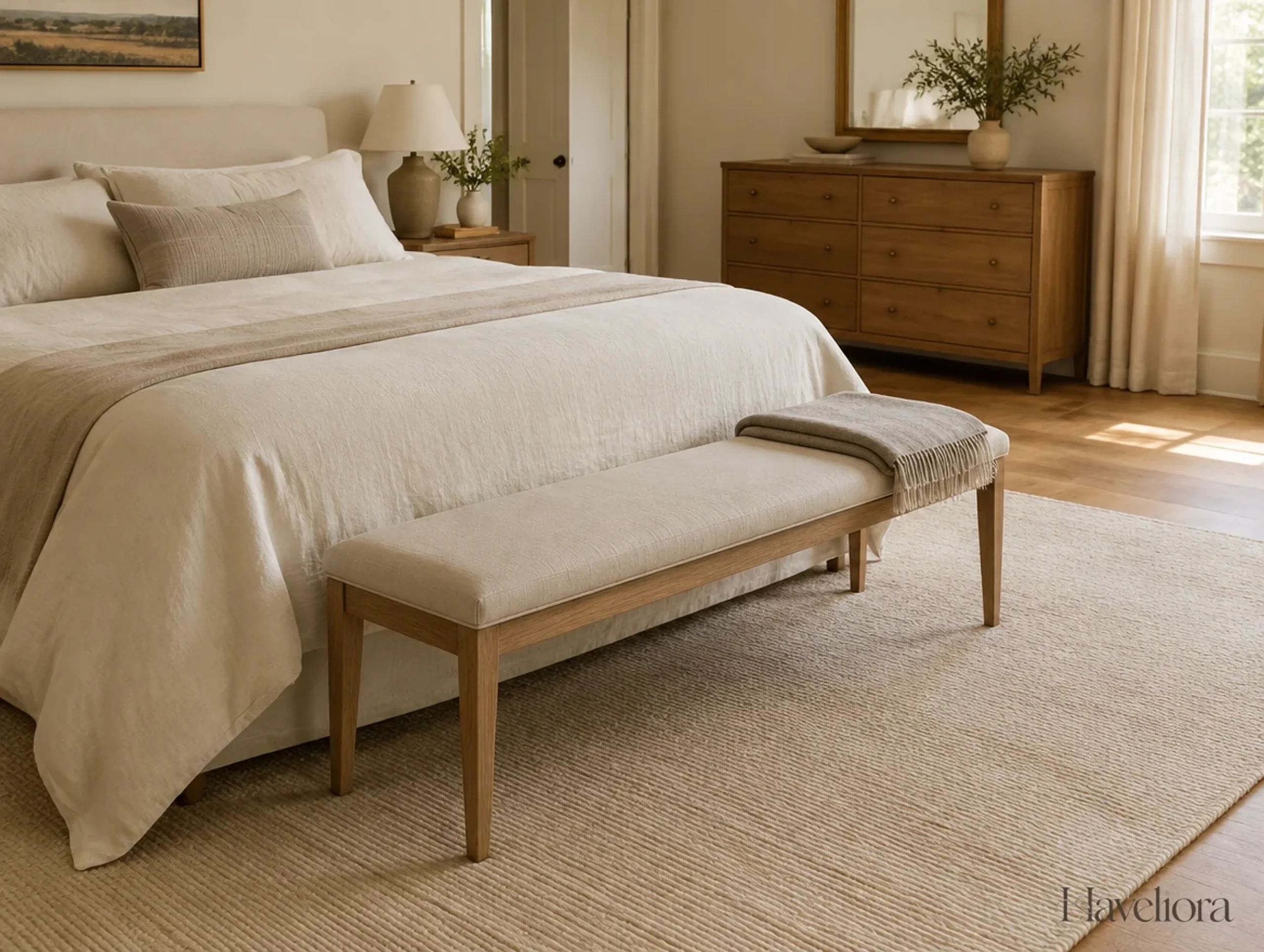
A bench at the foot of the bed can provide a place to sit while getting dressed or to set down a folded cover. But it should earn its floor space. A narrow route squeezed between the bench and dresser is not a worthwhile trade for a styled photograph.
Mock up the footprint with tape or boxes. Walk past it carrying a laundry basket, open nearby drawers, and consider whether another person could move around comfortably. In a smaller room, a compact chair elsewhere may be a better solution, or the room may not need additional seating at all.
Use the bench as a contrast: an upholstered seat can soften a wood bed, while a simple wood frame can balance heavily textured bedding. Resist covering the entire surface with throws and cushions if you intend to sit there daily.
Start with the function: decide what the seat will do before choosing its shape.
10. Add Color Through Muted Earth Tones
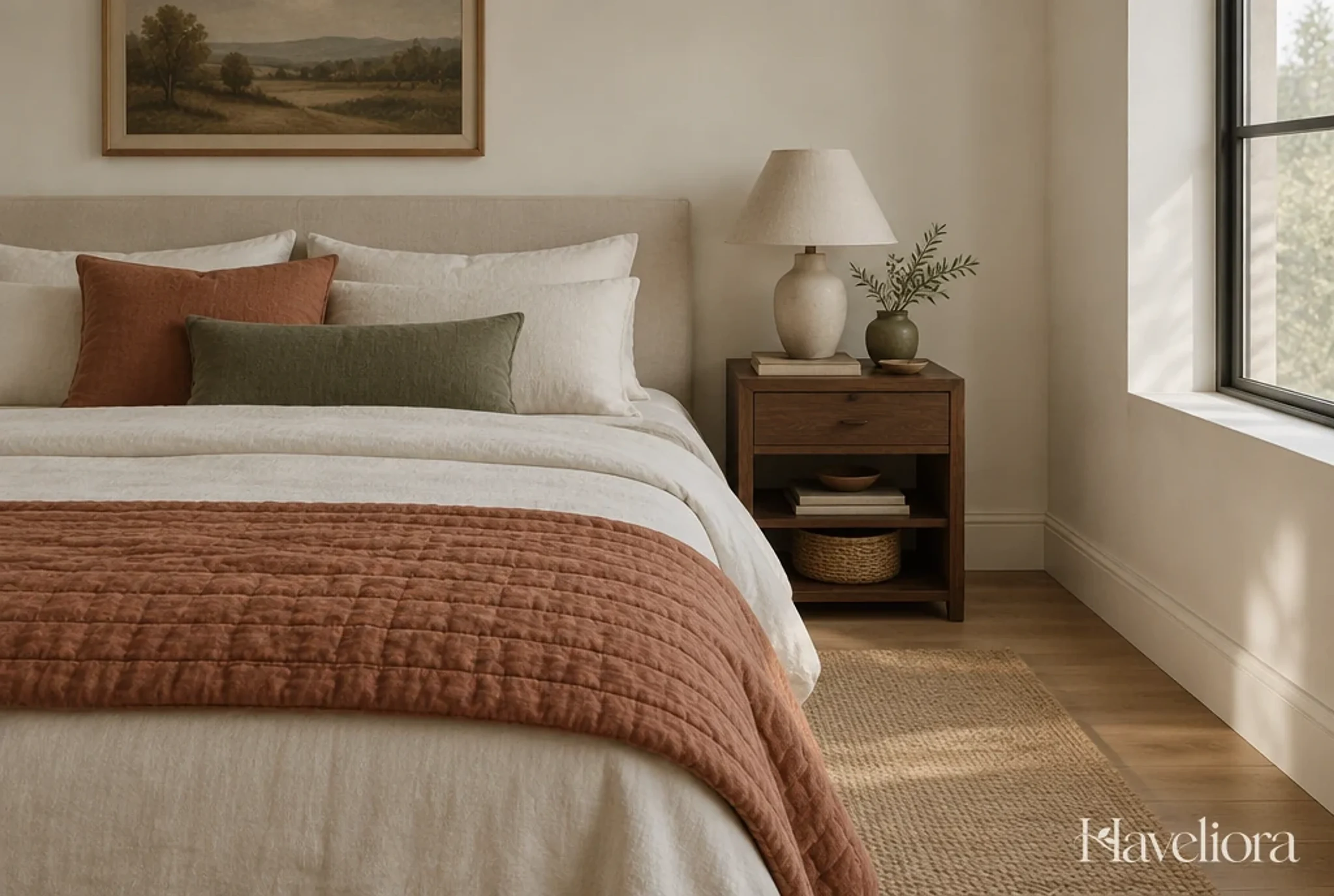
A cozy bedroom does not have to be entirely beige. Muted olive, clay, rust, cocoa, and dusty blue-green can give a neutral room a more individual character. The important question is how much visual attention you want the accent to receive.
For a restrained scheme, introduce color through one medium-sized textile and repeat it in a smaller object. An olive coverlet with a related tone in a print can feel more connected than several unrelated colorful cushions. Keep a neutral gap between competing accents.
Judge colors alongside the existing floor and furniture. A terracotta blanket can look quite different beside reddish wood than beside pale oak. Try a removable piece first when you are unsure; bedding and cushion covers are easier to revise than a whole painted wall.
For an easy combination, cream as the background, warm wood as the middle tone, and muted olive as the accent. Treat it as a starting point, not a rule.
11. Mix Quiet Patterns at Different Scales
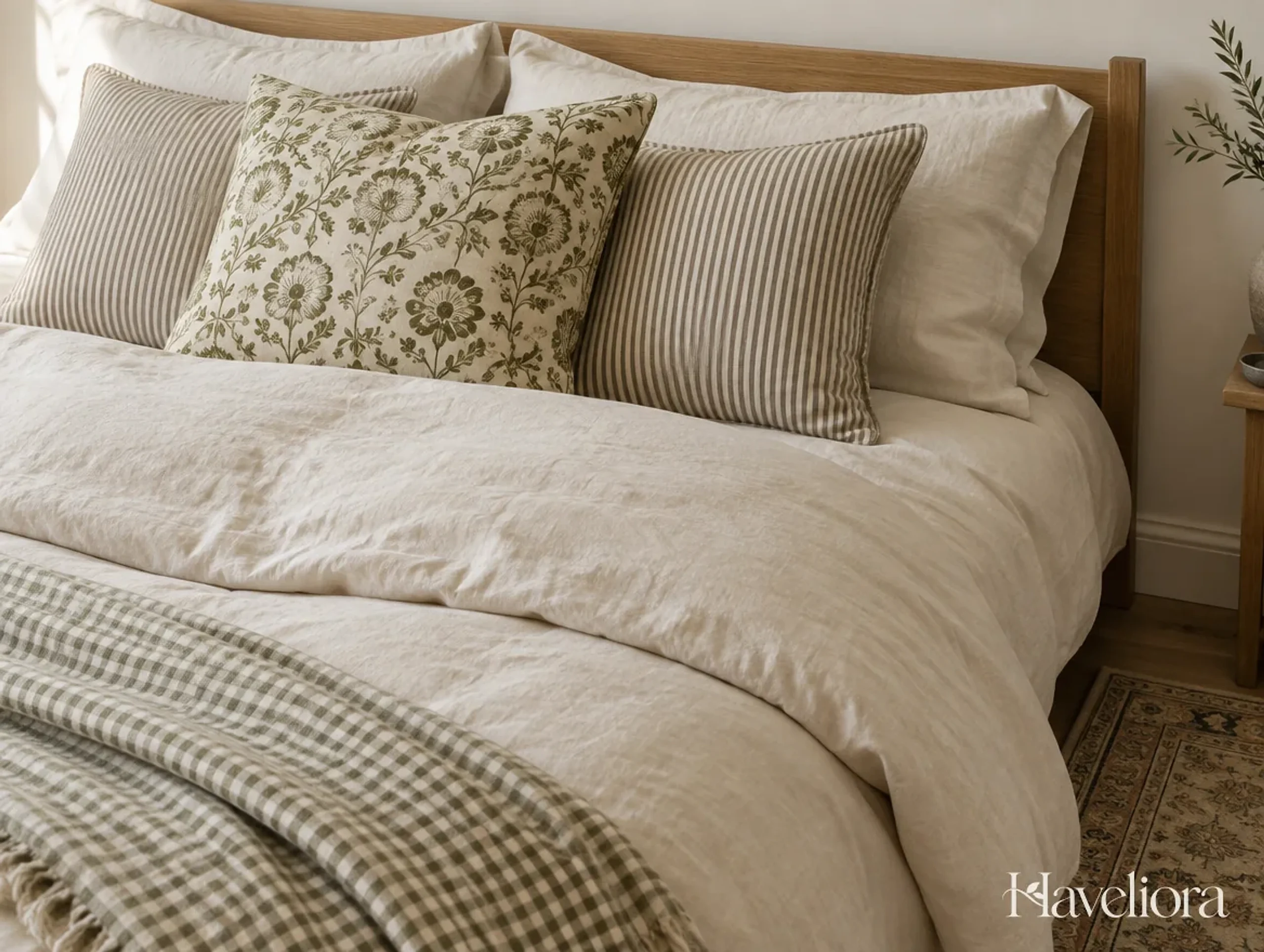
Pattern is useful when a room feels a little too uniform, but several equally bold prints can compete for attention. Start with one pattern you enjoy, then make any second pattern noticeably different in scale or contrast.
For example, try narrow striped bedding with a larger, softly drawn botanical cushion. A plain blanket between them provides a visual pause. The patterns do not need identical colors; one shared background shade is often enough to make the combination feel deliberate.
Look at the bed from across the room before adding another print. A pattern that seems subtle close up may become a strong stripe or dark block at a distance. If the rug already has a detailed design, you may prefer mostly plain bedding and let the floor supply the movement.
For a simple shortcut, combine one patterned fabric, one smooth plain fabric, and one textured plain fabric. This gives variety without complicated pattern matching.
12. Size Artwork for the Furniture Beneath It

Artwork can give a bedroom a sense of place, especially when the rest of the room is restrained. Choose a landscape, abstract composition, print, or personal piece that you genuinely enjoy, rather than something selected only to fill an empty rectangle.
Use paper templates to test the arrangement before making holes. View them from the doorway and from the bed. If two pictures will hang together, judge their combined width and the gap between them as one composition.
Relate the grouping to the bed, dresser, or chair below rather than centering every picture on an entire wall. In a room with a tall headboard, the best place for art may be the opposite wall. Use hardware appropriate to the object’s weight and wall construction, and avoid casually leaning heavy framed pieces above a sleeping area.
For a quieter look, repeat a wood or metal finish already present in the room through the frame.
13. Give Greenery a Suitable Place

Choose the position first and the plant second. Notice how much daylight reaches the proposed spot and how easily you can access it for care. A corner that looks attractive in a room plan may not provide the conditions a particular plant needs.
One plant with enough space around it usually creates a clearer focal point than several pots squeezed onto a bedside table. Use a stable container and protect furniture from drainage and moisture. Avoid placing a pot where it interferes with curtains or the route out of the room.
Check the exact species when pets share your home. The ASPCA’s plant database distinguishes toxic and non-toxic plants and notes that its list is not exhaustive. Do not assume a plant is suitable simply because it frequently appears in interior photographs.
No suitable plant spot? A botanical print can introduce a similar visual theme without adding maintenance.
14. Give Everyday Clutter a Specific Home
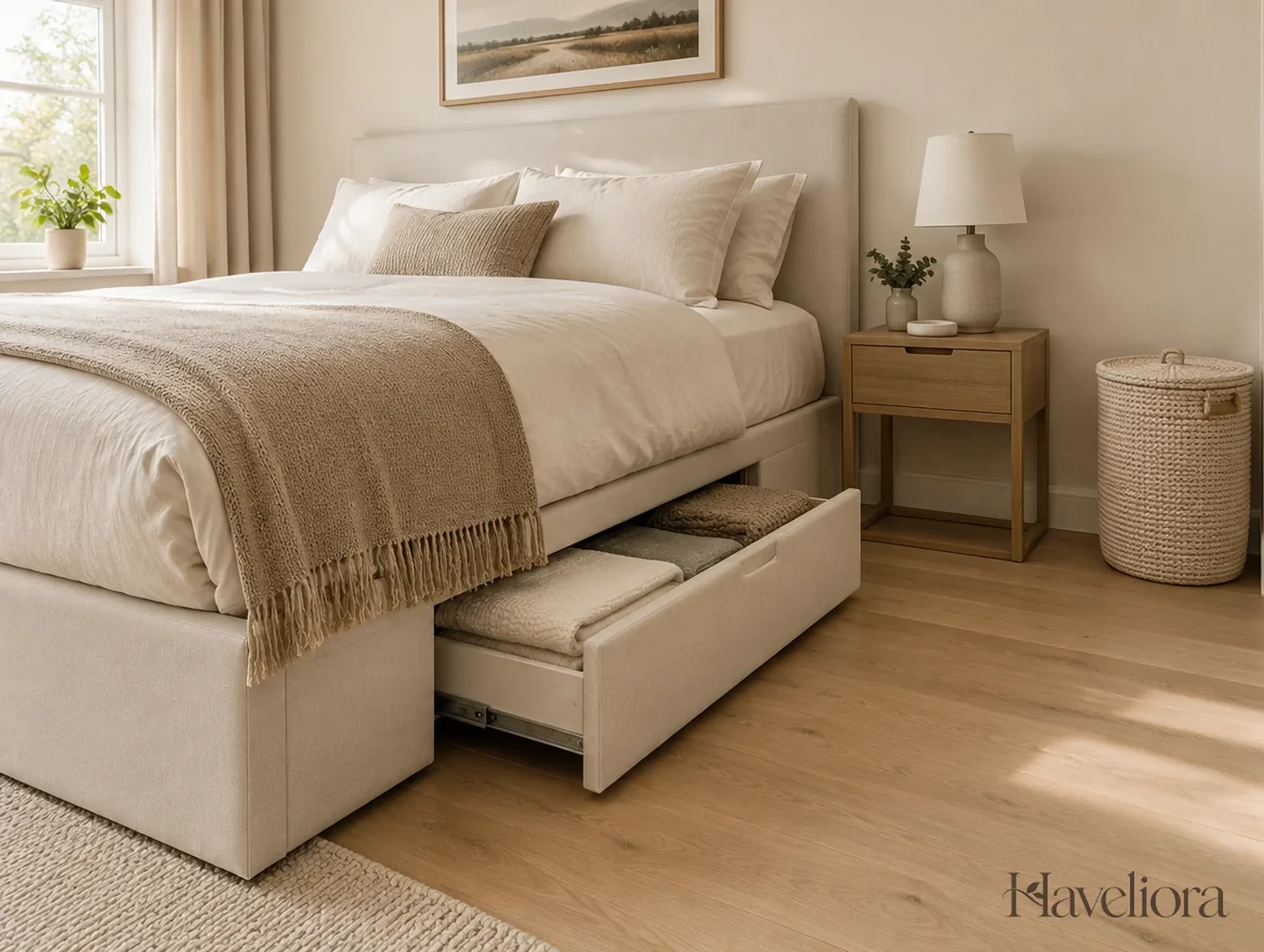
Before adding storage, identify what repeatedly lands on the floor or dresser. Clean laundry waiting to be put away needs a different solution from books, charging cables, or tomorrow’s clothes. Buying a basket without deciding its job rarely solves the underlying problem.
Use closed storage for visually busy items and keep frequently used objects easy to reach. Under-bed drawers are useful when they open fully; a deep drawer blocked by a nightstand is less helpful than its advertised capacity suggests. Check access before arranging the rest of the furniture.
Keep the practical improvements safe. The CPSC’s Anchor It! campaign advises securing furniture with drawers, doors, and shelves to the wall to help prevent tip-overs. Follow the furniture’s instructions rather than relying on its apparent weight.
For a quick reset, clear one surface, give each removed item a destination, and put back only what belongs there.
15. Use a Blanket Basket as Storage, Not Another Display
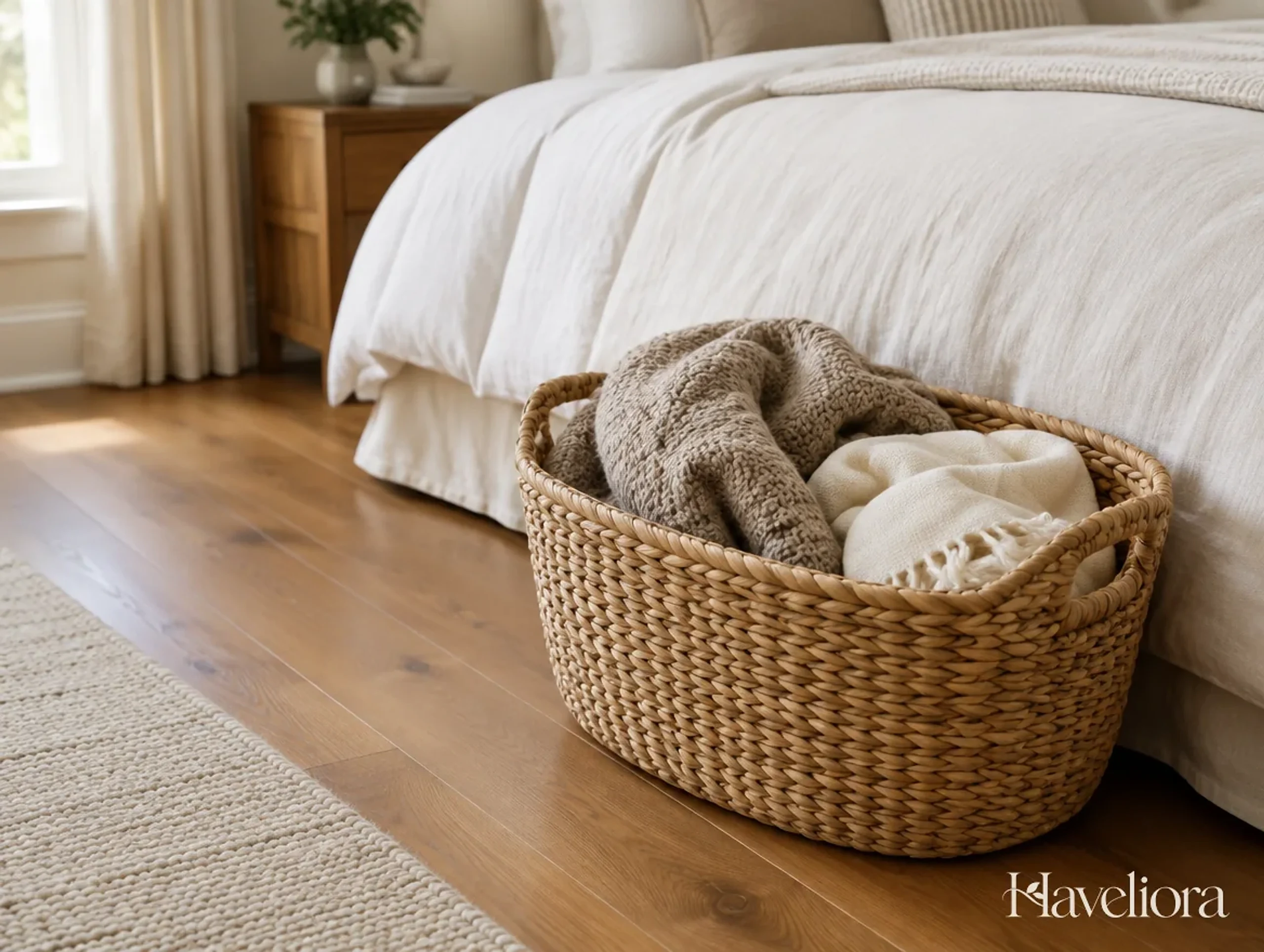
A basket can add woven texture while giving spare bedding a clear place to live. Position it beside a chair or at the edge of the sleeping area, where reaching for a blanket is convenient and the basket does not narrow the walkway.
Match the inside surface to the fabric you are storing. Rough edges can catch delicate knits, so inspect the basket or choose a lined version. Consider the handles, too: they should help you move the basket without projecting awkwardly into the room.
One loosely folded blanket can be enough. Filling the basket beyond its rim turns an organizing tool into a pile. Keep out-of-season bedding in suitable closed storage and reserve the visible basket for the layer you actually reach for.
Use what you already own: a plain fabric bin or an existing basket in a related color can work just as well as a new decorative purchase.
16. Check the Reflection Before Hanging a Mirror
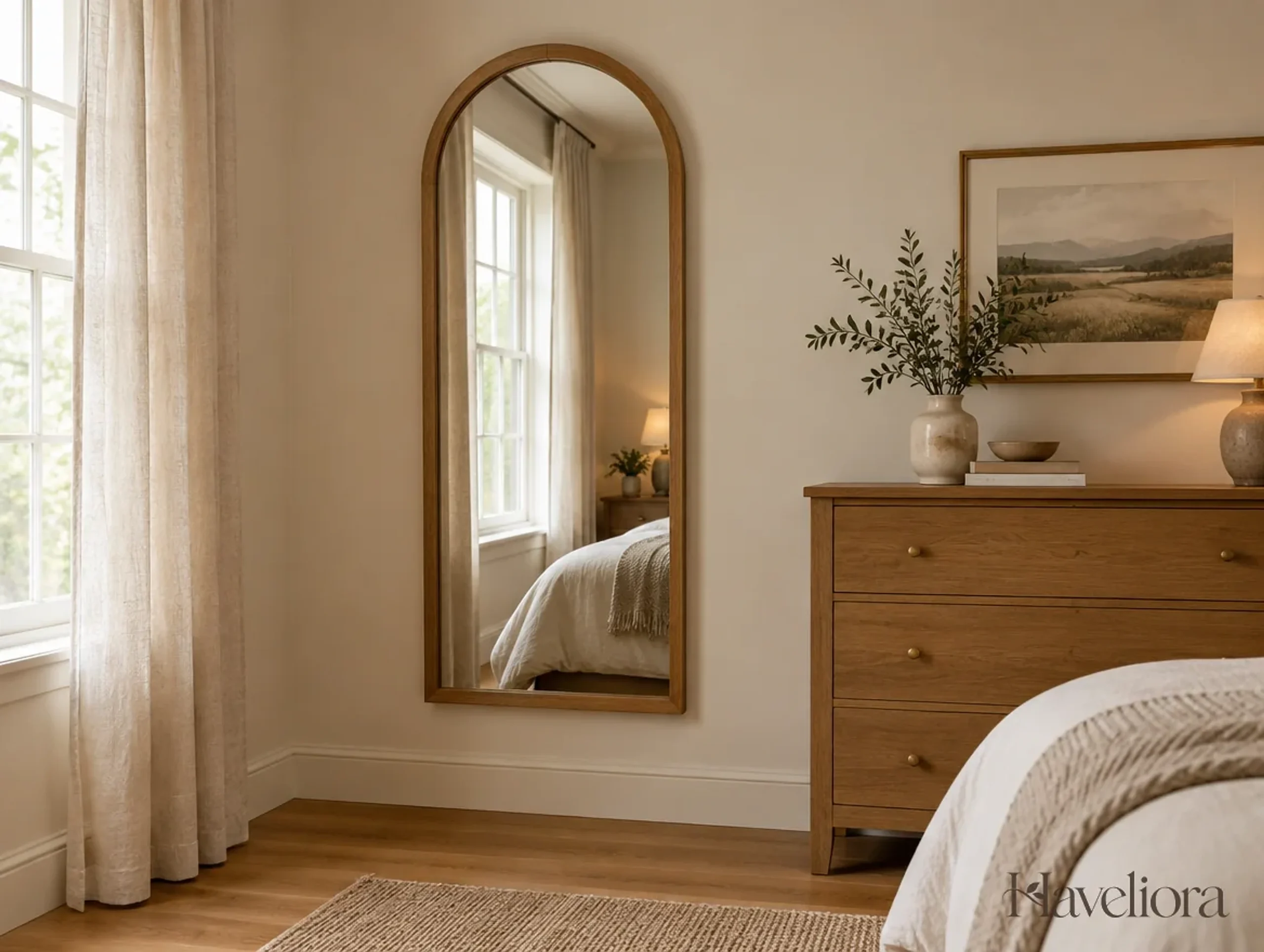
A mirror introduces another view within the bedroom, so its placement matters as much as its frame. Reflecting a window, a lamp, or an uncluttered part of the room can feel more intentional than reflecting laundry or the back of a door.
Test the proposed position from more than one viewpoint. A reflection that looks attractive while standing at the doorway may create unwanted glare when you are sitting in bed. Also check whether the mirror is useful for getting dressed; a decorative height and a practical height are not always the same.
Choose mounting and fixing methods appropriate to the mirror and wall. A floor mirror styled to look casually leaned still needs to be secured as its manufacturer directs. Do not assume a heavy frame will stay stable simply because it rests on the floor.
For the frame, use a simple frame when the reflected view is already detailed.
17. Build a Reading Corner Around Actual Comfort

A bedroom reading corner does not need a separate collection of accessories. Start with a chair you find comfortable, add a small surface for a book, and position a lamp where it lights the page without shining directly into your eyes.
Test the chair’s depth and arm height instead of choosing only by its silhouette. Leave room to sit down and stand up without turning sideways around another piece. A compact chair can suit a small room, but an uncomfortable miniature seat is not automatically the right answer.
Repeat one textile color from the bed to connect the corner to the rest of the room. If you already added a bench, ask whether you genuinely need a second sitting area. One useful seat is better than two competing arrangements that reduce your floor space.
Keep the purpose clear: avoid letting the chair become the default place for clothes by giving those clothes a separate home.
18. Balance Straight Lines With a Few Curves

Most bedrooms contain many rectangles: the bed, doors, windows, wardrobes, and picture frames. Introducing a rounded table, arched headboard, or curved lamp can vary that rhythm without adding more objects.
Choose a curve where it contributes to the whole arrangement. A round mirror can balance a long rectangular dresser; a rounded bedside cabinet can provide contrast beside a straight-lined bed. The aim is balance, not replacing every piece with a sculptural shape.
Check usefulness before committing. A small round table may offer less usable surface than the rectangular table it replaces. A deeply curved headboard can occupy more space than expected. Compare the actual dimensions and storage capacity, not just the front view.
For a budget-friendly option, introduce an organic ceramic vase or a rounded lampshade before buying large furniture. You may find that this small shape change supplies all the contrast the room needs.
19. Make the Bed Look Easy to Settle Into

There is a difference between a relaxed bed and one that looks unfinished. Keep the main cover arranged evenly, then allow the texture of the fabric to remain visible. A loose fold at the foot can look inviting without the whole bed appearing unsettled.
Choose a styling routine you will repeat. If removing eight cushions every evening irritates you, that arrangement is not the right one for your bedroom. Store decorative pieces somewhere clean rather than making the floor part of the nightly routine.
Use the folded-back edge of a cover to show a second tone or texture. This creates an intentional transition without adding another object. In a very small room, keeping the visible bedding relatively simple can also stop the bed from dominating every view.
For the everyday test, make the bed in the amount of time you realistically have on a normal morning, then refine that version rather than a showroom version.
20. Display a Few Details With Personal Meaning
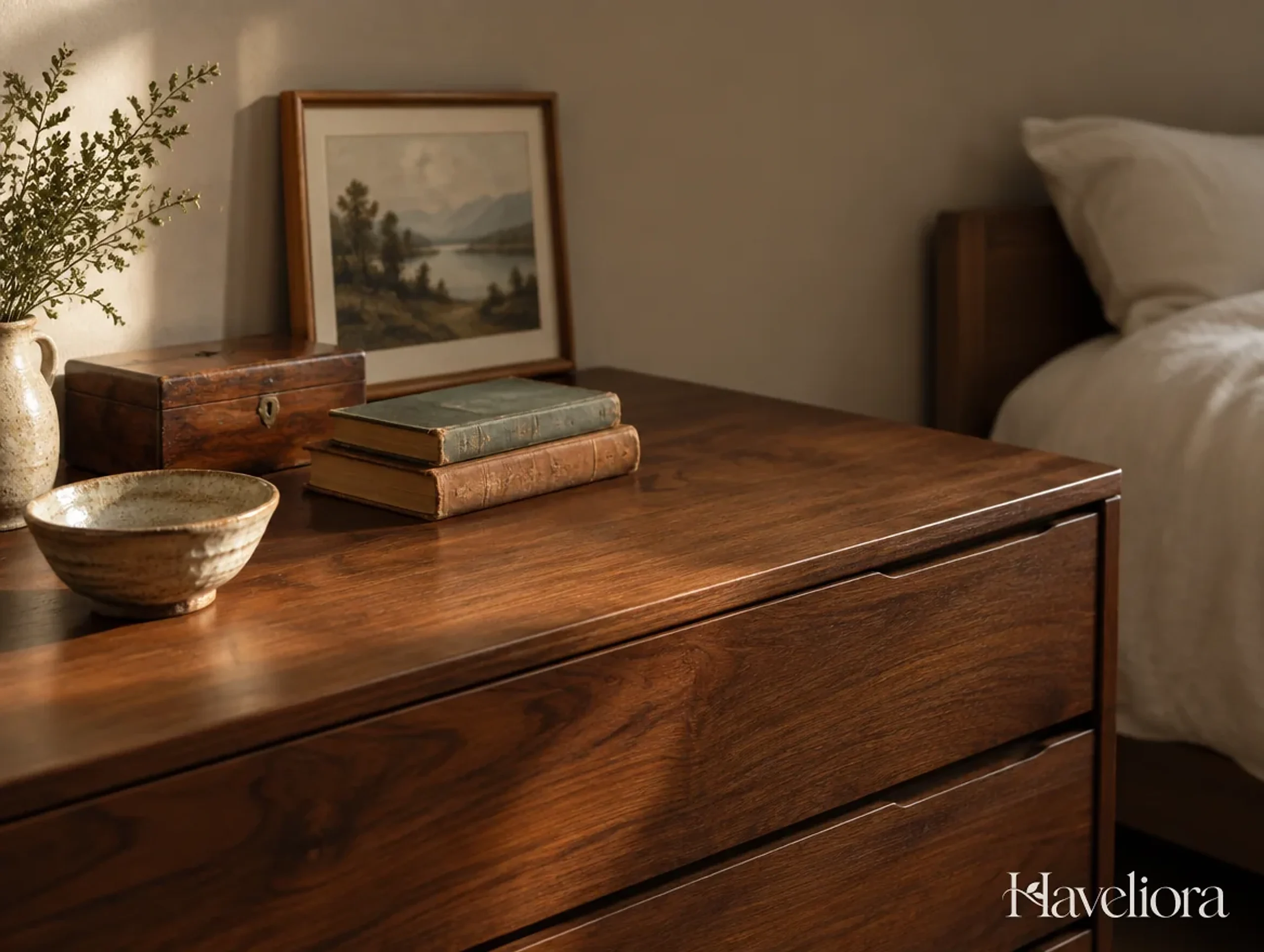
A bedroom can be visually coordinated and still feel anonymous. A favorite book, an inherited box, a framed memory, or a handmade piece can introduce something that a matching accessories set cannot.
Choose a small group rather than displaying everything at once. Mix heights and leave a visible area of the surface uncovered. A low object beside a taller one is often easier to read than several items of identical size arranged in a straight line.
Not every meaningful item has to match the palette perfectly. A slightly unexpected piece can become the detail that makes the room feel personal. Give it a deliberate position instead of trying to disguise it among many new purchases.
For a quick editing exercise, remove any object you keep only because you think a bedroom is supposed to have it. Keep the things you enjoy, use, or connect with.
21. Repeat Your Palette Across the Room
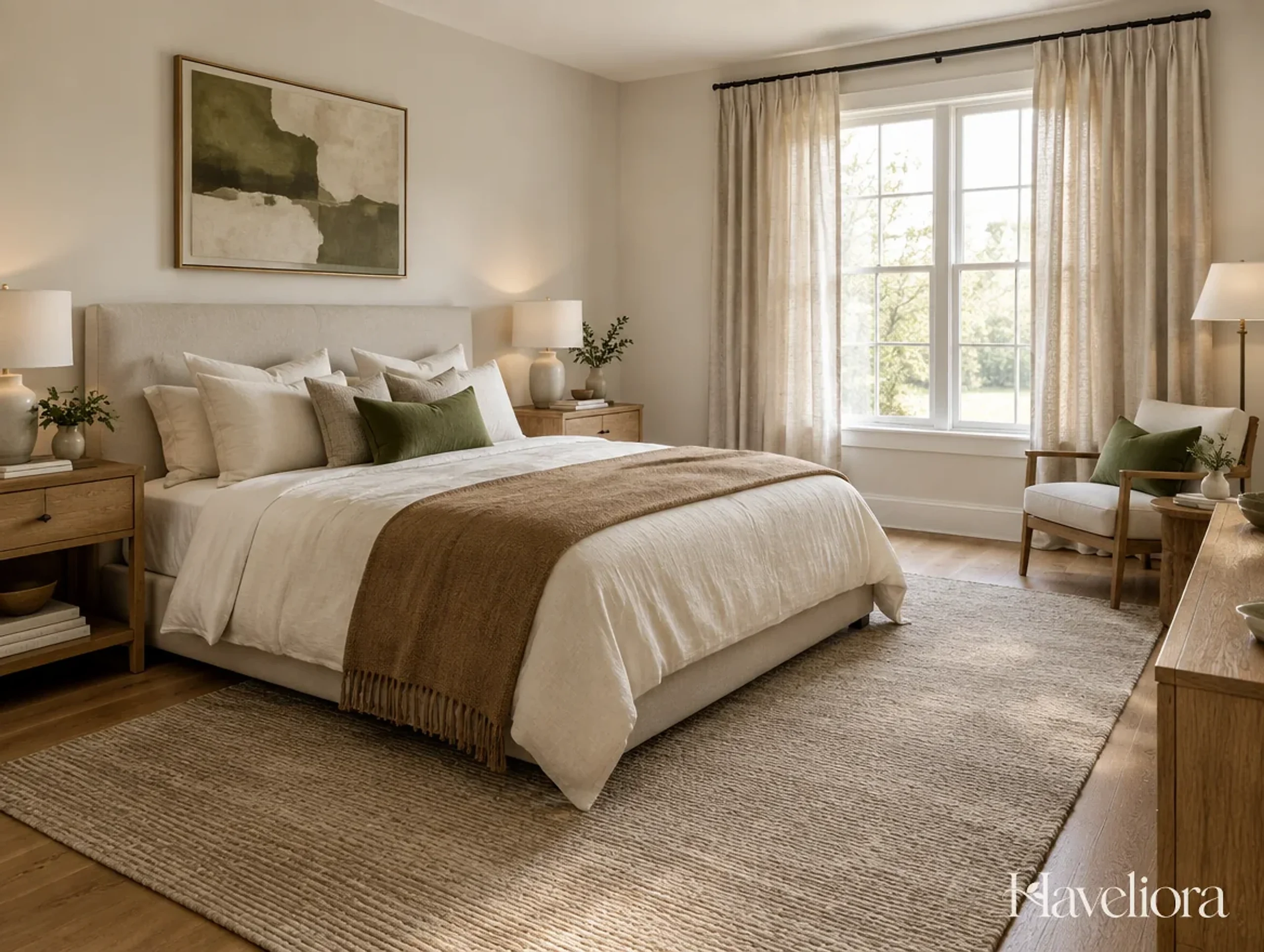
Once the main pieces are in place, stand in the doorway and look for connections. Does a color on the bed appear elsewhere? Does the darker furniture have a small counterpart across the room? Repetition can make a mixed collection feel more intentional.
Use different materials to avoid an overly matched result. Olive might appear as a cushion, a small area in a print, and greenery. A warm brown can connect a wood cabinet to a woven basket without requiring those objects to be identical.
If the room feels scattered, take one accent away before adding another. If it feels flat, vary texture or introduce a slightly deeper version of an existing color. You do not always need a completely new hue to create interest.
For a restrained finish, choose one dominant background, one supporting tone, and one accent as an editing tool. Let useful existing pieces and personal objects keep the scheme from feeling rigid.
A Practical Plan for Refreshing Your Bedroom
Use these ideas in stages rather than turning them into a shopping list. Begin with changes you can reverse, and spend only after you understand what the room needs.
First, rearrange and edit
Clear the bedside tables, move items that do not belong in the bedroom, and test the walking routes. Try the bed with fewer cushions. Fold an existing throw differently. Move a lamp from another room temporarily to judge whether a second light source makes a worthwhile difference. These trials help separate a layout problem from a purchasing problem.
Next, choose one high-impact upgrade
If the room feels harsh at night, investigate the lighting before buying wall art. If the floor feels bare, measure for a rug before buying a bench. If the bed is uncomfortable, prioritize useful bedding over decorative layering. Put your budget toward the thing you notice and use every day.
Then, check the room at its busiest
Look at the bedroom with drawers open, curtains drawn, a laundry basket in hand, and the bed ready for sleeping. A successful arrangement should still work in these ordinary situations. Photograph the room from the doorway as a final editing aid; you may notice a crowded corner or disconnected accent more easily in a small image.
Adapting These Ideas to a Small Bedroom
Keep the same priorities but reduce the number of separate pieces. A bedside cabinet with a drawer may replace both a side table and an extra storage basket. A suitable wall-mounted light can free tabletop space. A simple curtain treatment may work better than multiple bulky layers around a narrow window.
Do not force in a chair or bench just because it appears in an inspiration image. Preserve access to the bed, wardrobe, windows, and doors. Choose the bed frame carefully, because a thick upholstered frame can extend significantly beyond the mattress. Measure the complete furniture footprint.
Use a connected palette to simplify the view, then add personality through one or two details. A small room can still feel rich in texture without having a textured object on every surface.
Frequently Asked Questions
What is the easiest way to make a bedroom feel cozier?
Start with the part of the room that feels least comfortable. Try a shaded bedside light, a softer textile where you sit or stand, and a clear surface beside the bed. These changes improve the way the room works as well as the way it looks. Evaluate them before adding more decoration.
Can a white bedroom feel warm?
Yes. Try combining white with wood, an oatmeal or caramel textile, and lighting you enjoy in the evening. Choose contrast deliberately: a completely uniform collection of bright-white surfaces may not give you the layered effect you want. Test fabric and paint samples together in the room.
How can I make a bedroom cozy without painting?
Use the largest movable surfaces: bedding, curtains, a rug, and the headboard. A warm coverlet can establish a new color direction even when the walls remain unchanged. Lampshades, wood accessories, and artwork can support that direction. For a rental, check permission before changing fixtures or attaching anything to walls.
How many decorative pillows should I use?
There is no required number. Begin with the pillows you sleep on and one accent cushion. Add another only when the arrangement still leaves the bed comfortable and you have a sensible place to put it at night. A smaller bed often benefits from a simpler arrangement.
Does a cozy bedroom have to use warm colors?
No. Blue, green, gray, and deeper colors can be part of a welcoming room. You can balance them with texture, wood, and lighting rather than replacing them with beige. The best palette is one you enjoy in the actual room, alongside the furniture you plan to keep.
Should I buy matching bedroom furniture?
You can, but matching is not a requirement. Look for a connection in color, proportion, shape, or finish between different pieces. Keep the useful furniture you already own, then repeat a detail elsewhere to make the combination feel intentional. Avoid buying a full set before checking its total footprint.
Bring the Room Together One Choice at a Time
The best cozy bedroom ideas are the ones that improve your own routine. Start with comfortable bedding, adaptable lighting, clear routes, and storage that is easy to use. Build the decorative layers around those decisions.
Keep the room personal, leave some surfaces quiet, and stop adding things when the arrangement already works. A welcoming bedroom does not need to contain every idea in this guide. It needs a few well-chosen ideas working together.
For more focused planning, explore our small bedroom ideas for better use of space or use our neutral bedroom guide to bring color, texture, and contrast together.
Other Articles


