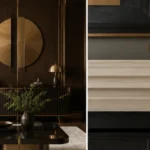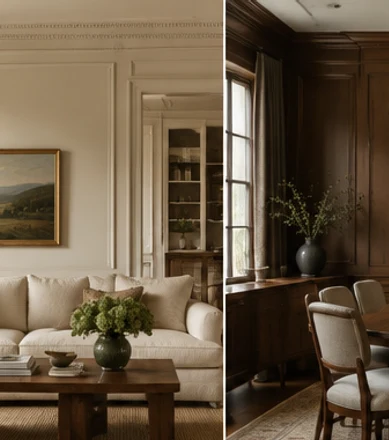
A collected interior feels like it developed over time rather than arriving in one delivery. The sofa may be new, the side table secondhand, the artwork personal, the rug older, and the lamp from a different decade. Yet the room still feels coherent because color, proportion, material, and use create relationships between pieces.
This approach has become increasingly visible in 2026 interiors. House Beautiful’s 2026 trend report describes a broader move toward rooms that feel collected, personal, and warm rather than anonymous or overly matched. Homes & Gardens similarly highlights pattern, traditional details, mixed finishes, and a move away from themed interiors. The useful lesson is not to chase an “eclectic” look. It is to allow your home to contain pieces with different histories while giving them enough visual structure to belong together.
Collected rooms are not automatically maximalist. A very calm interior can still feel collected if the few objects it contains have varied age, material, and meaning. Likewise, a layered room can contain many things without becoming cluttered when each one has a place and the surfaces still have breathing room.
If you want a room-specific version of this idea, our collected living room ideas goes deeper into sofas, side tables, bookshelves, and seating. This guide looks at the style across the entire home.
1. Mix One Vintage or Older Piece With Newer Upholstery
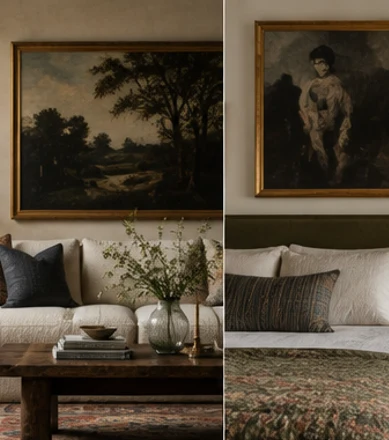
The easiest collected room begins with contrast in age. A contemporary sofa beside an older wood table, a new bed next to inherited nightstands, or modern dining chairs around an antique-style table can create depth immediately.
The pieces do not need to share a design period. They need compatible scale. A delicate vintage table can look lost beside a large sectional, while a heavy carved cabinet can overpower a small apartment sofa. Measure height, width, and visual weight before deciding whether the contrast works.
Let the older piece remain visibly older unless restoration is needed. Small marks, mellowed wood, and patina often provide the character you wanted in the first place. Repair instability, damaged wiring, broken hardware, or failing upholstery, but avoid stripping away every sign of age simply to make the piece look new.
Use one repeated quality to connect old and new. A warm wood tone can reappear in a frame. A curved leg can relate to a rounded lamp. A burgundy textile can echo a color in the older piece. The link can be quiet.
Do not buy a room full of “vintage-look” furniture at once. The collected effect becomes more convincing when some pieces are simple and contemporary. Contrast is the point.
Function should decide whether the old piece stays. An uncomfortable chair, shallow dresser, or unstable table does not deserve prime space solely because it has character. Collected interiors still need to support daily life.
2. Use Meaningful Art Instead of Art Chosen Only to Match

Artwork is one of the strongest tools for creating a collected home because it carries individual taste. A photograph, inherited painting, print from a trip, local artist’s work, textile, or drawing can introduce a story that no furniture collection can replicate.
Do not reject a piece because it contains a color not already in the room. Art does not need to coordinate like a cushion. If the frame, scale, and placement are right, an unexpected color can make the room feel more alive.
Give art enough wall around it. Collected does not mean every surface must be filled. One large piece over a cabinet can feel more substantial than six small frames squeezed into the same space. If you build a gallery wall, let the arrangement grow from the works you actually own rather than from the need to complete a template.
Mixed frames are welcome, but keep some relationship between them. Warm wood, black, brass, painted finishes, and simple white mats can coexist. If every frame is radically different in shape, color, and ornament, the wall may become more about frames than art.
Rotate pieces instead of displaying everything. A closet or portfolio can hold works that return seasonally or when the room changes. Rotation prevents crowding and lets favorite pieces feel fresh.
Use art in less expected rooms too. Kitchens, hallways, bathrooms in appropriate dry zones, and bedrooms can all carry meaningful work. This helps the whole home feel personal instead of concentrating identity in one living room wall.
3. Layer Books and Ceramics Without Filling Every Surface

Books and ceramics are common in collected interiors because they bring varied color, scale, texture, and evidence of real interests. The key is to keep them functional rather than turning them into styling props.
Books should be organized in a way you can use. Subject, author, size, or a personal system works better than arranging an entire library by color if you cannot find anything. Short horizontal stacks can vary the rhythm, but most books should remain easy to remove.
Ceramics work best when they have a role or meaning. A bowl for keys, vase you use for flowers, serving piece, travel object, or handmade cup can remain visible. You do not need to fill shelves with generic vessels simply because ceramics signal craftsmanship.
Group small objects. Three pieces on a tray or one shelf read more calmly than the same three scattered across separate surfaces. Leave parts of shelves and tables empty so the objects can be seen.
Vary height deliberately. A tall vase beside low books can create a balanced composition. Several objects of nearly identical size may look like a store display unless they are part of a true collection.
Keep daily surfaces practical. Coffee tables, bedside tables, and kitchen counters need room for real use. Collected rooms feel better when personality coexists with function rather than displacing it.
4. Mix Pattern Through a Repeated Color Family

Pattern makes a collected room feel developed because it introduces visual layers that rarely come from one matching set. The safest way to mix patterns is to repeat color while varying scale.
A large floral can sit beside a narrow stripe. A faded rug can coexist with a small check. A geometric cushion can work with a traditional curtain when one or two colors appear in both. The motifs do not need to match.
Count the patterns already present in materials. Wood grain, veined stone, woven upholstery, and book spines all add visual activity. A room with strong natural pattern may need fewer printed textiles.
Use solids as pauses. A plain sofa, cream wall, or quiet curtain can separate stronger patterns and keep the room readable. Without those pauses, every surface may compete.
Pattern can also help integrate older pieces. A vintage chair with an unusual upholstery color may connect to a rug that repeats that tone. A patterned curtain can bridge warm wood and cooler painted furniture.
Do not add pattern merely to make the room look “collected.” If the space already has enough variation, texture may be the better layer.
5. Pair an Heirloom-Style Table With Contemporary Lighting
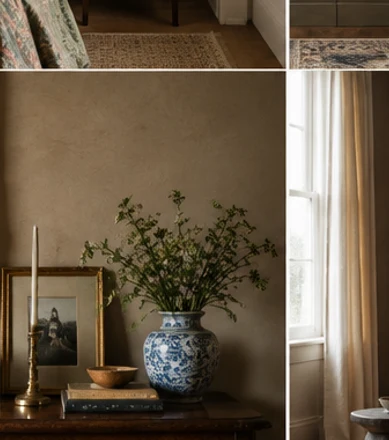
Dining spaces are excellent places to mix eras because the table and light occupy different visual planes. A traditional or inherited wood table can sit beneath a sculptural contemporary pendant and feel more relevant than it would under a matching vintage-style chandelier.
Keep the chairs somewhere between the two if you want the room to feel balanced. Simple upholstered chairs, woven seats, or clean wood frames can connect an older table to a newer light without competing with either.
Do not refinish an heirloom automatically. Clean, repair, and stabilize first. A mellow finish may be what gives the table depth. If the surface is genuinely damaged or unsuitable for use, professional restoration can preserve more character than aggressive DIY stripping.
Lighting should fit the table scale. A tiny pendant over a long table makes the room feel unfinished, while an oversized fixture can block sightlines. Measure before buying and consider the view from adjacent rooms.
Use the tabletop. A collected dining room should not become a display that prevents everyday meals. One bowl, vase, or pair of candlesticks can provide enough center detail when the table itself has character.
This old-new pairing can be repeated elsewhere: a modern mirror over a vintage console, contemporary art above a traditional chest, or a sculptural lamp on an inherited desk.
6. Balance Different Eras Through Proportion and Repetition
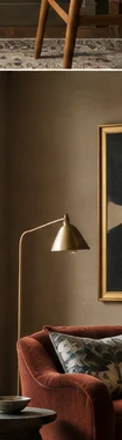
When a collected room feels chaotic, the problem is often not that the styles differ. The proportions may be fighting. A massive sofa beside tiny tables, a very high cabinet next to low delicate chairs, or several small objects against one oversized artwork can create imbalance regardless of style.
Repeat scale as well as color. If the sofa is broad, give it a substantial side table or lamp. If a tall cabinet anchors one side of the room, balance the other side with artwork, curtains, shelving, or another vertical element rather than a matching cabinet.
Repeat materials loosely. Three different wood tones can coexist when warm wood appears in several places. Two metals can coexist when each recurs. One unusual material that appears nowhere else may look accidental unless it is clearly a focal piece.
Shapes create another connection. Rounded chair arms can relate to a circular mirror. Straight cabinet lines can echo a rectangular coffee table. These relationships can be subtle enough that visitors never consciously notice them.
Leave room for contrast. If everything shares the same shape and tone, the room becomes coordinated rather than collected. Repetition provides the structure; variation provides the personality.
The final test is whether the pieces feel comfortable together in use. Can people reach tables, open drawers, move around chairs, and live with the room without rearranging it constantly? Practical proportion and visual proportion usually support one another.
What Makes an Interior Feel Collected?
A collected interior contains evidence of time, use, and individual choice. Pieces come from different sources. The art is not selected solely to match. Books and objects reflect interests. Furniture serves real functions. The palette may be controlled, but the materials are not perfectly uniform.
The style is not defined by how old the objects are. A room can be mostly new and still feel collected when the pieces are varied and personal. Likewise, a room full of antiques can feel like a showroom if everything belongs to one strict period.
How to Start When Your Home Is Mostly New
Do not try to age the room artificially. Keep the good new furniture and add contrast slowly through art, secondhand tables, vintage lighting, older rugs, handmade ceramics, books, and textiles.
Choose additions for use. A side table because the sofa needs one, a cabinet because storage is missing, or a lamp because the corner is dark will integrate more naturally than decorative objects purchased solely to create character.
Give the room time. A collected home is allowed to have an empty wall or temporary table while you wait for the right piece.
How to Shop Secondhand More Effectively
Search by dimensions and function rather than only style terms. “30-inch wood side table,” “small cabinet,” or “reading chair” may reveal better options than “vintage eclectic decor.”
Check condition, odor, stability, dimensions, and whether the item can physically enter your home. Measure doors, stairs, elevators, and corners for larger furniture.
For upholstered pieces, assess cleanliness and whether reupholstery is realistic. For lamps, old electrical components may need professional rewiring. For cabinets and tables, inspect joints, veneer, drawers, and evidence of pests or water damage.
How to Use Family Pieces Without Making the Room Feel Formal
Place inherited furniture beside simple contemporary pieces rather than surrounding it with objects from the same era. A traditional chest can hold a modern lamp. An older dining table can take relaxed linen napkins and clean-lined chairs.
Reupholstery can adapt a frame to current use while preserving its history. New hardware can be appropriate when original hardware is missing or impractical, but save original parts when they matter to the piece.
Not every sentimental item belongs in the main living space. Use it where its scale and function make sense. Meaning does not depend on prominence.
How to Make a Collected Bedroom Feel Restful
Concentrate the variation in a few areas. Use mismatched nightstands connected by similar lamps, an older chest with a new bed, or a patterned rug beneath calm bedding.
Keep the bed itself relatively easy to reset. Too many decorative textiles can turn character into nightly work. Art, wood, and lighting can carry much of the personality without cluttering the sleeping surface.
How to Make a Collected Kitchen Feel Functional
Display only cookware, dishes, books, or ceramics that are genuinely used. Closed storage should handle backups, packaging, cleaning supplies, and rarely used appliances.
A vintage table, older stool, art in a dry area, or mixed hardware can add character without sacrificing worktop space. Our cozy collected kitchen ideas explores this in more detail.
How to Make a Collected Bathroom Feel Calm
Use one older mirror, stool, framed artwork, or small cabinet rather than filling a compact room with accessories. Bathrooms need clear surfaces and easy cleaning, so keep the collected layer focused.
Natural wood and mixed metal can provide age and variation without introducing many objects. Choose materials appropriate to moisture.
How to Keep Mixed Wood Tones Cohesive
Identify whether the woods are generally warm or cool. They do not need to match, but a very orange wood beside a gray-stained wood may need a rug, paint color, or textile to bridge them.
Repeat each significant tone if possible. A walnut table can connect to a frame. Pale oak can reappear in a chair or shelf. Clear contrast usually looks better than almost-matching finishes.
How to Mix Metals in a Collected Home
Choose one dominant finish and one or two secondary finishes. Repeat them rather than assigning a new metal to every room. Polished nickel, brass, blackened metal, chrome, and bronze can coexist when the mix has rhythm.
Do not replace functional fixtures just to achieve a perfect metal scheme. A collected home can absorb variation.
How to Edit a Room That Feels Too Collected
Clear every horizontal surface first. Return only the useful and meaningful pieces. Then check the floor for too many small tables, baskets, stools, and stands. Remove what interrupts circulation.
Next, check the walls. Leave at least one section quieter. Finally, photograph the room from the doorway and look for isolated colors, repeated clutter, or one side that carries too much visual weight.
Editing does not erase personality. It makes the pieces that remain more visible.
Common Collected-Interior Mistakes
The first is buying “character” all at once. The second is keeping uncomfortable or unstable furniture because it looks old. The third is filling every shelf in the name of personality.
Another mistake is treating mismatch as the goal. Collected rooms still need relationships in scale, color, or material. Randomness is not the same as layering.
Finally, avoid themes. A room should reflect your interests without becoming a collection of props designed to prove a style label.
Frequently Asked Questions
Is a collected interior the same as eclectic style?
They overlap, but “collected” emphasizes gradual accumulation, personal meaning, and varied sources rather than simply mixing styles for visual effect.
How many vintage pieces do I need?
There is no required number. One older table or rug may provide enough contrast in a mostly contemporary room.
Can a minimalist home feel collected?
Yes. A small number of meaningful, varied pieces can feel more collected than a room filled with matching furniture.
How do I mix patterns without chaos?
Repeat a few colors, vary pattern scale, and use solid surfaces as visual pauses. Count natural material patterns too.
Do wood tones have to match?
No. Related undertones and repeated tones are enough. A deliberate contrast is often better than an imperfect match.
How do I know when a room has too much stuff?
If surfaces cannot be used, circulation is interrupted, cleaning becomes difficult, or individual objects no longer register, the room needs editing.
A Collected-Home Rule That Works
For every new visible object, ask three questions: Is it useful, meaningful, or beautiful to you? Does it have a sensible place? Does the room still have breathing space after it is added? The object does not need to satisfy all three, but it should satisfy at least one strongly and not make the other two worse.
How to Use Rugs in a Collected Interior
Rugs often do more than any small accessory to connect furniture from different periods. A faded traditional rug can sit beneath a contemporary sofa, a simple striped rug can calm an ornate wood table, and a handmade wool rug can bridge several wood tones through its color variation.
Choose the rug for the room size and furniture first. A rug that is too small can make a mixed room feel fragmented because each piece appears to float independently. In a living room, getting at least the front legs of the main seating onto the rug often helps the group read as one composition.
Pattern should support the furniture rather than compete with every piece. If the upholstery and curtains are already patterned, a quieter rug may be better. If the furniture is mostly solid, the rug can carry more visual complexity.
Older or vintage rugs can add depth, but condition matters. Check for odors, moth damage, weak areas, uneven edges, and whether professional cleaning is appropriate. A beautiful rug that constantly sheds or catches feet will not improve the room.
How to Mix Lamps From Different Eras
Lighting is one of the easiest categories to mix because lamps are naturally distributed around the room. A vintage ceramic lamp can sit beside a modern floor lamp while a simple ceiling fixture keeps the whole space grounded.
Connect different lamps through shade color, metal finish, or overall scale. A cream linen shade on two unrelated bases can make them feel related. Black or brass details repeated elsewhere can create another connection.
Old lamps may need professional rewiring before use. New wiring, a fresh shade, and a compatible bulb can preserve the character of the base while making the lamp safer and more practical.
Do not buy lamps only for appearance. The reading chair still needs useful light, the console lamp should not create glare, and switches should be accessible. Function helps mixed fixtures feel intentional.
How to Mix Sofas and Chairs Without Buying a Matching Set
A collected seating group often uses one anchor sofa and chairs with different shapes or materials. The key is compatible seat height and visual weight. A very low contemporary sofa paired with an extremely upright high-backed chair can feel disconnected unless another element bridges the difference.
Use upholstery color rather than exact fabric to create harmony. A cream sofa can sit with a patterned chair containing cream. A brown leather chair can connect to walnut tables. A deep green chair can repeat a small color in the rug.
Keep at least one element quiet. If the chairs are patterned or sculptural, let the sofa be simpler. If the sofa has a strong color or curved shape, choose calmer secondary seating.
How to Create a Collected Entryway
Entryways are ideal for collected pieces because they usually need only a few functional objects. A vintage console, contemporary mirror, lamp, bowl for keys, and one artwork can create a complete composition without filling the area.
Use the console for daily routines first. Leave enough surface for keys, mail, or a bag. Closed drawers can contain small clutter. The mirror should help with last-minute checks and can also reflect light into a narrow hall.
A runner can introduce pattern and make unrelated furniture feel more connected. Choose one that lies flat and is appropriate for the traffic and door clearance.
How to Create a Collected Dining Room
Dining rooms can absorb a mix of old and new because the central table already organizes the room. Use a traditional table with contemporary chairs, or a new table with an older cabinet. Add one light that contrasts in age or material.
Dining chairs do not all need to match, but a random collection can become uncomfortable. One practical approach is to use matching side chairs and different armchairs at the ends. Another is to keep all chair frames similar while varying upholstery.
Keep the sideboard or cabinet useful. Store table linens, serving pieces, or drinks rather than using it only as a display surface. A few objects on top are enough when the furniture already has character.
How to Bring a Collected Feeling Into a New-Build Home
New-build homes sometimes feel too uniform because every surface and fixture was selected at the same time. You do not need to renovate the architecture to add depth. Start with movable layers: an older table, art, a vintage rug, mixed lamps, books, and textiles with different textures.
A single room can evolve slowly. Keep the neutral walls and practical new furniture, then replace or add pieces only when you find something you genuinely prefer. The contrast between clean architecture and older objects can be especially effective.
Do not add faux-age finishes to make the home look older. Authentic variation from real materials, secondhand pieces, and personal art usually feels more convincing than artificially distressed surfaces.
How to Create a Collected Home When You Move Often
If you rent or move frequently, focus on portable identity. Rugs, art, lamps, books, cushions, mirrors, small tables, and freestanding shelves can travel from home to home. These pieces create continuity even when the architecture changes.
Choose furniture with flexible dimensions. A narrow console can work in an entry, living room, or bedroom. A small cabinet can serve as bar, linen storage, or bedside piece. Versatility helps a collection remain useful through different floor plans.
Keep records for valuable or sentimental pieces and pack them carefully. A collected home becomes easier to rebuild after a move when the important objects arrive intact and have multiple possible uses.
How to Photograph the Room to Improve Your Editing
Take one photo from the doorway and another from the main seat. The camera compresses the view and often reveals imbalances that are harder to notice in person: too many small objects on one side, one isolated color, an undersized rug, or shelves that feel overly dense.
Use the photograph only as an editing tool. A room can look balanced in a picture and still be uncomfortable to live in. After making visual adjustments, sit down, walk through the space, and check that the practical use still works.
How to Add New Pieces Without Losing the Collected Quality
New does not mean generic. Choose new pieces with good proportion, material, and function rather than trying to make everything look old. A clean sofa, modern light, or simple cabinet can provide the quiet structure that allows older pieces to stand out.
Avoid buying an entire room package because it is convenient. If you need several new pieces at once, vary at least one category: use different side tables, a separate lamp style, or an older rug. Small distinctions prevent the room from looking like a showroom set.
How to Know When a Collected Room Is Finished
A collected room is never permanently finished, but it can reach a stable point. The main furniture serves the household, surfaces remain usable, storage contains the less attractive necessities, and the visible objects feel meaningful enough that you would miss them if they disappeared.
If you find yourself buying objects simply to fill empty areas, the room may already be finished. Empty space gives future discoveries somewhere to go. It also lets the current pieces remain visible.
The most useful final test is time. Live with the room for several weeks before adding another layer. The pieces you repeatedly move, ignore, or work around are the ones to reconsider.
Final Thought
A collected interior is not created by buying eclectic decor. It grows from useful furniture, meaningful art, books, textiles, objects, and finishes that come from different times and sources but share enough proportion, color, and material relationships to belong together. Let the home develop slowly, edit regularly, and keep the pieces that improve everyday life. The result will feel personal because it actually is.
Other Articles

New Traditional Interior Ideas for a Classic Home That Feels Fresh
Neo Deco Interior Ideas for a Glamorous Look That Still Feels Modern