Bathroom lighting has to do more than make the room bright. It needs to help with grooming, support safe movement, flatter the materials you chose, work around mirrors and showers, and create a softer atmosphere when you do not want the room to feel clinical. A single ceiling fixture rarely handles all of those jobs well.
The most useful approach is layered lighting: clear light at the vanity, broad ambient light for the room, appropriate fixtures in wet or shower areas when needed, and a low evening or nighttime layer that does not require turning on the brightest source. This is the same principle that makes bedrooms and living rooms feel better after dark, but bathrooms add one important requirement—electrical safety in a wet environment.
Bathroom design in 2026 has been moving toward more sculptural vanity lights, larger decorative fixtures, warmer materials, and bathrooms that feel more like lived-in rooms. Homes & Gardens’ 2026 bathroom trend report highlights sculptural vanity lighting and more characterful fixtures as part of that shift. The ideas below use those trends as inspiration while keeping visibility, placement, maintenance, and safety at the center.
If you are planning the vanity itself, our wood bathroom vanity ideas guide covers cabinet tone, storage, mirrors, and moisture considerations. For a softer overall room, see our spa bathroom ideas.
1. Flank the Mirror With Side Sconces for More Even Facial Light

Vanity lighting is often installed directly above the mirror because it is easy to center, but overhead-only light can create shadows beneath the eyes, nose, and chin. Placing light on both sides of the face can create a more even result for shaving, makeup, skincare, and other close work.
The exact sconce height depends on the mirror, users, and fixture. Instead of following one universal measurement, stand at the vanity and mark approximate eye level. Position the fixture so the glowing portion sits beside the face rather than far above it. The bulb or LED source should be shielded enough that you do not look directly into glare.
If two side sconces are not possible because the mirror fills the wall, a broad fixture above the mirror can still work well. Choose one with a diffuser or shade that spreads light rather than a row of exposed high-output bulbs. The goal is even illumination, not maximum brightness.
For double vanities, the lighting plan should reflect the mirror plan. Two separate mirrors can each receive side lighting. One large mirror may work with sconces at the outer edges plus an additional center fixture if the span is broad. Test the arrangement with the actual cabinet width before final wiring.
Fixture depth matters in a narrow bathroom. A deep sconce can project into the user’s shoulder space or create a visual obstacle beside the mirror. Slim fixtures or flatter shades may be a better choice where the vanity zone is tight.
Choose the light for the face first and the decorative form second. A beautiful sconce that produces harsh glare is not a successful vanity light.
2. Use Sculptural Vanity Lighting as the Main Decorative Detail
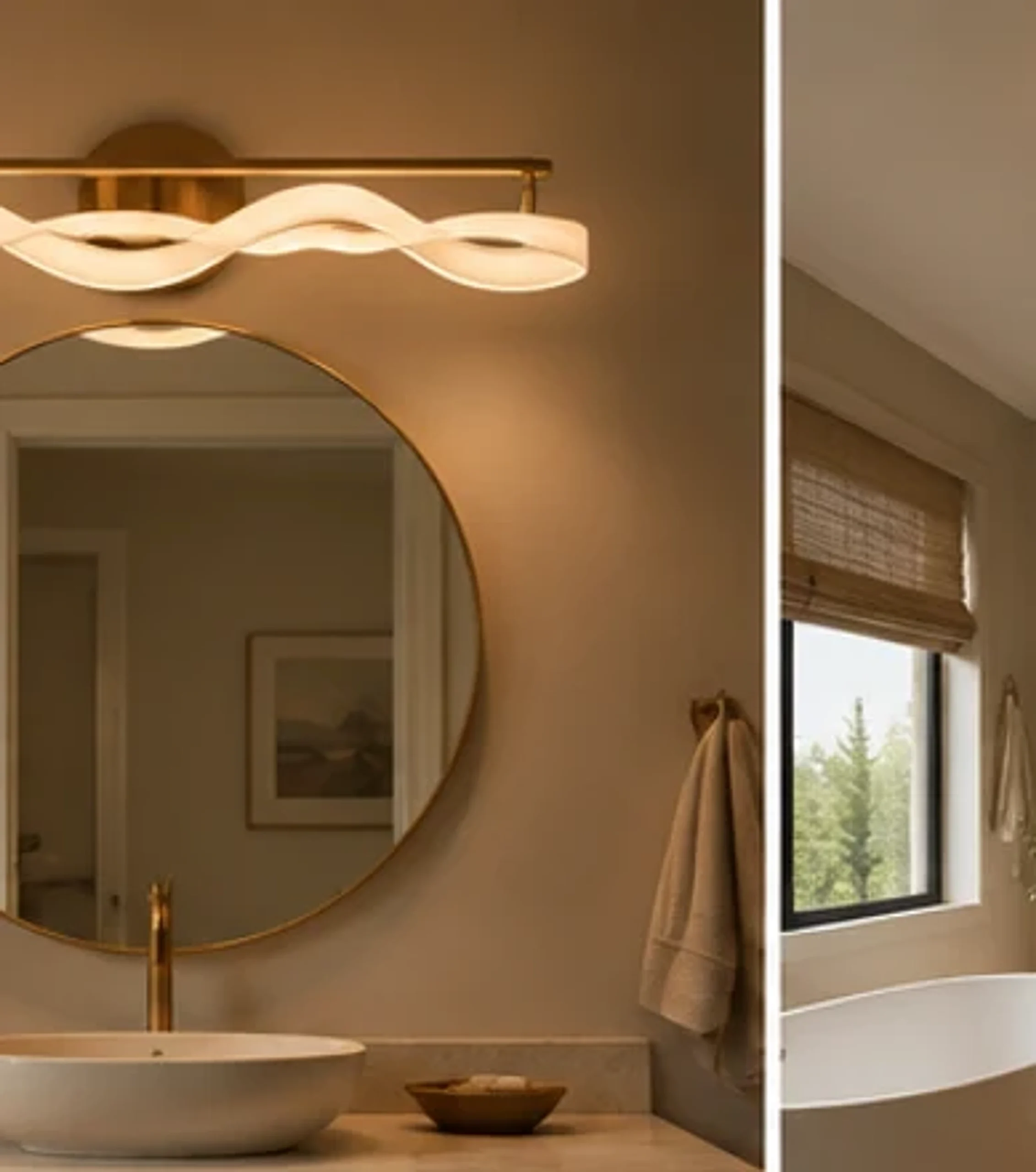
Bathrooms have limited room for furniture and soft furnishings, so lighting can carry more decorative weight than it does in other rooms. A sculptural sconce, opal-glass globe, ceramic shade, pleated detail, aged metal fixture, or simple organic form can add personality without occupying the countertop.
Current bathroom trends have leaned into this idea, but the best fixture still needs to serve the mirror. If the design is very directional, confirm that it spreads light across the face rather than only onto the wall. If the shade is dark or opaque, the actual output may be much lower than expected.
Scale the fixture to the mirror and vanity. One tiny light above a broad double vanity can make the whole wall feel under-planned. A large fixture above a narrow medicine cabinet may dominate the room. Tape the approximate width and height on the wall before purchasing if you cannot see the fixture in person.
Finish can either relate to the faucet or introduce a secondary metal. Matching is the simplest route, but mixed metals can look deliberate when each appears more than once or when the contrast is clear. Polished nickel with warm wood, brass with creamy stone, black with pale oak, or chrome with deeper paint can all work.
Glass color influences the room too. Opal glass diffuses light and often creates a softer appearance. Clear glass exposes more of the bulb and can look sharper. Ribbed or frosted glass adds texture while reducing direct glare.
Use the decorative lighting to reduce the need for counter styling. If the mirror wall already has a beautiful vanity, mirror, and lights, the surface below can stay calm and functional.
3. Add Broad Ambient Light for Cleaning and Everyday Visibility

Even with excellent mirror lights, most bathrooms still benefit from a source that illuminates the room as a whole. This may be a flush mount, recessed lighting, a pendant where appropriate, or another ceiling fixture that provides broad ambient light.
The main ceiling light is especially useful for cleaning, organizing, and seeing the floor clearly. It does not need to be the light you use every time you enter the room. In fact, the room often feels more comfortable when the vanity lights can operate independently.
Choose a fixture that suits the ceiling height. Low ceilings usually need a shallow design. Higher ceilings may allow more drop, but the fixture still needs to respect the bathtub, shower, doors, and circulation. Decorative lighting should never be placed where it conflicts with required safety zones or local electrical rules.
Diffusion improves comfort. A bright exposed source overhead can create glare on glossy tile, mirrors, and stone. Opal glass, frosted material, or a well-designed shade can distribute light more gently.
If you use recessed lights, placement is more important than quantity. A downlight directly above the vanity user can create shadows on the face. Use the vanity fixtures for facial light and position ceiling lights to illuminate the room rather than competing with the mirror.
Dimmers can make ambient light more flexible when the fixture and bulb are compatible. The brighter level can serve cleaning and morning routines; the lower level can support evening use alongside the vanity or accent lights.
4. Light the Shower Only With Fixtures Suitable for the Location
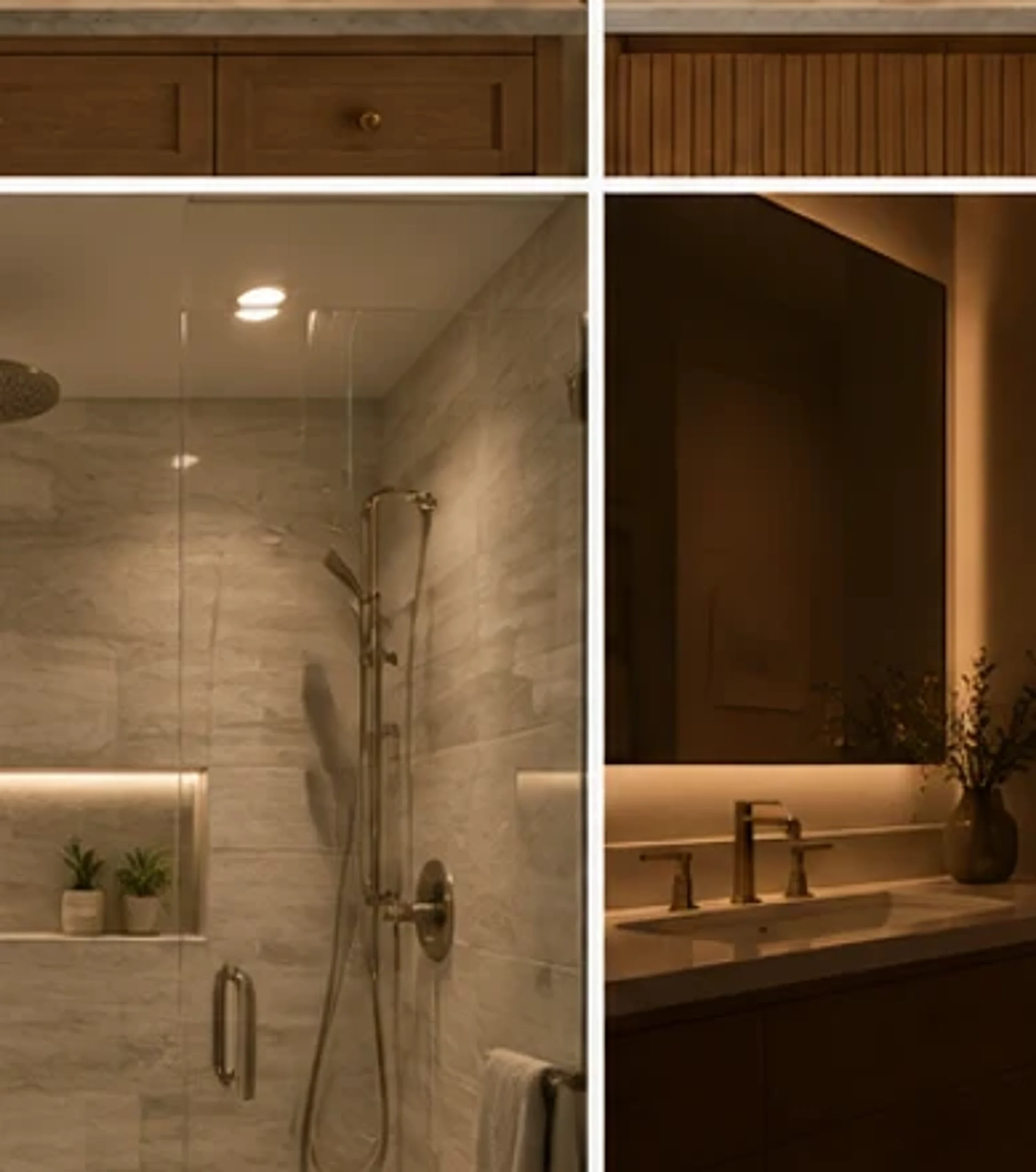
Showers often need dedicated light because glass, walls, or curtains can block the general room lighting. A correctly specified recessed or low-profile fixture can improve visibility without adding visual clutter. However, wet areas require more care than ordinary ceiling locations.
In the United States, the National Electrical Code requires luminaires within defined bathtub and shower zones to be marked for damp locations, and fixtures subject to shower spray to be marked for wet locations. The NFPA documentation for NEC 410.10(D) describes those requirements. Other countries use different rules, so local code and a qualified electrician should determine the installation.
Do not assume that a bathroom fixture is automatically suitable inside a shower. Product listings distinguish between dry, damp, and wet locations. Read the manufacturer’s installation instructions and rating before purchase.
Position the light for visibility without creating uncomfortable glare when you look upward. A diffused source can be more comfortable than a visible bright point. In larger showers, more than one low-output fixture may create more even light than one intense source.
If the shower includes a niche or bench, consider whether it needs separate accent lighting. Additional lighting can look attractive, but it also adds wiring, waterproofing, and maintenance complexity. Add it only if it improves use or creates an effect you genuinely value.
Electrical work in or near wet locations is not a suitable place to improvise. Safety, code compliance, and product ratings should outrank aesthetics.
5. Create a Low Nighttime Layer

A bathroom used during the night does not need the same lighting as a morning grooming routine. A low, gentle source near the floor, vanity, or wall can provide enough orientation to move safely without filling the room with bright overhead light.
This can come from a purpose-designed low wall light, toe-kick lighting, an integrated vanity light, or another fixture intended for the bathroom location. Avoid loose plug-in products in places where they create cord or moisture risks. Installation should suit the environment and local electrical requirements.
Keep the source shielded so it does not shine directly into the eyes. Reflected light from a wall or floor is often enough for navigation. The purpose is to reveal the path and major fixtures, not to create a decorative glow visible from every angle.
Motion control can be useful if it is not overly sensitive. A light that switches on at full output every time someone turns in bed near an ensuite bathroom may be more annoying than helpful. Adjustable sensor range or manual control can solve that problem.
If the bathroom opens directly into the bedroom, test the light with the door open. A low source that seems subtle inside the bathroom can still illuminate the bedroom strongly if it faces the doorway.
Night lighting is one of those upgrades that is easy to overlook in a design plan but can improve the room every day once it is properly integrated.
6. Balance Vanity Brightness With Color Quality and Daylight

The best vanity light is not necessarily the brightest. Too little light makes close work difficult, but too much can create glare on the mirror and glossy surfaces. What matters is useful light on the face combined with a color appearance that makes skin, cosmetics, towels, and finishes look natural.
When shopping for bulbs, use lumens to compare brightness rather than watts. The FTC’s Lighting Facts guidance explains that lumens describe light output while watts describe energy use. Product packaging also provides information about light appearance.
Color temperature is measured in Kelvin. Warmer light has a lower Kelvin value and cooler light has a higher one. Bathrooms often benefit from a balanced warm-to-neutral white that is clear enough for grooming without making the room feel blue or clinical. The exact preference varies, so test the light with your wall color and mirror.
Color rendering also matters when accurate skin tone and material color are important. Many modern LED products provide a color-rendering specification. Higher-quality light can make subtle paint, wood, and textile colors easier to judge.
Daylight changes the vanity throughout the day. If the bathroom has a window, observe whether morning or afternoon sun already provides strong facial light. Artificial lighting should fill the gaps rather than compete with the window.
Finally, keep nearby sources reasonably consistent. A very warm vanity light combined with a cool blue ceiling source can make the room feel visually disjointed. You do not need exact matching, but the sources should look as though they belong in the same room.
How Many Lighting Layers Does a Bathroom Need?
Most bathrooms benefit from two or three layers rather than a fixed number of fixtures. A small powder room may need one good vanity light plus a general source. A larger primary bathroom may use vanity lighting, ambient ceiling light, shower light, and a low nighttime source.
Do not add layers simply because a design guide lists them. If the vanity light already illuminates the entire small room, another decorative pendant may be unnecessary. If the shower is bright from nearby recessed lights and glass walls, a dedicated shower light may not improve anything.
Map the activities first, then give each activity enough light. That method produces a cleaner ceiling and a more useful room.
How to Light a Bathroom Mirror Without Harsh Shadows
Side lighting is the most direct way to reduce vertical shadows. If side sconces are impossible, use a broad light above the mirror and consider adding ambient fill elsewhere. Avoid a single narrow downlight directly above the user’s head.
Backlit mirrors can create a soft perimeter glow, but they may not provide enough forward facial light by themselves. Treat them as one layer unless the product is specifically designed and tested to illuminate the face adequately.
Integrated-light mirrors can be convenient in compact rooms, but compare brightness, color temperature, replacement options, and electrical requirements before choosing one. A mirror is a long-lived object; built-in lighting should be serviceable enough for the way you expect to use the room.
Bathroom Lighting for Small Spaces
Small bathrooms benefit from fixtures that stay close to the wall and ceiling. Slim side sconces, shallow ceiling lights, integrated mirrors, and compact wet-rated shower fixtures can provide several layers without projecting into the room.
Use the mirror to reflect light but avoid exposed bulbs that multiply glare. A larger mirror can make one good fixture feel more effective by distributing brightness visually.
Keep the ceiling relatively simple. Several small fixtures in a tiny room can create a busy pattern overhead. Use only the sources the layout truly needs.
Bathroom Lighting for Dark or Moody Rooms
Deep paint, dark tile, and walnut cabinetry absorb more light. Instead of using one extremely bright source, spread illumination across the vanity, ceiling, and any dark corner that needs visibility.
Light-colored shades, opal glass, and mirrors can help distribute light. Warm wood and stone can look rich under layered illumination, but without enough light the same materials may appear flat.
If the room is intentionally moody, preserve a clear task mode at the mirror. Atmosphere should not make grooming difficult.
How to Coordinate Lighting With Mirrors, Tile, and Metal
Lighting interacts with the finishes around it. A glossy tile may reflect exposed bulbs strongly. Textured tile can create attractive shadows. A large mirror doubles the visual presence of fixtures. Dark metal reads more graphic against pale walls, while polished finishes reflect surrounding color.
Mock up the fixture position with cardboard or painter’s tape before installation. This simple step helps you judge whether the light is too large, too close to the mirror, or visually crowded by tile lines.
Do not center a fixture on the wall if it needs to be centered on the vanity. The furniture and user should determine the lighting axis.
How to Mix Bathroom Lighting Styles
The vanity sconces, ceiling fixture, and shower light do not have to come from one collection. Connect them through one or two characteristics—similar glass, related metal, repeated curves, or comparable simplicity.
Let the most visible fixture carry the personality and keep secondary lights quieter. If the vanity sconces are sculptural, the ceiling light can be simple. If a pendant is the focal point, use restrained mirror lighting.
This hierarchy prevents the room from feeling like a lighting showroom.
A Practical Bathroom Lighting Planning Order
First, finalize the vanity, mirror, sink, and ceiling heights. Second, identify the wet and damp locations that affect fixture ratings and installation. Third, plan the task light at the mirror. Fourth, add ambient light only where the room still needs it. Fifth, consider shower and nighttime lighting. Finally, choose decorative forms and finishes.
Planning in this order reduces conflicts between mirrors and electrical boxes, protects the required clearances, and keeps the decorative choices tied to real function.
Common Bathroom Lighting Mistakes
The most common mistake is relying on one ceiling light. Another is placing a recessed light directly over the user’s head and expecting it to perform like vanity lighting. Exposed bulbs, mismatched color temperatures, and undersized fixtures can also make the room uncomfortable.
In wet areas, the most serious mistake is choosing a fixture without the appropriate location rating or installing it without regard to local code. Do not treat decorative lighting advice as a substitute for electrical requirements.
Finally, avoid adding so many sources that the bathroom feels visually busy. A small number of well-planned fixtures is usually enough.
Frequently Asked Questions
Are side sconces better than a light above the mirror?
Side sconces can provide more even facial illumination, but a broad, well-diffused fixture above the mirror can also work. The best choice depends on wall space, mirror size, and the user’s needs.
What color temperature is good for a bathroom?
Many people prefer a warm-to-neutral white that feels clear without appearing blue. Check the Kelvin value on the product and test it with your wall color, tile, and skin tone.
Can I put any recessed light in a shower?
No. The fixture must be suitable for the specific damp or wet location and installed according to local electrical code and manufacturer instructions. Requirements vary by jurisdiction.
Do backlit mirrors provide enough light for makeup?
Some do, but many are better as ambient or supplementary light. Check the product’s output and whether it sends useful light forward onto the face.
Should all bathroom fixtures use the same metal finish?
No. Mixed metals can work when the combination is deliberate. Repeat a dominant finish and use a secondary metal selectively.
How can I make a bathroom feel relaxing at night?
Use independent controls so you can switch off the brightest ceiling light and rely on vanity or low-level lighting. A softer, shielded source can create a calmer evening mode while maintaining safe visibility.
How to Position Bathroom Lights Before the Walls Are Finished
Lighting becomes much easier when the electrical plan follows the finished vanity rather than rough room dimensions. Before wiring is finalized, confirm the exact vanity width, mirror width, sink centerline, faucet position, and finished floor height. Small changes in any of those dimensions can leave a junction box awkwardly off-center or too close to the mirror edge.
Use full-size tape outlines on the wall. Mark the vanity, mirror, sconces, medicine cabinet doors, and any shelving. Stand at the sink and check whether the fixtures will sit beside the face or above the head. Open the medicine cabinet if it swings outward. A sconce that looks perfectly placed on a drawing may block a mirrored door in real life.
If the wall is tiled, coordinate lighting with the tile layout early. A junction box centered on a grout line may be visually distracting, while drilling through a decorative tile later can be difficult. The electrical and tile plans should support one another rather than being designed separately.
For a double vanity, decide whether the composition is centered on the full cabinet or divided into two personal zones. That decision affects mirror widths, sconce spacing, and whether a central fixture makes sense. Test the layout as a complete elevation rather than choosing each item independently.
How to Use Daylight Without Creating Mirror Glare
A window near the vanity can provide excellent daytime light, but the direction matters. Side daylight tends to model the face more gently than a bright window directly behind you. If the mirror reflects the window, the room may feel brighter, yet strong sun can also create glare depending on the time of day.
Use a shade, blind, or cafe curtain when privacy or direct sun requires control. The treatment should allow the bathroom to benefit from natural light while preventing uncomfortable brightness. In humid rooms, choose materials suitable for the environment and easy to clean.
Artificial lighting should complement daylight, not fight it. If the room is naturally bright in the morning, you may need only modest vanity lighting at that time. Evening use may require the full layered plan. Independent controls make that transition easier.
When selecting paint or tile, view the samples near the mirror in both daylight and artificial light. A pale neutral that feels warm at noon may turn cool under an evening bulb, and glossy tile can reflect a strong point source more than expected.
How to Light a Bathroom With a Medicine Cabinet
Medicine cabinets complicate lighting because the doors may project from the wall, swing outward, or contain mirrored side panels. Side sconces need enough clearance that the doors can open fully without hitting the fixture.
If the medicine cabinet is wide, a light above it may be simpler, but check how far the cabinet projects. A fixture mounted too close to the wall may cast light onto the top of the cabinet rather than toward the face. A slightly extended arm or a fixture designed for that application can work better.
Integrated-light medicine cabinets are another option. Evaluate them as both mirror and fixture: brightness, color appearance, controls, replacement parts, and electrical access matter. A built-in feature should be serviceable because replacing the entire cabinet for a failed lighting component is an expensive outcome.
How to Choose Between Recessed Lights and Decorative Ceiling Fixtures
Recessed lighting is visually quiet and useful when ceiling height is limited, but too many downlights can make a bathroom feel flat. A decorative flush mount or pendant can add character and diffuse light more broadly, provided the fixture is appropriate for the location.
In a small bathroom, one central flush mount plus good vanity lights may be enough. In a larger room, a combination of recessed lights and a decorative fixture can provide both coverage and personality. The ceiling should not become a grid simply because recessed fixtures are available.
Consider maintenance. Decorative glass and fabric may require regular cleaning in a humid environment. Recessed trims are less visible but can collect dust. Choose the level of upkeep you are comfortable with.
How to Make Bathroom Lighting Feel More Luxurious Without Adding More Fixtures
Luxury often comes from control rather than quantity. Separate the vanity and ambient lights so you can use them independently. Add dimming where compatible. Choose shades that soften the source, and use fixtures at a scale that fits the mirror and room.
Replace visibly mismatched bulbs with products that have similar color appearance. Clean dusty glass and mirrors so existing light works more effectively. Adjust poorly aimed fixtures before assuming the room needs another source.
Finally, let one fixture be distinctive and keep the others quieter. A pair of sculptural vanity lights can become the decorative moment while the ceiling source disappears. A beautiful pendant can lead while the mirror lighting remains simple. Hierarchy makes the room feel intentional.
A Bathroom Lighting Audit You Can Do in One Evening
After sunset, turn on the lights you currently use and stand at the mirror. Look for shadows on the face, glare in the eyes, and dark areas around the room. Then sit or stand in the shower area, look at the floor, and check the route from the doorway to the toilet and sink.
Switch off the ceiling light and see what remains. If the vanity lights alone make the room comfortable, you already have a useful second mode. If the room becomes almost black away from the mirror, a modest ambient source may help.
Take photographs from the doorway and mirror. Cameras can reveal overly bright points and dead corners. Use the audit to make a short list of actual problems before shopping. “The left side of my face is in shadow” is a better shopping brief than “I need new bathroom lights.”
Good bathroom lighting should disappear into the routine because it simply works.
Final Thought
Bathroom lighting works best when it is planned around people, not fixtures. Give the face even light, give the room enough ambient visibility, treat wet areas with the appropriate safety requirements, and create a lower evening layer if the room is used at night. Once those needs are solved, sculptural shades, beautiful glass, and mixed metals can add personality. The result should feel clear when you need precision and calm when you do not.
Other Articles

Warm Bathroom Ideas That Feel Personal, Calm, and Lived-In
Wood Bathroom Vanity Ideas for a Warmer, More Timeless Space