

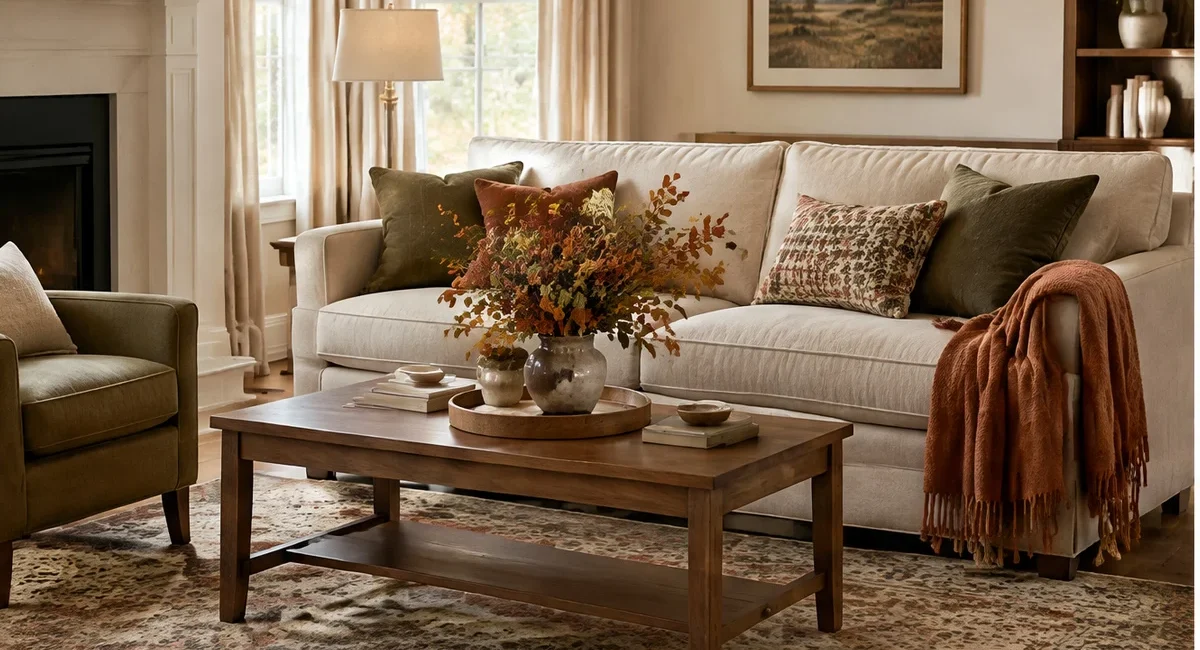
Fall decorating does not have to mean covering every surface with pumpkins. A warmer textile, a deeper accent color, or a small change to the dining table can mark the season while leaving the home comfortable for ordinary use.
The best seasonal refresh works with the room you already have. A cream sofa can support rust or olive accents, a wood table can carry a low simple arrangement, and the entry can welcome a seasonal detail without becoming a storage display. The changes should be easy to live with and easy to put away later.
These fall home decor ideas focus on six manageable areas: the living-room palette, textiles, dining table, entrance, evening light, and storage. Adapt them to your climate and the way you experience the season. There is no need to add heavy layers simply because an inspiration photograph suggests cold weather.
Six fall refresh ideas
1. Add One Earthy Accent to the Room You Already Have

Choose an accent that sits comfortably beside the existing furniture. Rust, muted olive, clay, warm brown, or a deeper neutral can each provide a seasonal direction. You do not need to use them all at once.
Start with one medium-sized area of color, such as a throw or cushion cover, then repeat a related tone in a smaller detail. A ceramic bowl or a color within an existing artwork may already provide the second connection.
Keep the permanent palette visible. If every textile and object changes to a strong autumn color, the room may lose the character you enjoy for the rest of the year. A seasonal accent is often more effective when the familiar background remains.
Judge the result in your evening light. A deeper orange or rust may become more prominent than expected beside warm lamps. Reduce the amount if necessary rather than adding several other colors to compete with it.
For a low-commitment start, try one removable cover before buying a full set. Live with the color for several days and see whether it supports the room or merely announces the season.
2. Change the Textiles That Improve Actual Comfort
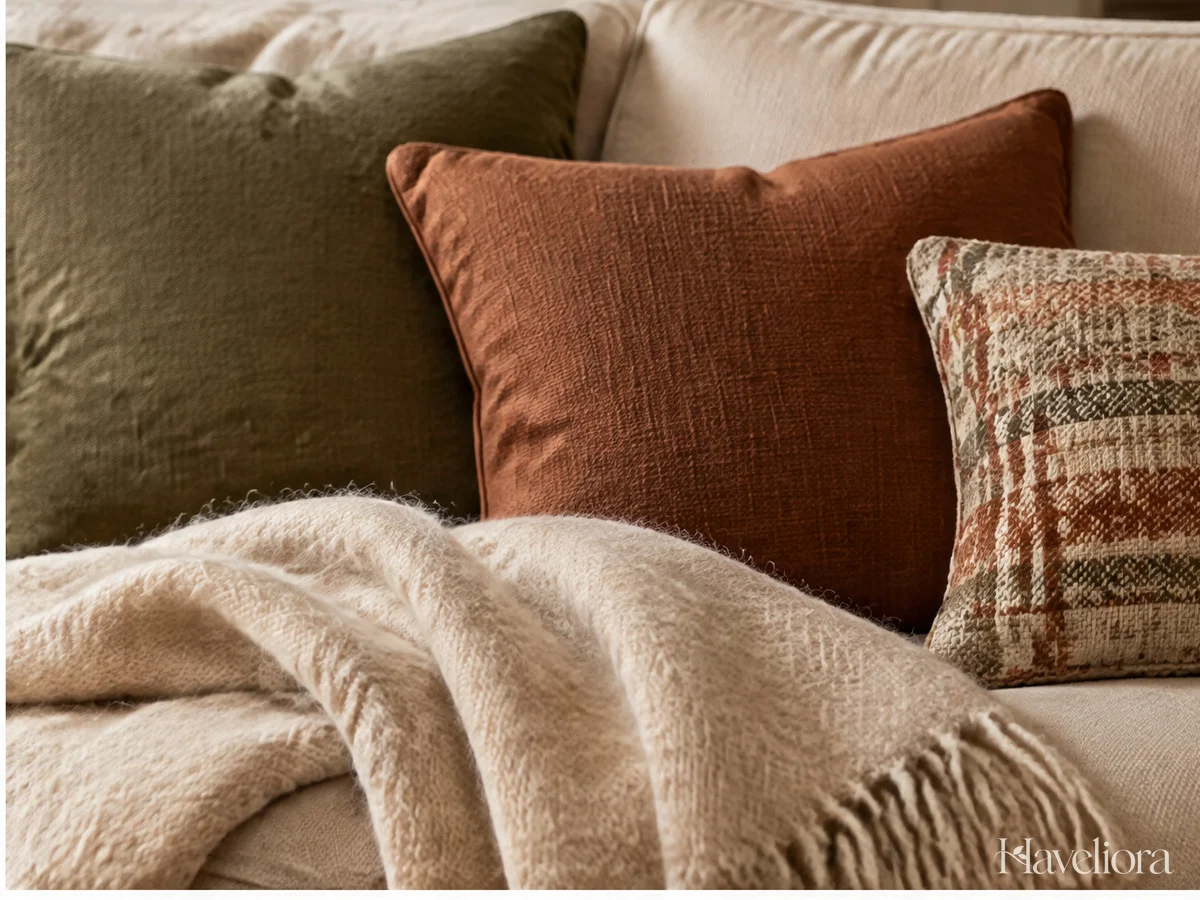
Use the seasonal change as a chance to review comfort rather than simply add fabric. If evenings are cooler, a useful blanket within reach may be welcome. In a warmer climate, a lighter textured throw can provide the visual change without unnecessary weight.
Swap selected covers instead of adding more cushions to an already full sofa. Keep the seat usable and give the removed covers a clean storage place. A manageable change is more likely to remain part of the room than a large decorative arrangement that gets pushed aside.
Mix textures within the palette. A smooth cotton cover can sit beside a more pronounced knit or woven blanket. Keep some broad plain areas so the room does not become visually heavy.
Check care instructions before buying. Consider washing, pets, and whether delicate loops or loose fibers suit the household. The seasonal layer should be something you enjoy using, not something reserved for a photograph.
Bedroom option: change one coverlet or folded throw rather than replacing all the bedding. Our cozy bedroom guide offers practical ways to layer a bed without overloading it.
3. Keep the Dining Arrangement Low and Easy to Move

A dining table can acknowledge fall with a small, deliberate arrangement. A low bowl, a pair of ceramic seasonal objects, or a simple textile may be enough. The table still needs to hold food, plates, and the activities that happen there every day.
Choose a grouping that can be lifted away easily. Spreading many separate pieces across the whole surface creates work before each meal. A single stable tray can help when it suits the objects and leaves enough tabletop available.
Keep sightlines clear. Tall branches may look dramatic but make conversation awkward. A lower arrangement is often more practical, especially on a small table shared by several people.
Consider the condition of natural materials. Inspect anything brought indoors, protect the tabletop appropriately, and remove items that deteriorate. Reusable ceramic or fabric pieces may suit a household that prefers a longer-lasting arrangement with less maintenance.
Before you settle on the centerpiece, set the table as you normally would with the centerpiece in place. If the decoration takes the serving space or has to be redistributed around the room, reduce it to a smaller grouping.
4. Give the Entry One Seasonal Detail, Not a New Obstacle
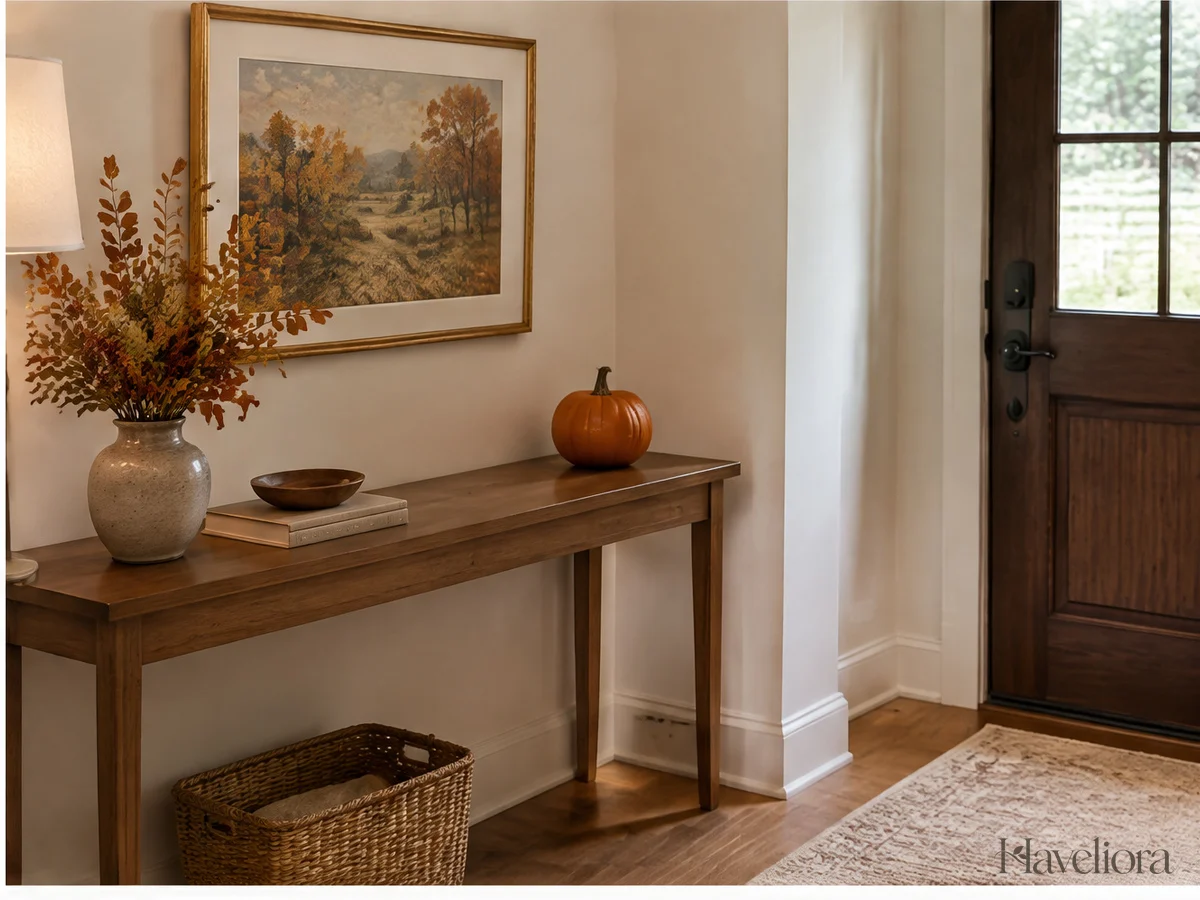
The entrance is a good place for a small seasonal change because you encounter it frequently. A replaceable print, a suitable wreath, or one object on a shallow console can establish the mood without decorating every room.
Keep the arrival routine intact. Leave space for keys and the items carried in from outside. Do not replace the only useful landing area with a seasonal display that has to be moved every time you come home.
Check the door swing and route with the decoration in place. Hanging pieces should be fixed appropriately and should not interfere with locks, handles, or access. Keep floor decorations out of the path, especially where people arrive carrying bags.
For rentals or shared buildings, follow the relevant permission and building rules. These ideas are for suitable areas within your home, not a reason to add objects to communal corridors or exit routes.
To connect the entry with the rest of the home, repeat the living room’s seasonal accent in the entry rather than choosing a separate palette. One small relationship can make the refresh feel intentional across the home.
5. Create a Gentler Evening Setting Without Depending on Flames

Review the lamps you already have before buying seasonal lighting. A shaded table lamp near the sofa or a useful reading light can make evenings feel more comfortable without adding another decorative collection.
A flameless decorative candle may provide a small additional glow when used according to its instructions. The U.S. Fire Administration recommends considering flameless candles as an alternative to burning candles. Keep batteries and small components appropriately secured, particularly around children.
Keep dried foliage, paper, fabric, and other combustible seasonal materials away from heat sources. Do not drape decoration over a working heater or crowd a fireplace area. Follow the equipment’s required clearances rather than treating a styled photograph as a safety guide.
Use lighting rated for its intended location and inspect it before use. Decorative effects should not depend on damaged cords, overloaded connections, or improvised wiring. A simpler arrangement using existing suitable lamps is often enough.
In the evening, view the room with its normal lights on. Add only the glow that contributes something useful; too many small light sources can make the arrangement feel busy rather than calm.
6. Plan the End of the Season Before Buying More

Decide where the seasonal pieces will live when they are not displayed. A compact collection of covers, a few durable objects, and a suitable wreath can be easier to maintain than a large group of fragile decorations in different sizes.
Keep the storage clean and appropriate for the materials. Follow textile care instructions before packing, protect fragile pieces, and avoid sealing damp items into a container. Store the collection where it can be reached without moving unrelated household belongings.
Photograph an arrangement you particularly enjoyed before putting it away. The image can remind you how a few pieces worked together next year and reduce the temptation to buy a whole new collection simply because you cannot remember what you own.
Review the pieces that were never used. If something does not suit the home, is difficult to maintain, or has no practical storage place, it may not belong in the collection. Seasonal decorating should not gradually consume the storage needed for everyday life.
Set a clear limit: choose a defined amount of storage for fall decor. Let that capacity guide future additions instead of buying first and finding overflow space later.
A Fall Refresh in Three Small Stages
Begin with one textile or color change in the room you use most. Keep the existing furniture and useful surfaces in place. This establishes the seasonal direction without turning the whole home into a project.
Next, add one small arrangement to the dining table or entrance, not necessarily both. Choose the position where it will be enjoyed and least interfere with daily activity. Keep the objects easy to remove and store.
Finally, review the evening lighting and the practical comfort of the room. A useful blanket and a better lamp position may make a bigger difference than another seasonal ornament.
For year-round comfort, explore cozy living room ideas. To plan a later festive transition using a similarly restrained approach, see Christmas home decor ideas.
Frequently Asked Questions
Can fall decor work without orange?
Yes. Muted olive, warm brown, clay, deeper neutrals, and changes in texture can suggest the season. Choose a direction that suits the existing room rather than adding a color you do not enjoy.
How much should I decorate?
Enough to mark the change without taking away useful space. One textile swap and one small arrangement can be sufficient. Let the room’s everyday functions determine the limit.
What if the weather is still warm?
Use color and lighter texture rather than heavy layers. Seasonal styling does not require making the room physically warmer when that would be uncomfortable. Adapt the ideas to your home and climate.
A thoughtful fall refresh feels like a variation of your home, not a replacement for it. Keep the useful arrangement, add a few warm details, and leave enough space for ordinary life to continue comfortably.
Other Articles

Christmas Home Decor Ideas for a Warm, Uncrowded Home
Cozy Luxury Decor Ideas Built Around Comfort and Thoughtful Details


