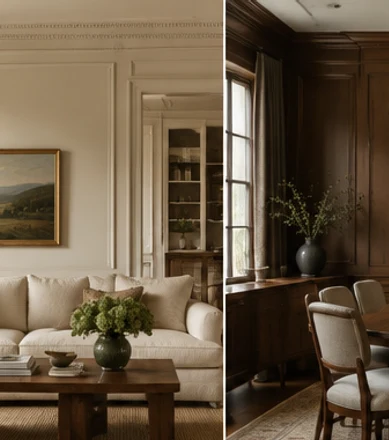

Christmas decoration can make a home feel celebratory without making it difficult to live in. A tree needs a position where people can still move comfortably. A dining arrangement needs room for the meal. The entrance still has to handle coats, bags, and an opening door.
Planning those ordinary functions first does not reduce the festive atmosphere. It gives the decorations a clearer setting. A limited group of colors, a few repeated materials, and one or two well-chosen display areas can feel more intentional than adding something seasonal to every surface.
These Christmas home decor ideas focus on six decisions: tree placement, ornaments, dining, the entrance, lighting, and storage. They suit a restrained warm palette, but the planning approach works with brighter or more traditional colors too. Keep the pieces that carry meaning for your household and build the arrangement around them rather than replacing the whole collection.
Plan a practical festive home
1. Choose the Tree Position Before Choosing Its Size

Start with the route through the room, the position of heat sources, and the available space for the stand and branches. A tree’s widest point matters as much as its height. Mark the approximate footprint and check it with the seats occupied and the doors open.
The National Institute of Standards and Technology advises keeping a Christmas tree at least three feet from heat sources and making sure it does not block an exit. Follow the tree, stand, and lighting instructions as well as the conditions in your home.
For a real tree, use a suitable stand and maintain the water supply as directed. NIST’s guidance includes watering the tree daily. For an artificial tree, follow its assembly and care instructions rather than assuming the material removes every fire or stability concern.
Choose a smaller tree when that allows the room to remain comfortable. A compact version placed deliberately can be more enjoyable than a large tree that forces furniture into awkward positions. You do not need to sacrifice the main seating route to make the display feel festive.
Before choosing the final position, consider where the decorations, lights, and stand will be handled during setup. The final position should be practical to maintain throughout the season, not just possible to assemble once.
2. Let Meaningful Ornaments Lead a Restrained Palette

Sort the ornaments you already own before shopping. Identify the pieces that matter most and the colors or materials they share. A few repeated elements can give a mixed collection structure without making every ornament identical.
Choose a supporting palette rather than a restrictive rule. Burgundy ribbon and wood details may work with cream or metallic ornaments, but another household may prefer brighter colors. The guiding principle is repetition, not a compulsory festive color scheme.
Distribute visually prominent pieces around the tree rather than clustering all of them on one side. Step back regularly and look from the main seats as well as directly in front. A tree is usually seen from several positions during ordinary use.
Consider the weight, attachment, and placement of decorations. Keep fragile or small pieces where they are suitable for the household, especially around children and pets. Follow product warnings and avoid arrangements that invite unstable pulling or climbing.
Before you add more ornaments, remove one layer or spread the existing ornaments more evenly. Sometimes the tree needs clearer spacing rather than another box of decorations.
3. Build a Dining Arrangement That Can Stay Through the Meal

Set out the plates and serving dishes before deciding how much decoration the table can hold. A centerpiece that looks modest on an empty table may occupy the only useful serving area once the meal is in place.
Keep the main arrangement low enough for people to see one another. A short greenery-style grouping, a bowl of ornaments, or a simple runner can establish the festive direction without tall branches across the conversation.
Use a grouping that can be lifted away easily if needed. A stable tray may help, but it should suit the objects and not create an unstable stack. Avoid scattering many loose small pieces where they compete with place settings or are unsuitable for the household.
Choose linens around the meal and cleaning routine. A washable runner or coordinated napkins can provide color while leaving the table practical. You do not need a completely new set of dishes to create a seasonal look.
Before the meal, place the food-serving vessels you expect to use on the table with the decoration. If the arrangement only works after moving the centerpiece elsewhere, make that move part of the plan or reduce the display.
4. Welcome Guests Without Filling the Entrance

A wreath or a small console arrangement can make the arrival area feel festive. Choose the decoration around the door’s movement and the space needed for everyday belongings rather than treating the entrance as an unused display zone.
Use appropriate fixing methods and check that hanging pieces do not interfere with locks, handles, or the door closing properly. For a rental or shared building, follow the relevant permission and building rules. Do not extend decoration into communal escape routes.
Leave a useful landing area for guests and household items. A console covered completely with ornaments may look attractive but offer nowhere to place keys or a bag. One small seasonal grouping can coexist with the practical function.
Keep floor decorations out of the route. Wrapped display boxes, lantern-style objects, and baskets can become obstacles in a narrow entrance, especially when someone arrives carrying food or luggage. The safest clear position is more important than a symmetrical arrangement.
To connect the entrance with the tree, repeat one ribbon, material, or accent from the tree rather than inventing a separate scheme for the hall. A small repeated detail can make the home feel coordinated without extensive decoration.
5. Use Festive Lighting as a Carefully Planned Layer

Begin with the room’s existing lighting. A warm table lamp may already provide the atmosphere you want, allowing festive lights to remain a small accent rather than the room’s only illumination.
Inspect decorative lights before use and follow their instructions, including connection limits and indoor or outdoor ratings. The Electrical Safety Foundation advises switching off decorative lights before leaving home or going to bed. Do not rely on appearance alone to judge whether old or damaged lighting is suitable.
Route cords so they do not cross walking paths, become pinched, or interfere with doors. Avoid improvised electrical arrangements. Use qualified help when the available setup does not support the intended display safely.
Flameless decorative candles can provide an alternative to live flames when used according to their instructions. Keep battery compartments secure and follow warnings around children and pets. A decorative effect should not introduce a small-component or electrical hazard.
In the evening, view the room from the places where people sit. Remove a light source that produces glare or visual clutter. A limited, well-positioned glow can feel more comfortable than many competing flashing or brightly lit objects.
6. Build a Collection You Can Store and Use Again
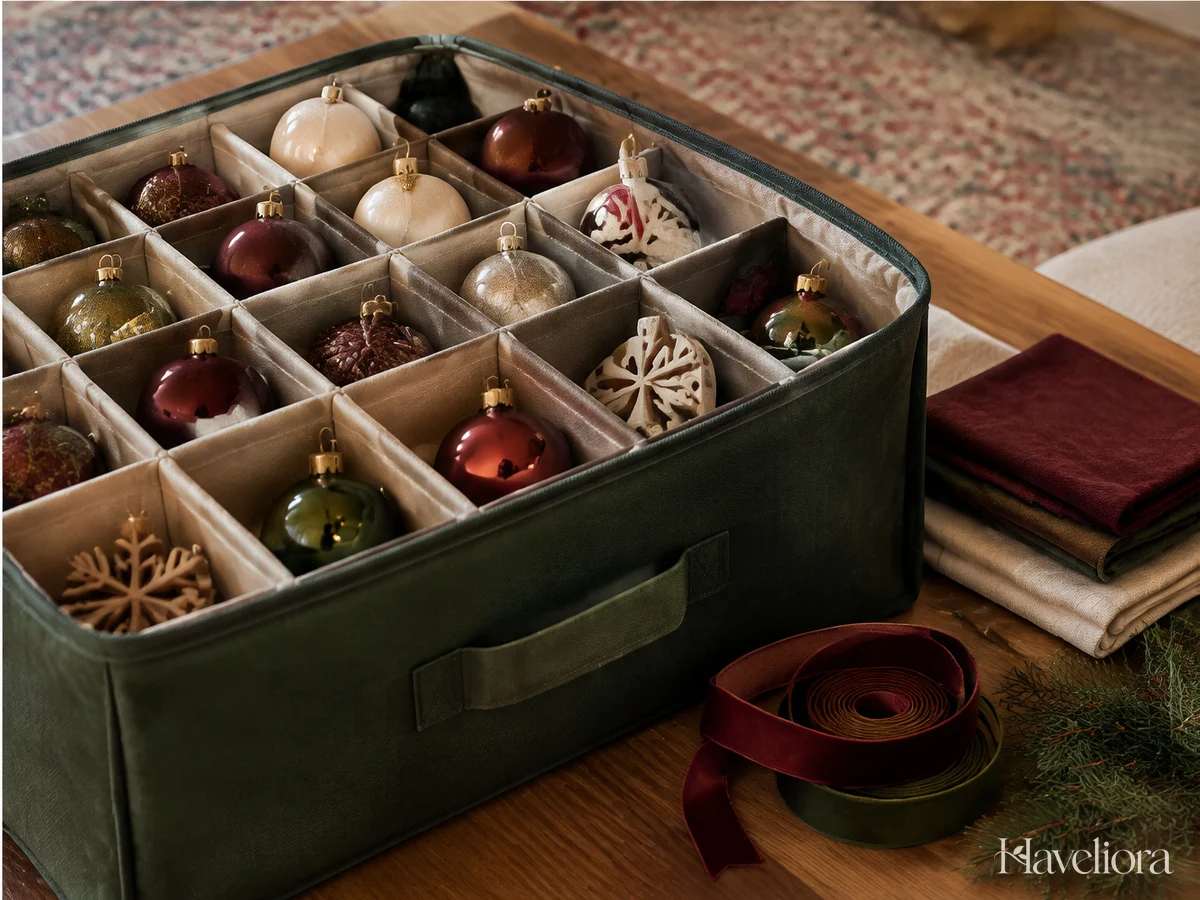
Plan storage while the collection is still visible. Group ornaments by fragility, size, or the area where they are used. A divided box can protect smaller pieces, while ribbons and textiles need a clean, suitable place of their own.
Follow product guidance for lights, batteries, and other electrical decoration before packing. Do not store damaged items with the expectation that they will somehow become usable next year. Keep instructions or identifying information that will help you use the products correctly again.
Photograph arrangements you enjoyed. A simple reference can remind you that a few pieces worked well together and reduce unnecessary replacement shopping. Note anything that proved awkward to store, maintain, or position safely.
Set a realistic storage limit. A seasonal collection that grows beyond the available space can take over cupboards needed for everyday life. Keep meaningful and useful pieces, and reconsider objects that never found a suitable place in the home.
For easier setup next year, store each group so it can be retrieved without unpacking everything. The next year’s setup should begin with the collection you own, not with uncertainty about what is hidden in several boxes.
A Festive Decorating Order That Keeps the Home Usable
Choose the tree position and safe lighting arrangement first. These decisions have the greatest effect on space and operation. Then decorate the tree with the meaningful pieces and a restrained supporting palette.
Add one or two smaller display areas after the main room works. The dining table and entrance are good candidates when the decoration leaves their everyday functions intact. You do not need to decorate every shelf to create continuity.
Review the finished home with the lights on and the main seats occupied. Check routes, access, and the places where guests will set things down. The most enjoyable festive arrangement is one that remains comfortable throughout the season.
For a quieter seasonal starting point, see fall home decor ideas. For a room that feels welcoming all year, explore cozy living room decorating.
Frequently Asked Questions
Can I decorate a small home without a full-size tree?
Yes. Choose a smaller suitable tree or a limited group of seasonal details that fits the available space. Keep stability, product instructions, heat sources, and clear routes in mind regardless of the display’s size.
Do all the ornaments need to match?
No. Repeated ribbon, color, or material can connect a varied collection. Keep meaningful pieces and use the supporting details to give them a coherent setting.
How do I avoid a crowded look?
Choose a main festive focal point and a small number of supporting areas. Leave useful surfaces available and avoid decorating every gap. A consistent palette can connect fewer pieces effectively.
A warm Christmas home is one where celebration and ordinary comfort work together. Keep the routes clear, the lighting suitable, and the collection personal enough to enjoy bringing out again.
Other Articles

Spring Home Decor Ideas for a Lighter, More Useful Seasonal Refresh
Fall Home Decor Ideas for a Warm, Uncluttered Seasonal Refresh