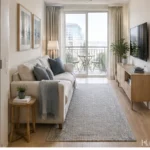
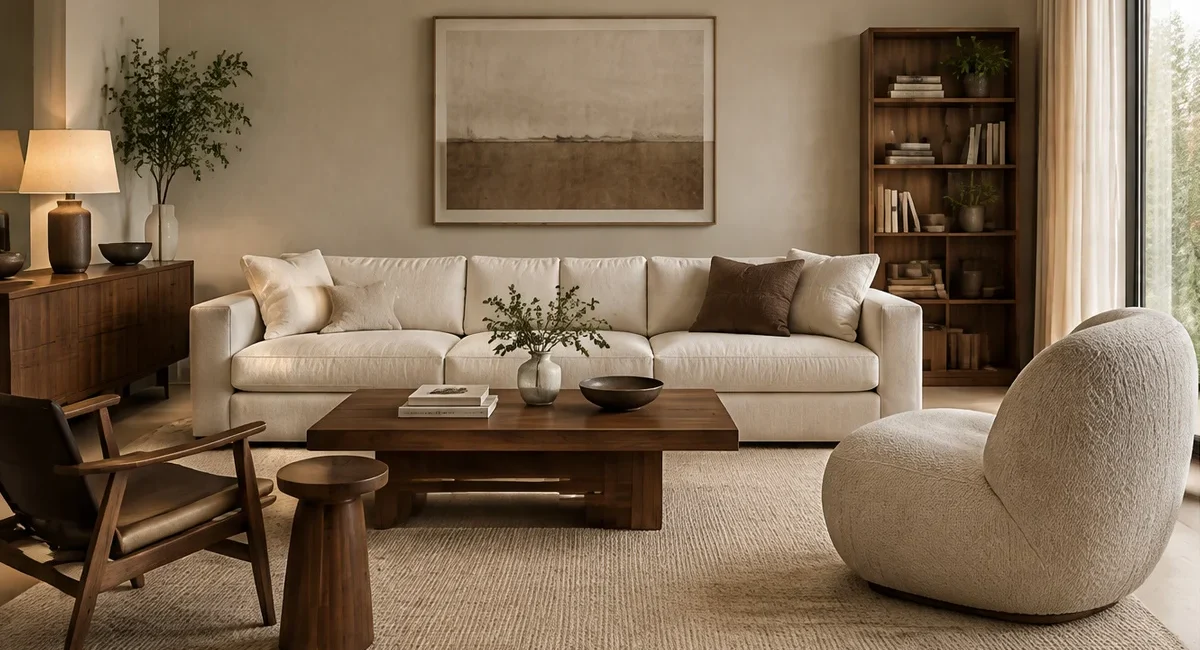
A modern living room does not have to be a collection of sharp edges and untouched surfaces. Clean lines can provide a useful framework, while fabric, wood, light, and personal pieces supply the warmth. The challenge is choosing enough variation to make the room inviting without losing the clarity that drew you to the style.
For this guide, modern means a restrained, practical approach to furniture and decoration rather than a claim about a particular design period. You can apply these ideas to a new apartment, an older home, or a room with furniture collected over time. The architecture does not need to be minimalist before the furnishings can feel coherent.
Begin by identifying what already works. A comfortable sofa, useful cabinet, or meaningful artwork can remain the starting point. Then examine the room’s shapes, materials, focal point, lighting, and everyday storage. A better relationship between those elements often matters more than replacing everything with pieces labeled modern.
Six ways to warm up a modern room
1. Use Simple Large Shapes and One Softer Counterpoint
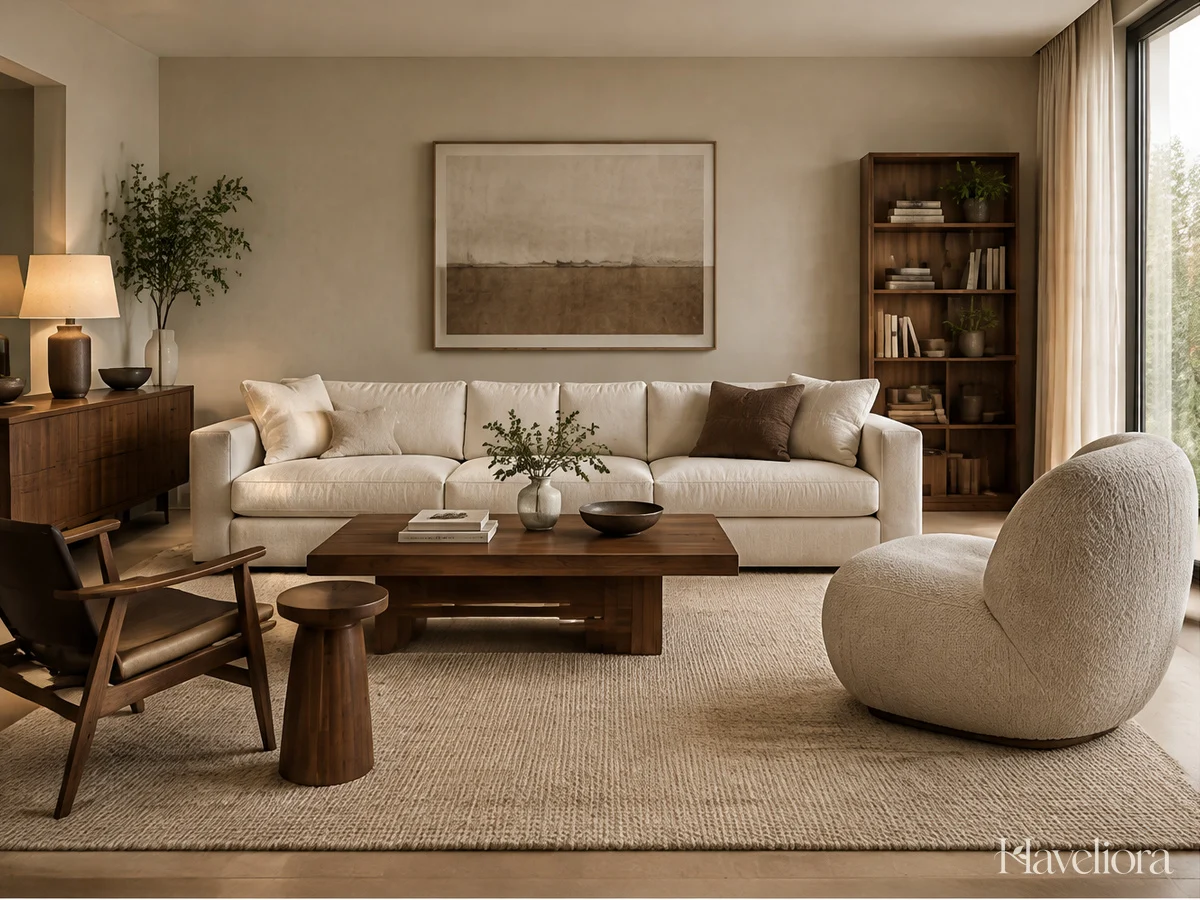
Start with the silhouette of the largest pieces. A simple sofa and a quiet storage unit create an easy-to-read base. Add one softer shape through a rounded chair, oval table, or curved lamp rather than asking every item to be sculptural.
Judge the pieces together. A low sofa, tall cabinet, and delicate chair can create a balanced mix, but only if their proportions suit the room. Look at height as well as floor area. A visually heavy piece may work well when the surrounding furniture gives it enough breathing space.
Comfort remains the deciding factor. A beautiful chair with a shape you cannot sit in comfortably is not the right statement piece. Test seat depth, support, and the ease of getting up. Modern styling should make the room clearer, not less usable.
Keep the main route legible. Furniture with an interesting outline can project farther than expected, particularly curved sofas or broad lounge chairs. Mark the complete footprint and test the arrangement with doors open before committing.
As a starting point, keep two major pieces relatively quiet and let one smaller piece introduce the expressive shape. You can add detail later without losing control of the composition.
2. Build Warmth Through Material Contrast

A room made entirely of smooth, uniform surfaces can feel visually thin even when the furniture is attractive. Introduce a few clearly different materials: woven upholstery, visible wood grain, a matte ceramic object, or a softly patterned rug. The variation can be tactile rather than colorful.
Give each material enough area to register. One well-proportioned wood table may contribute more than several tiny wooden ornaments. A substantial textile layer can soften the seating more convincingly than many small cushions in nearly identical fabrics.
Consider maintenance before choosing a finish. Check how a tabletop handles everyday use, what the upholstery care instructions require, and whether a textured surface will catch on clothing or collect the kind of debris your household produces. A room feels more relaxed when its materials do not demand constant caution.
Keep strong patterns selective. If a stone-look surface has pronounced veining, a plain rug and quieter upholstery can let it stand out. If the fabric is heavily textured, the table may work better with a simpler finish. Not every material needs to be the most visually dramatic version available.
To compare the materials, put your main fabric, wood finish, and proposed tabletop sample together. Look for a difference in texture without a conflict you dislike in color.
3. Make One Artwork Arrangement Feel Intentional

Art can supply the room’s most expressive moment. A large piece above a plain sofa is one option; a carefully spaced pair or a small collection on a separate wall can work just as well. Choose around what you enjoy rather than assuming modern rooms require abstract art.
Test the scale with paper templates. Include the frame and the spaces between pieces. View the arrangement from the doorway and from the seats, because a composition that looks balanced while standing directly in front may feel awkward elsewhere in the room.
Relate the art to the furniture beneath it rather than centering everything on the entire wall. A long sofa can provide a clear anchor, while a tall cabinet may need a quieter neighboring area. Let some walls remain undecorated so the selected arrangement has presence.
Use proper fixings for the wall and the weight of the object. Large framed pieces should not be casually leaned where they could fall onto seating. Follow the hardware instructions and get installation help when the wall construction or load is uncertain.
To connect the color palette, repeat one small tone from the artwork elsewhere, perhaps in a cushion or ceramic piece. You do not need to reproduce the whole painting’s palette throughout the room.
4. Give the Television and Equipment a Practical Home
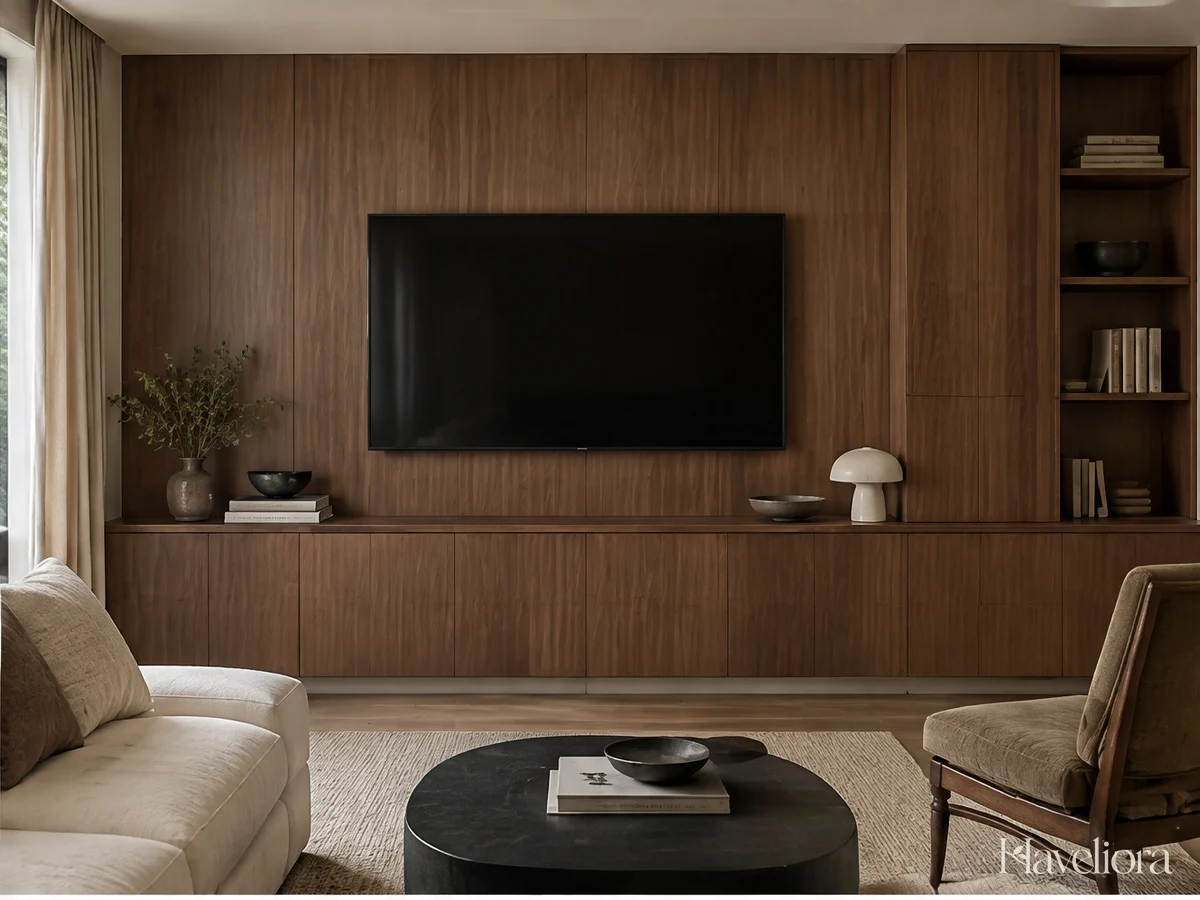
A media area can undo the clarity of a room when every device, cable, and remote control has a different temporary position. Start with the actual equipment and choose storage that supports it. Check dimensions, weight capacity, access, and ventilation requirements before selecting the cabinet.
Think about the viewing position from the seats. A visually impressive installation is not useful if the screen sits at an uncomfortable angle for the way you watch. Test the proposed position before mounting, and account for reflections from windows and lamps.
Use closed storage for small equipment and a defined drawer or tray for remotes. Do not seal electronics into furniture without considering their instructions. Cable management should make the arrangement safer and easier to maintain, not make every connection inaccessible.
Keep decoration around the screen restrained. One meaningful object or a short group of books may be enough. A television wall does not need an artificial fireplace, extensive shelving, and multiple competing art pieces to feel finished.
For safety, use furniture suitable for the television and secure the equipment as directed. For additional guidance, refer to the Anchor It resources on furniture and TV stability.
5. Choose Lamps for Their Light, Not Only Their Shape
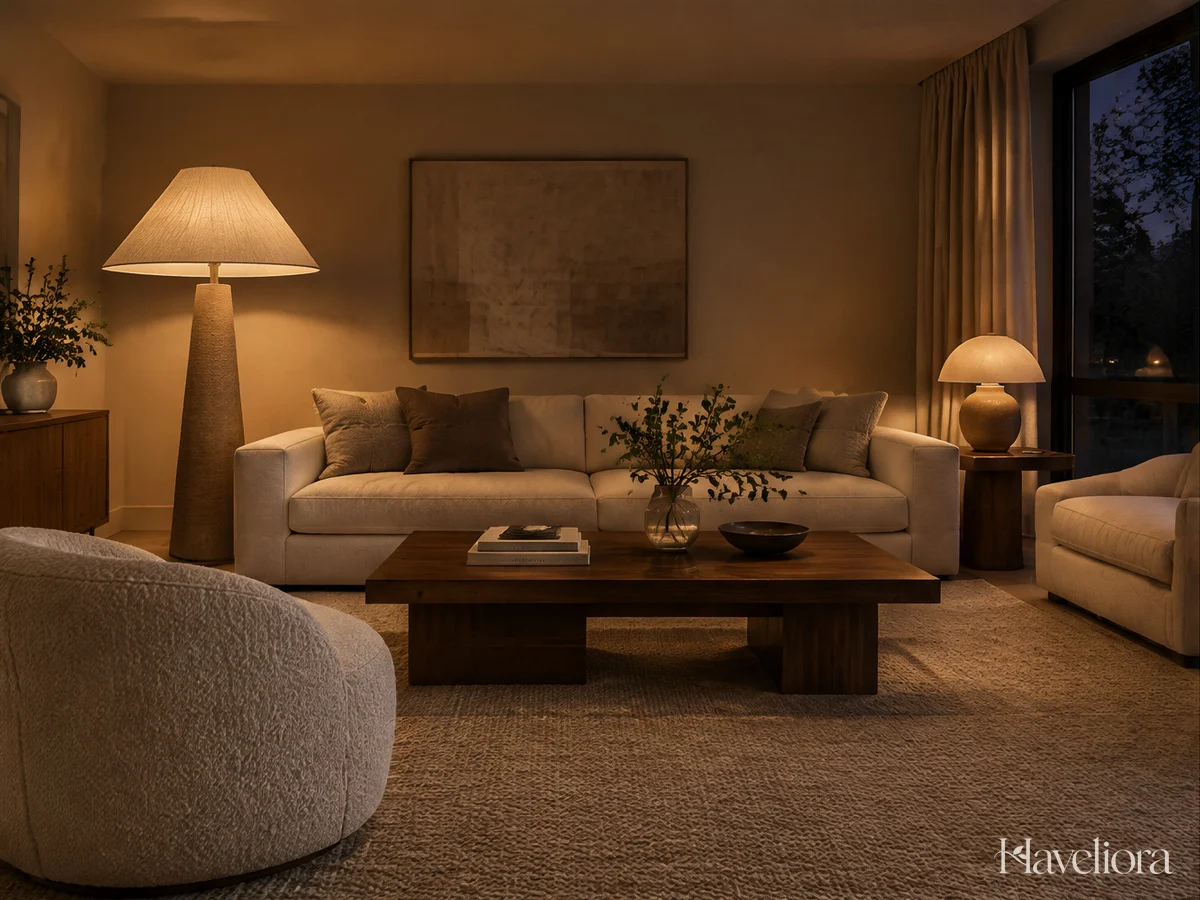
Modern lighting can be visually expressive, but the fixture still has a job. Decide whether it supplies reading light, general illumination, or a softer decorative glow. One lamp may not do all three equally well.
Check glare from the main seats. An exposed bulb or highly reflective shade may look attractive in a photograph but become distracting during an ordinary evening. Try the fixture or examine its light direction before making it the room’s central feature.
Use separate sources to create flexibility. A reading lamp beside a chair and a table lamp across the room can support different activities without relying on the ceiling light. Keep their overall color appearance compatible when you want a quiet evening scheme.
Consider controls and cables while arranging the furniture. You should be able to reach a switch comfortably, and cords should not cross a walking route. Follow bulb and dimmer compatibility instructions. Use qualified electrical help for work beyond the straightforward installation the product is designed for.
In the evening, photograph the room with the lights you actually use. If one glaring fixture dominates the image and your attention, adjust that source before buying another lamp.
6. Let an Older or Personal Piece Interrupt the Perfection
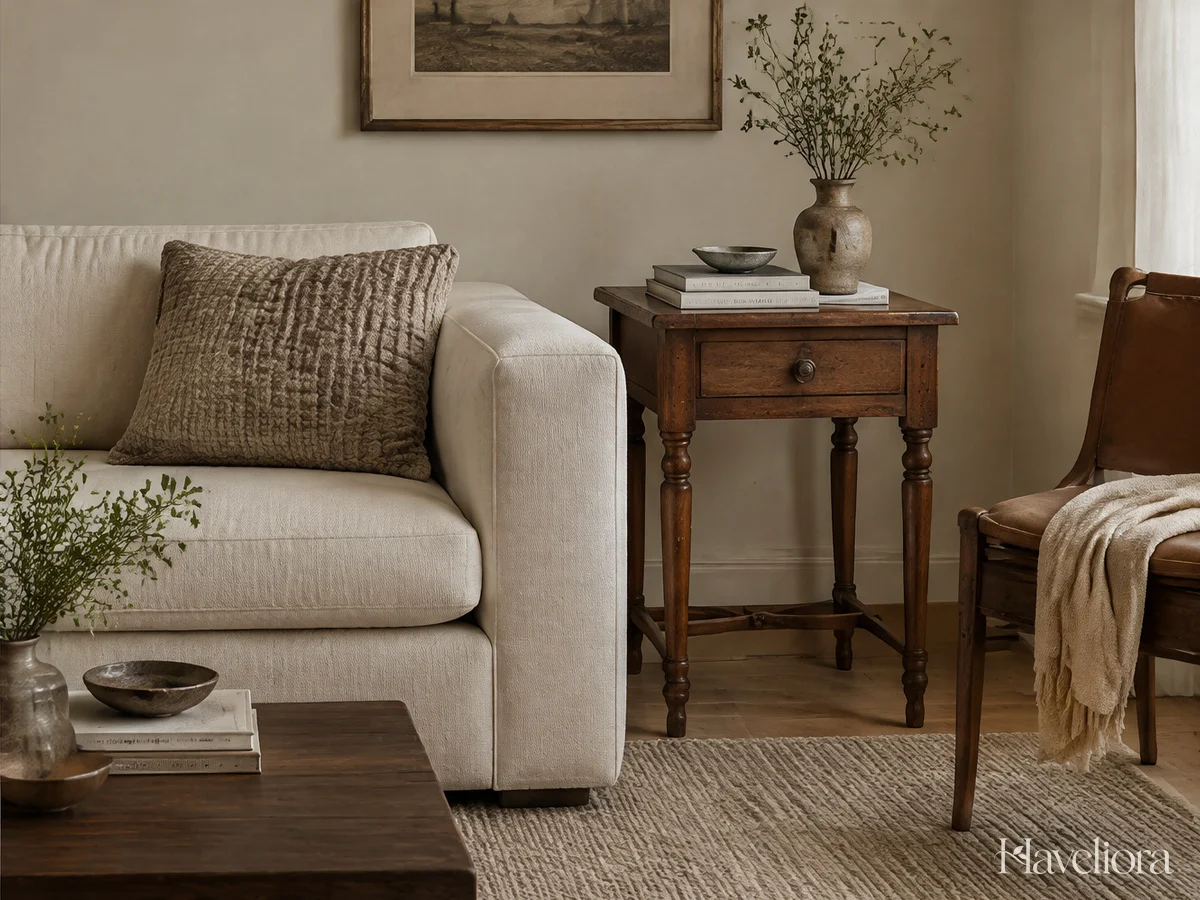
A room purchased entirely from one display can feel coordinated yet anonymous. An older wood table, a handmade object, or an artwork with personal meaning can provide a useful counterpoint to newer furniture.
Connect the different piece through one shared quality. Its wood tone may relate to the cabinet, its rounded shape may echo the chair, or a color within it may repeat in the rug. One connection is often enough; you do not need to make every detail match.
Give the piece a useful position. A vintage table should still be stable and the right height for the seat beside it. A keepsake can live in a bowl or display area where it is easy to appreciate rather than hidden among many small ornaments.
Keep the rest of the composition edited. The personal object becomes more noticeable when surrounding surfaces have space. Resist buying several additional accessories merely to make it look like part of a collection.
Before you finish, ask: which part of this room could belong only to your household? If the answer is nothing, introduce one meaningful detail before adding another fashionable finish.
How to Modernize the Room Without Replacing Everything
First, simplify the arrangement. Remove pieces that have no useful role, organize the media equipment, and give the largest furniture enough room. This can reveal the clean lines already present in the room.
Next, choose one material or shape change. A quieter rug, a better-proportioned table, or a more comfortable lamp may bring the room closer to your preferred direction. Make that change before buying a complete set of new accessories.
Finally, review the room in daylight and after dark. The furniture should work in both conditions, and your personal details should remain visible without making every surface busy. For a more restrained whole-home approach, explore warm minimalist decorating. For extra softness, see our cozy living room guide.
Frequently Asked Questions
Can I keep traditional furniture in a modern living room?
Yes. Choose the pieces that work and connect them to the newer elements through color, proportion, or material. An older cabinet can add useful character when the surrounding arrangement is simpler. You do not need to disguise every difference.
Does modern decor require a neutral palette?
No. A restrained furniture plan can support strong color. Decide which element leads and keep competing details under control. A colorful sofa may call for quieter artwork or a plainer rug, depending on the result you want.
How do I avoid a cold-looking room?
Look for missing texture, uncomfortable light, or overly uniform surfaces before adding more objects. Wood, woven fabric, a useful rug, and a personal piece can soften the scheme while keeping the clean-lined character intact.
A warm modern living room is not defined by how little it contains. It is defined by how clearly its useful pieces work together and how comfortably you can live among them.
Other Articles

Kitchen Decor Ideas That Keep Your Counters Useful
Small Living Room Ideas for Better Flow and Comfortable Seating